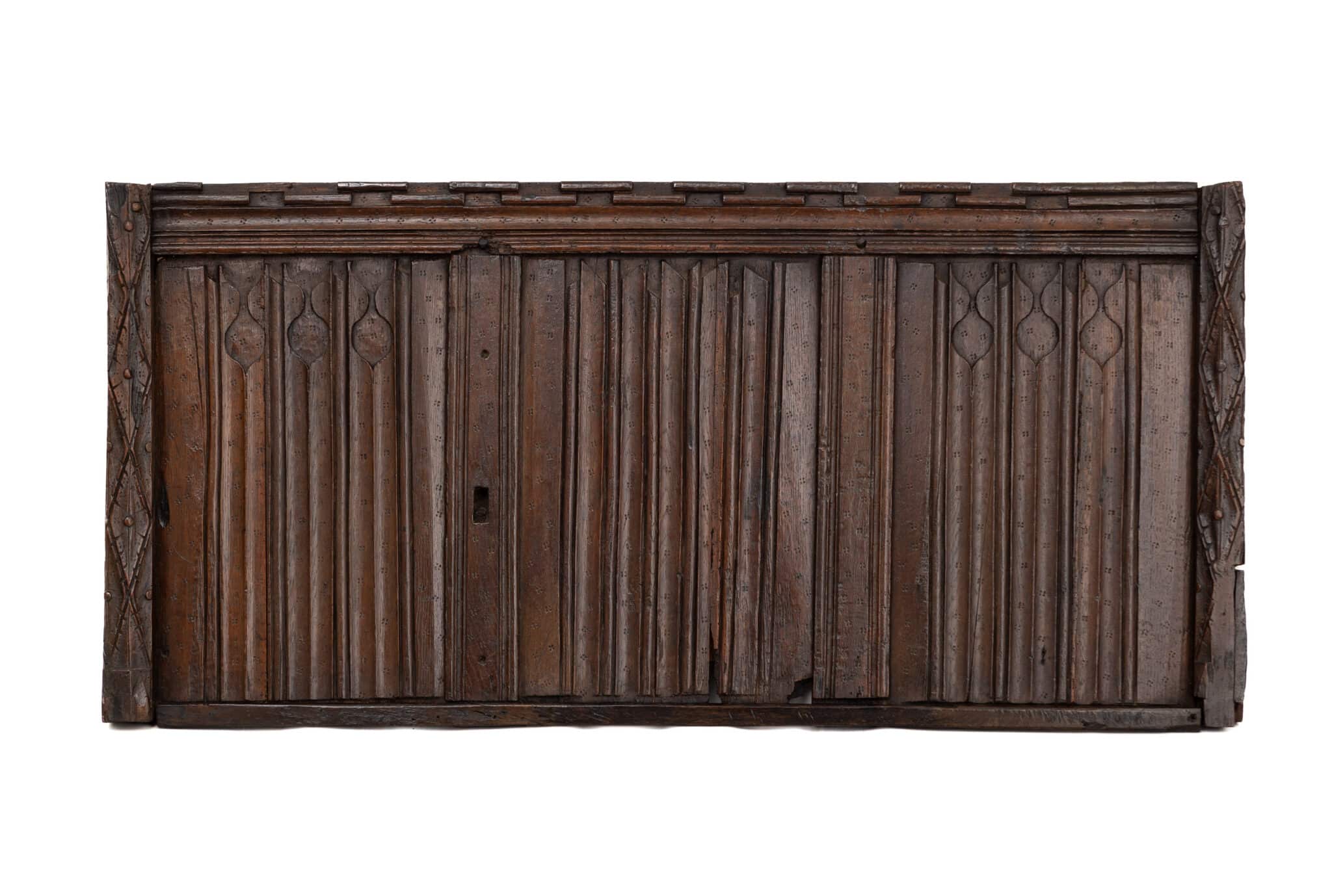
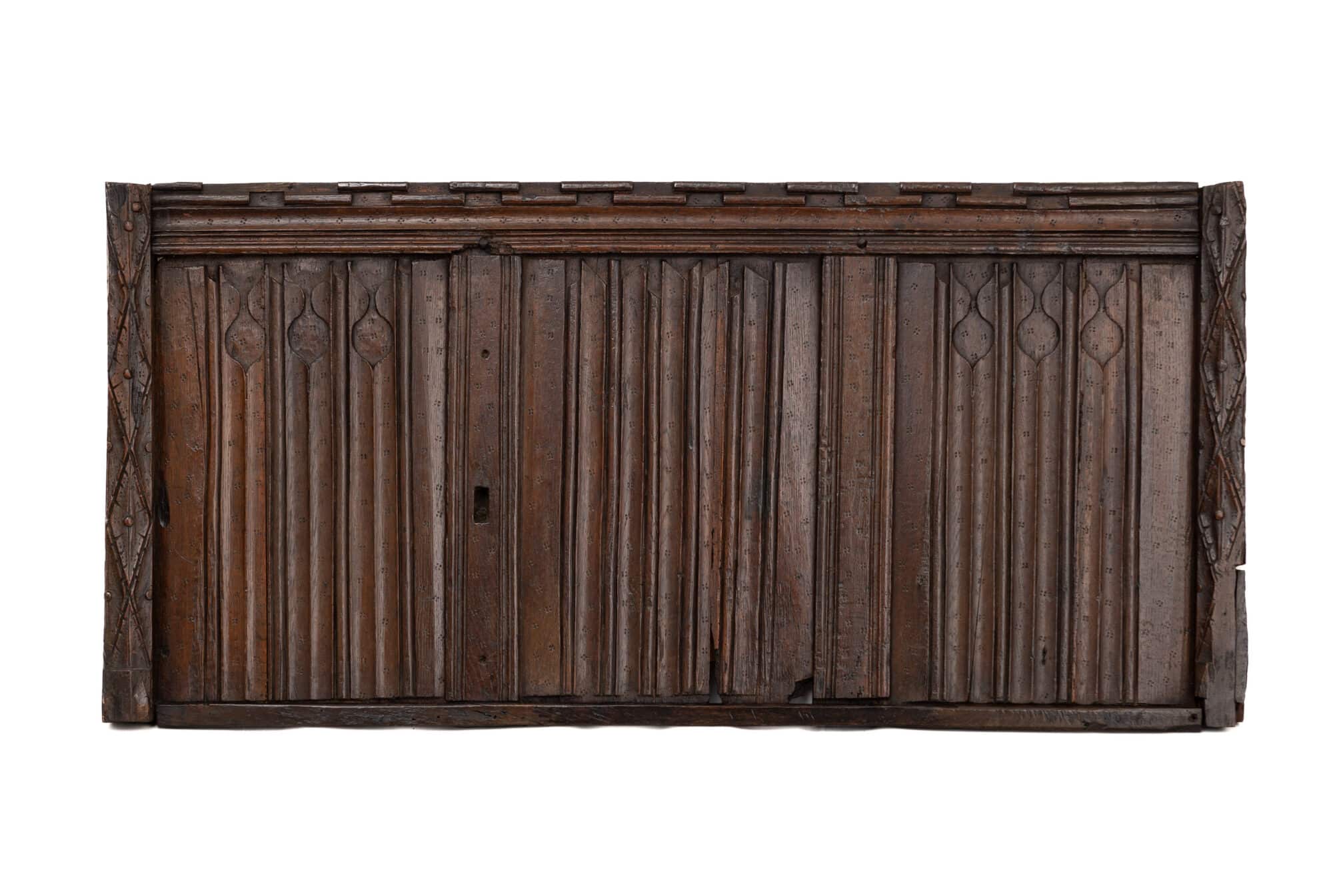
Henry VIII Period Oak Linenfold Bed Head Fragment
- Period
- 1520 - 1540
- Origin
- England
- Dimensions
- W 53 3/4" × H 25 1/2" × D 2 3/4"
- Reference
- #Marh3753
£4,850
Description
An important and rare English Tudor carved oak bed-head fragment dating from the reign of Henry VIII, circa 1525–1540. The surviving structure comprises a series of finely worked linenfold panels enclosed within a substantial oak frame and enriched with chip-carved decoration. The side members display interlaced Gothic ornament, while the distinctive crenellated upper rail reflects the architectural character associated with high-status early Tudor woodwork.
The linenfold motif, derived from the representation of folded cloth or parchment, was one of the most characteristic decorative devices employed in English furniture and interior panelling during the late fifteenth and early sixteenth centuries. The form and execution of the carving place the piece within the transitional period between the Perpendicular Gothic tradition and the early influence of Renaissance ornament in England.
Comparable examples of Tudor bed heads with linenfold panelling are illustrated by Ralph Edwards in The Dictionary of English Furniture and survive in museum collections including the Victoria and Albert Museum. Such survivals are uncommon, as relatively few early Tudor bedsteads escaped later alteration or dismantling.
The present fragment retains its original carved panels, upper rail, and side framing members. The lower rail has been sympathetically restored at a later date to provide structural stability, while preserving the integrity and appearance of the surviving sixteenth-century work.