A Late Gothic Limestone Figure of a Praying Angel
- Period
- 1480 - 1500
- Origin
- Netherlands
- Dimensions
- W 6" × H 17 1/2" × D 5"
- Reference
- #Marh3736
£6,850
Description
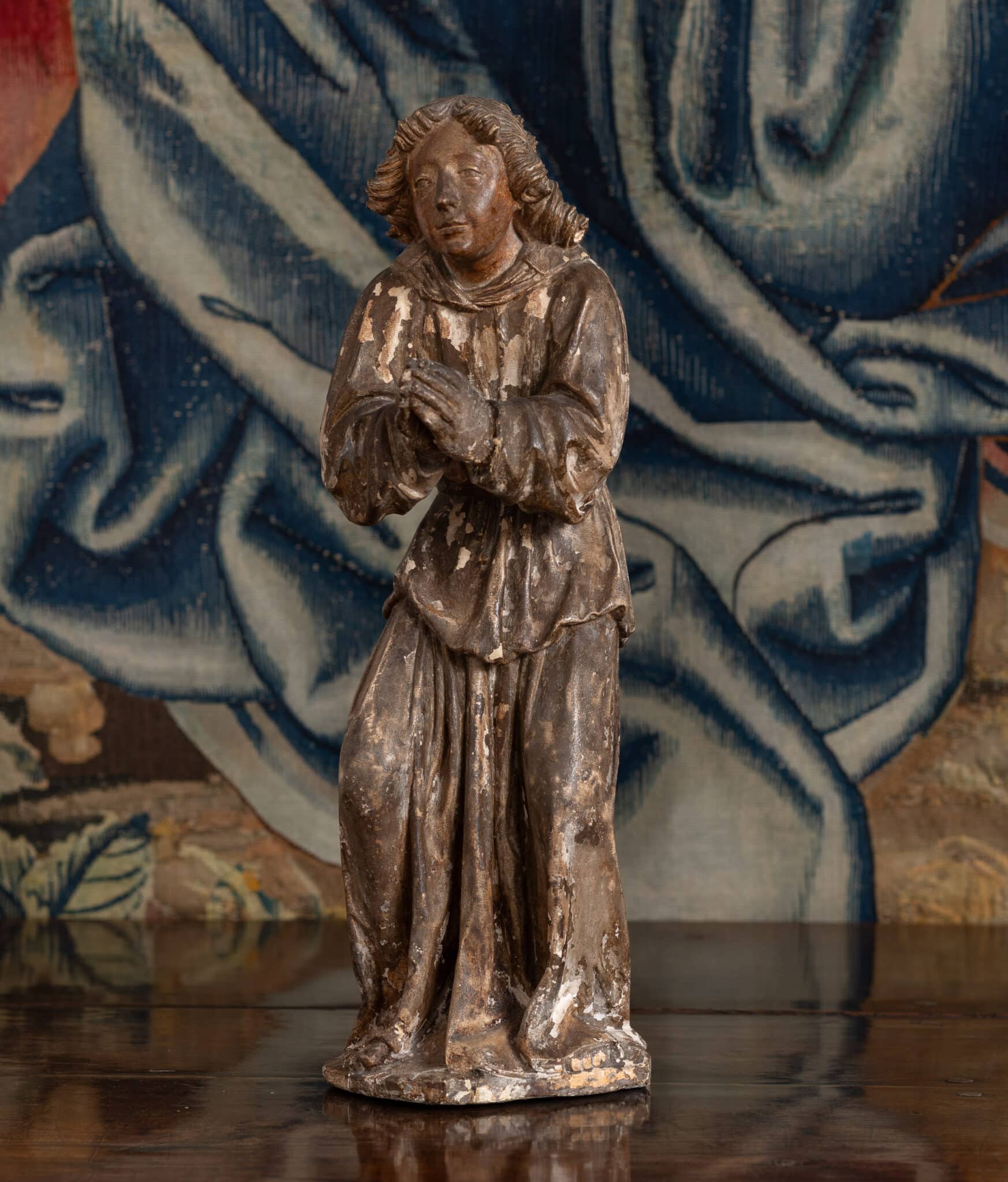
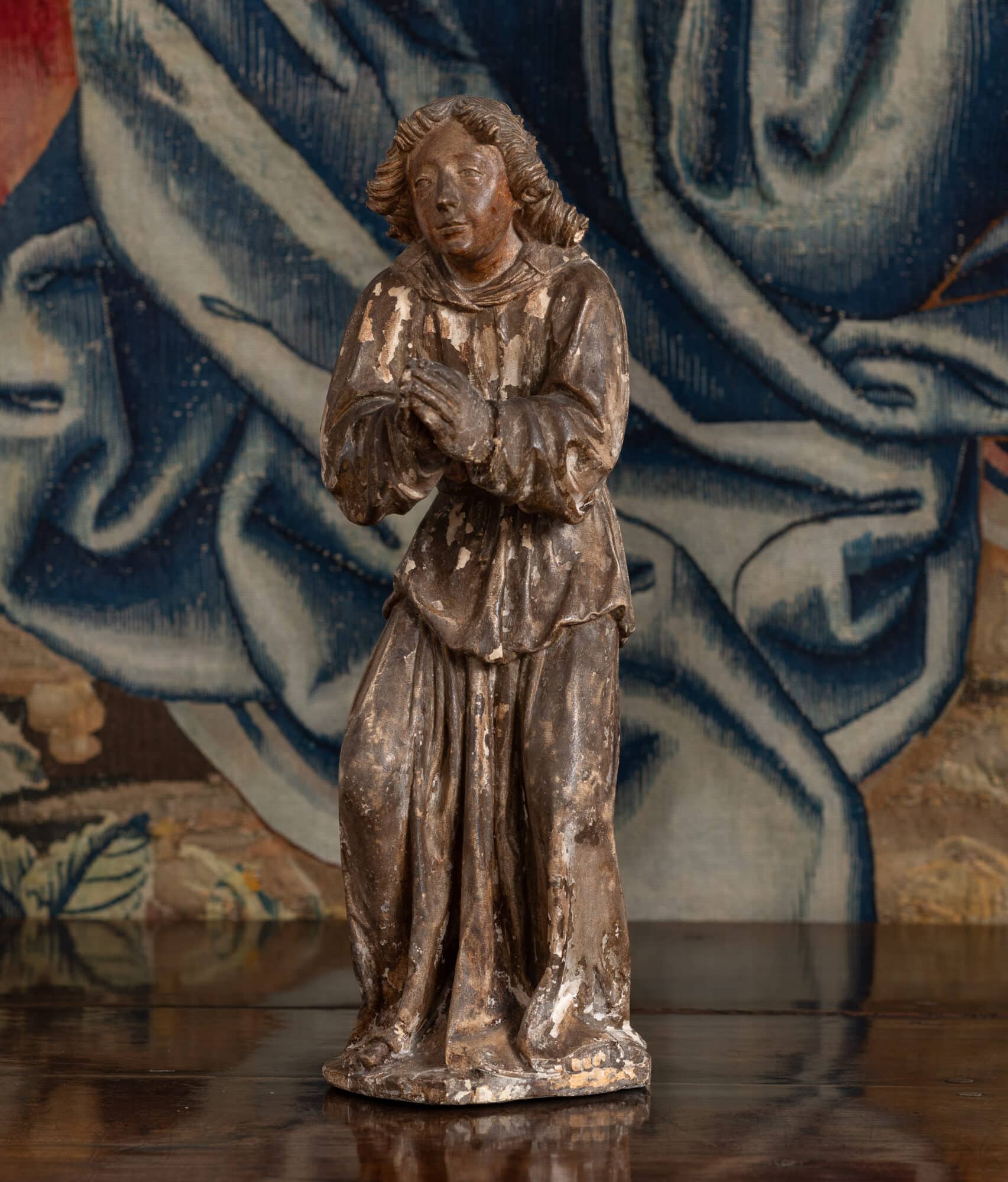
A late Gothic limestone sculpture depicting a youthful angel in an attitude of prayer, its hands clasped devoutly before the chest and its gaze gently uplifted in contemplation. Carved in the Netherlands during the final decades of the fifteenth century, the figure belongs to the flourishing tradition of devotional sculpture produced in the Burgundian Netherlands, one of the most important artistic centres of Northern Europe during the late Middle Ages.
Originally conceived as a winged angel, the figure has lost its wings over the course of more than five centuries, a common occurrence among medieval sculptures that survived periods of religious upheaval, architectural alteration, and changing patterns of collecting. Despite these losses, the sculpture retains a remarkable degree of its original presence and spiritual character.
The angel is clothed in a flowing robe whose deeply carved folds fall in elegant, rhythmic cascades, creating a sense of both movement and solemnity. The treatment of the hair, arranged in softly curling locks that frame the face and fall onto the shoulders, reflects the refined naturalism characteristic of Netherlandish Gothic carving at the end of the fifteenth century. Particularly appealing is the serene expression of the face, which conveys the quiet introspection and devotional sensitivity so highly valued in late medieval religious art.
Traces of the original polychromy remain visible across the surface. Medieval stone sculpture was rarely intended to be seen as bare stone, and figures such as this would originally have been richly painted and, in many cases, enhanced with gilding. The surviving remnants provide valuable evidence of the sculpture’s original appearance while reinforcing its authenticity and historical integrity.
Angels of this type were typically created as part of larger ecclesiastical ensembles, serving as attendant figures within altarpieces, sacrament houses, funerary monuments, or architectural settings. Their function was both decorative and devotional, encouraging contemplation and prayer through their example of perpetual worship.
Executed during the final flowering of the Gothic tradition in the Low Countries, the present sculpture embodies the combination of naturalistic observation, technical accomplishment, and spiritual expression that characterises the finest Netherlandish carving of the period. Its appealing state of preservation, traces of original surface, and evident quality of execution make it a particularly evocative survival from the closing years of the medieval world.
More than five hundred years after its creation, this angel continues to communicate the profound sense of reverence and quiet devotion for which late Gothic art remains celebrated.