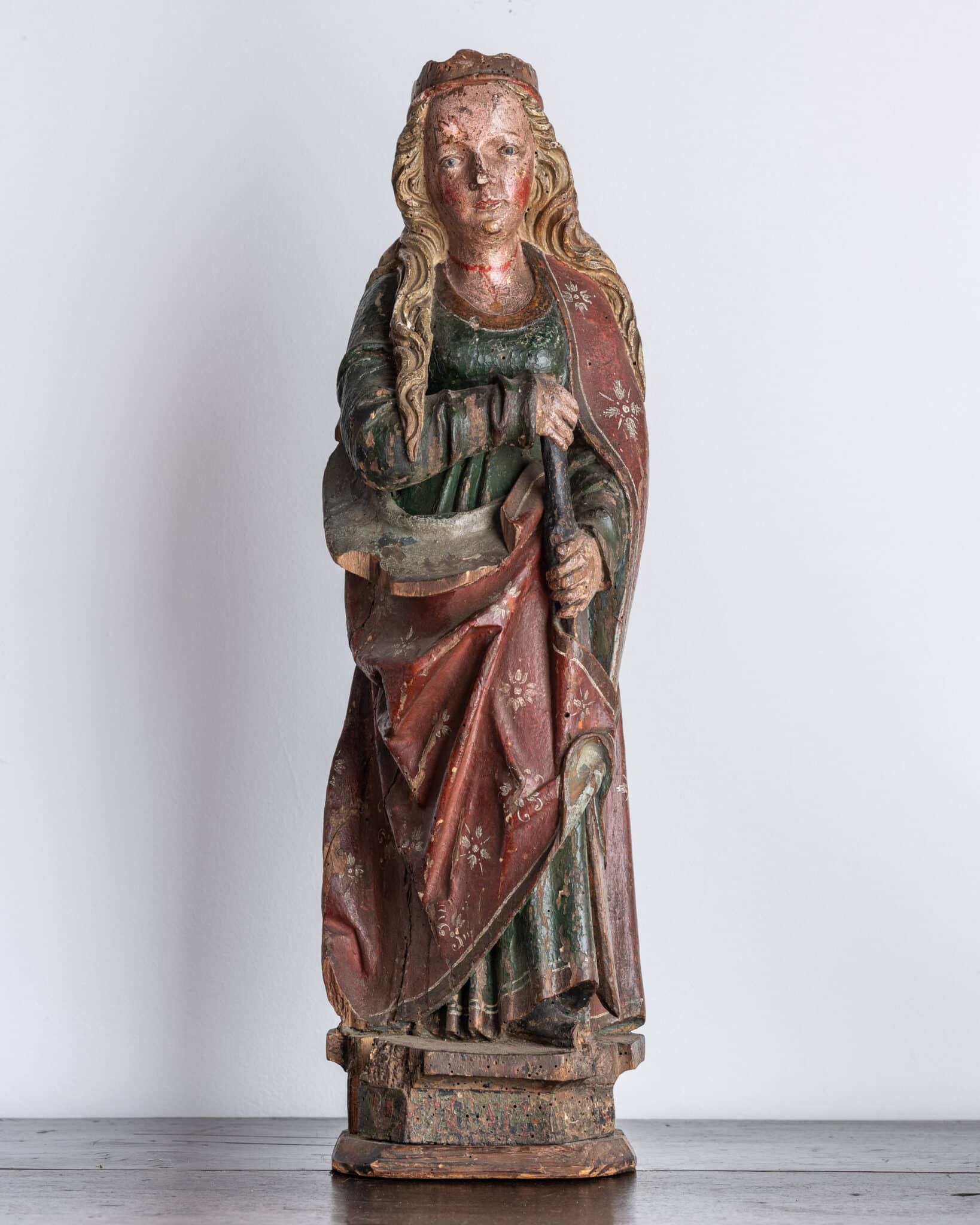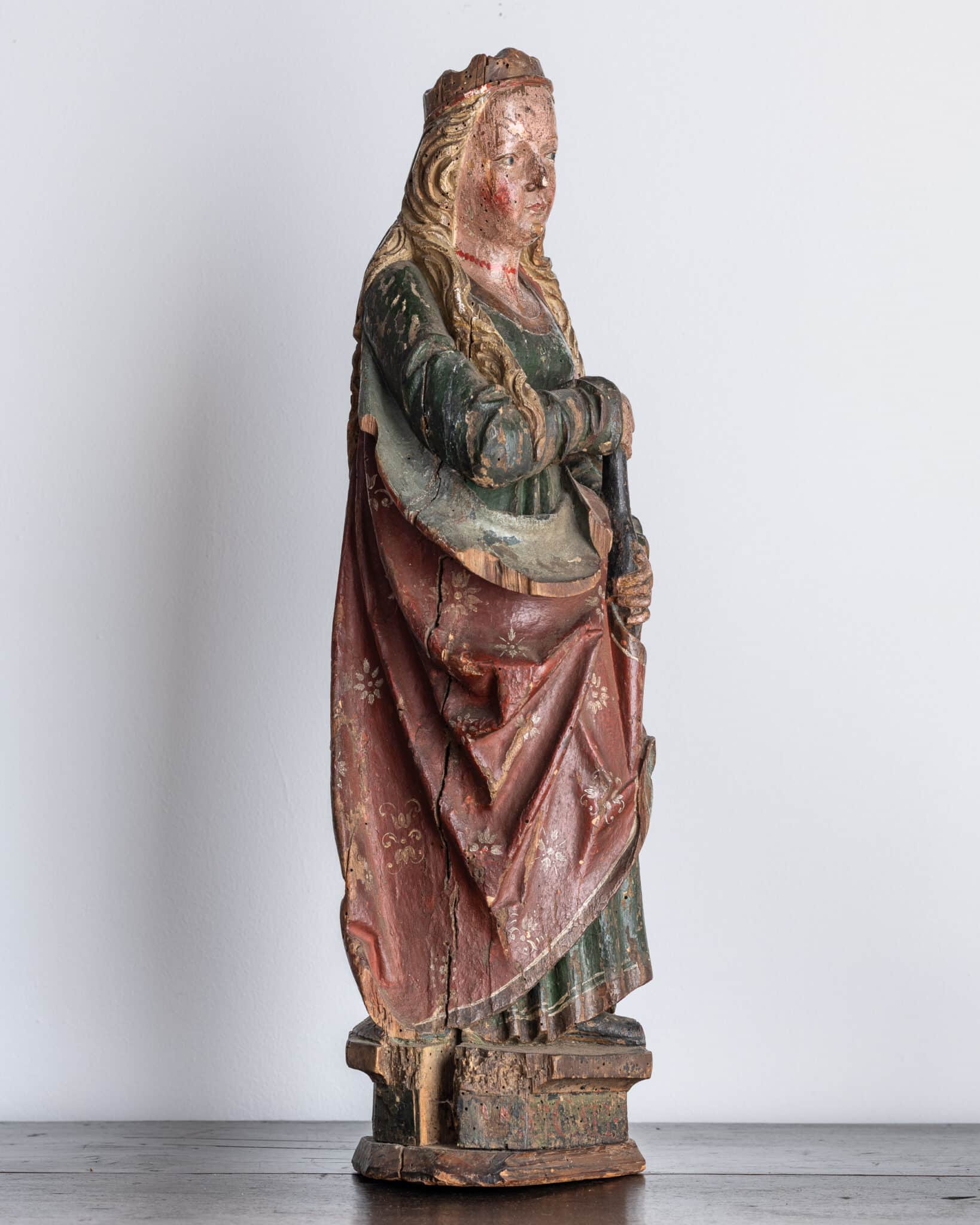
A Late Gothic Polychrome Limewood Figure of Saint Catherine of Alexandria
- Period
- 1490–1510
- Origin
- South Germany, probably Swabia or Bavaria.
- Dimensions
- W 6 1/4"" × H 23"" × D 5 3/4""
- Reference
- #Marh3848
£5,250
Description
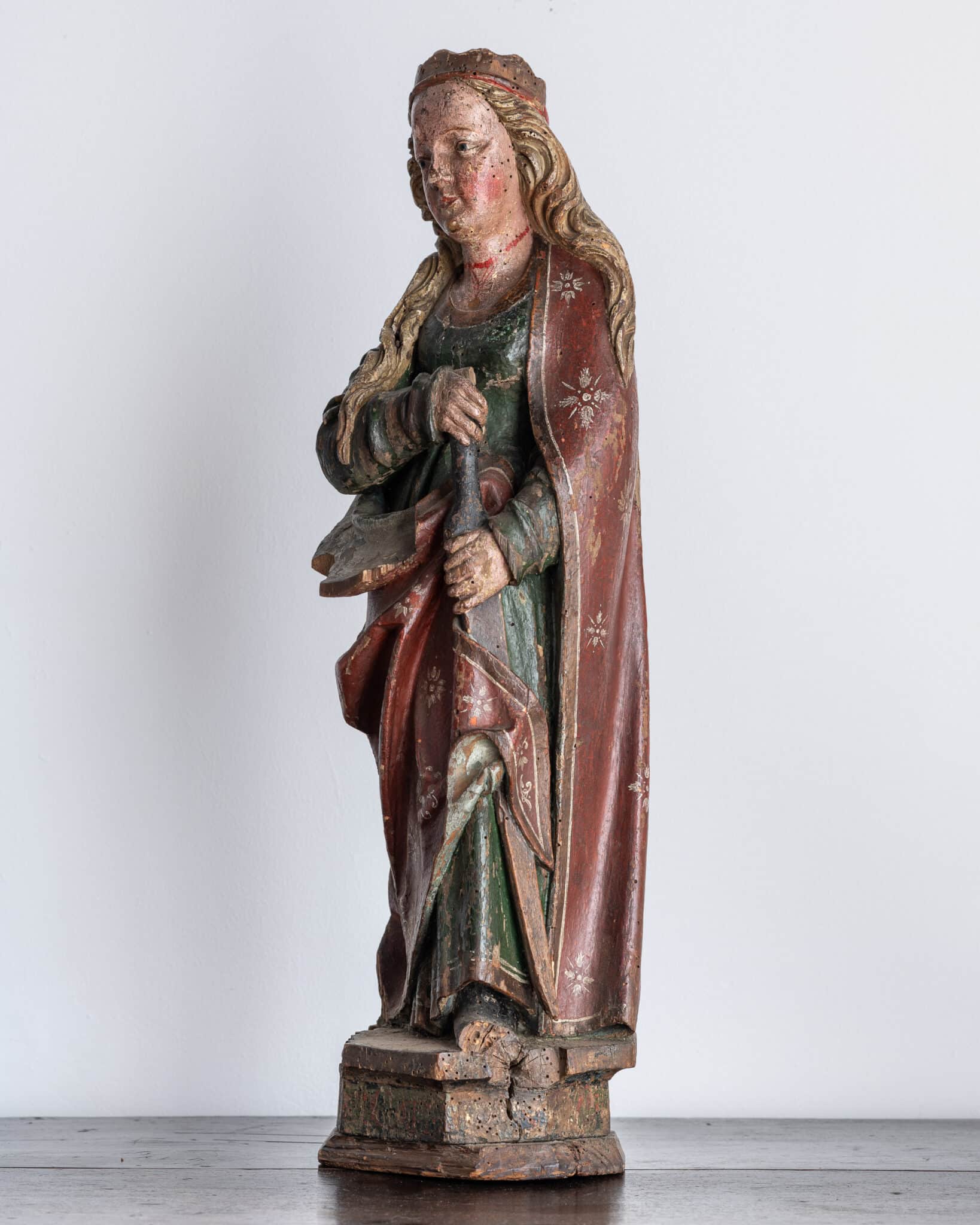
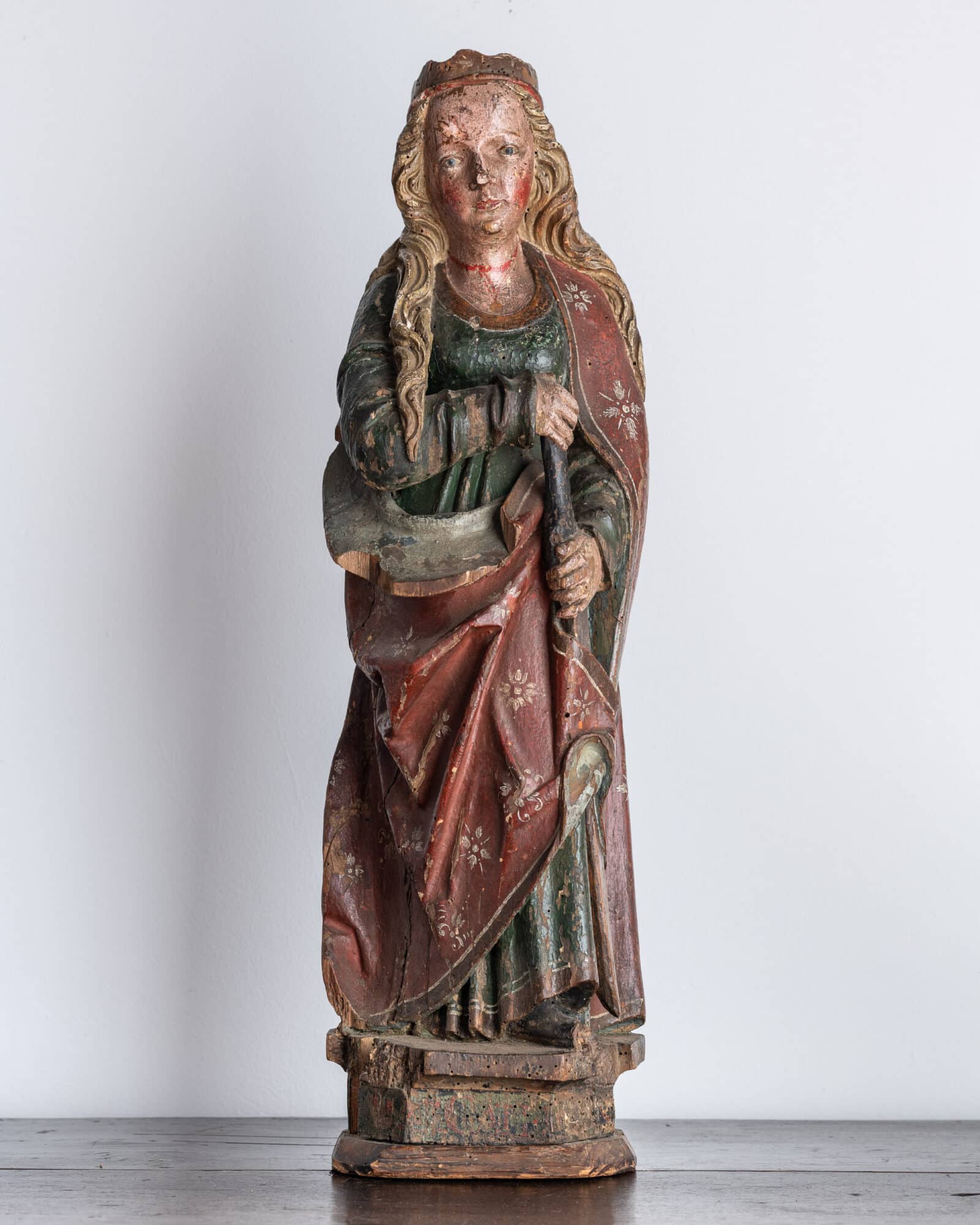
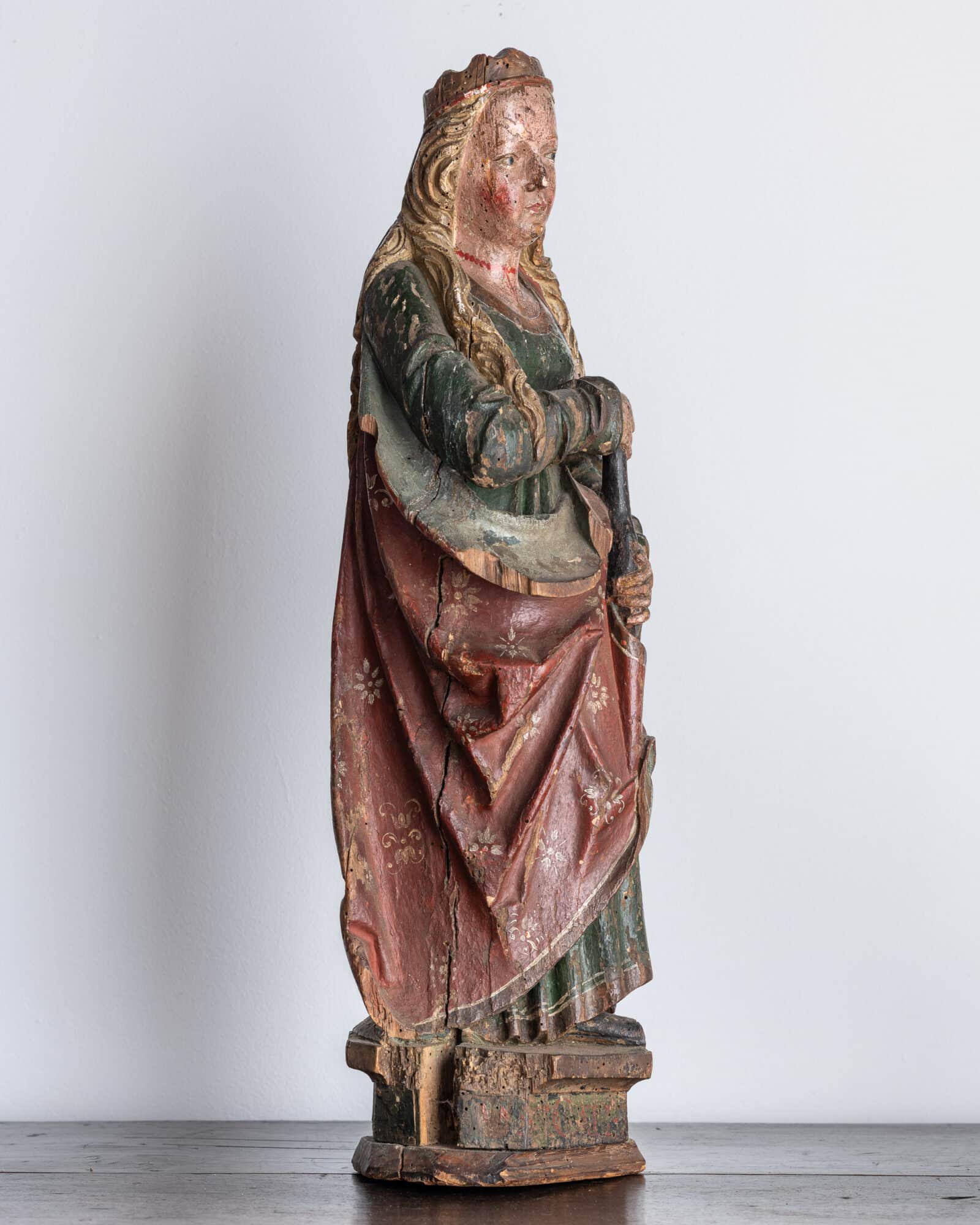
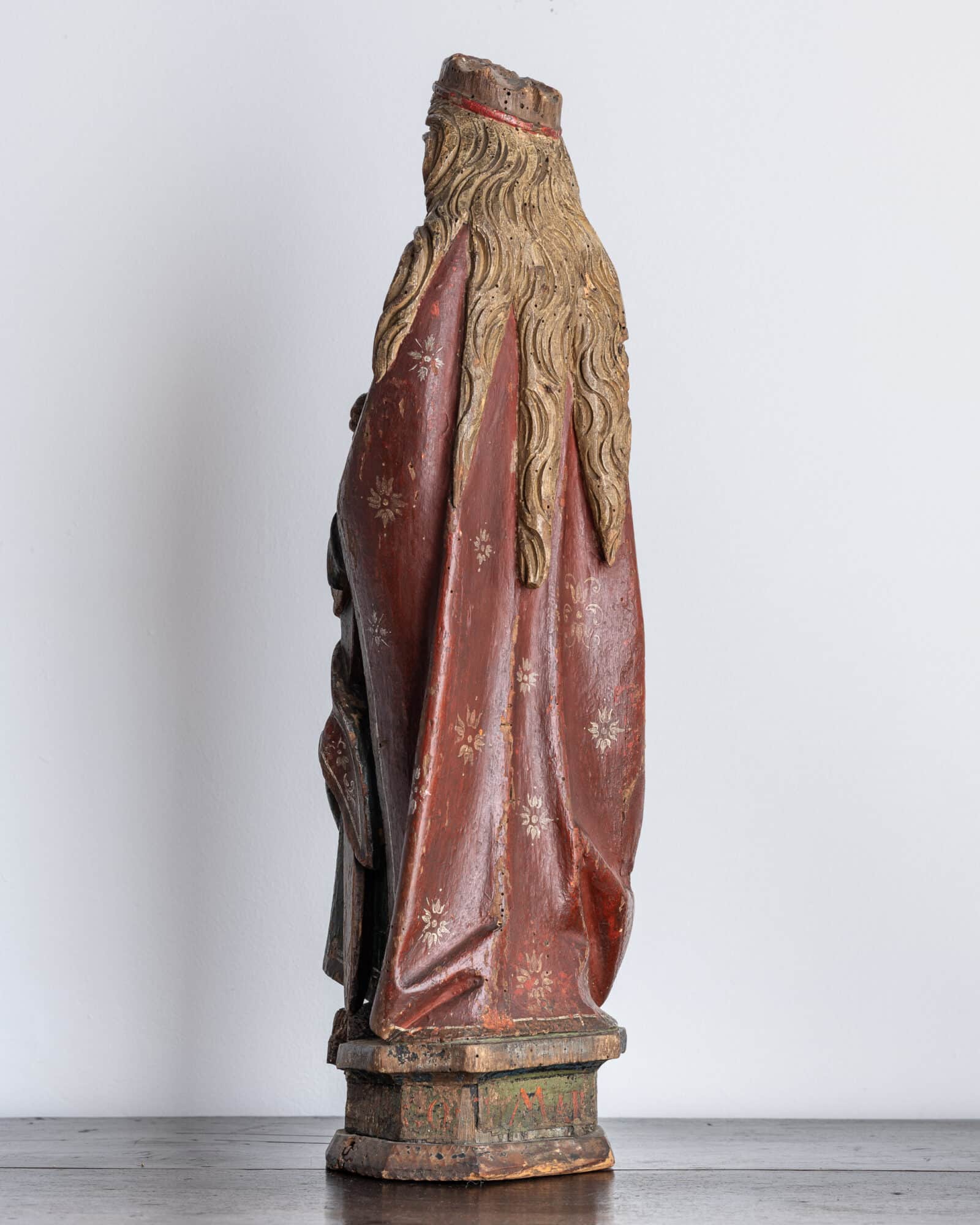
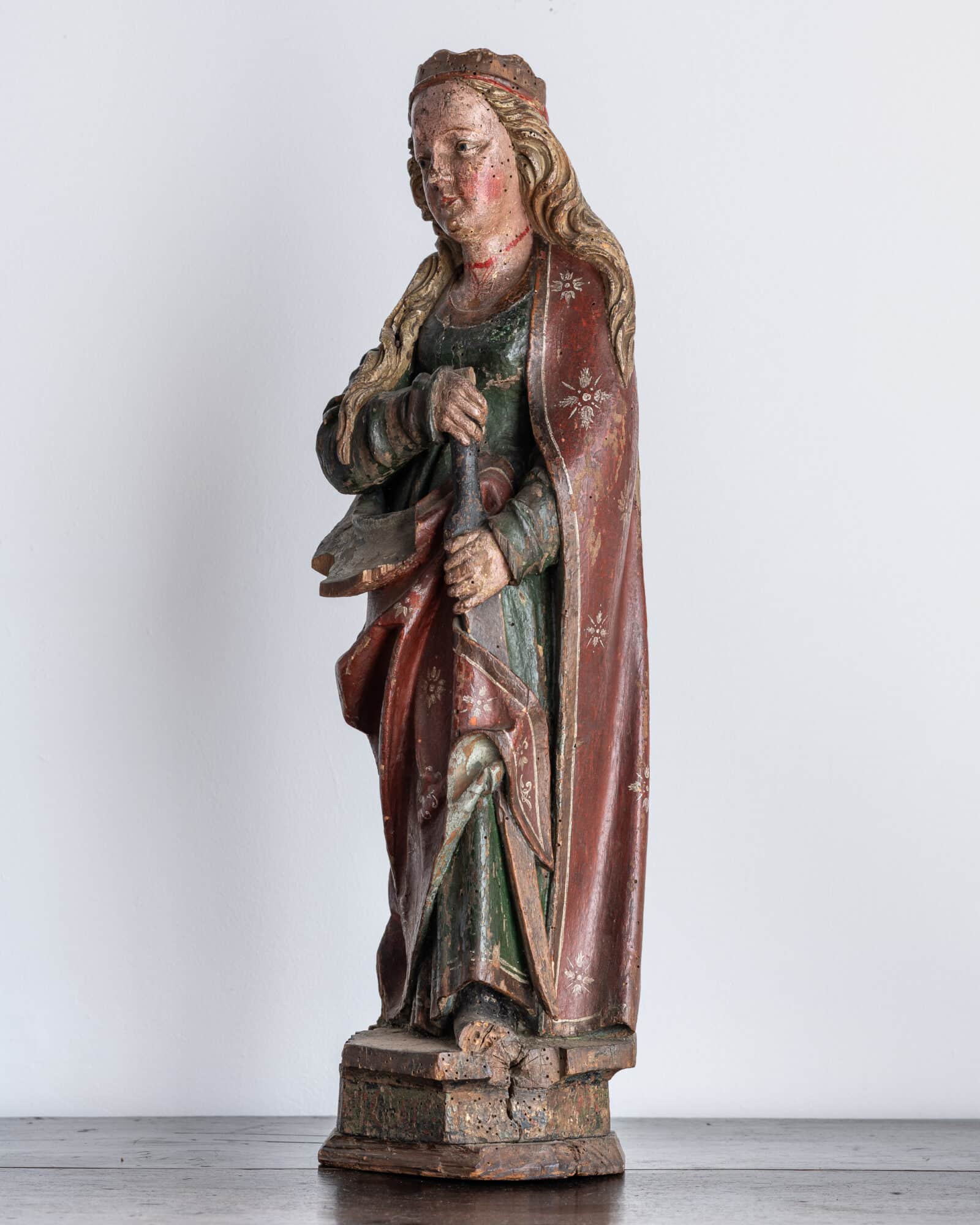
A late Gothic carved limewood sculpture depicting Saint Catherine of Alexandria, retaining extensive original polychromy and gilding.
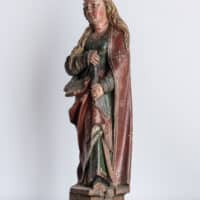
The saint is represented standing, crowned and holding the sword of her martyrdom vertically between both hands. Her youthful face is characterised by a high, rounded forehead, softly modelled cheeks and a composed expression, reflecting the late Gothic ideal of feminine beauty prevalent in southern German sculpture around 1500.
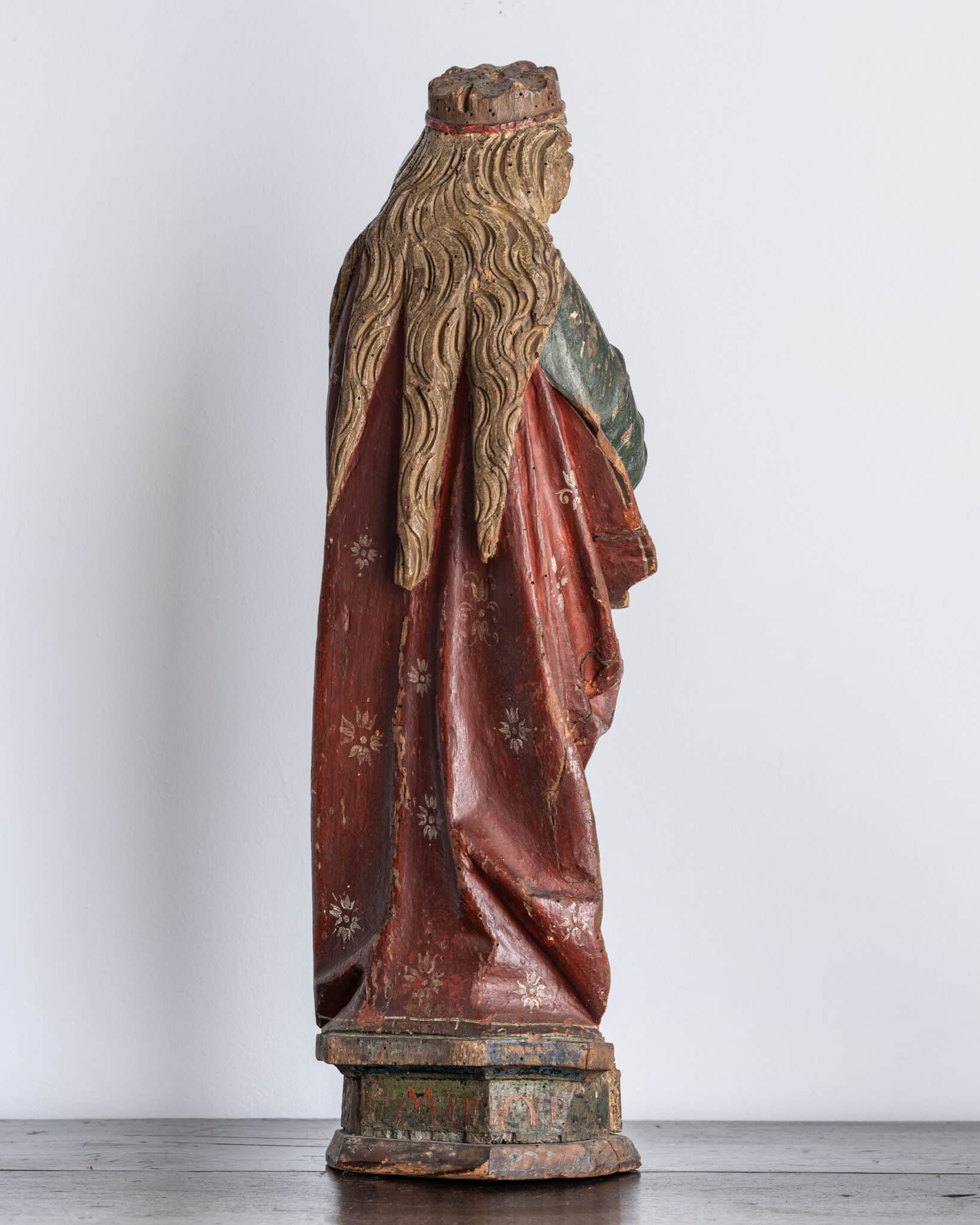
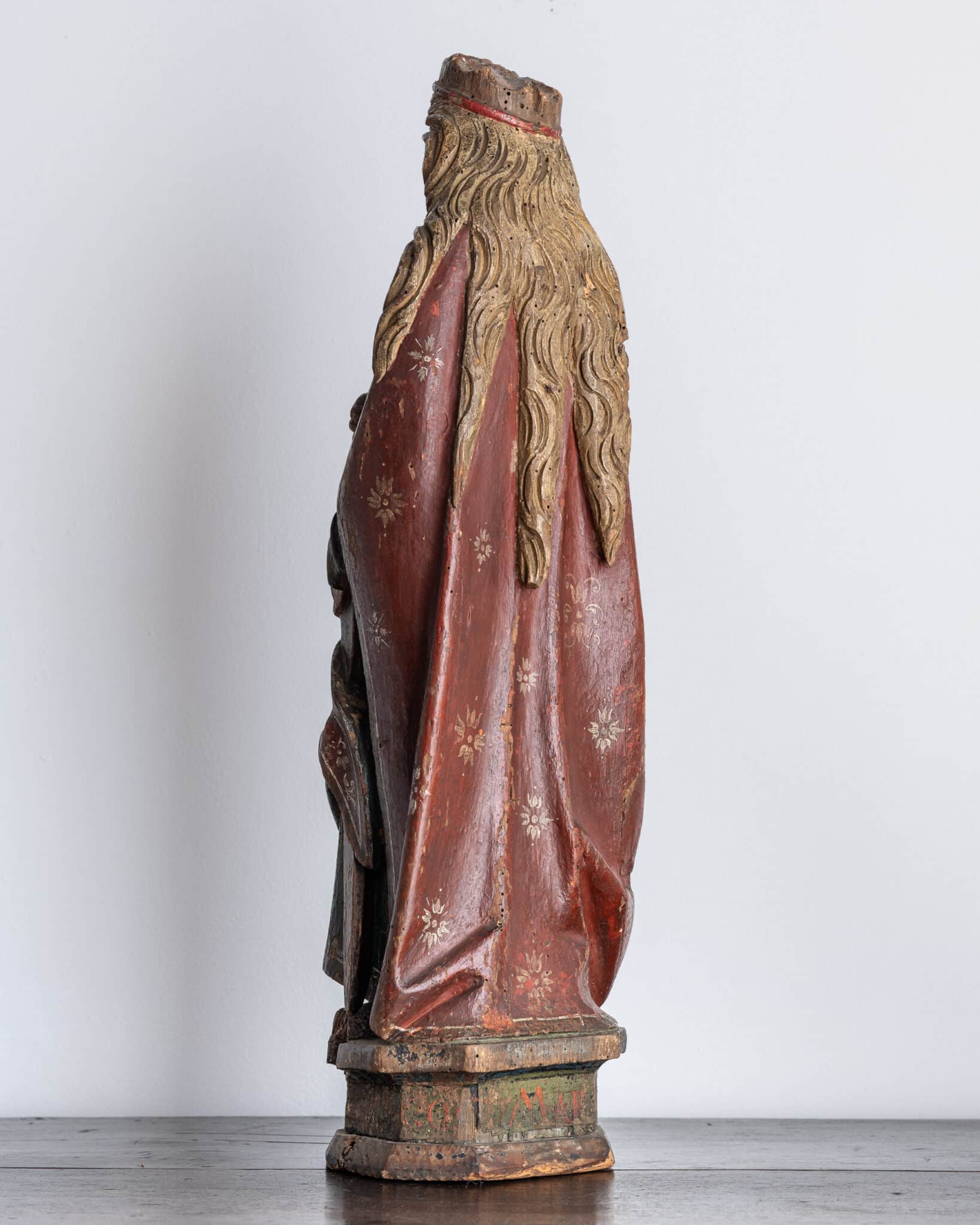
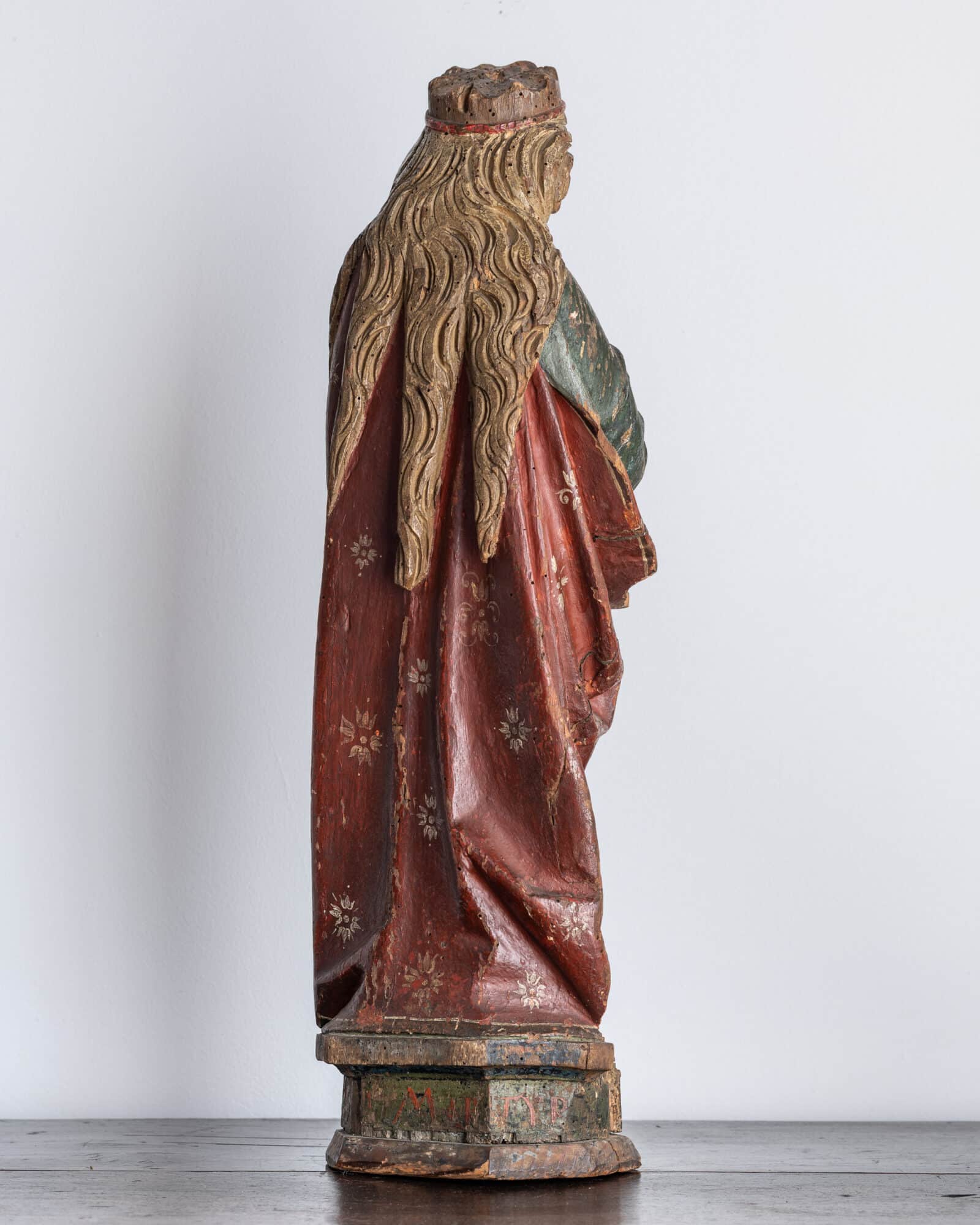
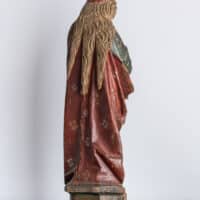
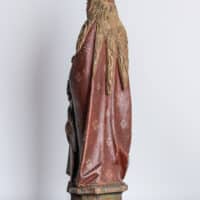
Her long, flowing hair falls in deeply carved, undulating strands over her shoulders and down her back, retaining much of its original gilding. She wears a green gown beneath a red mantle, the latter arranged in angular folds and decorated with delicate painted floral ornament. A narrow red necklace encircles her neck. The reverse is fully carved and painted, suggesting that the figure was intended to be viewed from several angles.
The sculpture retains a painted inscription around the integral pedestal, with the letters CATH visible on the front and MARTYR on the reverse, confirming the identification as Saint Catherine of Alexandria. The crown and sword are her principal attributes, the latter referring to her execution following the miraculous destruction of the wheel upon which she was condemned to be tortured.
The figure belongs stylistically to the late Gothic sculptural traditions of southern Germany, particularly those of Swabia and Bavaria, where limewood was widely employed for religious sculpture. The facial type, elaborate treatment of the hair and angular drapery are characteristic of the period circa 1490–1510, with parallels in the broader artistic environment of the Ulm workshops.
The sculpture retains extensive historic painted decoration, including gilded hair, delicately modelled flesh tones and floral ornament across the garments. The integral limewood pedestal rests upon a separate pine foundation board, approximately half an inch thick, following the outline of the base and secured from beneath with wrought-iron nails, apparently forming part of its early construction.