A Hispano-Flemish Polychrome Walnut Relief of Souls in Purgatory
- Period
- 1570 - 1600
- Origin
- Hispano-Flemish
- Dimensions
- W 9"" × H 12 1/2"" × D 2 1/4""
- Reference
- #Marh3847
£2,850
Description
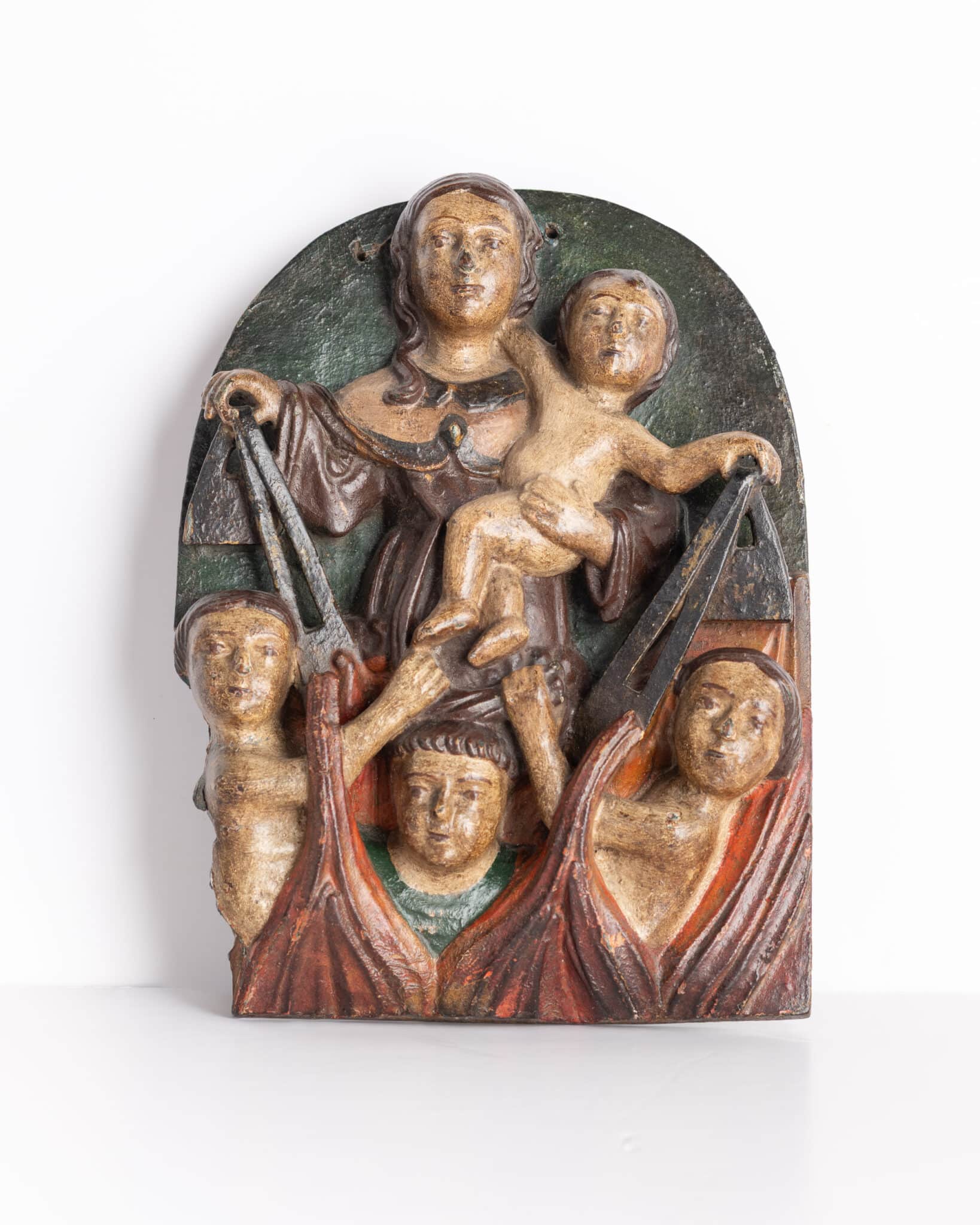
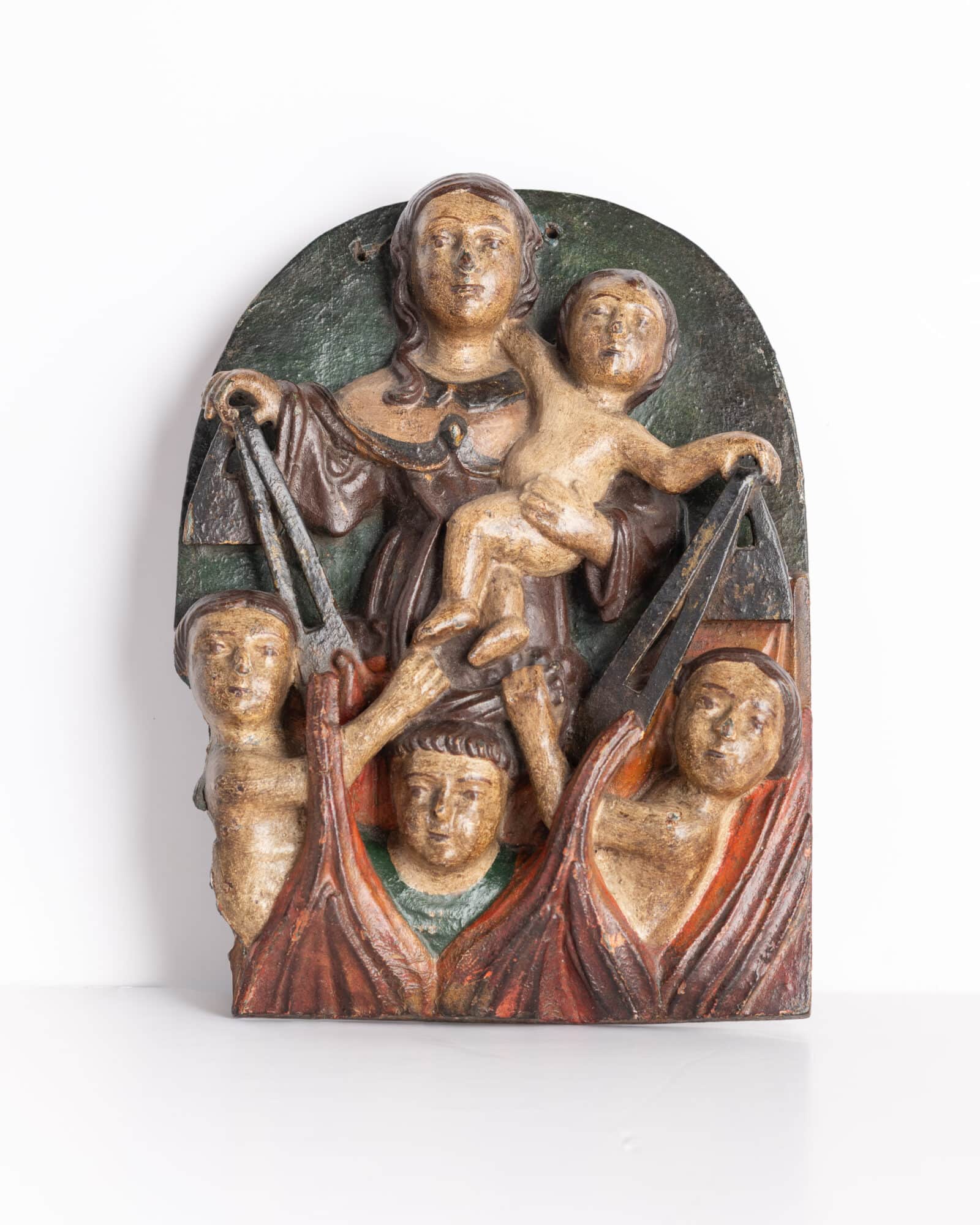
A late sixteenth-century devotional relief carved in walnut and retaining its original polychrome decoration, depicting the Virgin and Christ Child interceding for three souls in Purgatory.
The composition is arranged within an arched field, with the Virgin occupying the upper register, supporting the naked Christ Child upon her lap. Beneath them, three half-length figures emerge from the flames of Purgatory, their individualised faces directed upwards towards the heavenly figures.
Of particular iconographic interest are the two suspended rescue straps, held respectively by the Virgin and Christ Child, which descend towards the souls below. These provide a direct visual expression of divine intervention and the deliverance of souls from Purgatory. The central figure among the three souls appears to possess a clerical tonsure, suggesting the inclusion of a member of the clergy alongside the two flanking figures.
The relief retains an extensive original painted surface, with the Virgin’s deep brown and reddish draperies contrasting against the dark green background. The flesh tones are rendered in warm ochre and pale golden colours, while the flames below are articulated in red, orange and darker pigments. The carefully differentiated colouring contributes to the clarity of the composition and emphasises the separation between the heavenly figures and the souls awaiting deliverance
The relief may be considered within the Hispano-Flemish artistic tradition, reflecting the close cultural and artistic connections between Spain and the Southern Netherlands during the sixteenth century.
These relationships encouraged the circulation of religious imagery, sculptural models and craftsmen between the two regions, contributing to the development of devotional works combining northern European sculptural conventions with the expressive polychrome traditions associated with Spanish religious sculpture.
The compact arrangement of the figures, rounded facial types, strongly defined drapery and direct narrative treatment are compatible with this broader artistic context.
A date within the last quarter of the sixteenth century, circa 1570–1600, is proposed on stylistic and iconographic grounds.
The modest dimensions suggest that the relief was intended for devotional use, possibly within a domestic chapel, ecclesiastical setting or as a component of a larger religious furnishing.
The survival of its original polychromy is particularly important to the interpretation of the carving, preserving the relationship between the sculptural forms and their intended painted appearance.
The work provides an engaging example of late sixteenth-century Catholic devotional imagery, in which the doctrine of Purgatory and the intercessory role of the Virgin are expressed through an immediate and carefully structured sculptural narrative.