A Late Gothic Polychrome Limewood Sculpture of Saint Simon the Zealot
- Period
- 1490–1520
- Origin
- South German or Upper Rhine
- Dimensions
- W 5 1/2"" × H 18" (including new base 20")" × D 3""
- Reference
- #Marh3874
£4,850
Description
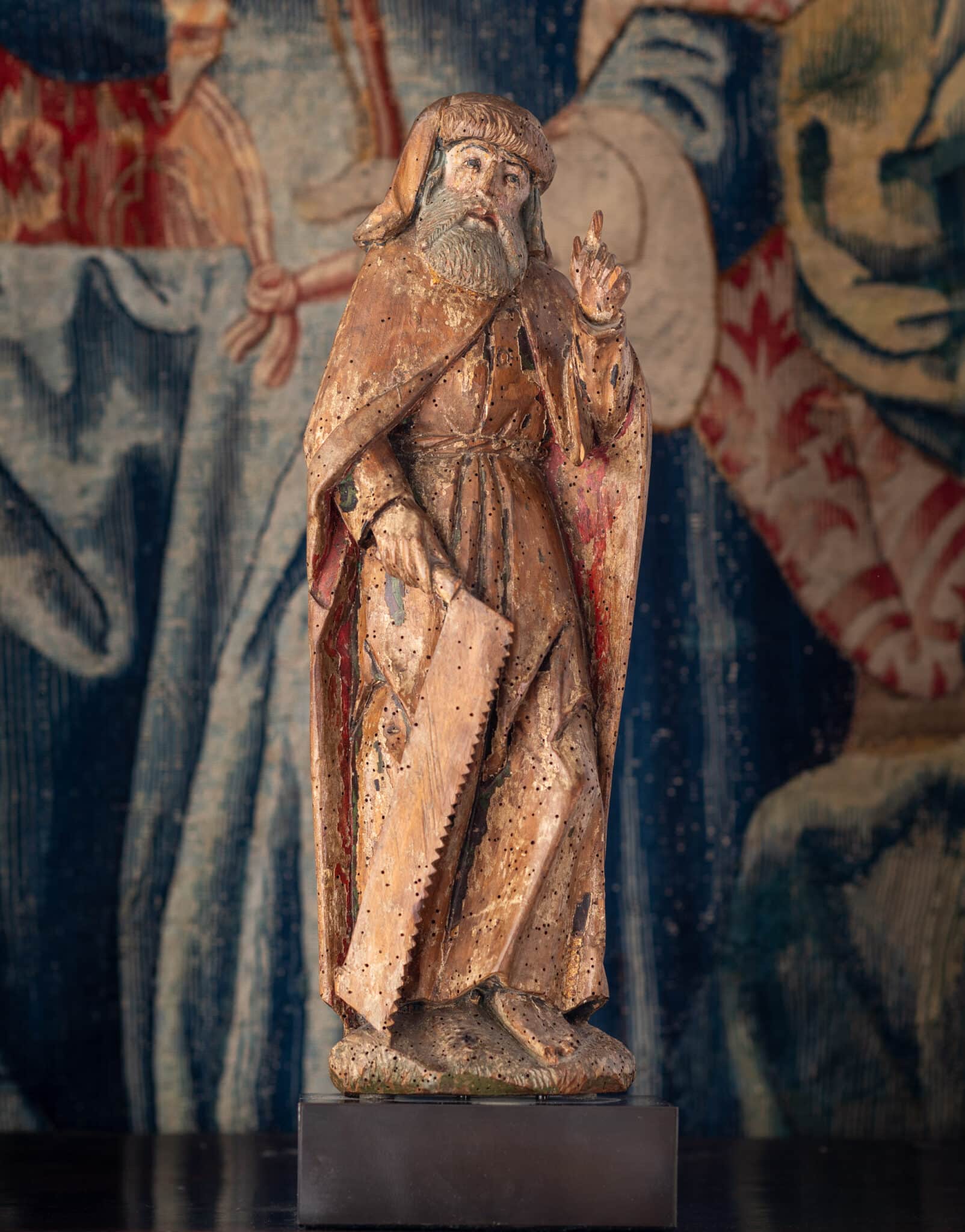
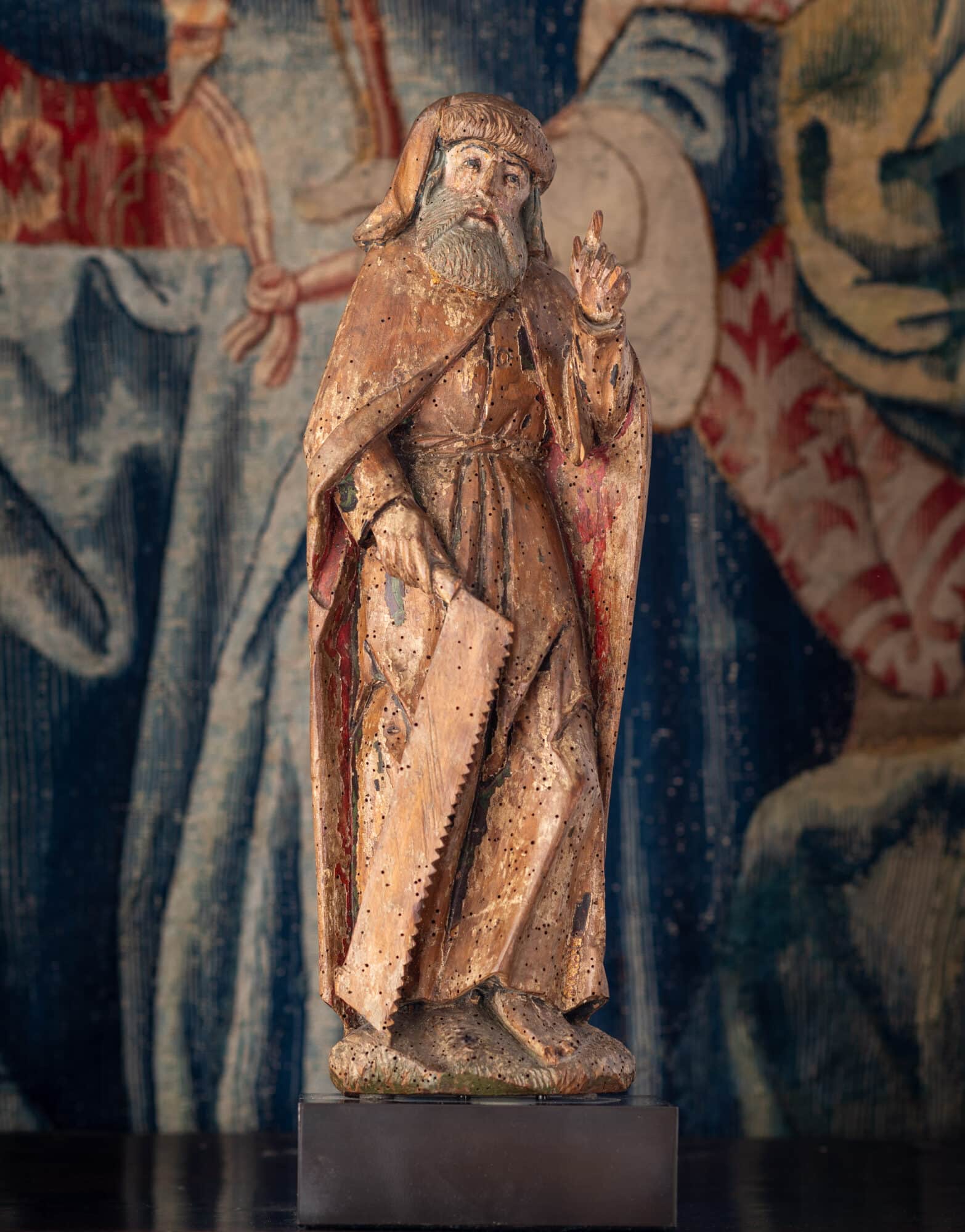
A late Gothic carved and polychromed figure representing Saint Simon the Zealot, one of the Twelve Apostles, depicted standing in a long, belted tunic beneath a generously draped mantle. The saint holds his traditional attribute, a large saw, in his right hand, while his left is raised in a gesture of instruction, the index finger extended.
The sculpture displays characteristics associated with the late Gothic woodcarving traditions of southern Germany and the Upper Rhine during the closing decades of the fifteenth century and the opening years of the sixteenth. The elongated proportions, restrained frontal stance and angular arrangement of the garments reflect the established sculptural vocabulary of this period.
Particularly distinctive is the treatment of the head, with its rounded cap, closely worked fringe and long, carefully delineated beard. The facial features are sensitively modelled, with a prominent nose, deeply defined eyes and a contemplative expression. The individual locks of the beard are articulated through closely spaced incisions, contrasting with the broader, more simplified treatment of the surrounding garments.
The mantle falls diagonally across the chest before descending in long, sharply defined folds, while the tunic is gathered at the waist and arranged in a succession of angular pleats. The pronounced linear treatment of the drapery, particularly around the lower body, is characteristic of the late Gothic preference for expressive, structured folds.
The figure retains extensive remains of historic polychromy, including flesh tones to the face, blue-grey colouring to the beard, red decoration within the mantle and areas of gilded or ochre-coloured finish across the garments. These surviving painted surfaces contribute considerably to an understanding of the sculpture’s original appearance, when the relationship between carving and colour would have formed an integral part of its devotional function.
The reverse is broadly flattened and retains substantial evidence of the original working of the timber, including vertical cutting marks and areas of unfinished surface. This treatment suggests that the sculpture was intended principally for frontal viewing, possibly within an architectural framework or as part of a larger ecclesiastical ensemble.