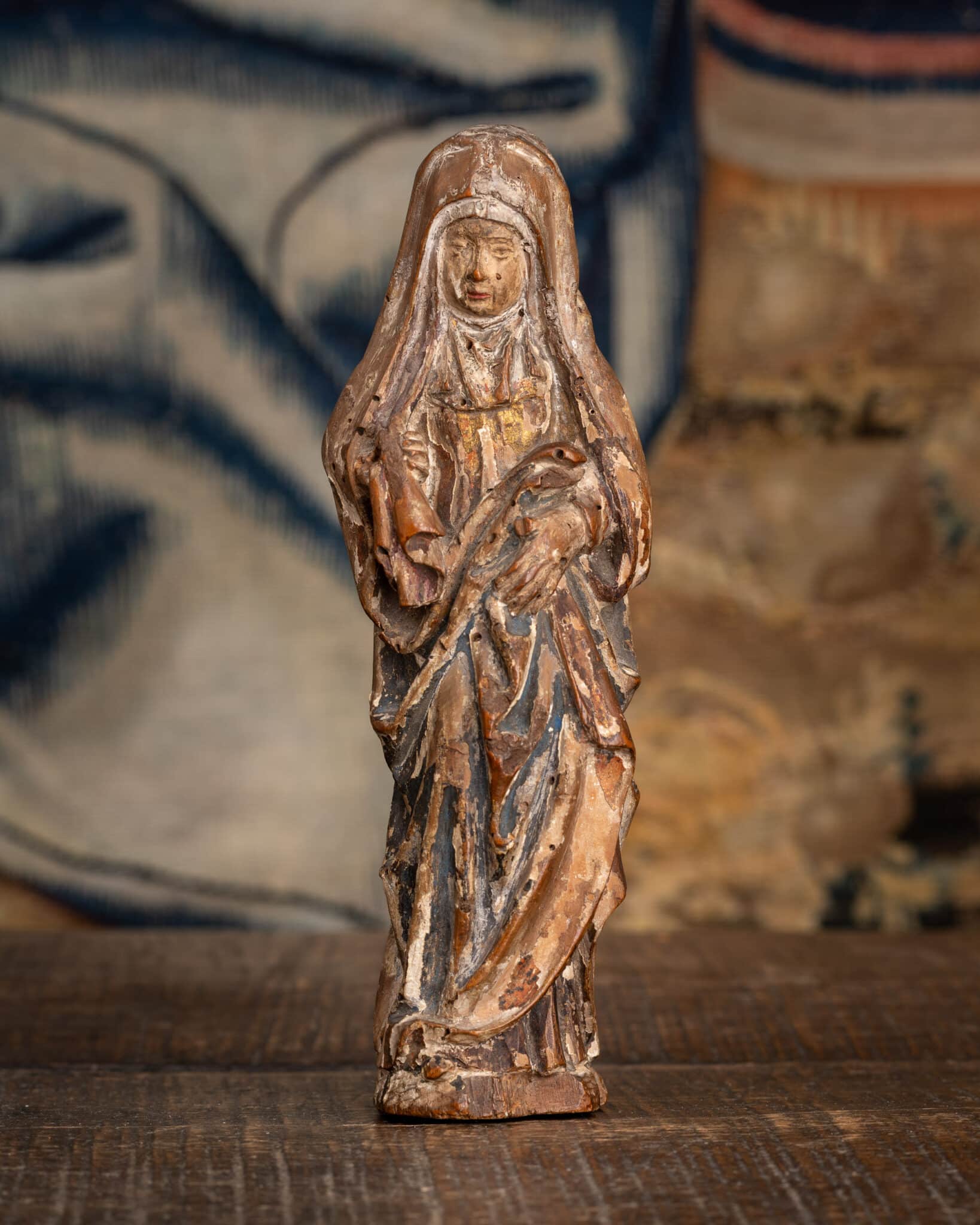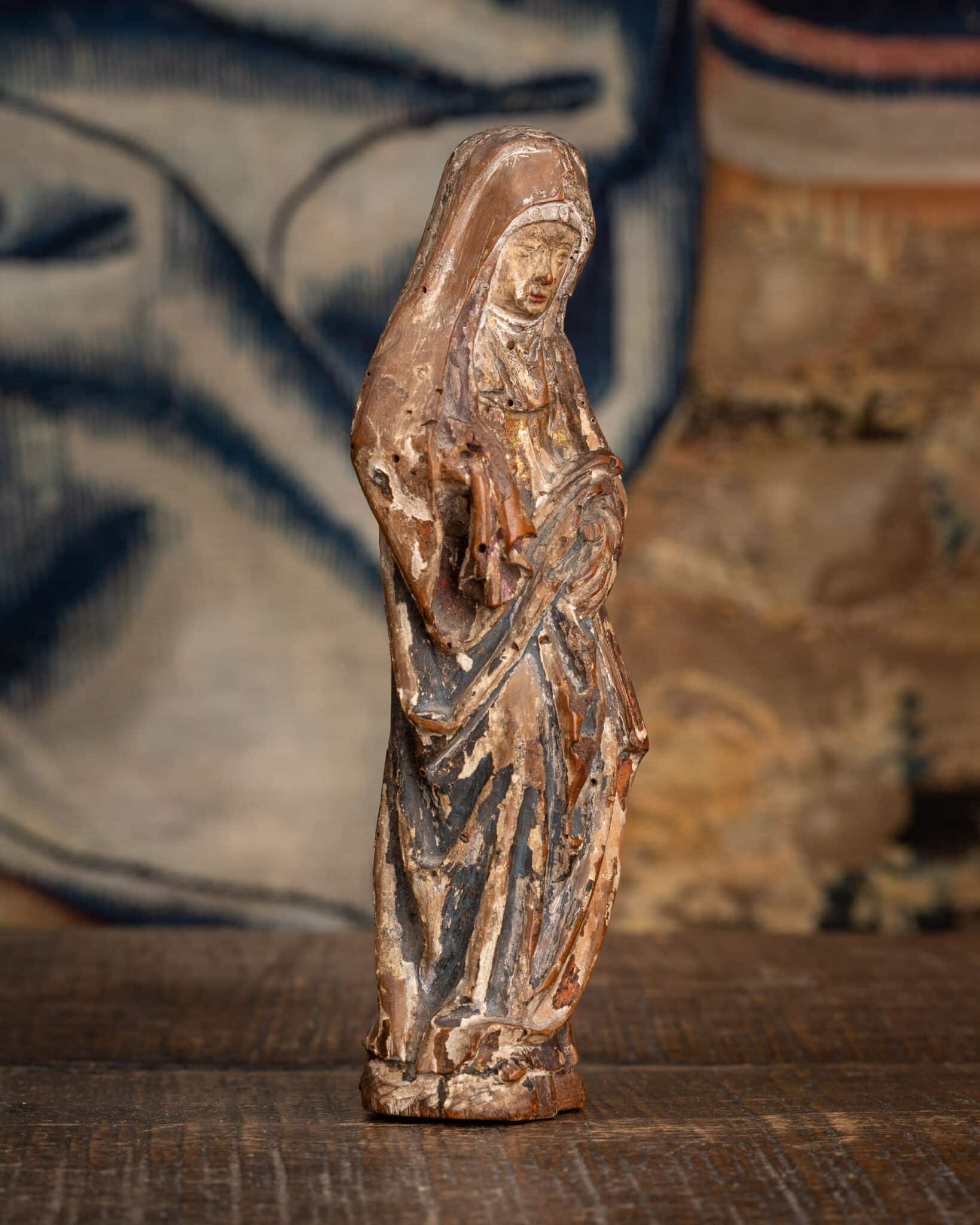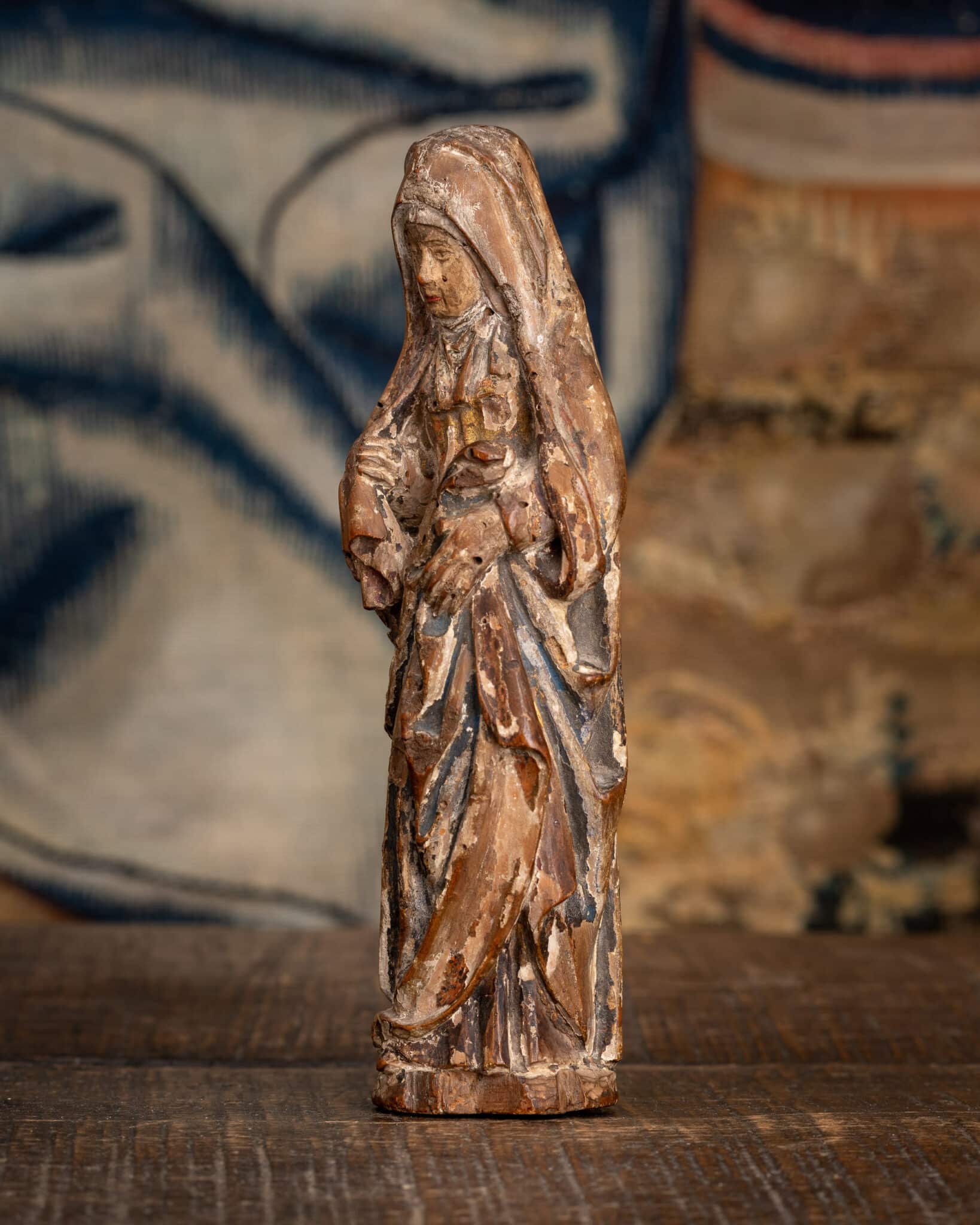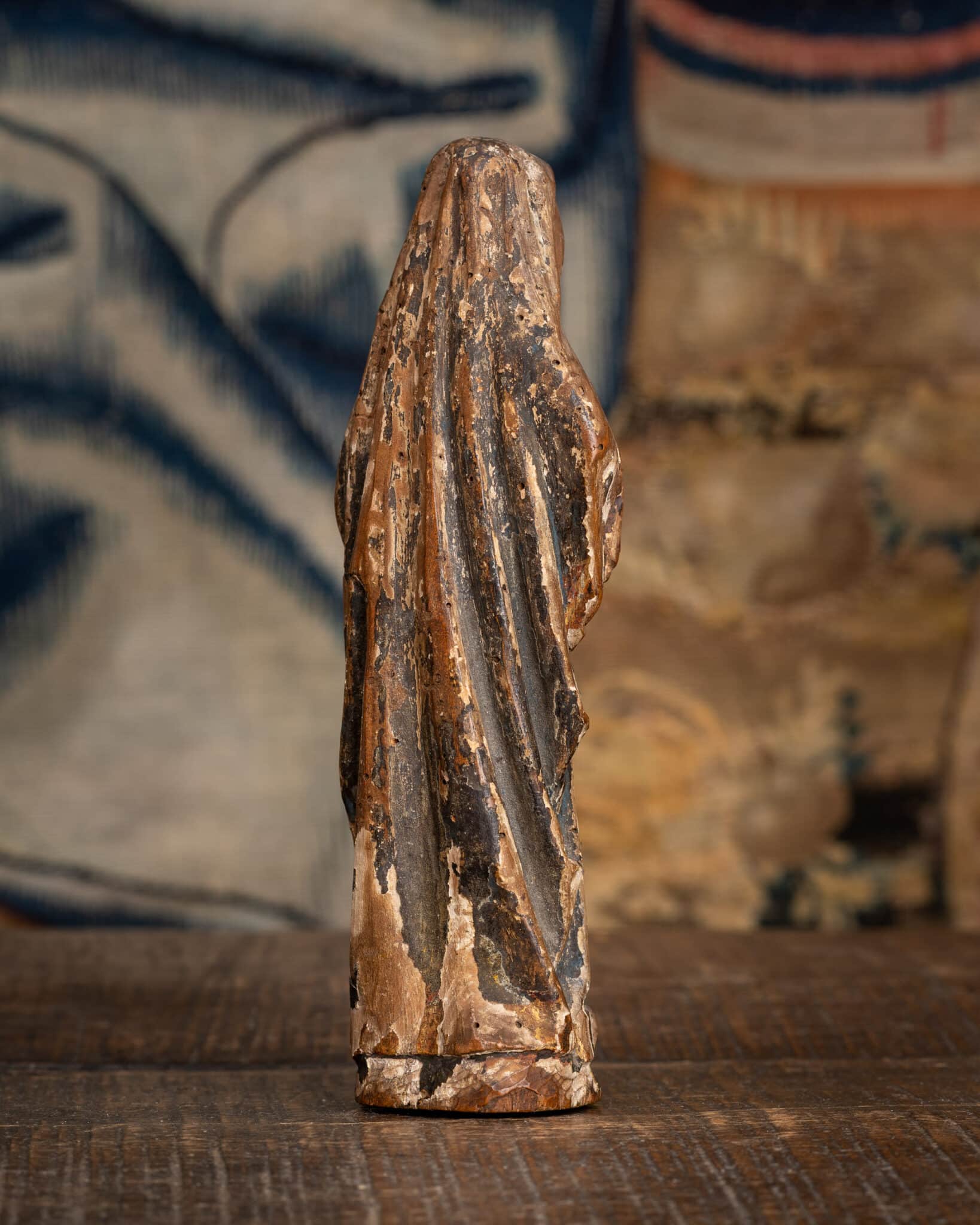
A Miniature Late Gothic Polychromed Sculpture of the Mourning Virgin
- Period
- Circa 1490–1520
- Origin
- South German, possibly Swabian or Franconian
- Dimensions
- W 2 3/4"" × H 7 5/8"" × D 1 3/4""
- Reference
- #Marh3840
£4,850
Description
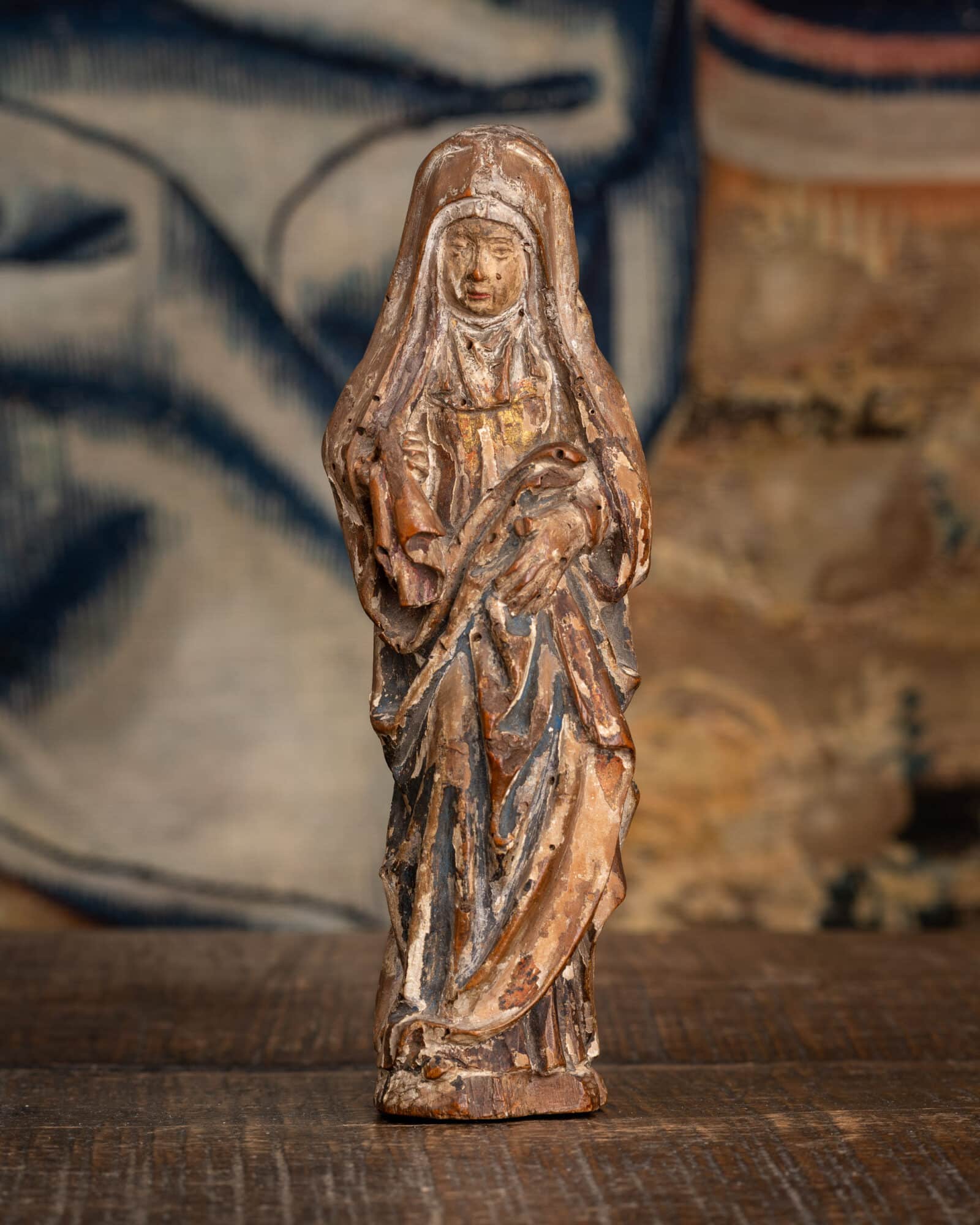
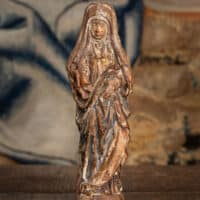
A finely carved miniature late Gothic sculpture of a standing female figure, probably representing the Virgin Mary in mourning, executed in limewood with surviving polychromy.
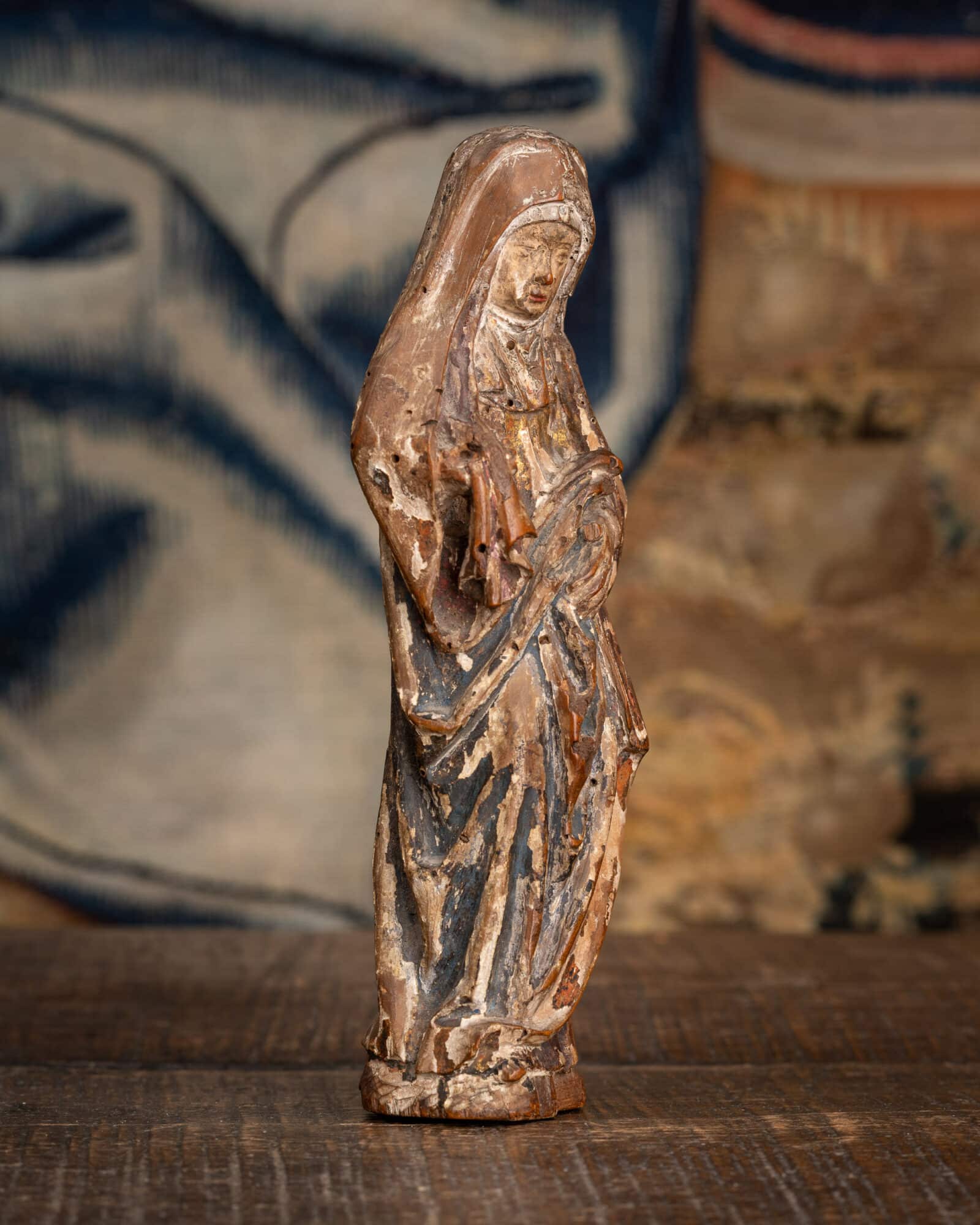
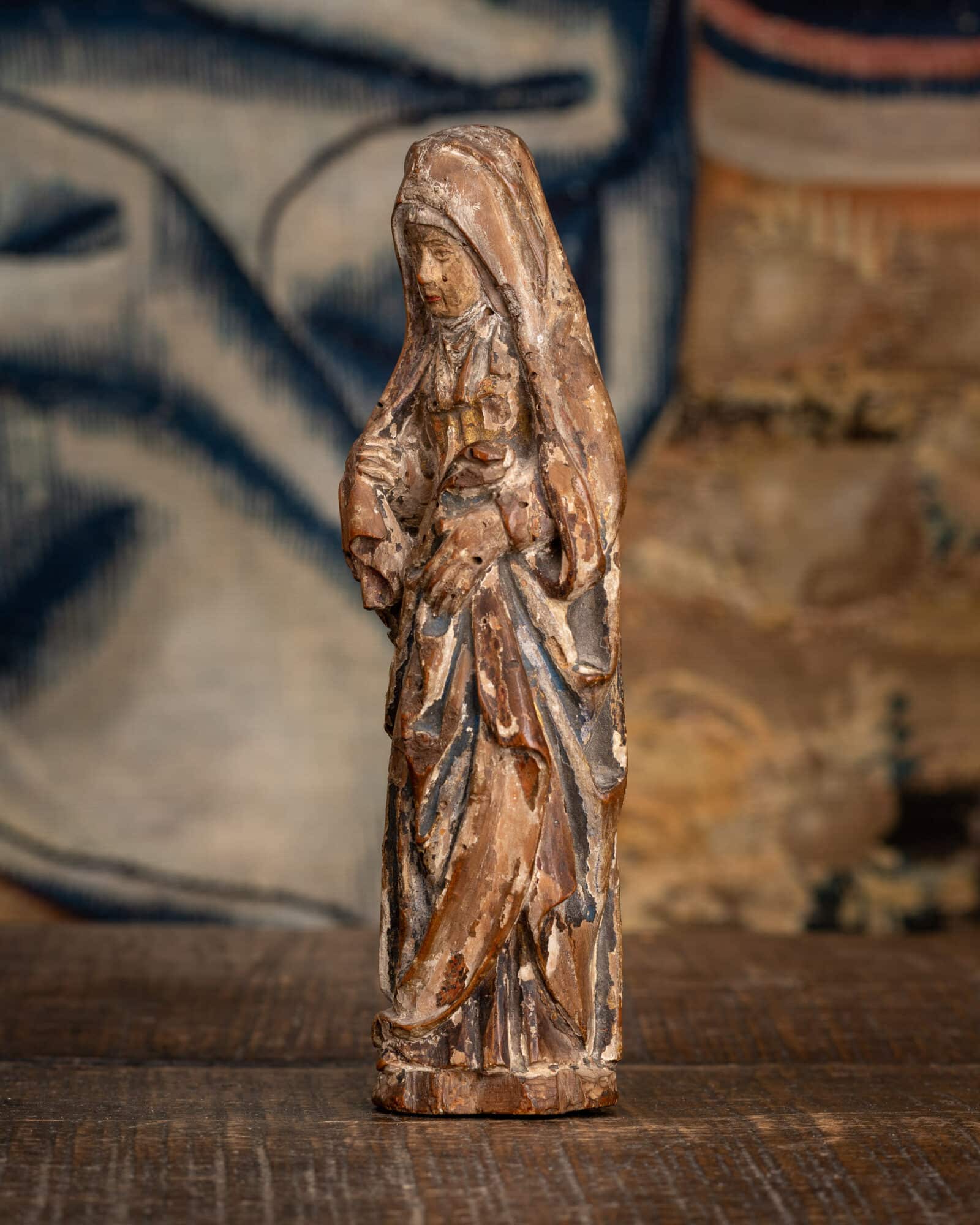
The Virgin is depicted standing in a restrained and contemplative attitude, her head gently inclined downwards and her expression characterised by a quiet solemnity. Her hair is concealed beneath a closely fitted headdress and a long veil, which descends over her shoulders and merges into the folds of her outer mantle.
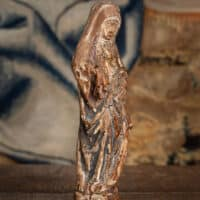
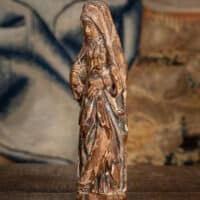
Both hands are brought together before her body, gathering the fabric of her gown in a carefully observed and naturalistic gesture. The resulting arrangement of drapery forms a complex succession of diagonal, angular and overlapping folds, contrasting with the more vertical disposition of the mantle towards the lower part of the figure.
Particular attention has been given to the modelling of the face, with its delicately defined features, lowered eyes and softly articulated mouth. Despite the sculpture’s diminutive proportions, the treatment of the head, hands and garments demonstrates considerable technical accomplishment and an understanding of the expressive possibilities of late Gothic woodcarving.
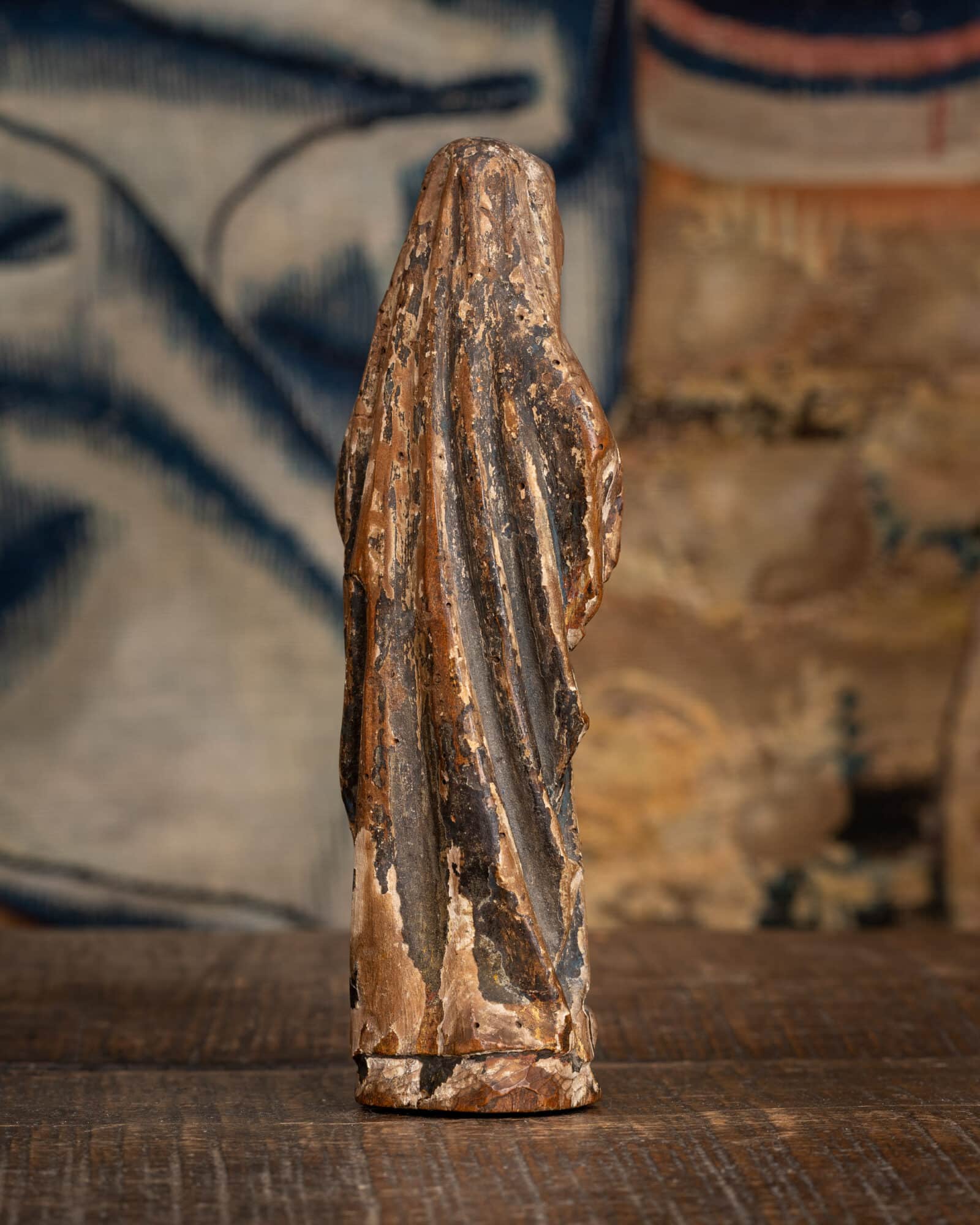
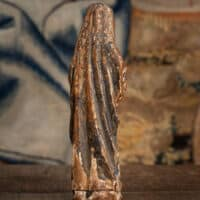
The surviving polychromy contributes to the modelling of the figure, with traces of colour remaining across the garments and flesh surfaces. The reverse is also carved, with the folds of the mantle continuing around the body, indicating that the sculptor considered the figure as a three-dimensional composition rather than simply a frontal relief
The sculpture belongs stylistically to the late Gothic tradition of woodcarving that flourished in southern Germany during the decades surrounding 1500.
The closely observed facial features, slender proportions and sharply articulated drapery are characteristic of sculptural production in regions such as Swabia and Franconia, where limewood was extensively employed for both monumental altarpieces and smaller devotional figures.
The angular arrangement of the folds, particularly where the gown is gathered across the front of the body, reflects the late Gothic preference for expressive and rhythmically organised drapery. This treatment creates movement within an otherwise composed and essentially static figure.
The restrained facial expression and carefully controlled modelling also correspond with developments in German sculpture during the final decades of the fifteenth century, when artists increasingly combined the formal conventions of Gothic carving with a more sensitive observation of human expression.