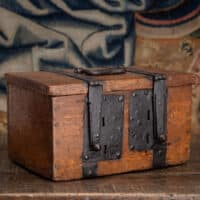
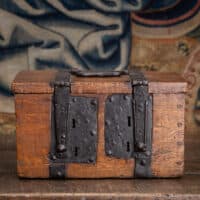
A Tudor Oak and Wrought-Iron Security Coffer with Four Keyholes
- Period
- Circa 1530–1550
- Origin
- England, possibly London or East Anglia
- Dimensions
- W 12 1/2"" × H 7 1/4"" × D 8 3/4""
- Reference
- #Marh3841
£7,250
Description
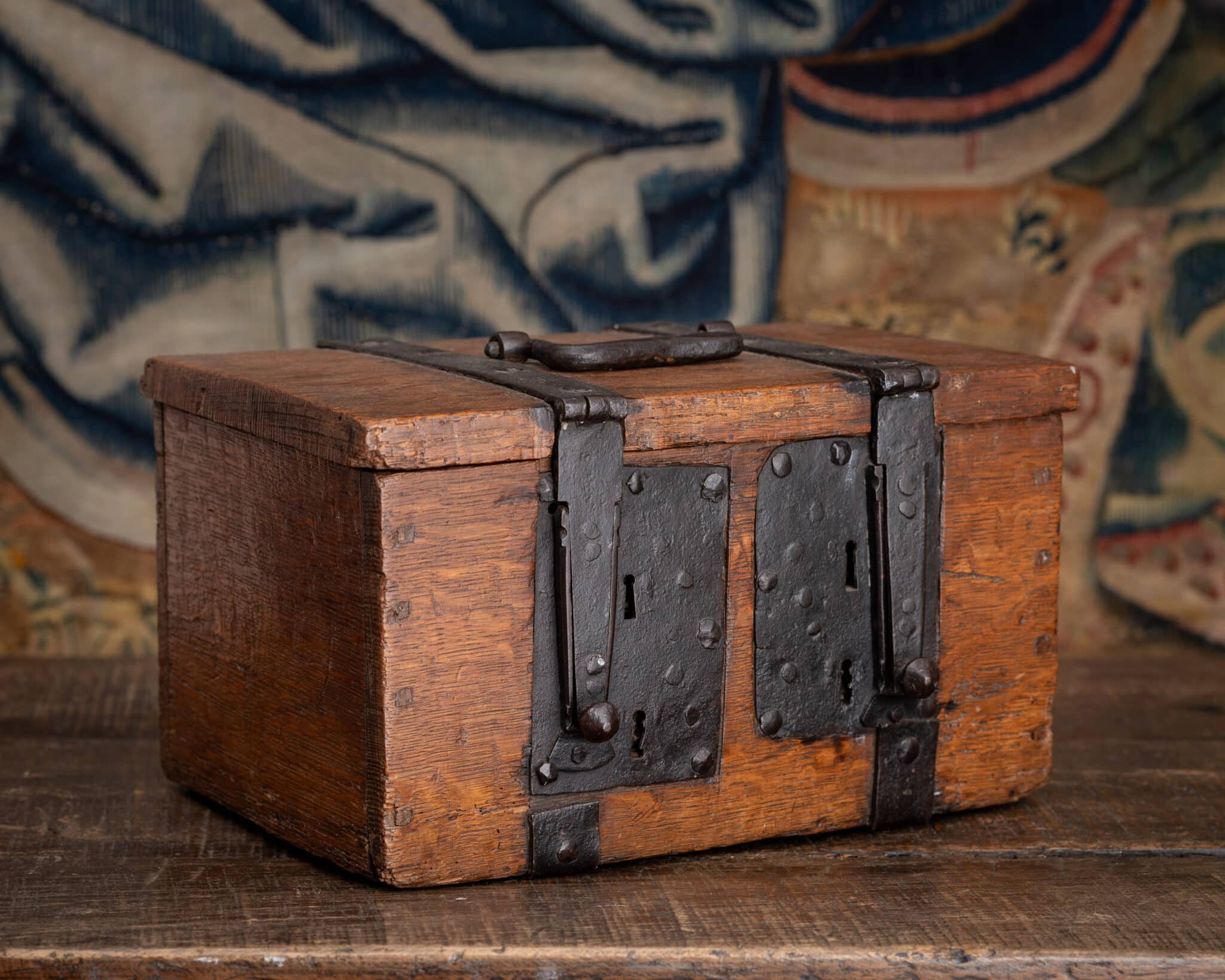
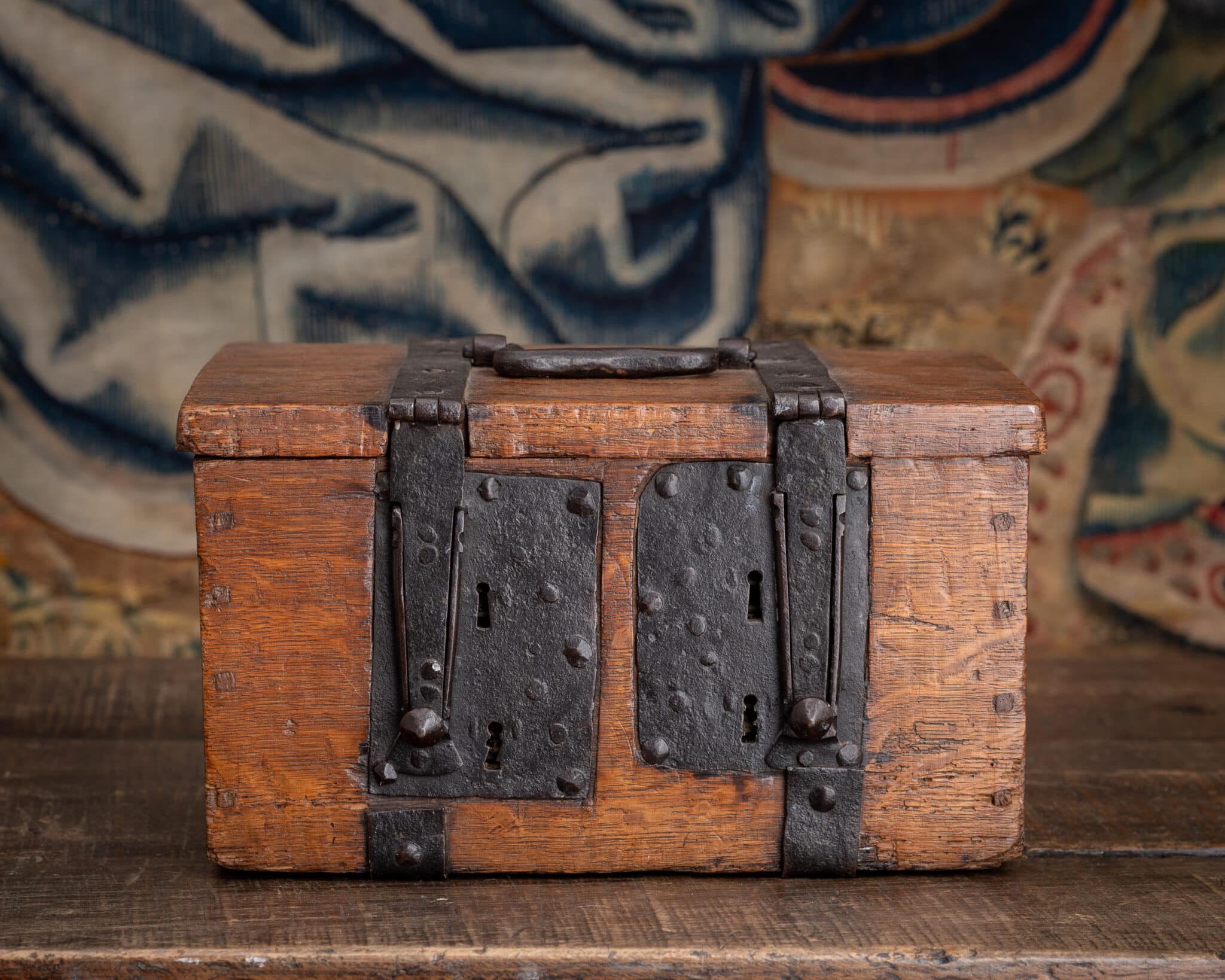
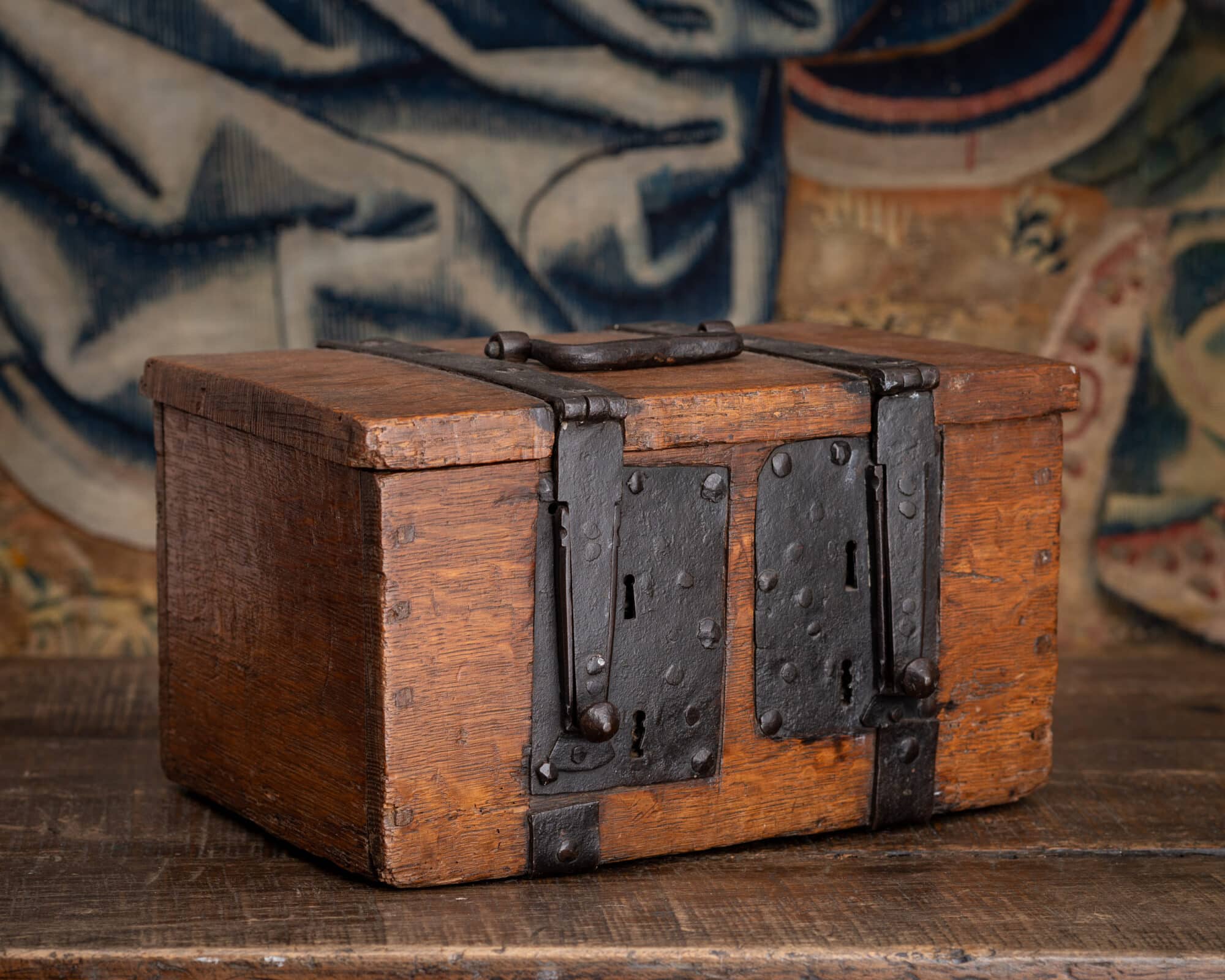
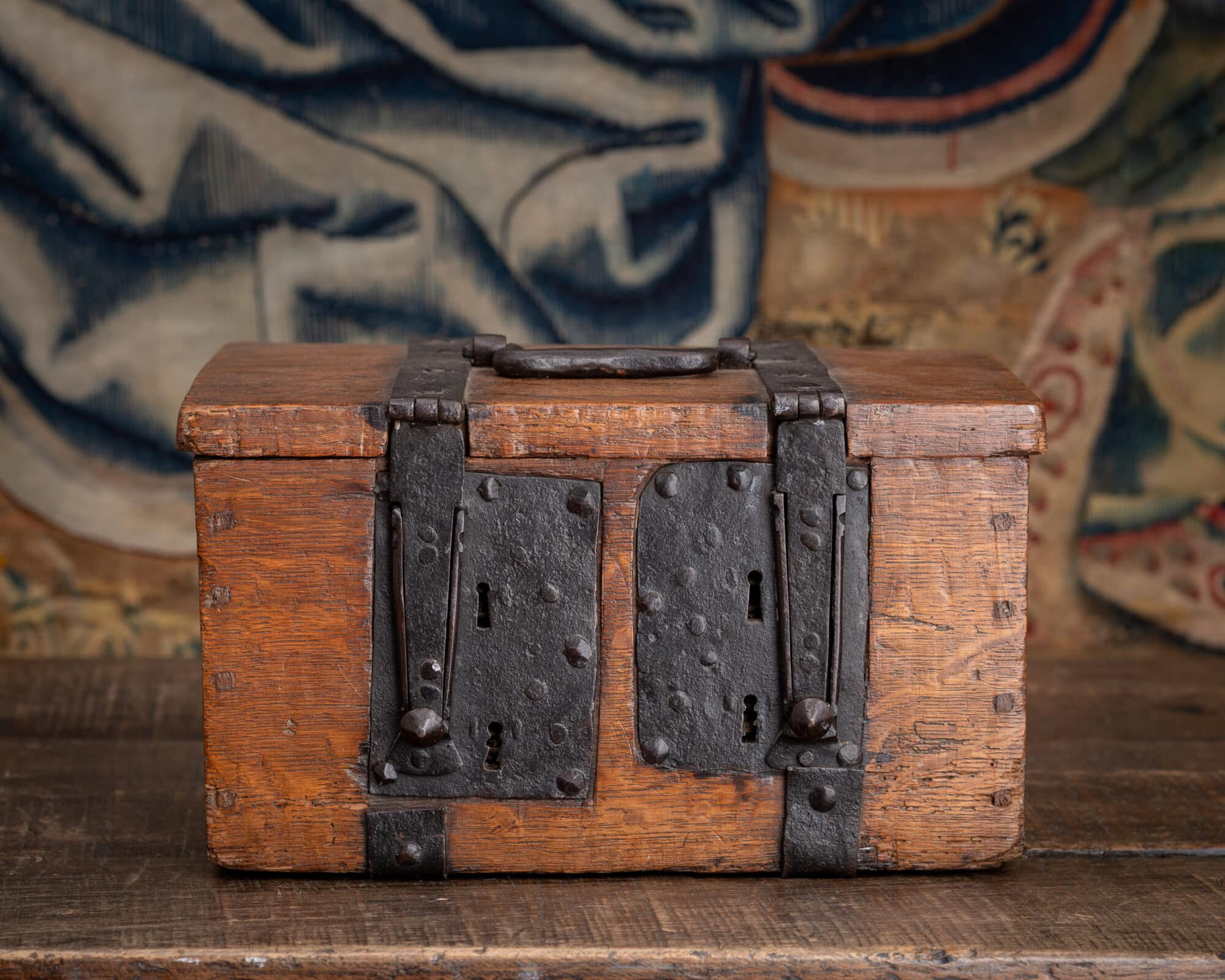
An exceptionally interesting and unusually small Tudor oak security coffer, constructed from imported Baltic timber and retaining its original wrought-iron fittings, including two substantial lockplates, each incorporating two separate keyholes, together with a carrying handle mounted centrally upon the lid.
Of particularly restrained and functional construction, the coffer is devoid of carved ornament or unnecessary embellishment. Its character is instead defined by the substantial ironwork and unusually elaborate provision for security. The interior is entirely plain, suggesting a practical purpose associated with the safekeeping of money, documents, valuables or other possessions requiring restricted access.
The arrangement of the locking mechanisms is especially noteworthy. Although there are only two principal lockplates, each is pierced with two keyholes, providing four separate points of key operation. The original keys are no longer present, and the precise operation of the mechanisms remains to be established. Nevertheless, the provision for multiple keys suggests an unusually sophisticated approach to security, potentially intended to regulate access between several individuals.
Such arrangements were particularly appropriate within ecclesiastical, institutional and administrative settings, where valuable property might be held collectively rather than entrusted to a single custodian.
The small dimensions and centrally mounted carrying handle further distinguish this example from the more familiar substantial parish chests and domestic storage furniture of the period. Its construction suggests an object designed to be both secure and portable
The Reformation and the Security of Ecclesiastical Property
The proposed dating of this coffer places it within one of the most significant periods of religious and administrative change in English history: the Henrician Reformation and the dissolution of the monasteries between 1536 and 1540.
During these years, the administration, recording and safeguarding of ecclesiastical property underwent substantial reorganisation. Religious institutions, parish churches and royal administrators were responsible for valuable objects, financial resources and documentary records, frequently requiring secure storage.
Of particular relevance are the royal injunctions issued in September 1538 by Thomas Cromwell, acting as Henry VIII’s vicegerent in spiritual matters.
These injunctions required every parish to maintain written registers of baptisms, marriages and burials. The registers were to be preserved within a secure chest or coffer fitted with two locks and keys, one held by the parish priest and the other by the churchwardens.
The injunction stated:
“one sure coffer with two locks and keys, whereof the one to remain with you and the other with the wardens of every parish”
This provision established a system of divided responsibility, preventing unrestricted access by any single custodian.
Although the present example differs from the prescribed arrangement by incorporating four keyholes across its two lockplates, it illustrates a comparable concern with the physical security of important possessions and the regulation of access.
It is tempting to consider whether such an unusually elaborate locking arrangement might have served an ecclesiastical or administrative purpose during this period of religious upheaval. However, in the absence of documentary provenance, a direct association with the Dissolution or the injunctions of 1538 cannot be established.
The possibility nevertheless provides a historically appropriate context in which to consider the object’s unusual construction.