A Romanesque Polychrome Oak Figure of the Virgin and Child
- Period
- 12th century
- Origin
- Western Europe
- Dimensions
- W 5 1/4"" × H 19 3/4"" × D 3 1/2""
- Reference
- #Marh3862
Price on application
Description
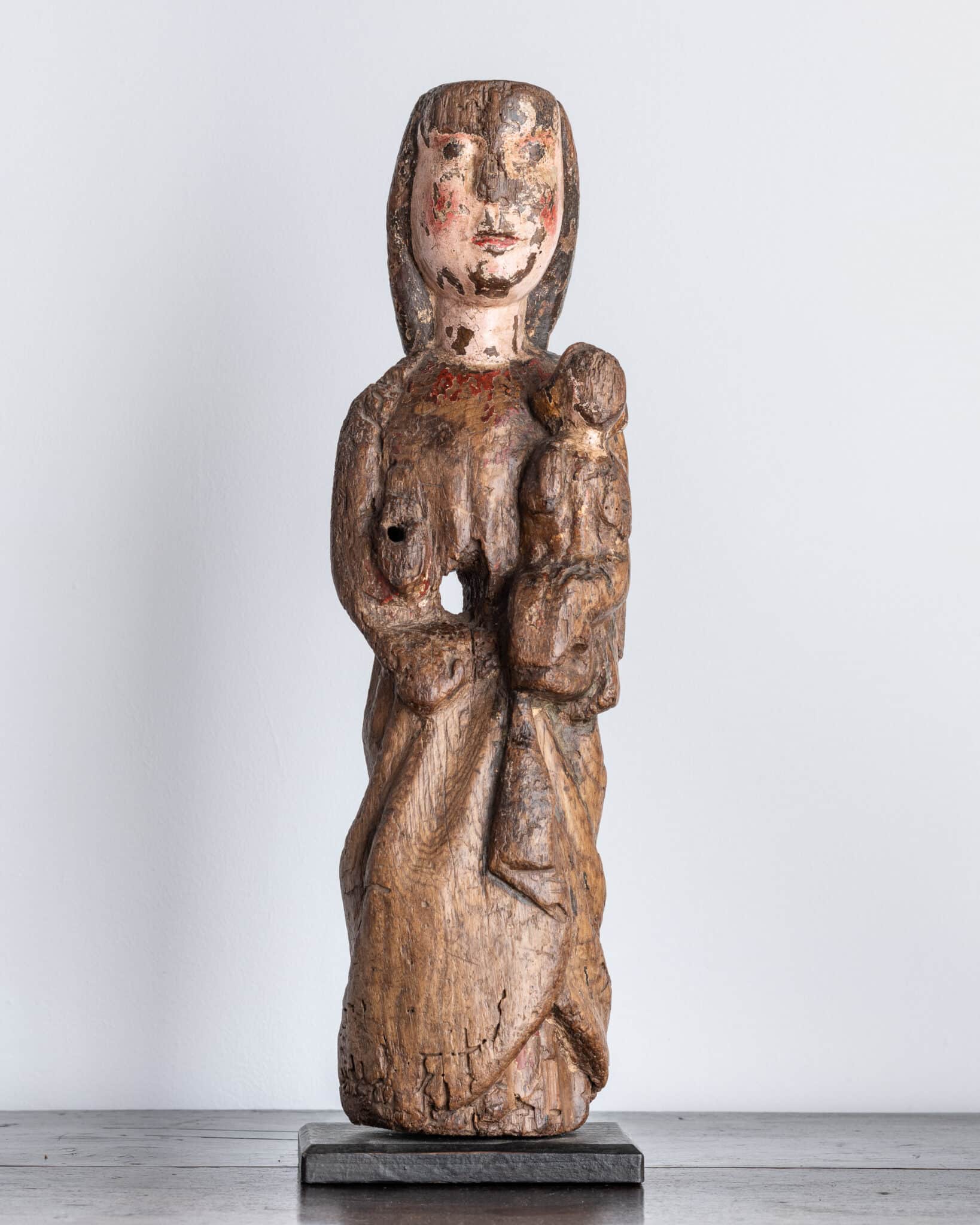
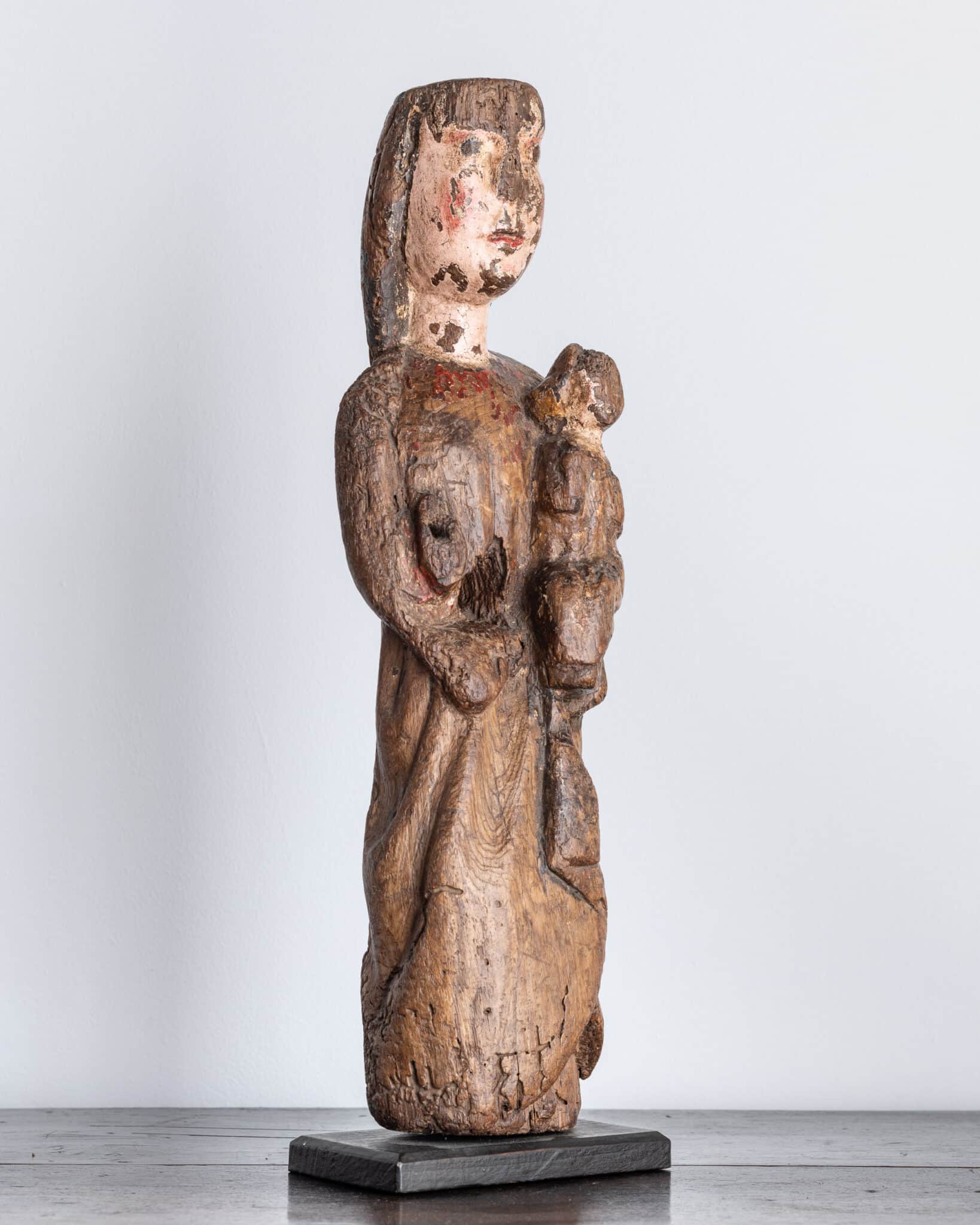
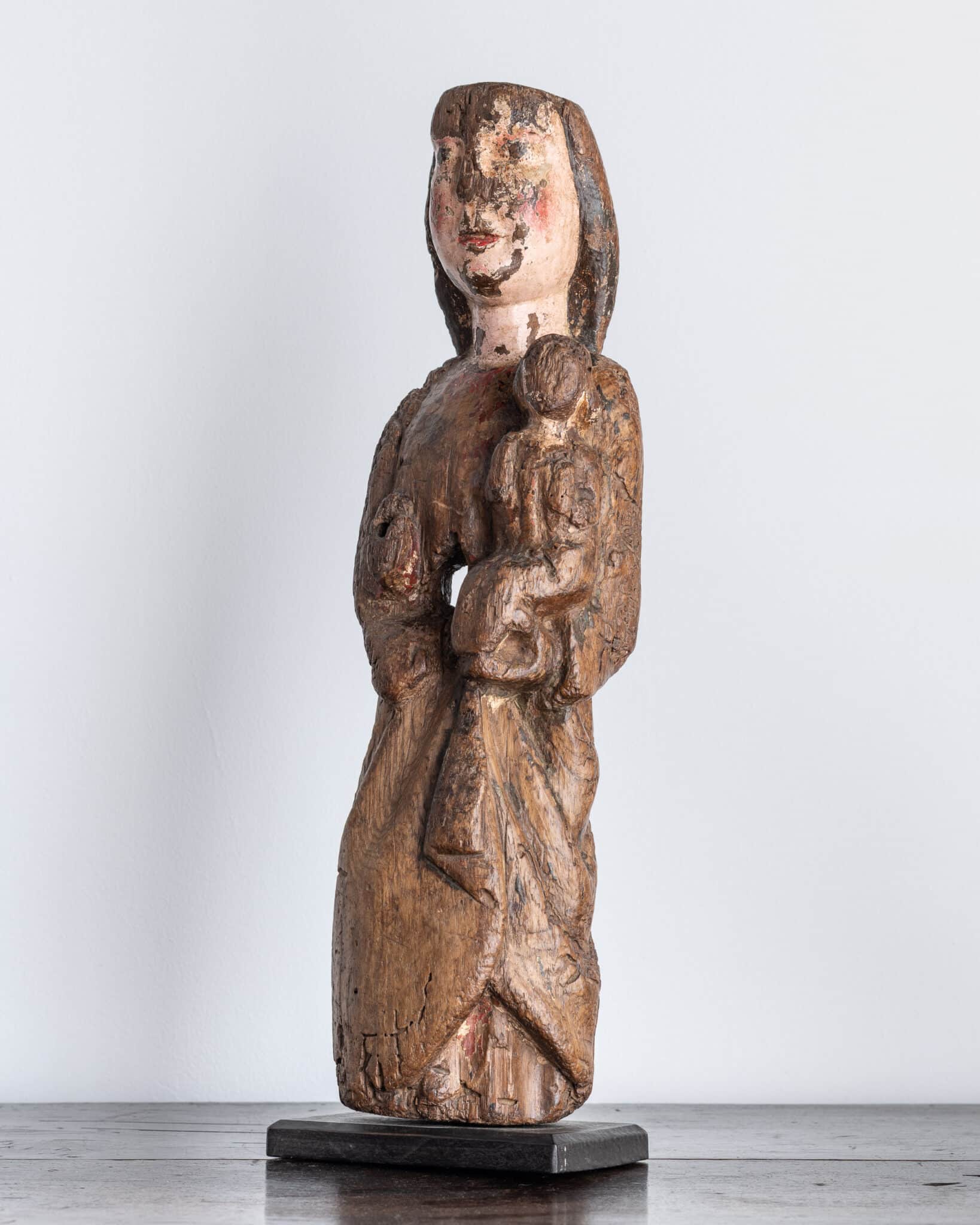
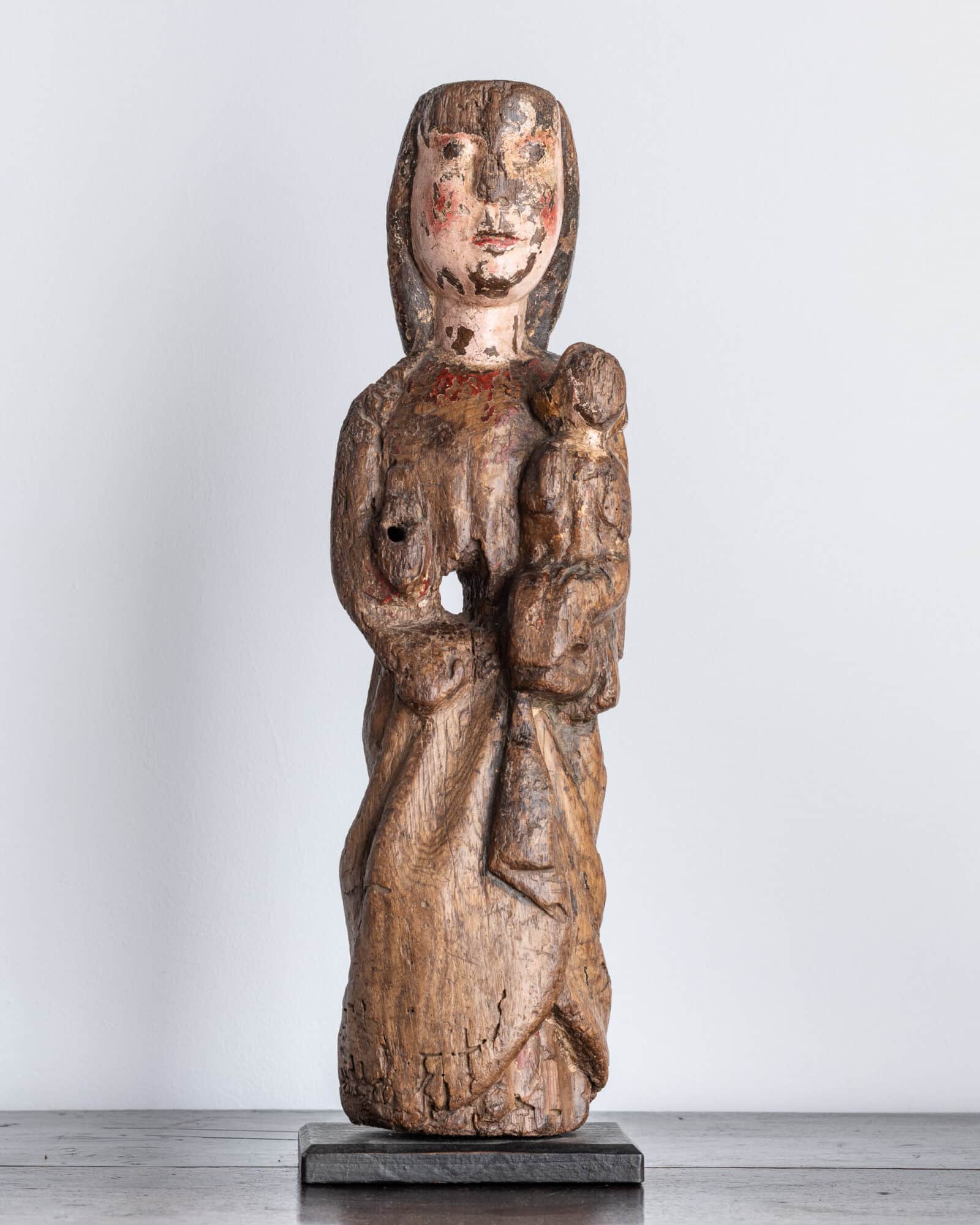
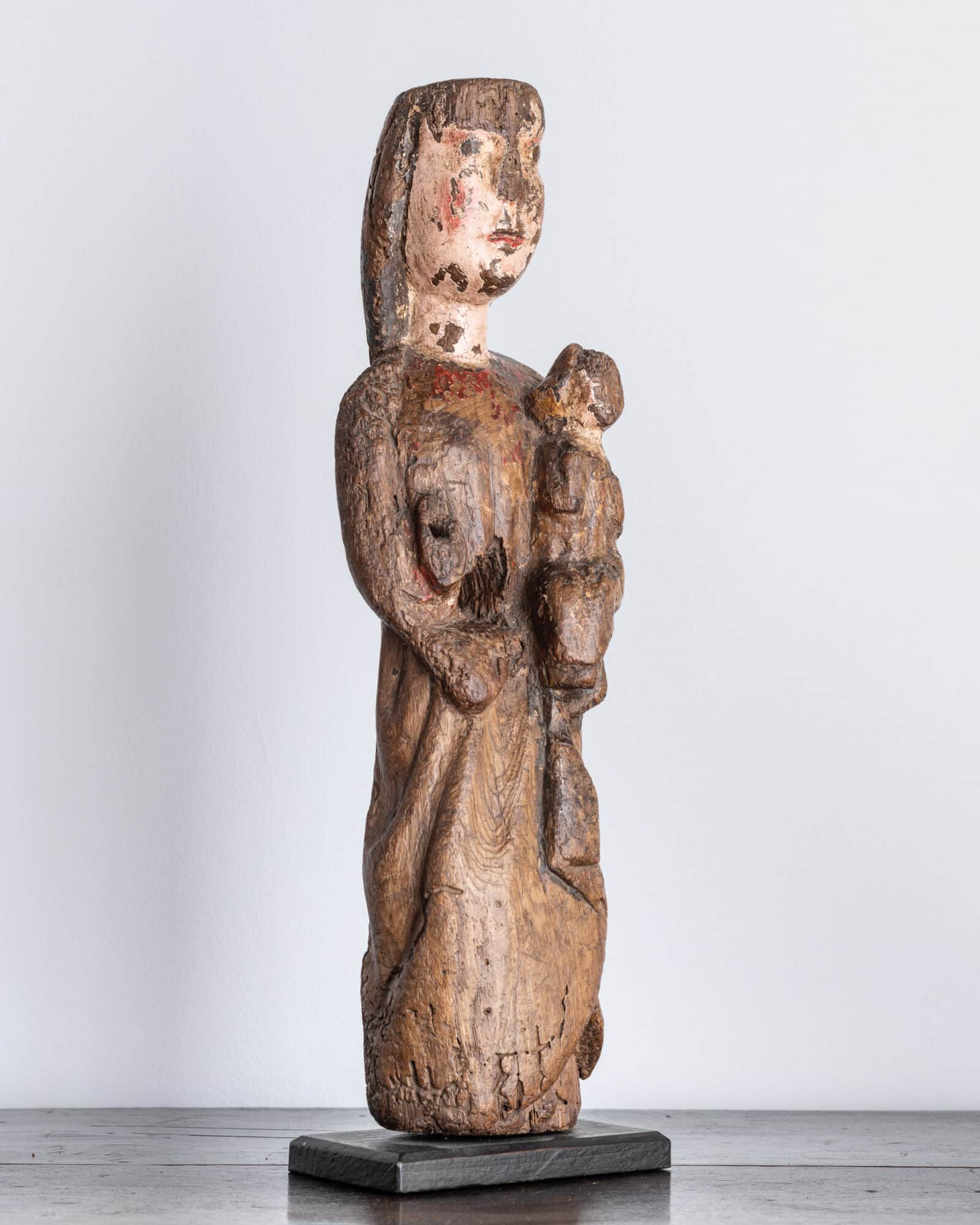
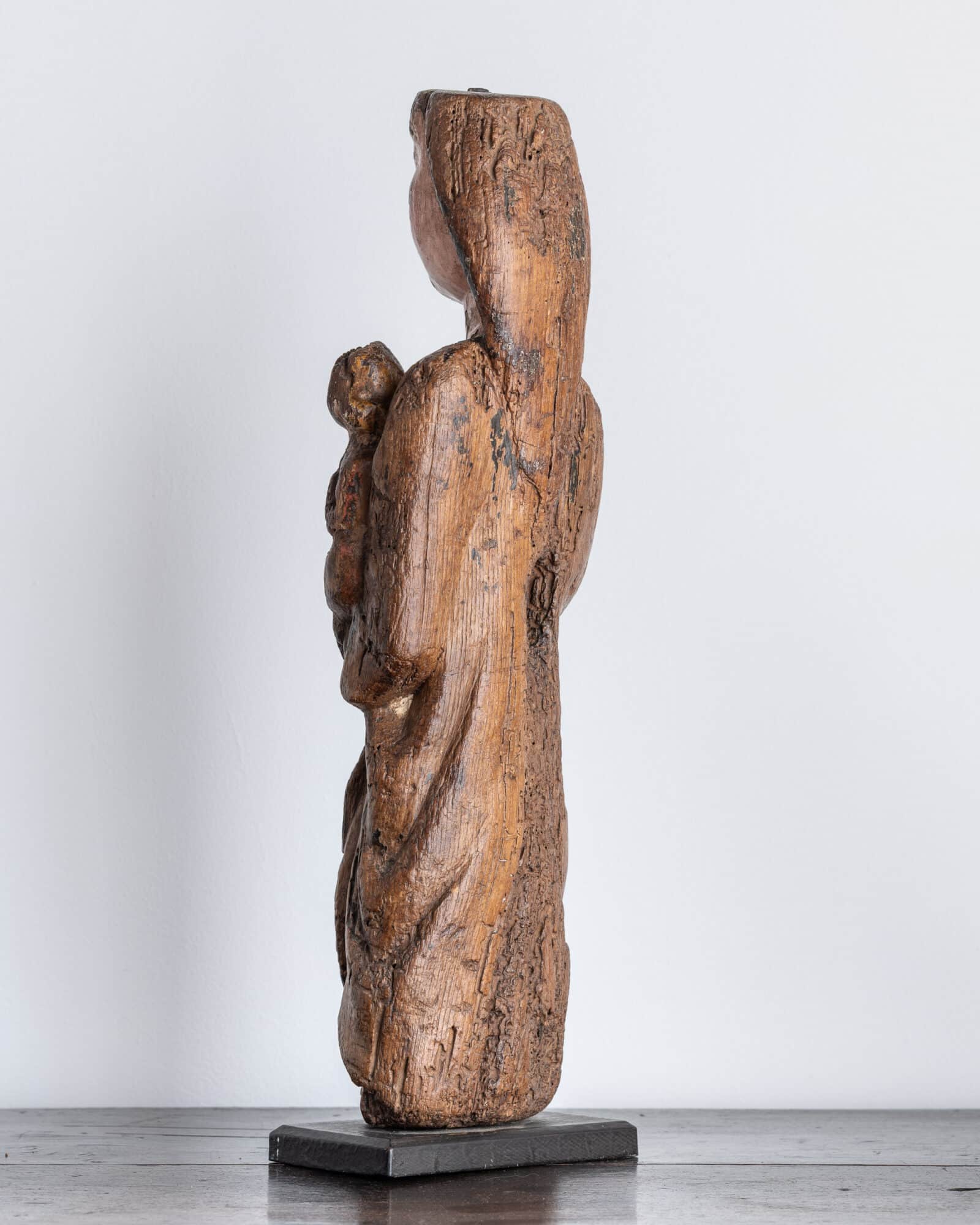
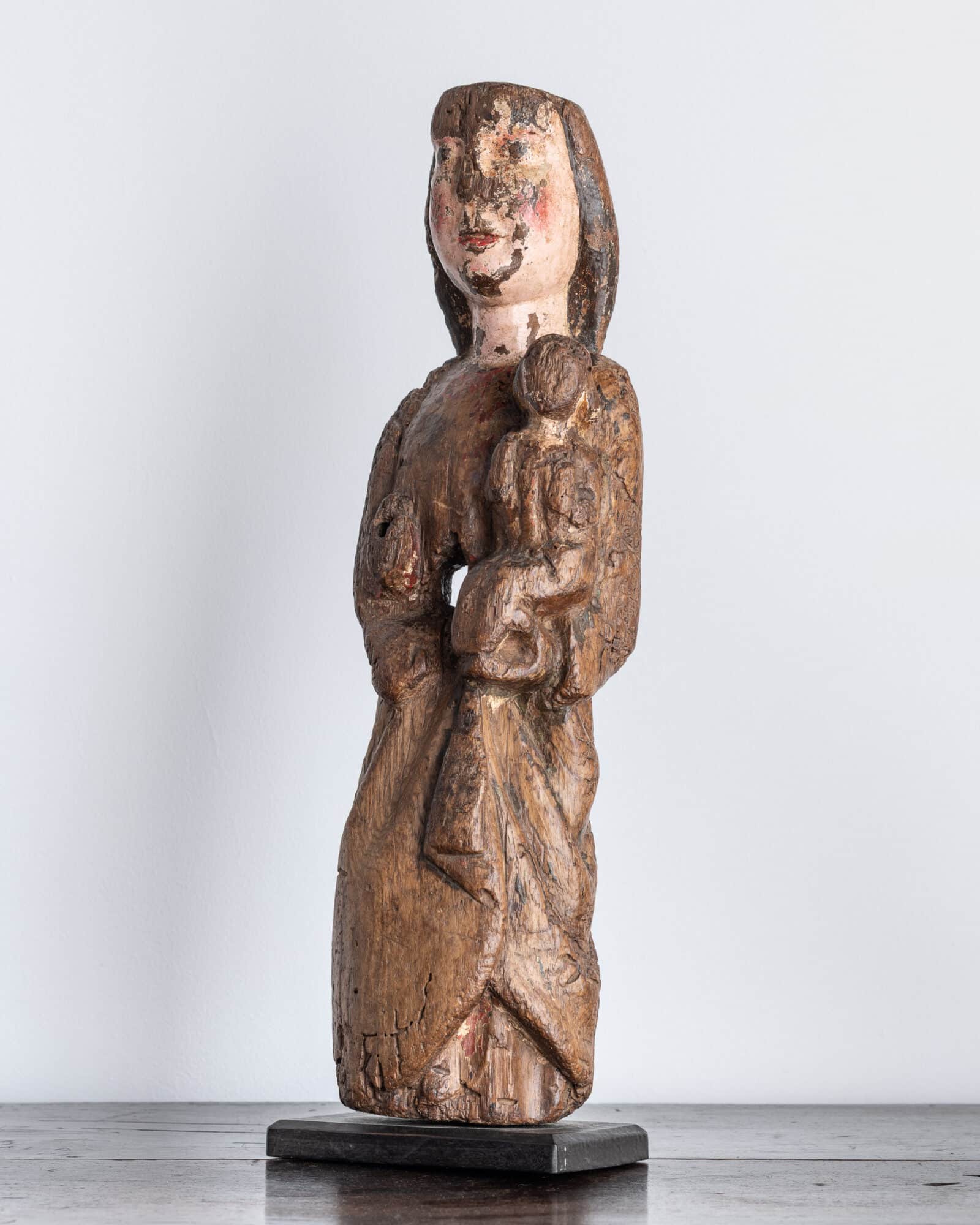
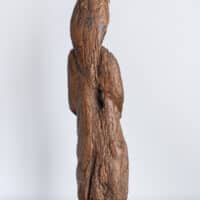
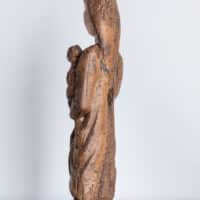
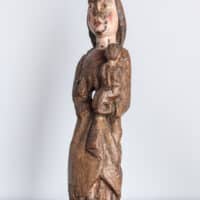
A Romanesque oak sculpture depicting the standing Virgin Mary supporting the Christ Child upon her left side. The composition is distinguished by its pronounced frontality, elongated proportions and restrained sculptural treatment, characteristics associated with European devotional sculpture of the twelfth century.
The Virgin is represented standing upright, her slender figure clothed in a long garment arranged in a succession of vertical and diagonal folds. Her youthful, elongated face is framed by long hair falling over her shoulders, while the facial features are rendered with an expressive simplicity. Particularly noteworthy is the surviving polychromy of the face, with its pale complexion, strongly accentuated red cheeks, darkly delineated eyes and small red mouth.
The Christ Child is held high against the Virgin’s left side and presented almost directly towards the viewer. His rigidly frontal posture and relatively independent position emphasise the theological character of the composition, in which the Virgin serves as the bearer and presenter of Christ. This hieratic arrangement reflects the symbolic conventions of Romanesque religious imagery, rather than the more naturalistic interaction between mother and child that developed in later medieval sculpture.
The surviving painted decoration forms an important element of the sculpture’s visual character. The treatment of the faces, particularly the contrast between the pale flesh tones and pronounced red cheeks, finds parallels in northern European polychrome wooden sculpture, including examples preserved in medieval Norwegian ecclesiastical collections.
The standing arrangement distinguishes the present sculpture from the more widely encountered enthroned representations of the Virgin and Child, traditionally known as Sedes Sapientiae, or Throne of Wisdom. Standing representations are documented within the Romanesque traditions of western and northern Europe, including the Rhineland, where the frontal presentation of the figures and simplified treatment of the garments reflect closely related devotional conventions.
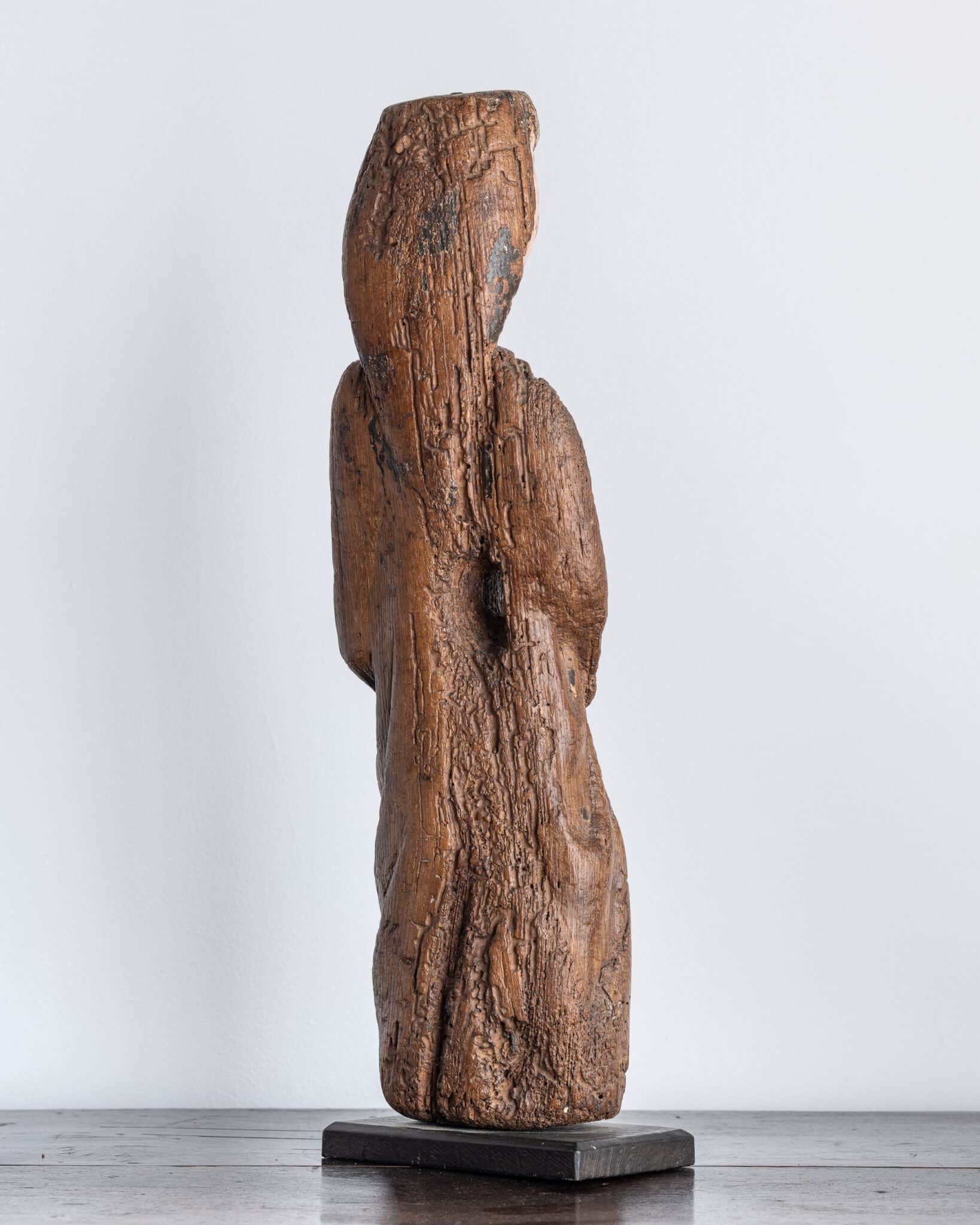
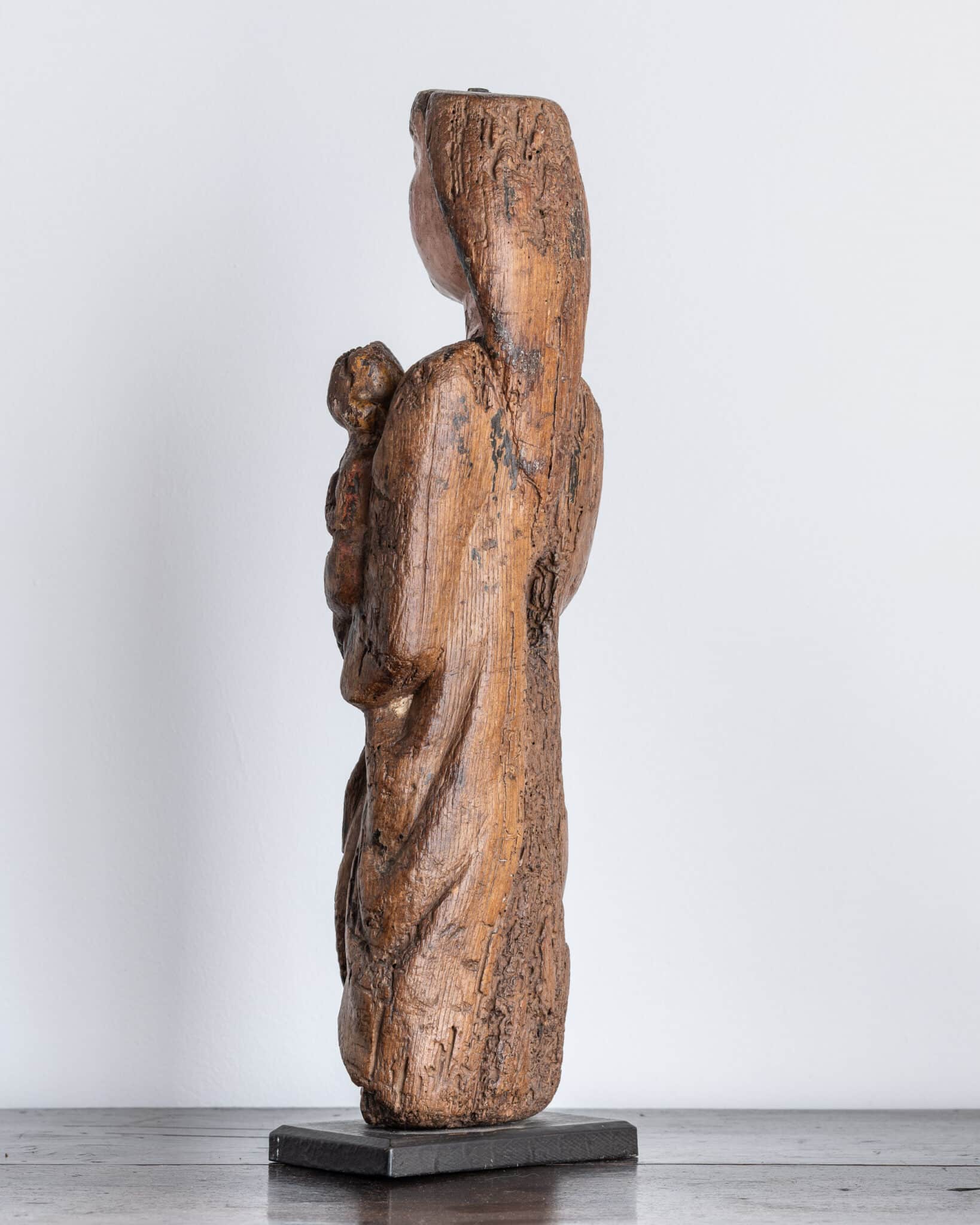
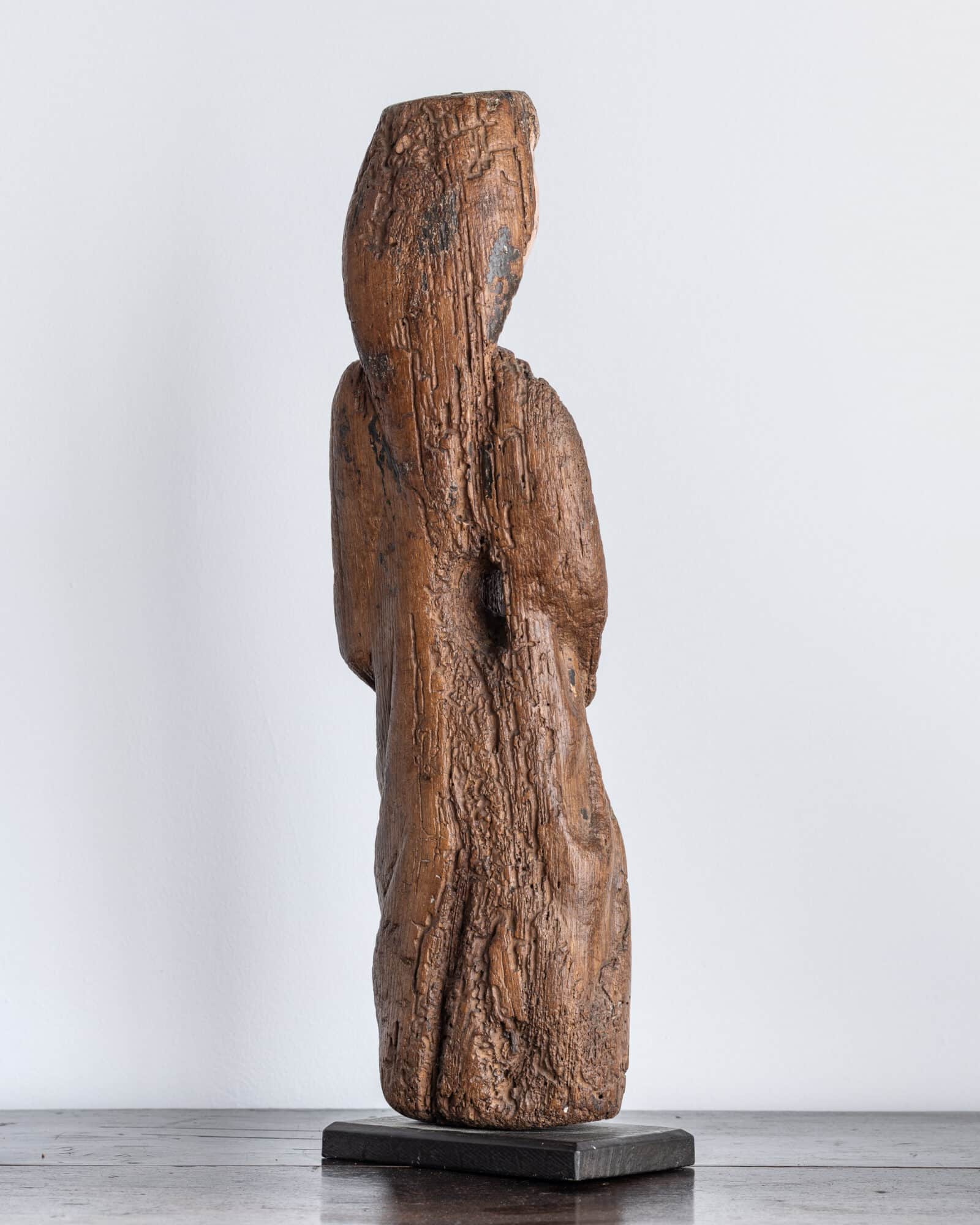
Carved in oak, the sculpture retains extensive evidence of its historic painted decoration, together with the characteristic fissuring, surface erosion and losses associated with the ageing of medieval timber. Despite these alterations, the principal sculptural forms and much of the facial polychromy remain clearly discernible.
The combination of its standing composition, frontal Christ Child, restrained carving and surviving polychromy places the sculpture within the wider artistic traditions of twelfth-century European Romanesque woodcarving, with particular affinities to northern European examples.
Comparative Literature
Martin Blindheim, Gothic Painted Wooden Sculpture in Norway 1220–1350, Oslo, 2004.