A Sixteenth-Century Oak Merchant’s Travelling Cabinet
- Period
- Circa 1550–1600
- Origin
- Possibly Flemish, Southern Netherlands
- Dimensions
- W 22"" × H 33 1/2"" × D 14 1/2""
- Reference
- #Marh3838
£6,850
Description
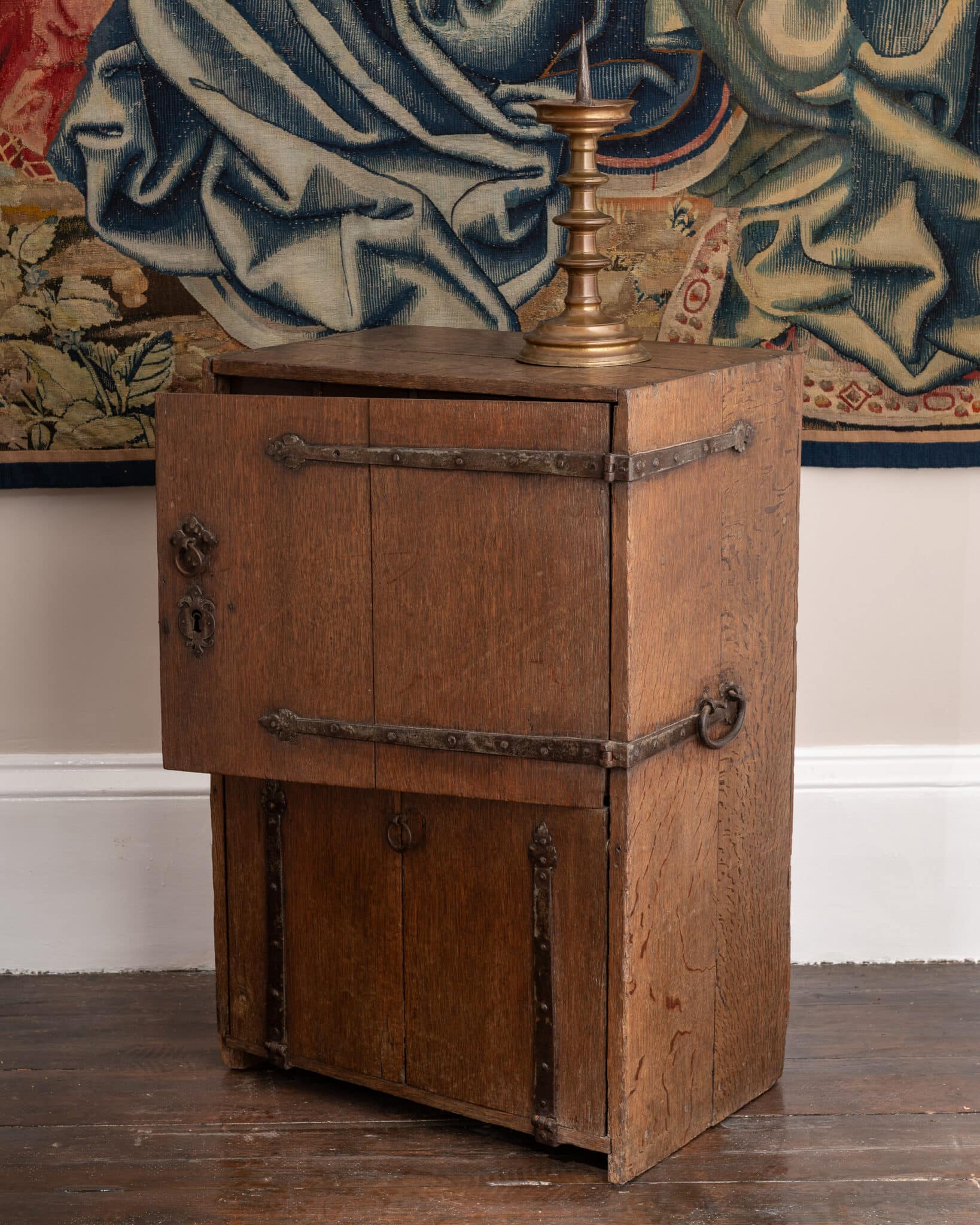
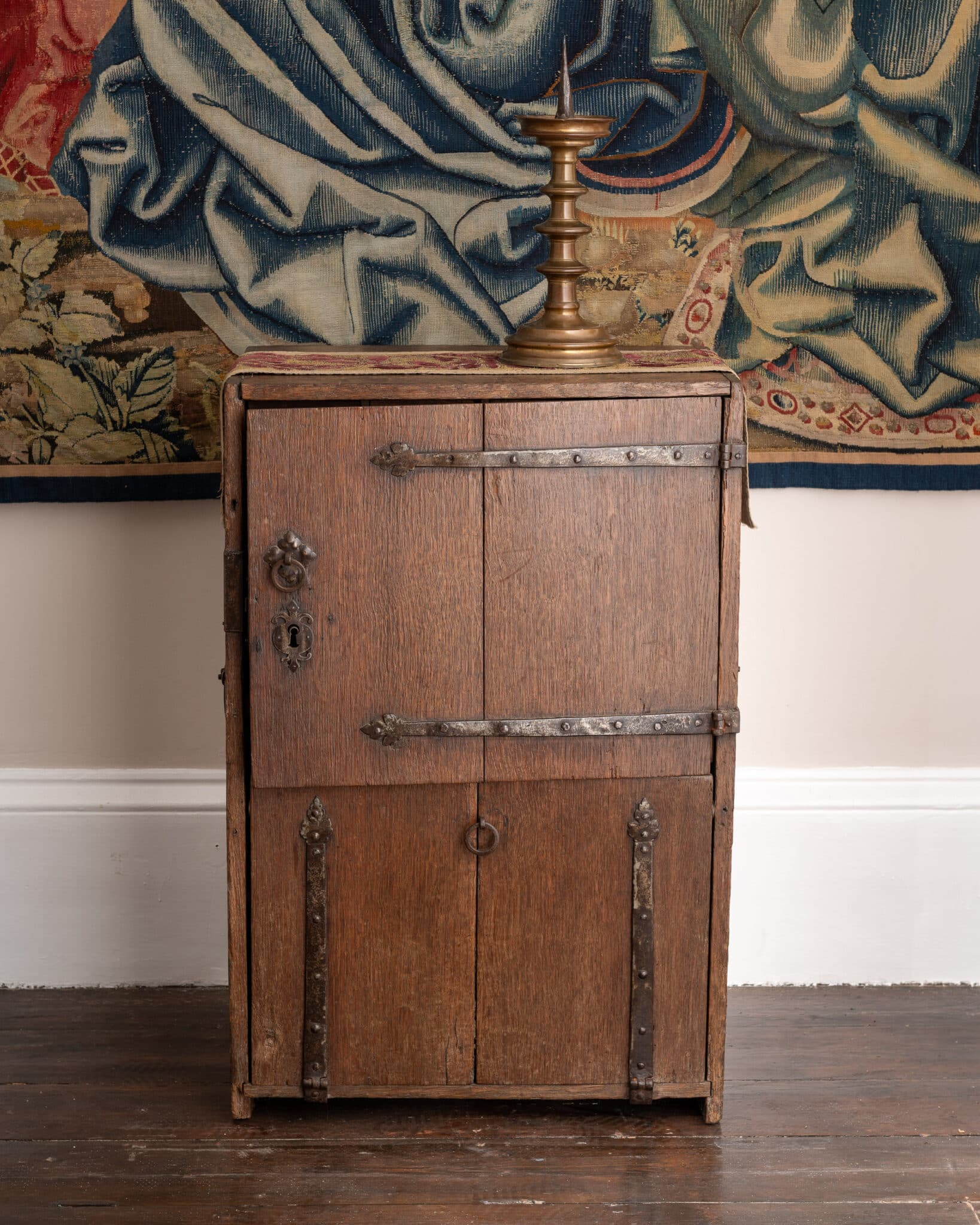
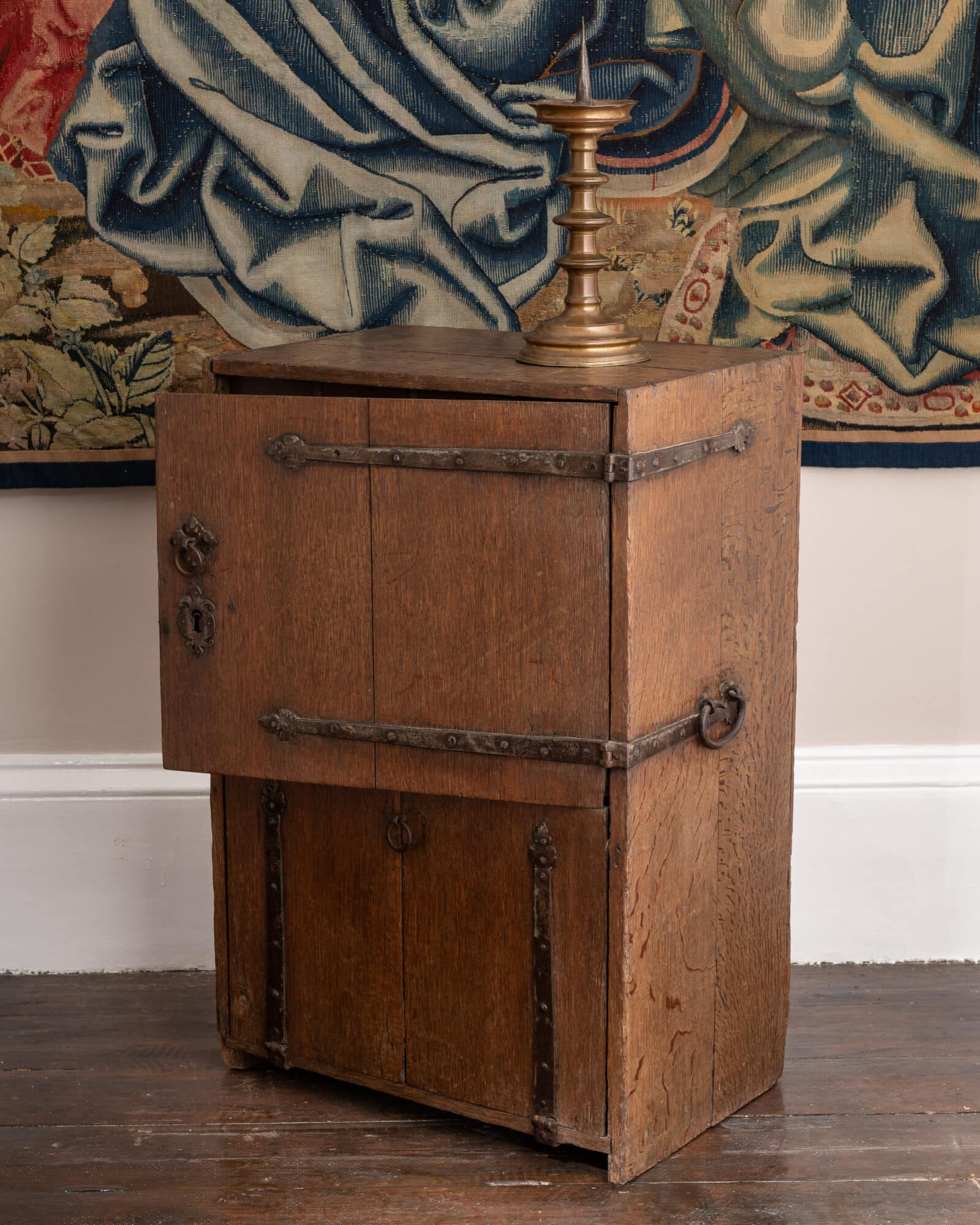
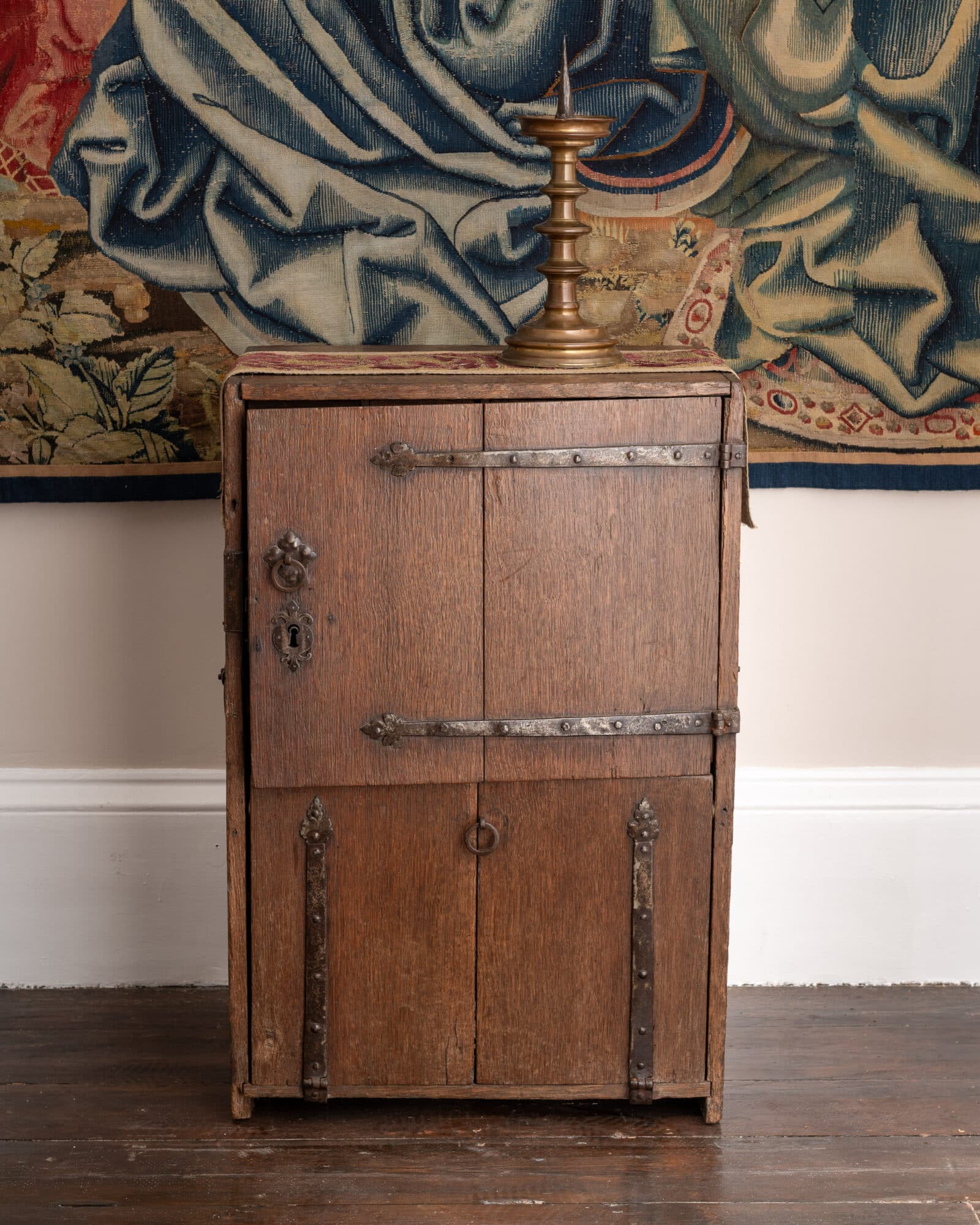
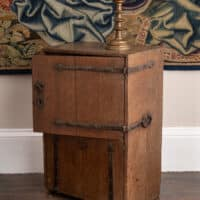
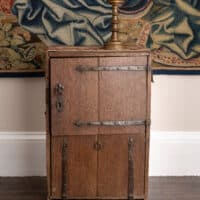
An oak travelling cabinet of substantial construction, fitted with iron carrying handles, reinforcing straps and locking arrangements, and incorporating a series of drawers of differing dimensions. Its form and internal organisation suggest a specialised piece of furniture intended for the secure storage and transportation of merchandise, commercial documents or other possessions associated with mercantile activity.
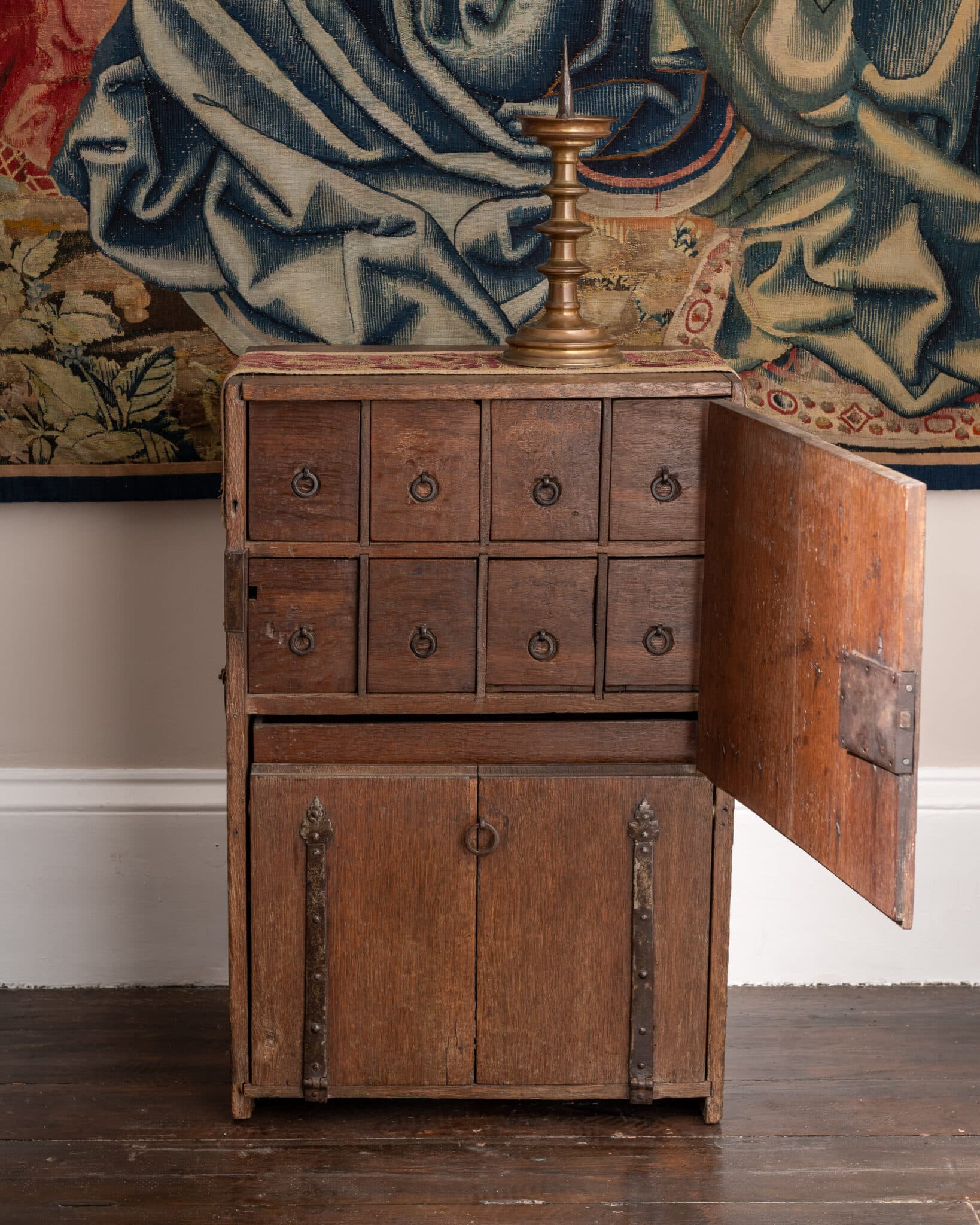
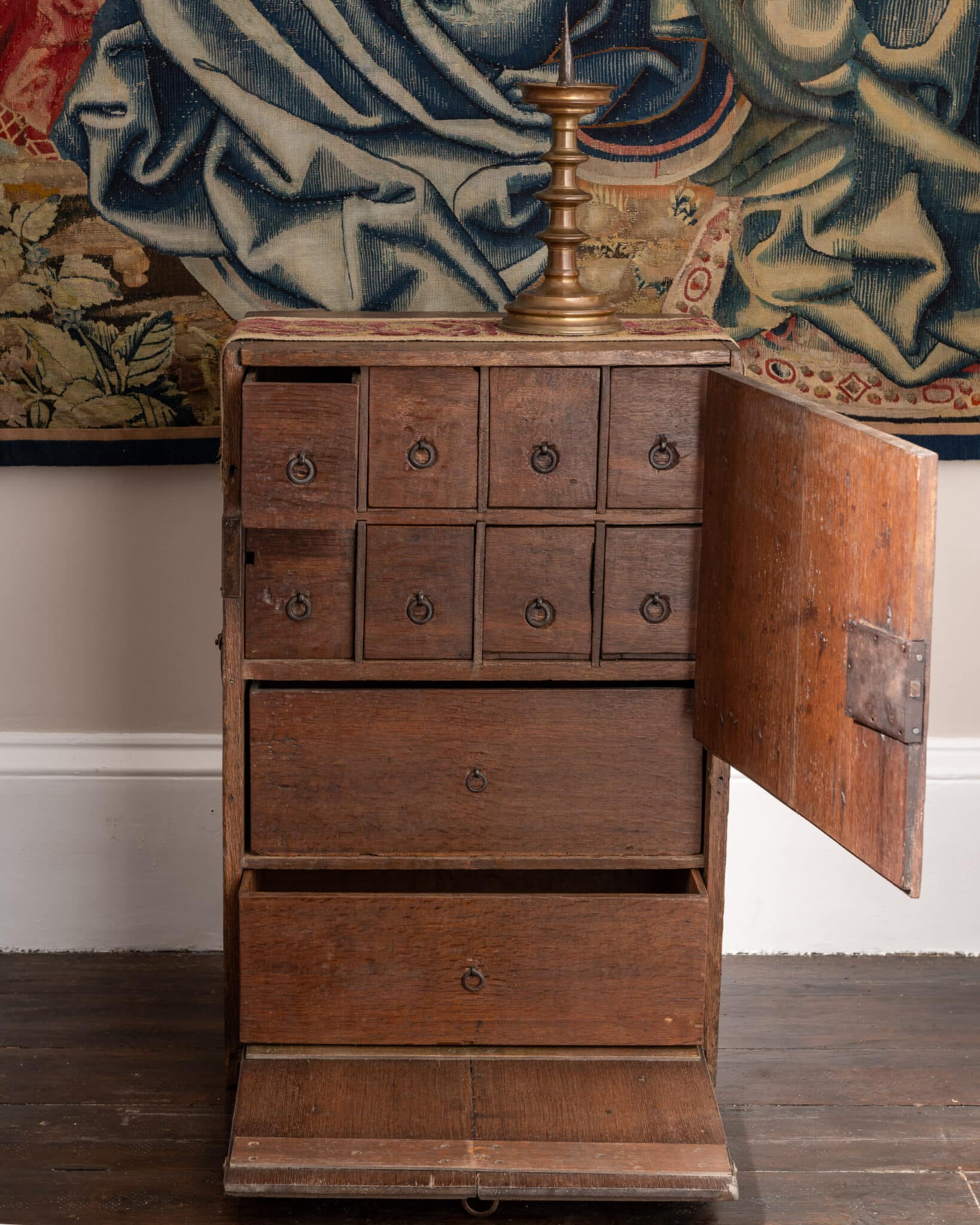
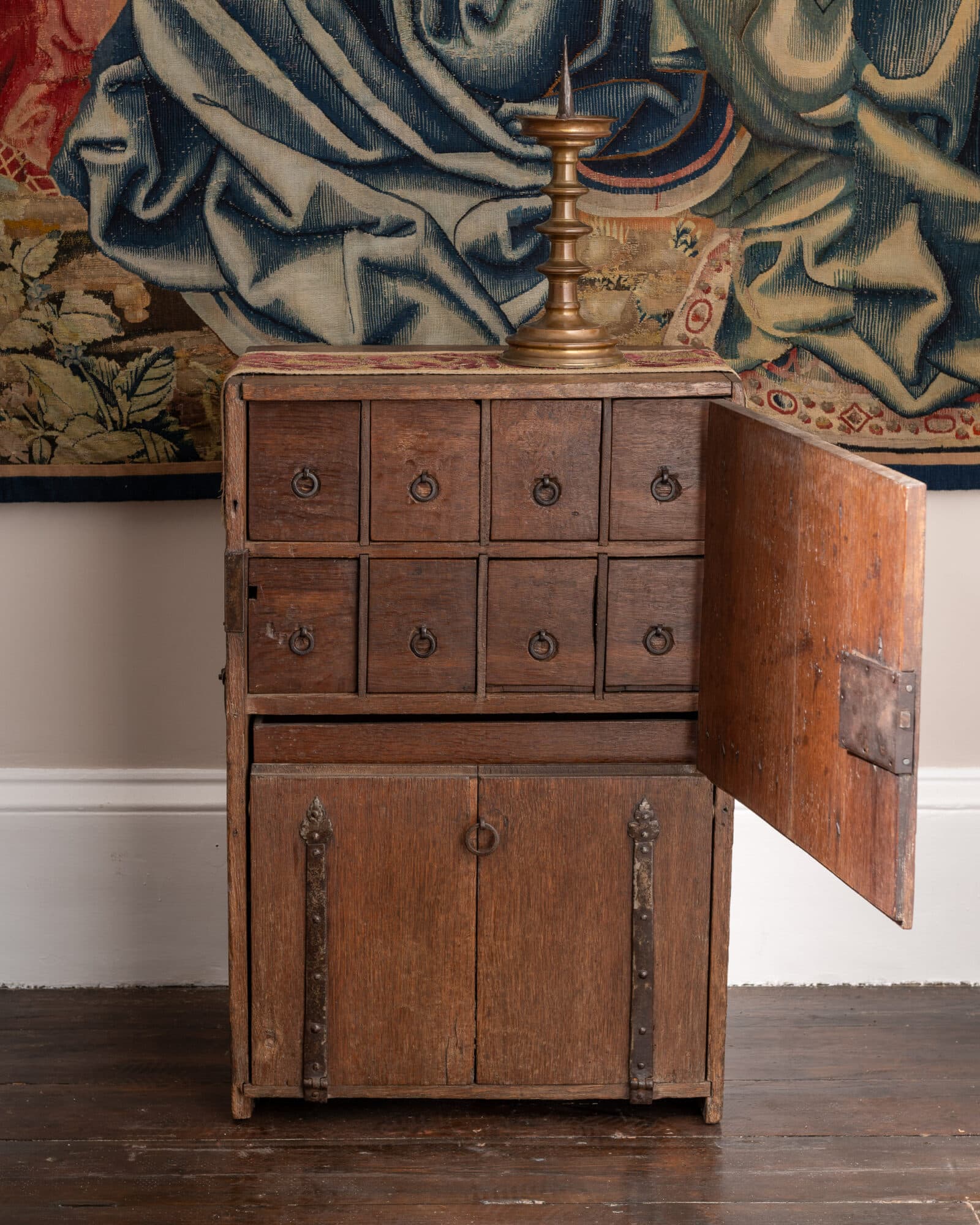
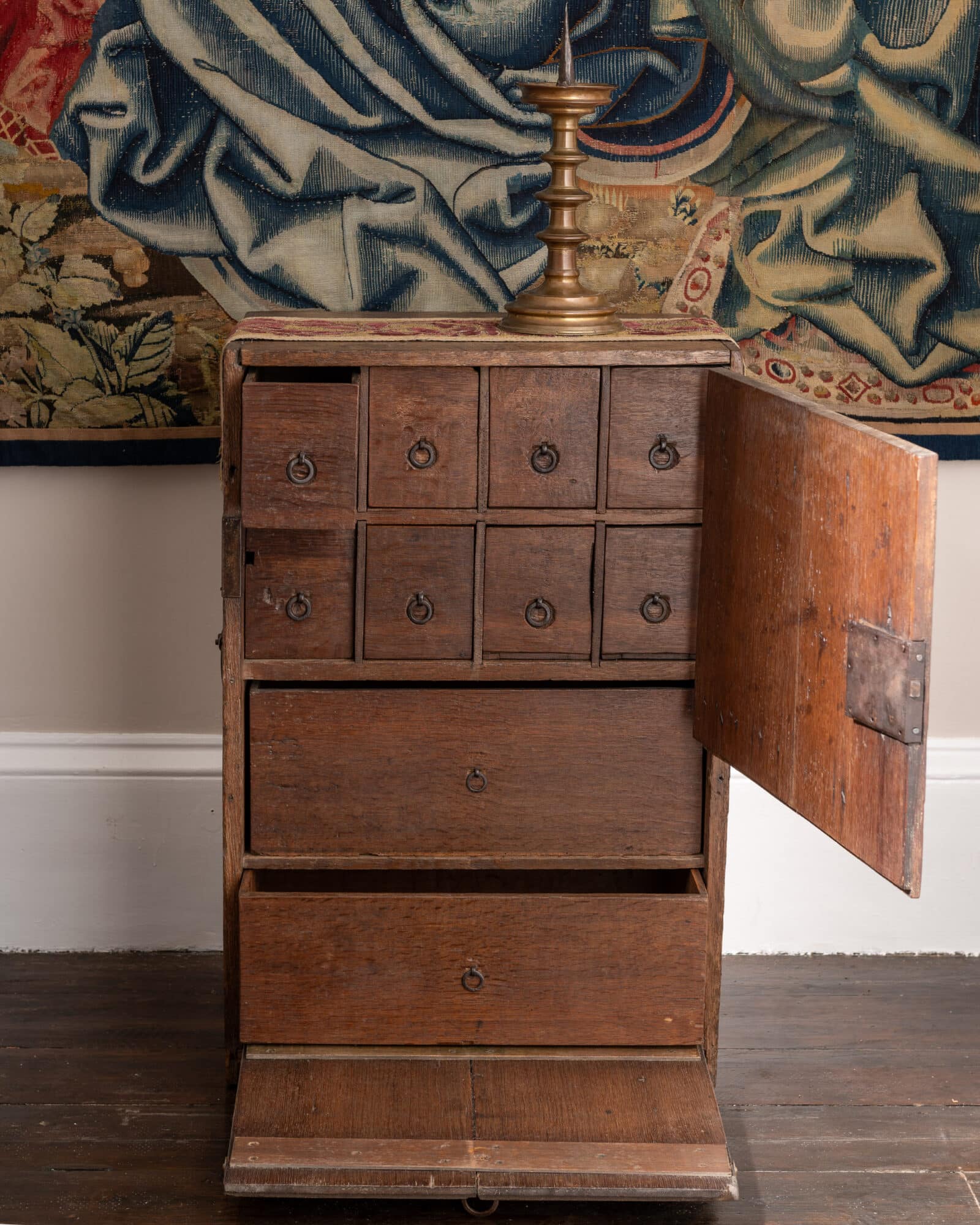
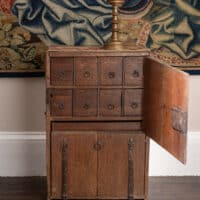
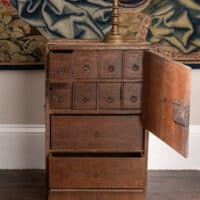
The cabinet is constructed in an upright rectangular form, its interior divided into ten drawers arranged in three horizontal tiers. The upper section contains eight smaller drawers, arranged in two rows of four, each fitted with an iron ring pull. Beneath these are two larger drawers extending across the width of the interior. This arrangement provides separate compartments for the orderly storage and retrieval of objects of varying sizes.
The exterior is fitted with substantial ironwork, including carrying handles to the sides and reinforcing straps. The upper compartment is enclosed behind a hinged, lockable door, while the lower section is protected by a separate hinged fall-front. The arrangement allows the contents to be secured when the cabinet is closed and accessed individually when opened.
The proportions and construction suggest that the cabinet was intended to remain upright during use, with the carrying handles facilitating its movement between locations. Its relatively considerable weight, particularly when filled, would indicate transportation by two people or by cart rather than continual carriage by an individual
The present cabinet is distinguished by the functional relationship between its iron-bound exterior, carrying handles, independently enclosed compartments and internal arrangement of drawers.
Unlike the more elaborate Renaissance cabinets produced for domestic display or the storage of private collections, its comparatively restrained appearance and substantial construction suggest that practical considerations governed its design.
The absence of elaborate architectural ornament, combined with its provision for transportation and the systematic arrangement of the interior, supports an interpretation as a working cabinet associated with commercial activity.
Its precise original contents and the particular occupation of its owner remain undetermined. Nevertheless, the cabinet’s construction is consistent with the requirements of a merchant or professional trader needing secure, organised and transportable storage.
A possible Flemish attribution is supported by the cabinet’s general character.
The cabinet provides a material illustration of the practical equipment that may have accompanied commercial activity in the Low Countries during the second half of the 16th century.