A Tudor Carved Oak Boarded Box
- Period
- 1540 - 1560
- Origin
- England
- Dimensions
- W 23 3/4"" × H 8"" × D 14 1/4""
- Reference
- #Marh3859
£1,250
Description
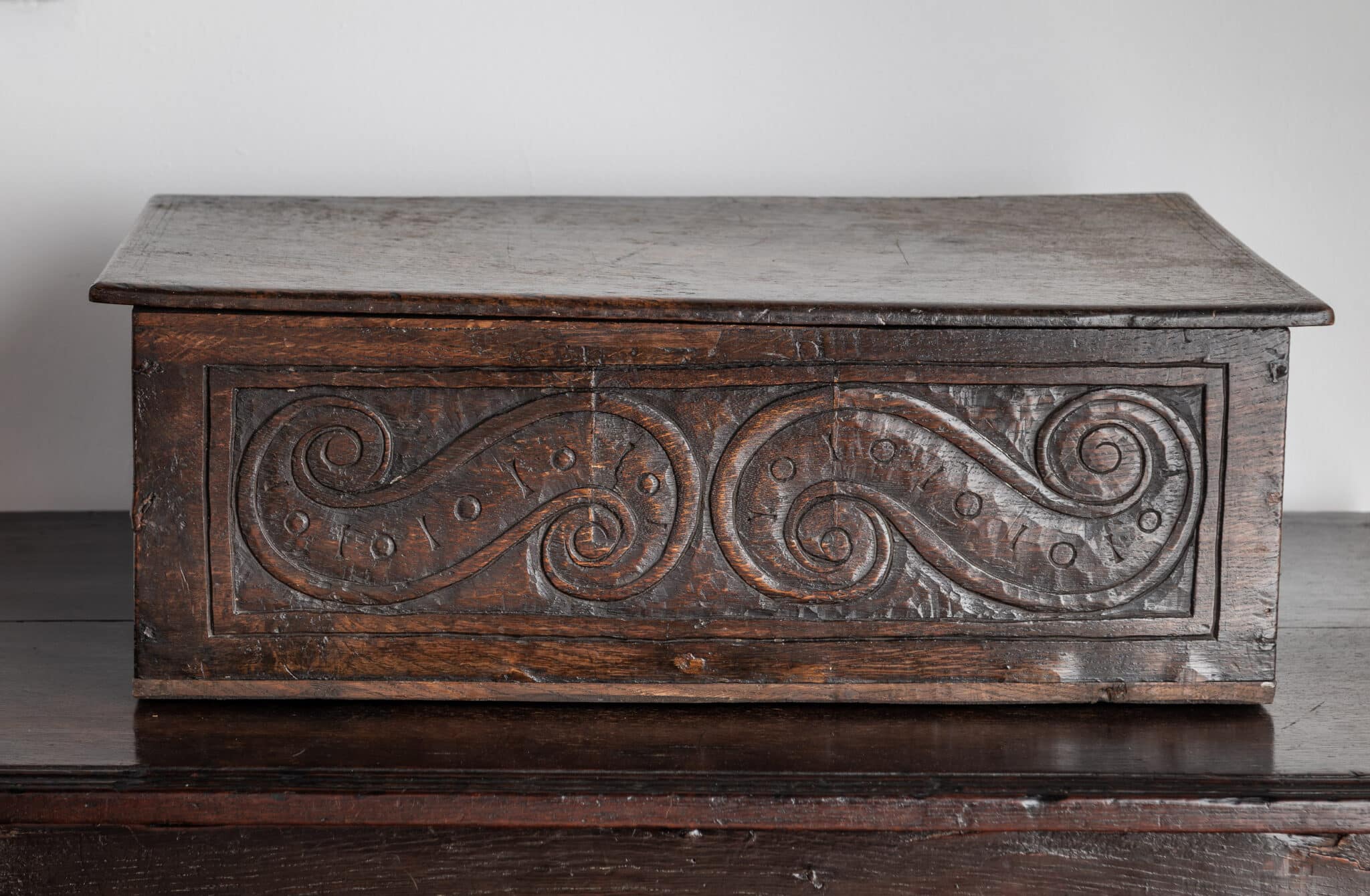
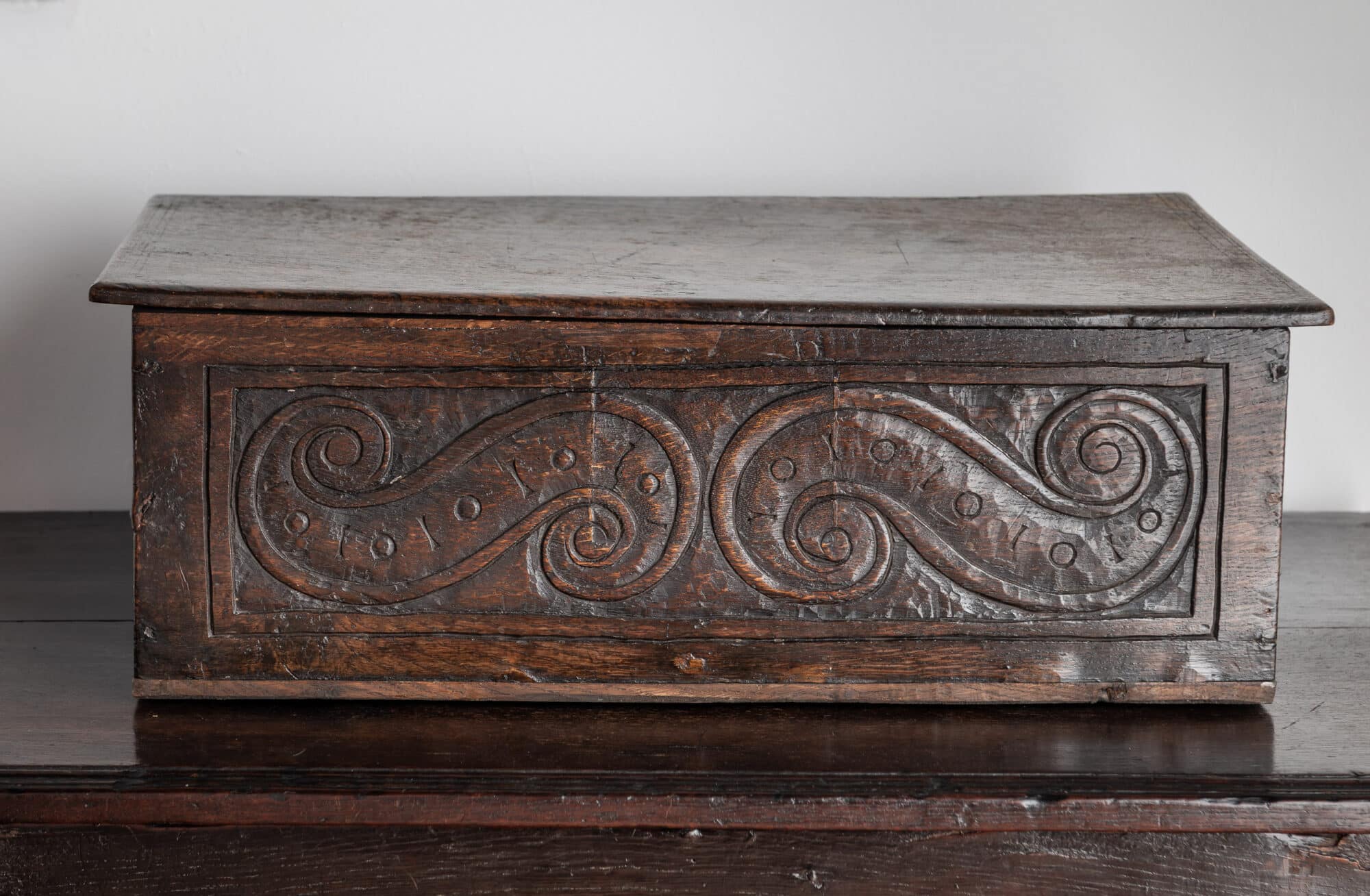
An interesting and early Tudor oak boarded box of simple rectangular form, the front carved with two opposing Renaissance S-scrolls, their tightly coiled terminals embellished with small circular devices and incised decoration, the whole contained within a plain rectangular border.
The bold, flowing arrangement of the scrolls reflects the introduction of Renaissance ornament into English furniture during the first half of the sixteenth century, when traditional medieval forms began to incorporate decorative influences from Continental Europe. Although comparatively restrained in its execution, the carving possesses a distinctive character, its uncomplicated treatment entirely in keeping with the functional nature of the box.
Of straightforward boarded construction, with a broad overhanging lid, the box belongs to a small surviving group displaying this unusual ornamental arrangement. Closely related examples include a Tudor oak box formerly with Marhamchurch Antiques, dated to circa 1540, and another illustrated by Fred Roe in A History of Oak Furniture, described as originating from Colchester and attributed by Roe to the first half of the seventeenth century. The close correspondence between their carved designs provides an interesting comparison and suggests the continuation of an established decorative tradition.
The box has clearly experienced considerable domestic use over nearly five centuries, retaining the unmistakable character of an early piece of English furniture. Historic alterations include the loss of the original lock, with its former position filled, replacement hinges and renewed bottom boards. Such practical repairs reflect the continued usefulness and preservation of an object that might otherwise have been discarded.
A charming and increasingly scarce survival of Tudor domestic furniture, combining simple early construction with an attractive example of English Renaissance carving.