An Early 15th-Century Polychrome Oak Figure of the Archangel Gabriel from an Annunciation
- Period
- Circa 1420–1450
- Origin
- Southern Netherlands, possibly the Meuse Valley
- Dimensions
- W 9"" × H 27"" × D 8""
- Reference
- #Marh3834
Price on application
Description
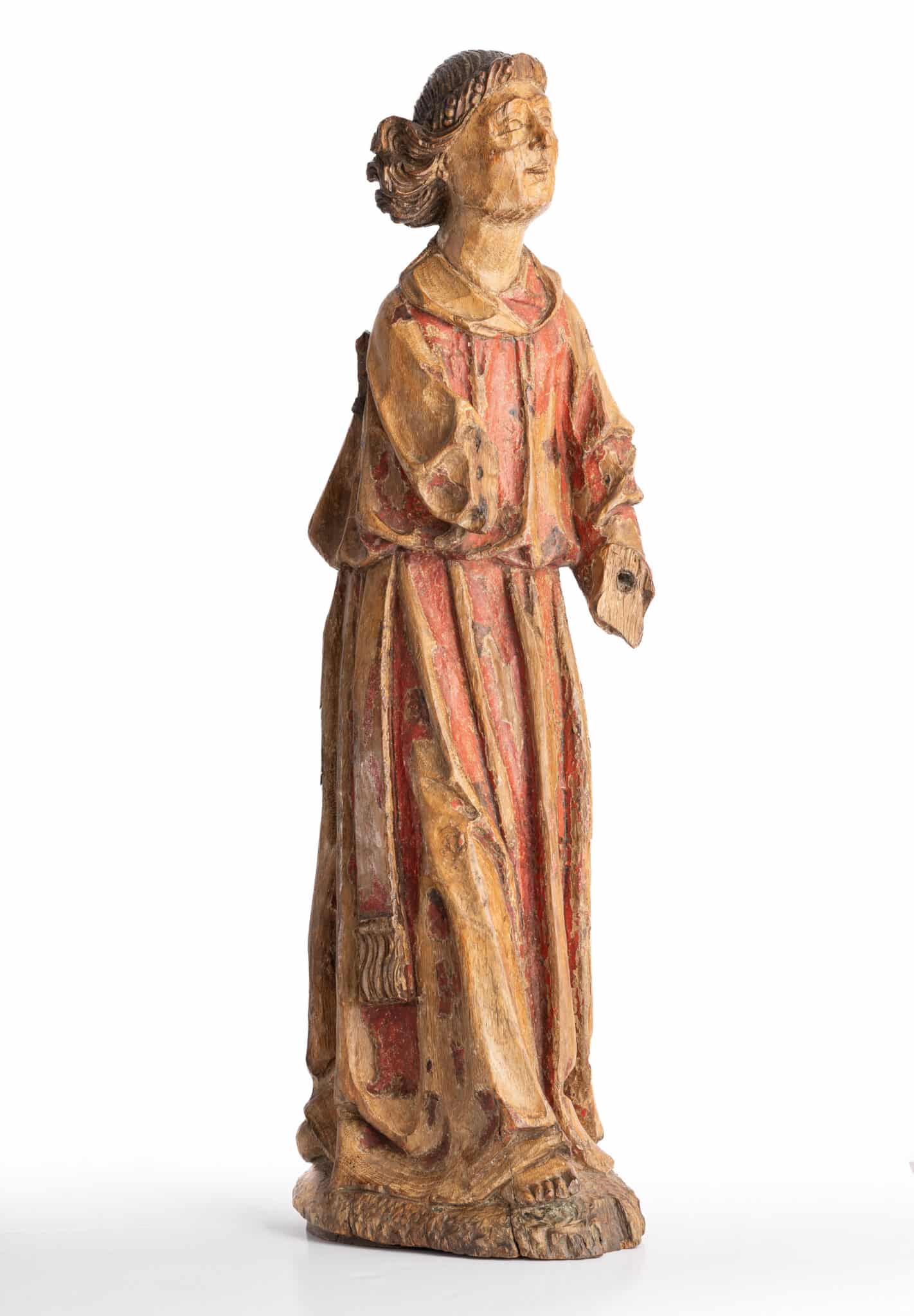
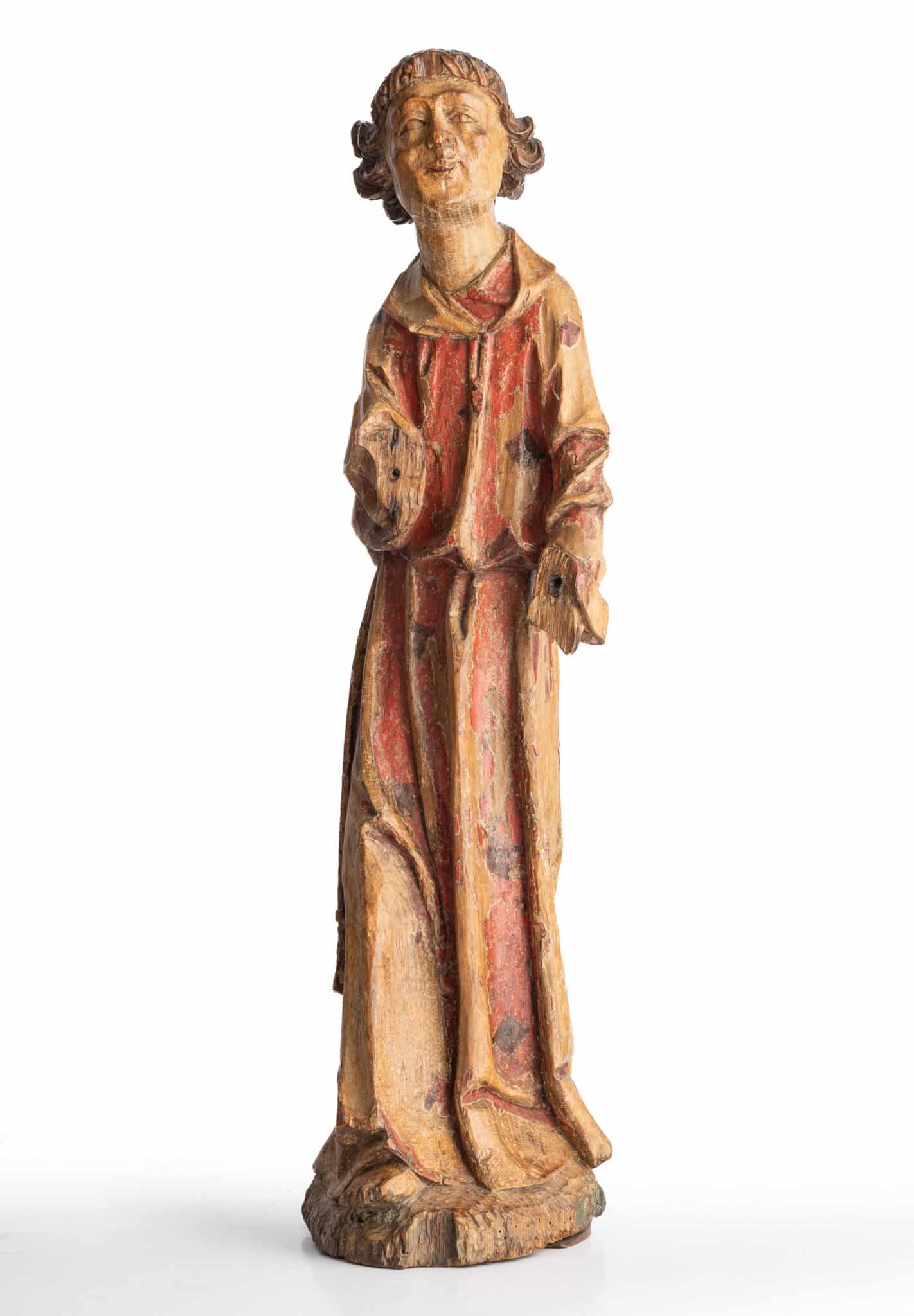
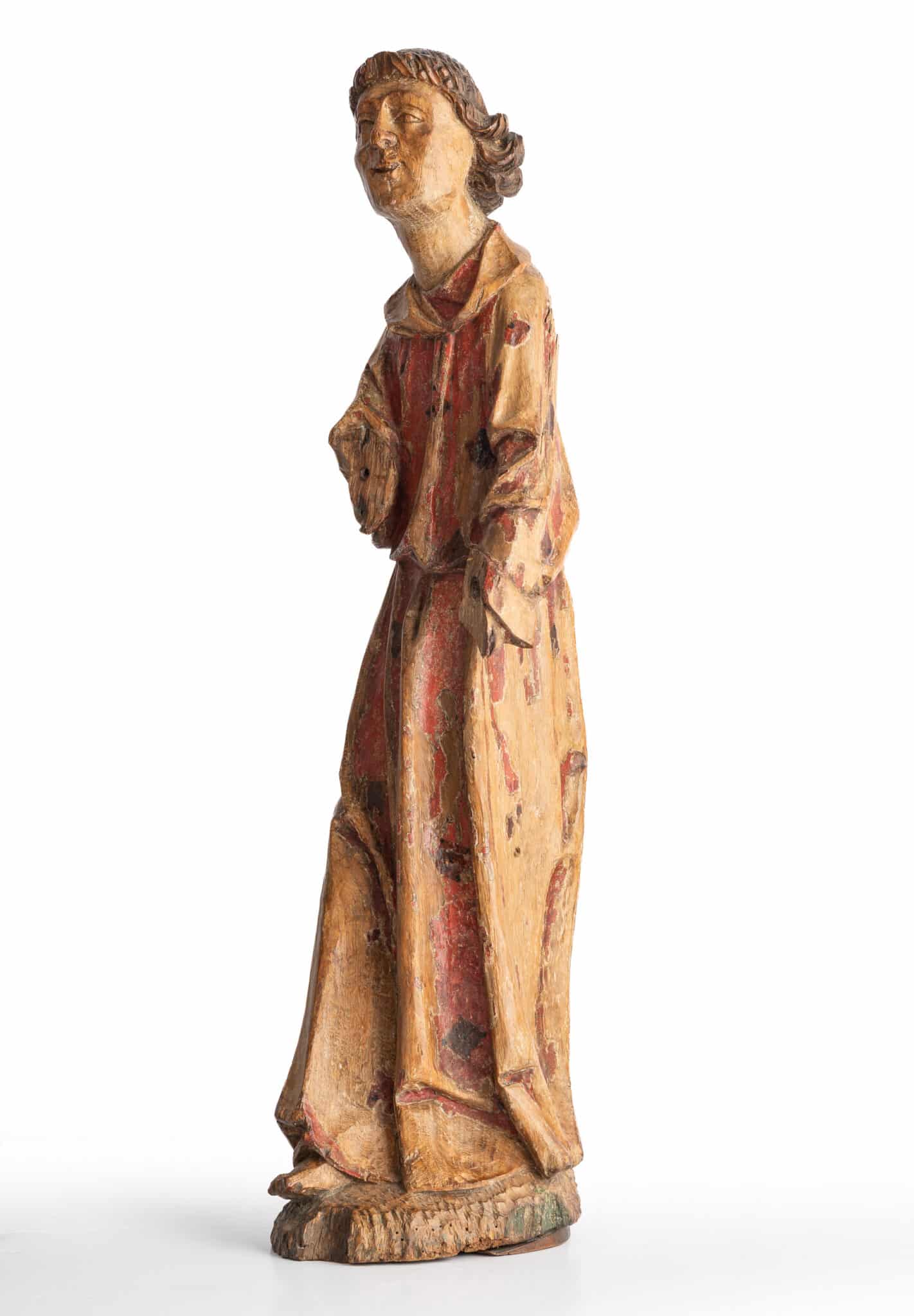
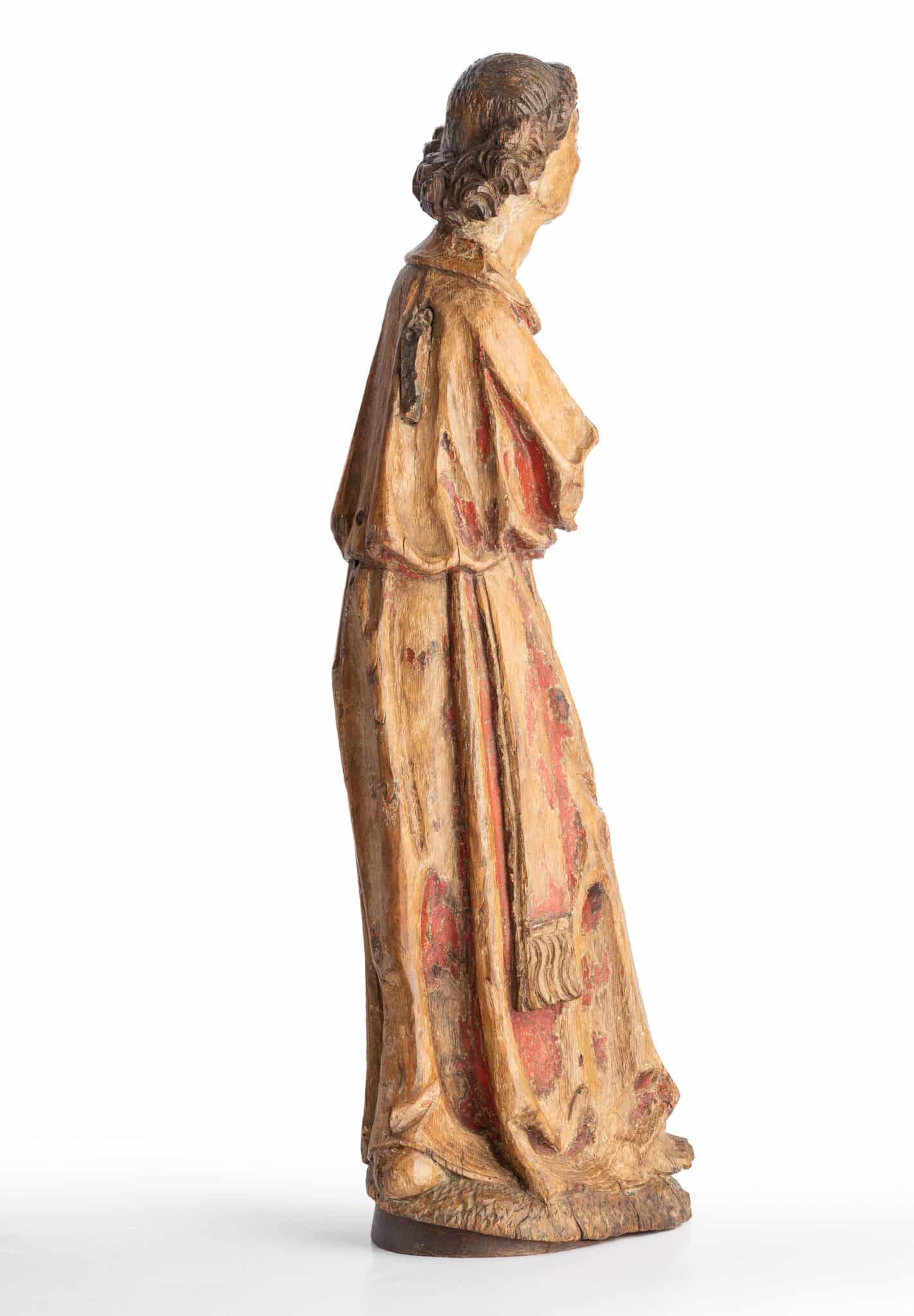
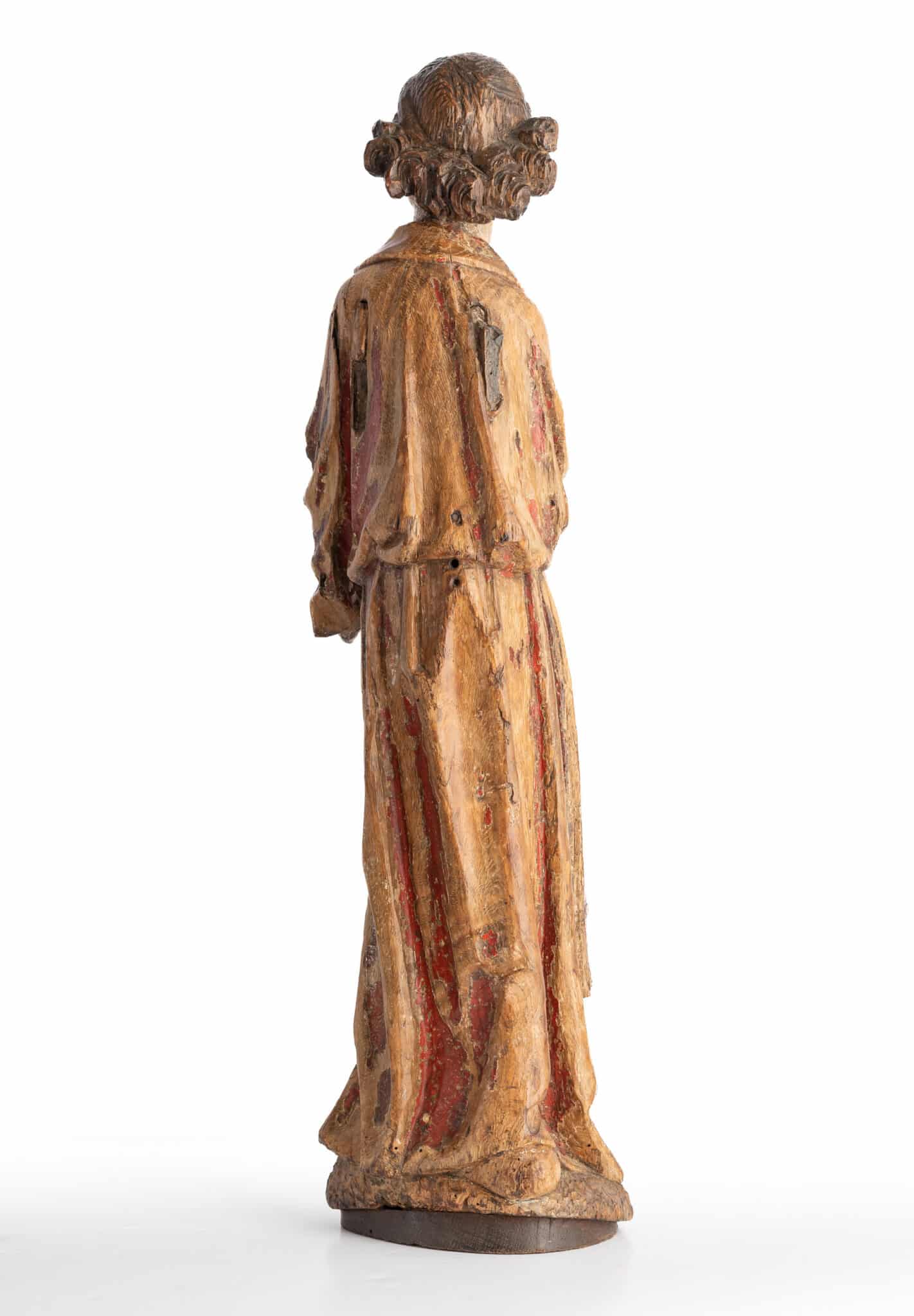
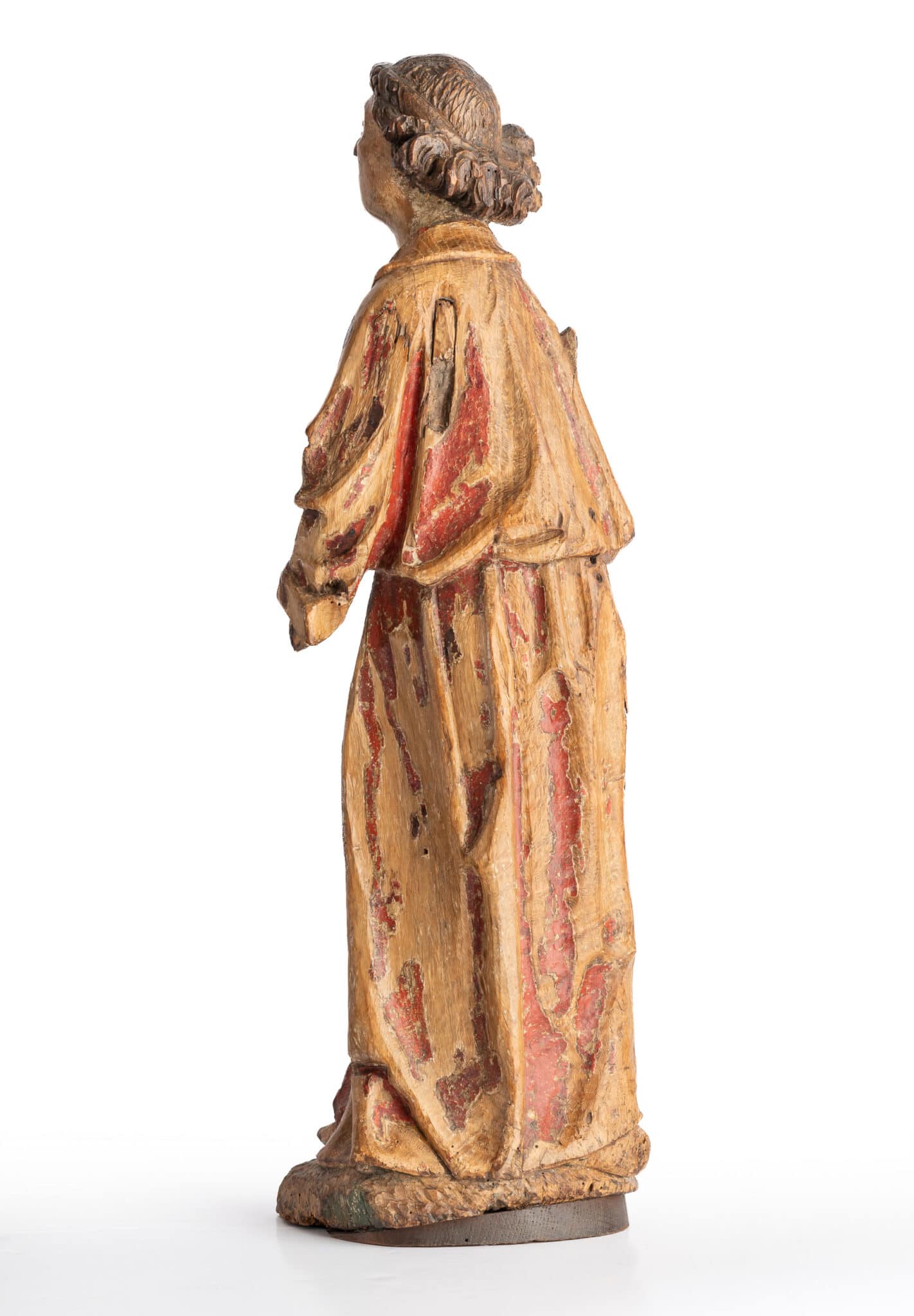
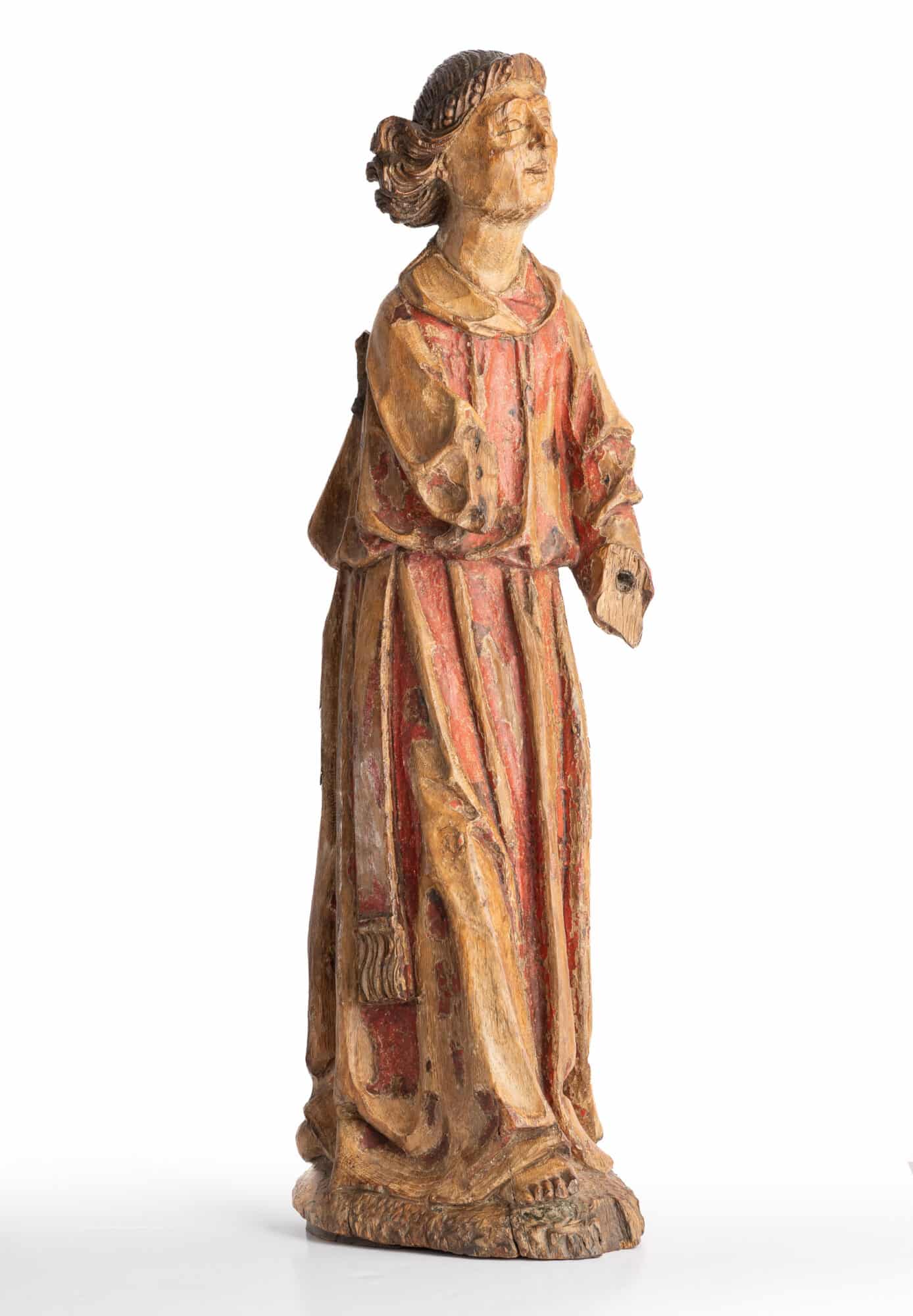
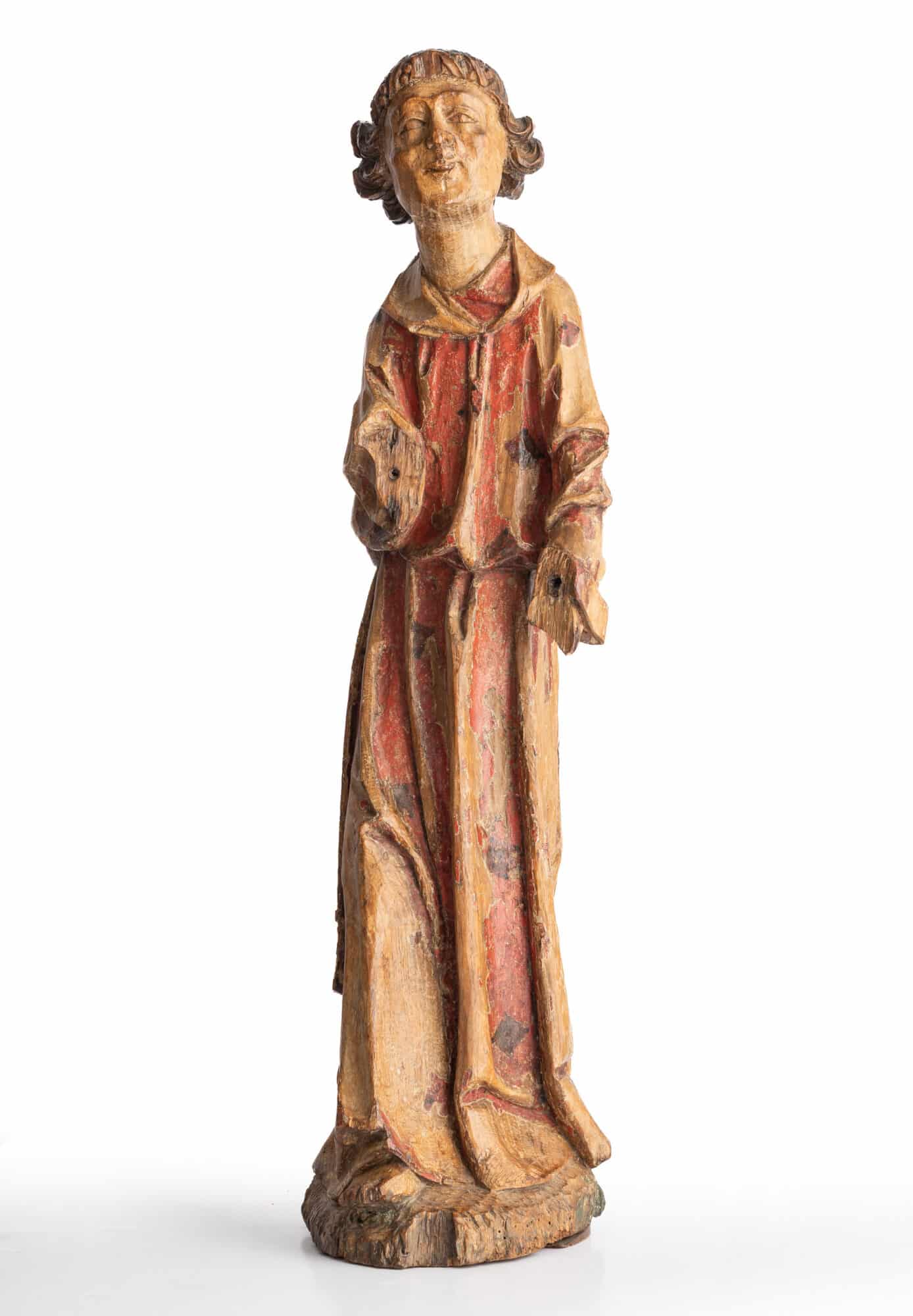
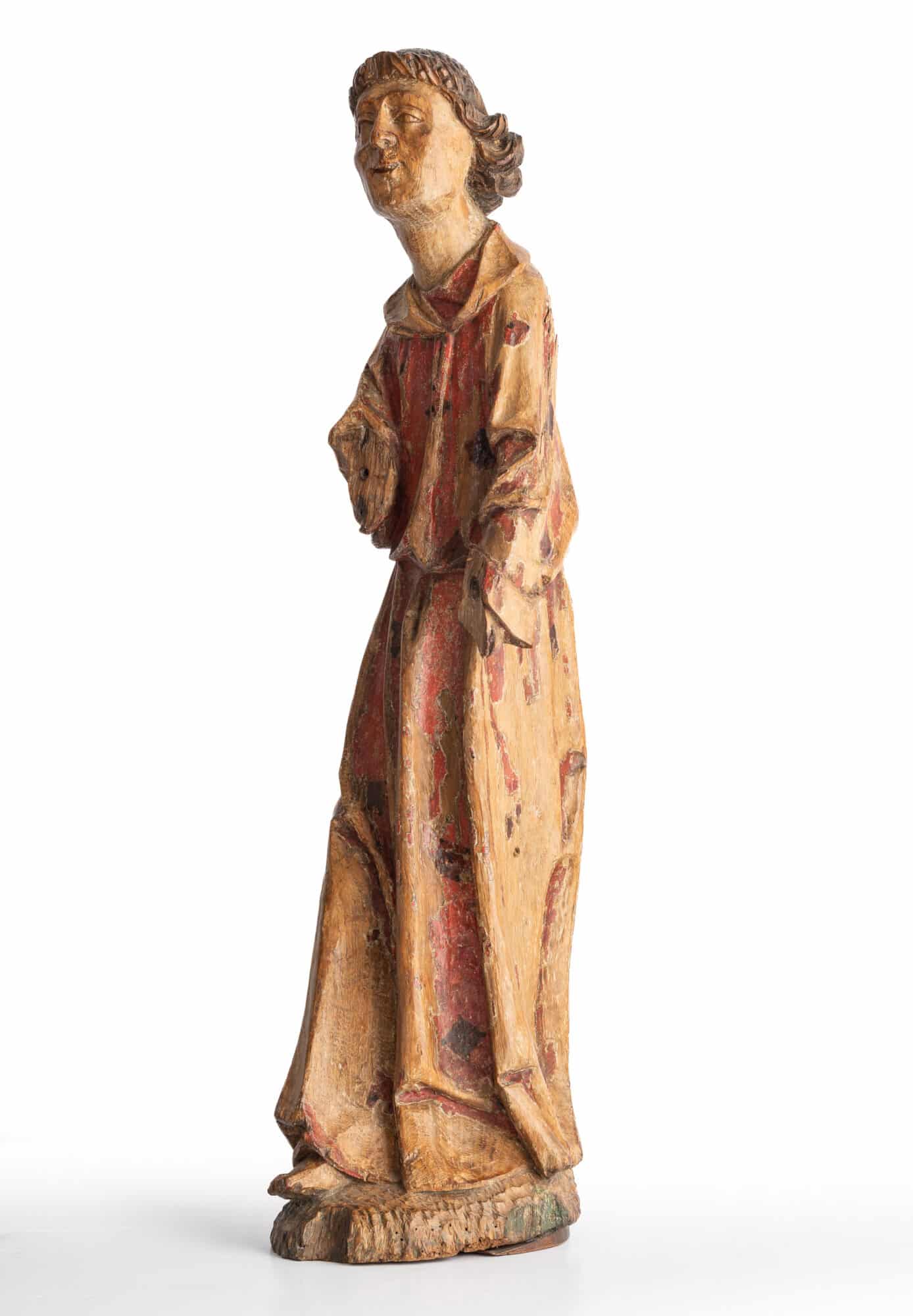
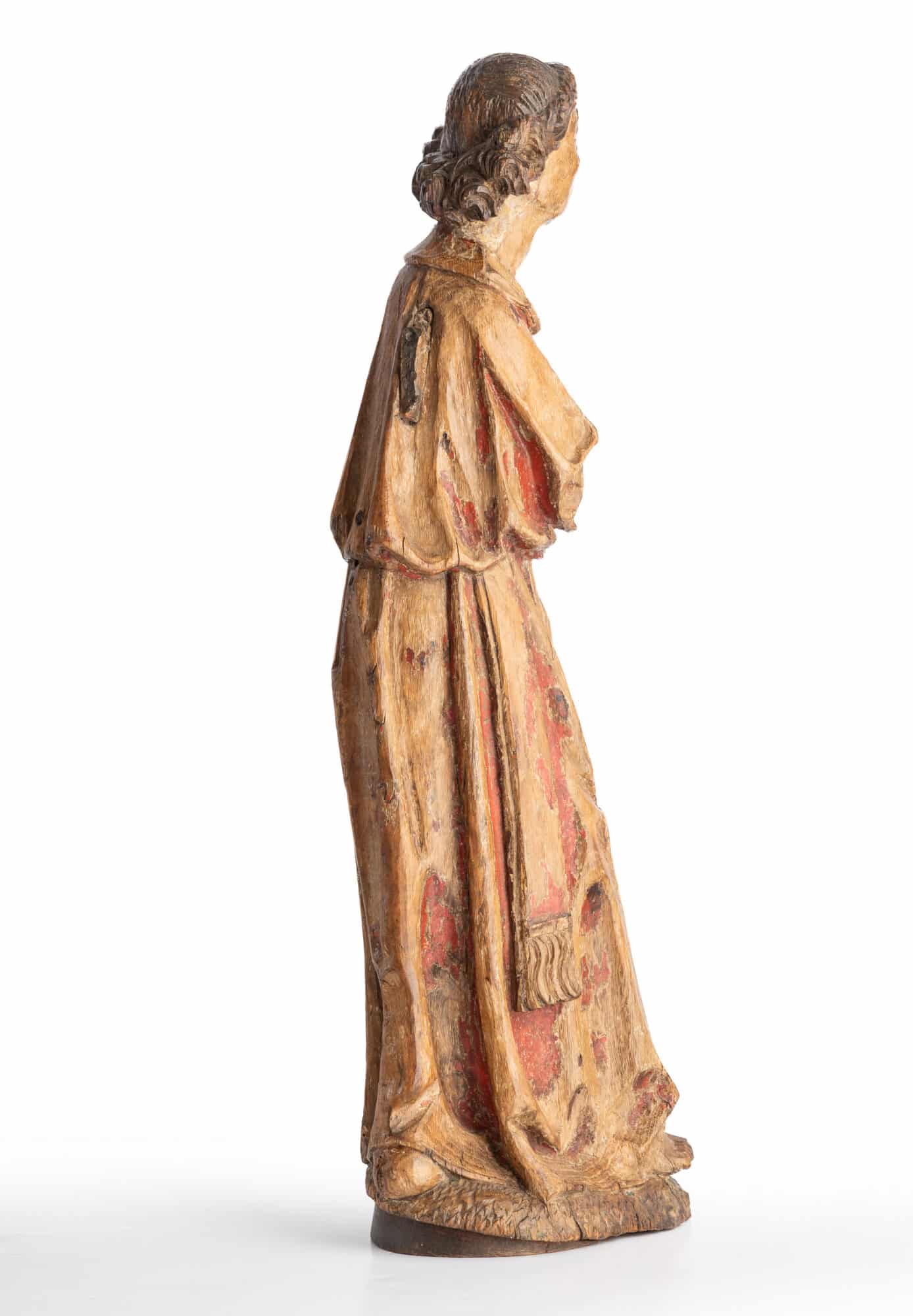
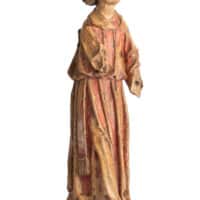
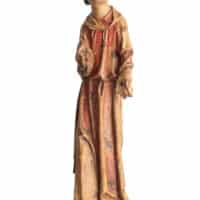
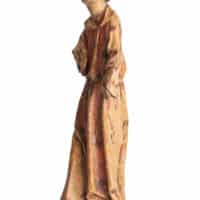
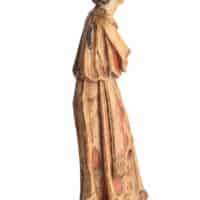
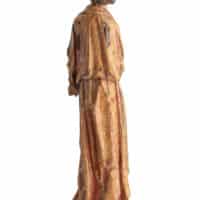
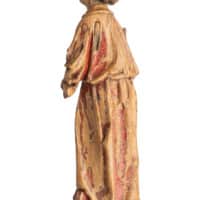
This substantial figure represents the Archangel Gabriel, originally forming part of an Annunciation group. Gabriel is shown standing, his slender body enveloped in long vestments falling in predominantly vertical folds, while his head is raised and turned as though addressing the Virgin. His hands and their original attributes are now lost, as are the separately carved wings, whose former attachment points remain visible on the back of the figure.
The sculpture is conceived fully in the round. Particular attention has been given to the head, which is set upon an unusually long, exposed neck and inclined upwards. The youthful face is characterised by a long nose, narrow almond-shaped eyes, a pronounced chin and slightly parted lips, lending the figure an animated expression appropriate to Gabriel’s role as the divine messenger.
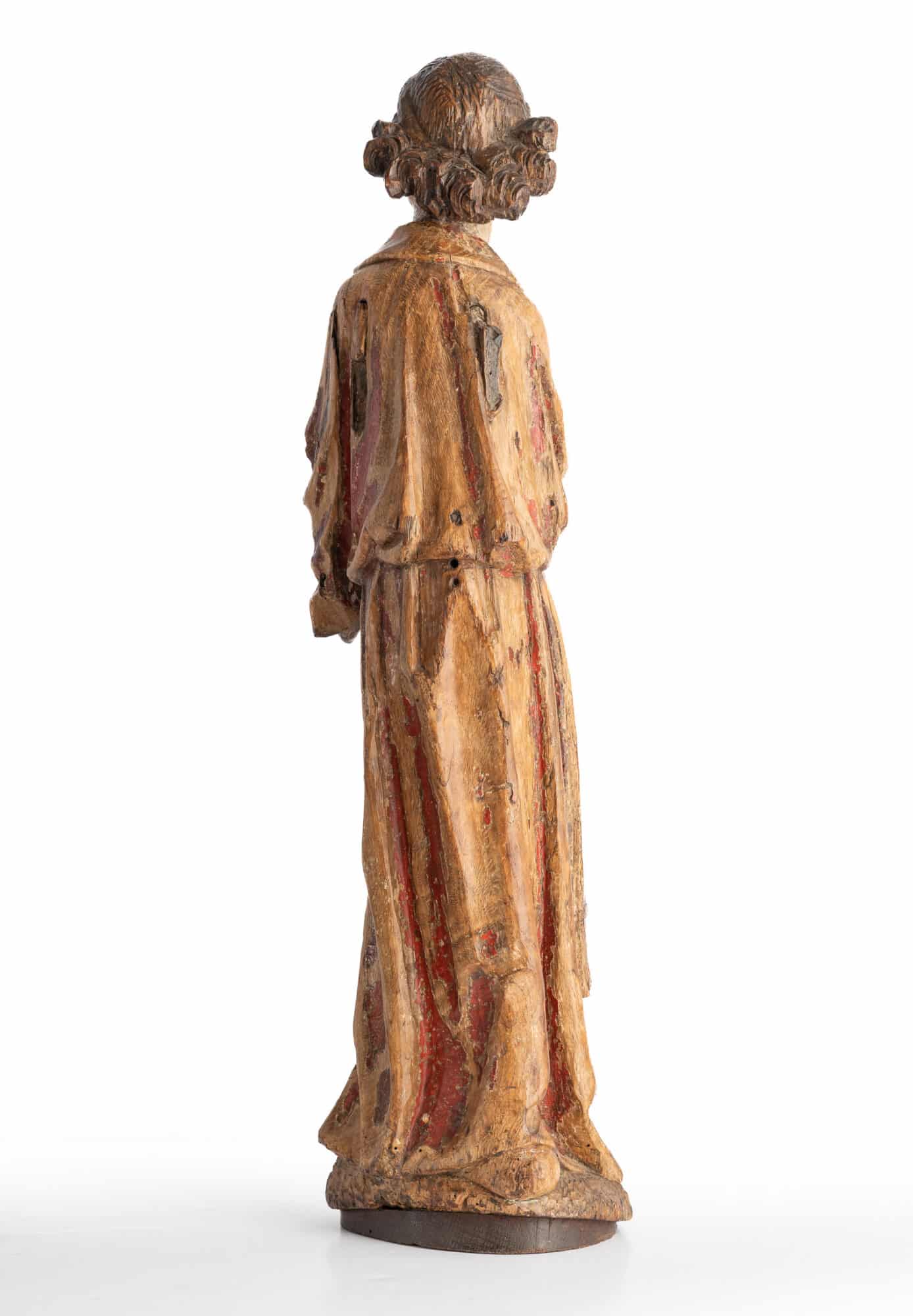
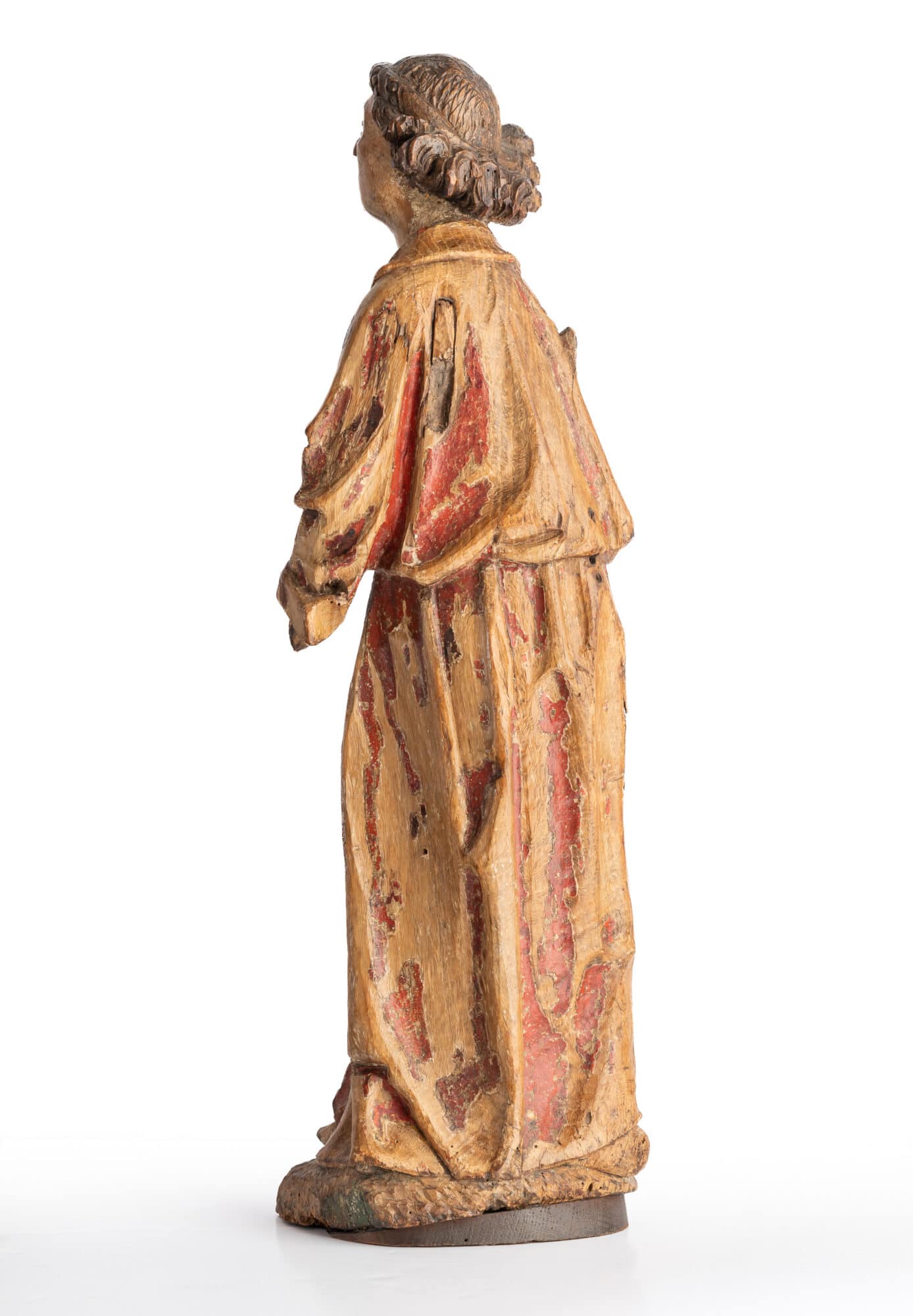
The treatment of the hair is especially distinctive. Closely arranged locks are incised across the crown before developing at the sides and back into a succession of deeply carved, curling masses. The ears remain exposed between the face and the swept-back hair. This combination of an elevated head, parted mouth and luxuriantly curled hair belongs to the courtly vocabulary of Northern European sculpture during the first half of the fifteenth century.
The elongated proportions of the figure are reinforced by the treatment of the costume. Beneath a short mantle, the principal garment descends towards the feet in long, relatively restrained folds, giving the sculpture a strongly vertical character. This comparative simplicity of the drapery contrasts with the increasingly broken and angular folds encountered in much Northern European sculpture during the later fifteenth century.
Considerable remains of the painted decoration survive. Red predominates upon the garments, relieved by lighter passages and traces of gilding. The surface has worn and weathered unevenly, exposing the oak in numerous areas while preserving sufficient polychromy to convey the original decorative scheme. The surviving surface, together with the losses to the hands and wings, forms an important part of the sculpture’s historical character.
Gabriel was originally furnished with separately carved wings. Rectangular attachment areas and associated fixing points survive on the upper back. The carving of the hair, mantle and garments continues around the rear of the figure, demonstrating that the sculpture was intended to be viewed three-dimensionally rather than conceived simply as a shallow relief.
In its elongated proportions, upward-looking youthful countenance and restrained drapery, the figure belongs to the artistic culture of the Southern Netherlands and neighbouring regions during the first half of the fifteenth century. Particular consideration may be given to the sculptural traditions of the Meuse valley and the eastern Southern Netherlands, an area in which Netherlandish, French and Rhenish artistic currents intersected.
A useful comparison for the expressive conception of the head is provided by the Angel of the Annunciation in the Musée du Louvre (RF 1401), attributed to Tournai, Hainaut, and dated 1440–1460. Although executed in stone and differing in the treatment of the costume, the Louvre angel similarly employs an elevated head, slightly parted lips, elongated facial profile and strongly curling hair. The comparison illustrates the presence of this facial and expressive vocabulary within fifteenth-century sculpture of the Southern Netherlands.
A further point of reference is the oak Angel of the Annunciation in the Victoria and Albert Museum (A.10-1914), catalogued as Northern French and dated 1415–1450. At 74 cm high, it is also of comparable scale and originally belonged to an Annunciation ensemble. Such surviving figures demonstrate the considerable sculptural presence accorded to Gabriel within independent or altarpiece Annunciation groups during the first half of the fifteenth century.