
A Late Gothic Netherlandish Panel Depicting the Crucifixion with Kneeling Donors
- Period
- Circa 1470 - 1500
- Origin
- Northern or Southern Netherlands, possibly Brabant
- Dimensions
- W 19 3/4" (frame 24")" × H 27 1/4' (frame 31 3/4")" × D 2""
- Reference
- #Marh3833
Price on application
Description
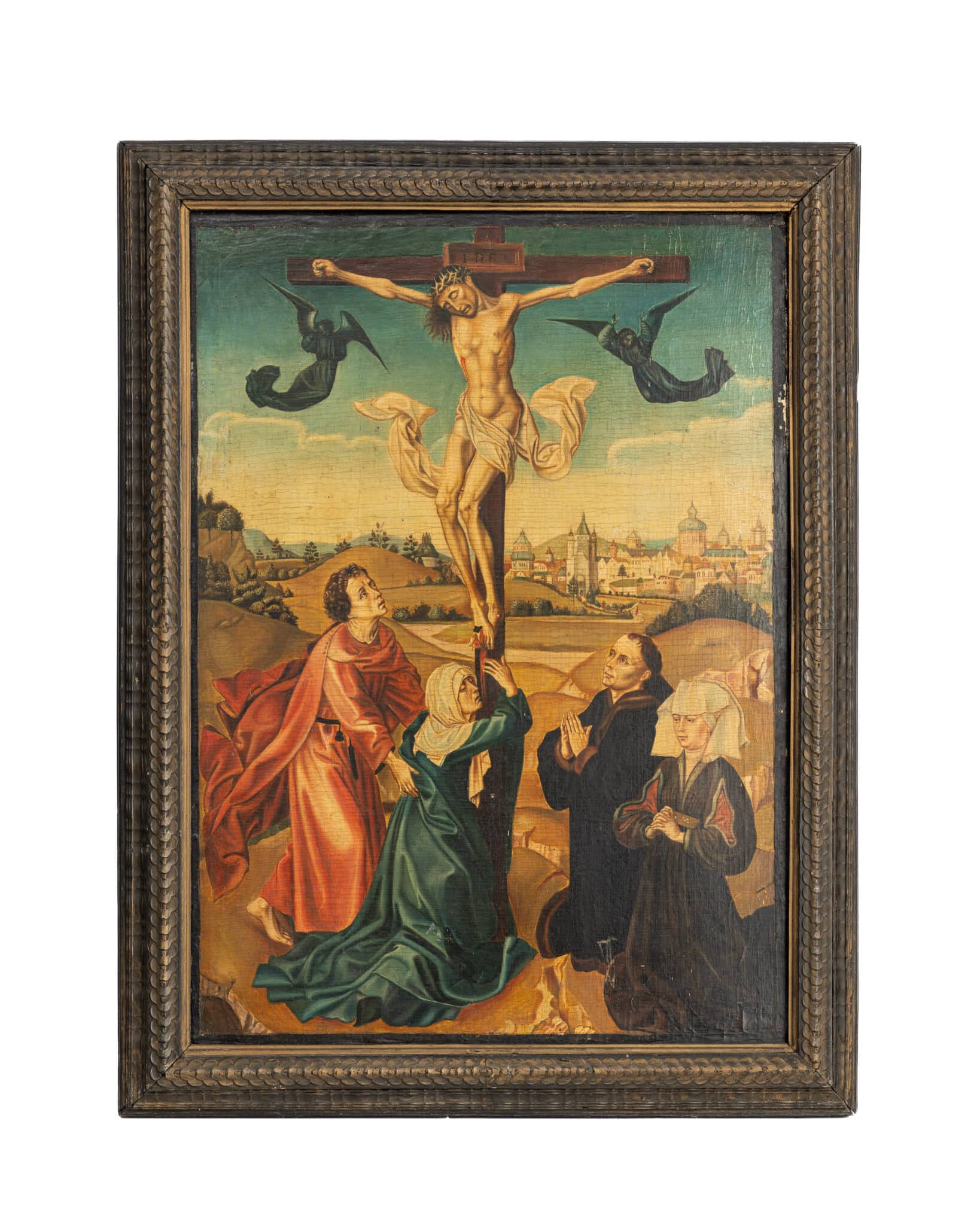
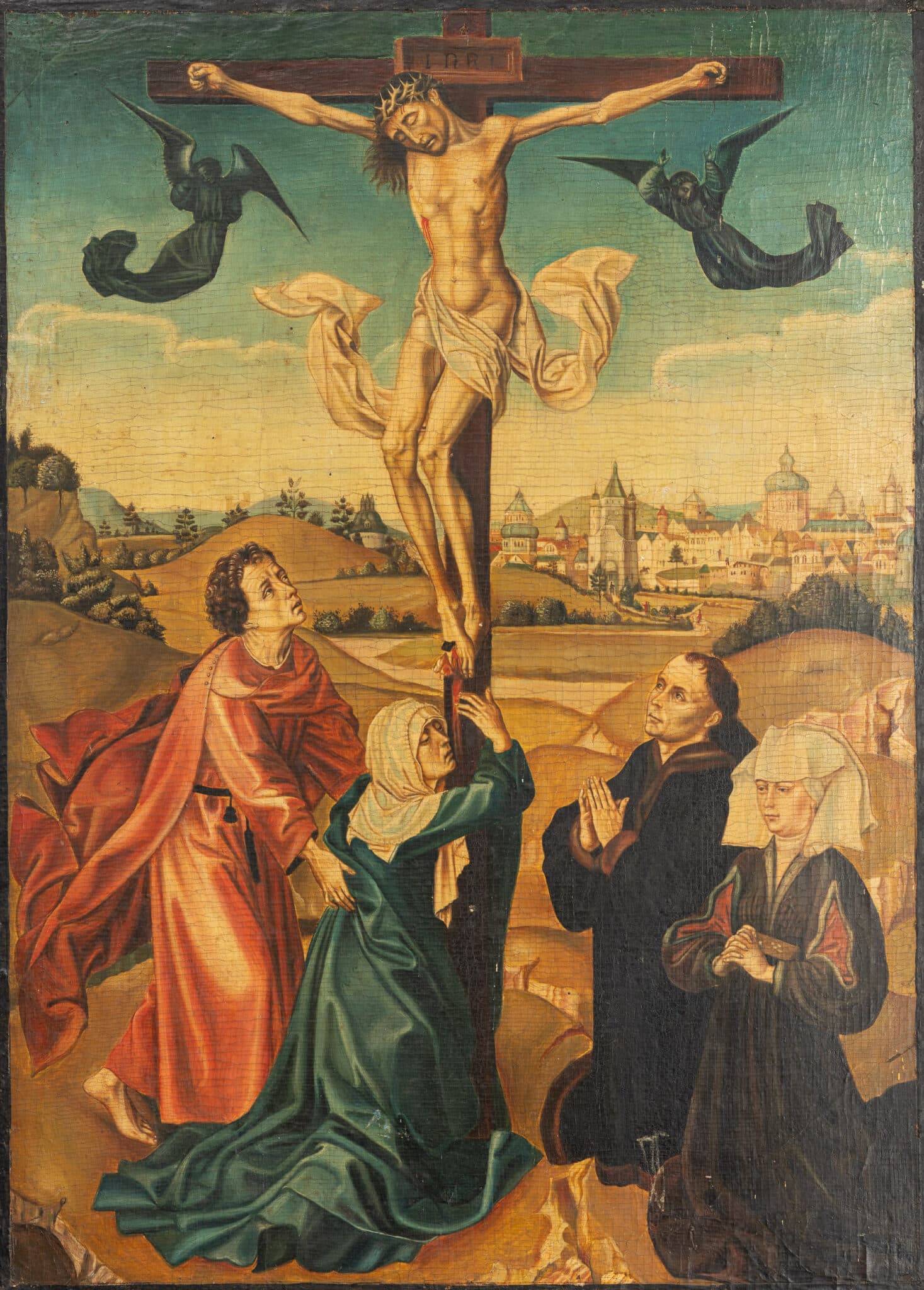
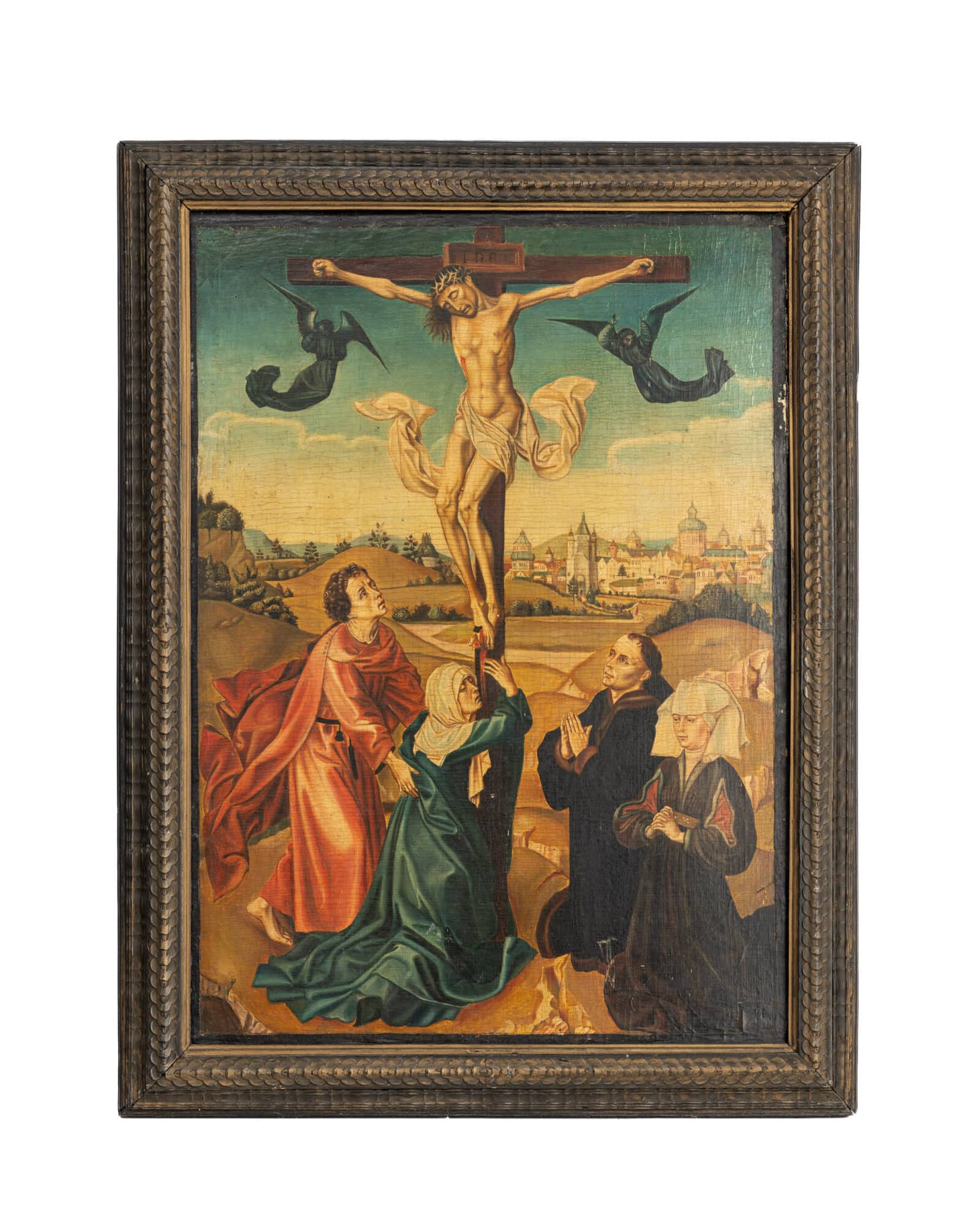
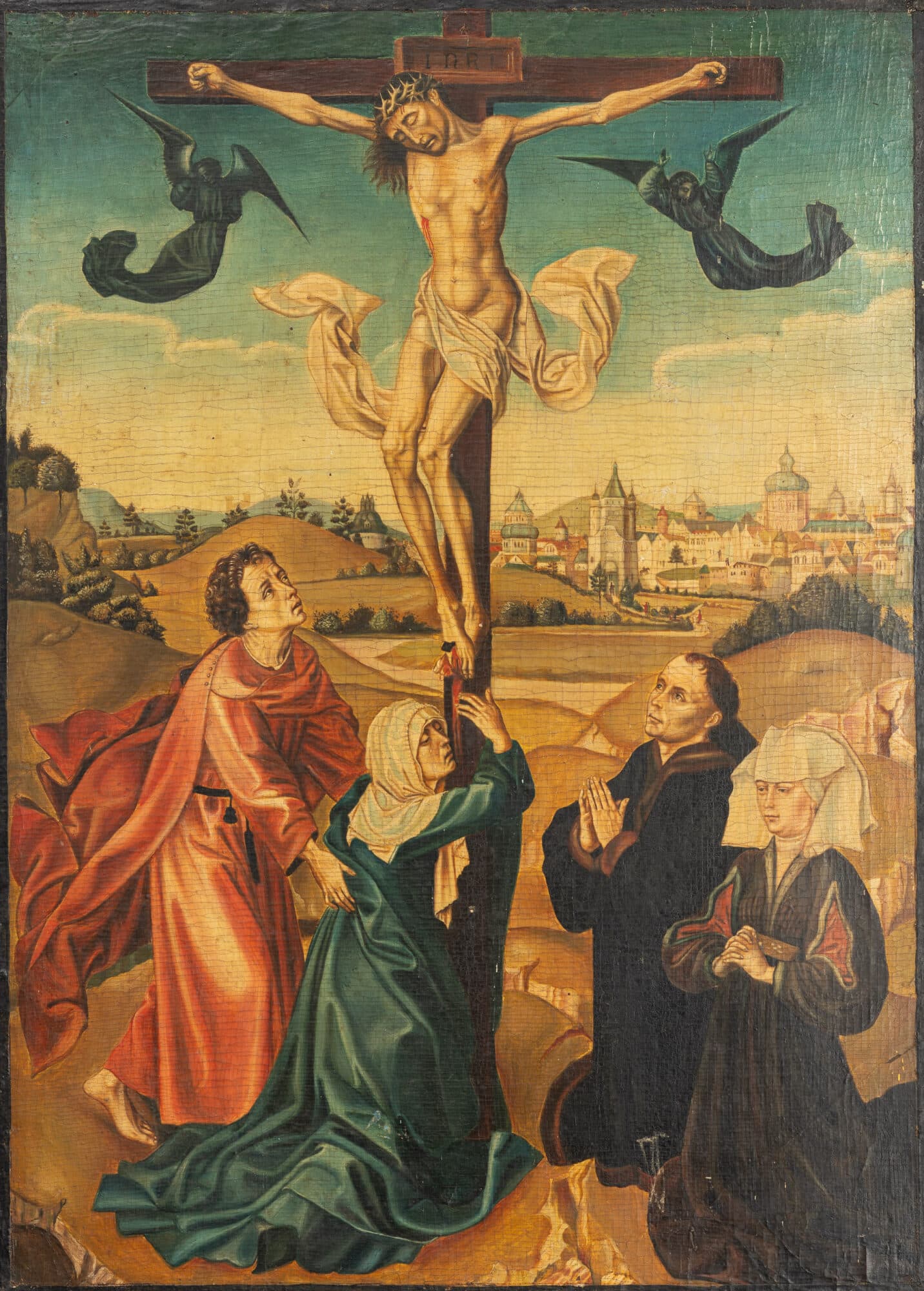
An accomplished late fifteenth-century Netherlandish panel painting depicting the Crucifixion of Christ, accompanied by the mourning figures of the Virgin Mary, Saint John the Evangelist and Mary Magdalene, together with two kneeling donors.
The composition is set within an extensive landscape of undulating countryside, scattered trees and distant monumental architecture, characteristic of the developing naturalism of Netherlandish painting during the second half of the fifteenth century.
Christ occupies the central axis of the composition, his elongated body suspended from the cross against the distant landscape. The carefully observed anatomy, restrained expression and delicate modelling of the flesh convey the solemnity of the subject. Two angels appear beside the crucified figure, collecting the blood flowing from his wounds, a devotional motif emphasising the Eucharistic significance of Christ’s sacrifice.
The accompanying figures are distinguished by the particularly accomplished treatment of their garments. Broad, sweeping folds of richly coloured fabric are articulated through carefully graduated tones and sharply defined passages of shadow. The flowing red mantle of Saint John and the voluminous green drapery of the kneeling female figure demonstrate the painter’s understanding of movement, weight and the sculptural possibilities of fabric. The contrast between these richly modelled garments and the more restrained clothing of the donors contributes to the carefully balanced arrangement of the composition.
Of particular interest are the two kneeling donors occupying the lower corners of the painting. Their inclusion indicates a work conceived within the tradition of private patronage and personal devotion, in which the individuals responsible for commissioning an image were represented as perpetual witnesses to the sacred event.
The female donor is depicted wearing a dark gown and an elaborate white linen headdress, closely framing her delicately modelled face. The elongated facial proportions, high forehead and restrained expression recall conventions established in Early Netherlandish portraiture during the first half of the fifteenth century, particularly those associated with the artistic legacy of Jan van Eyck. Such characteristics continued to influence representations of female patrons throughout the later fifteenth century.
The male donor, similarly represented in an attitude of prayer, wears a dark garment, his comparatively austere appearance providing a visual counterpoint to the richly coloured sacred figures.
The landscape is an important element of the painting’s artistic character. Beyond the immediate setting of the Crucifixion, the terrain opens into gently rising hills populated by individually articulated trees and vegetation. The eye is drawn towards an imposing distant city, its towers, roofs and monumental buildings rising above the surrounding countryside. The juxtaposition of expansive rural scenery and densely arranged architecture reflects the Netherlandish interest in constructing continuous and convincing pictorial space, while retaining the symbolic significance of Jerusalem as the setting of the Passion.
The treatment of the trees, the gradual recession of the landscape and the atmospheric relationship between foreground and distance reveal the influence of artistic developments associated with fifteenth-century Netherlandish painting. These conventions were widely disseminated through workshops operating in both the northern and southern provinces.