 Sold
Sold
An Exceptionally Fine Elizabeth I Oak Joined Chest with Original Polychrome Decoration
- Period
- 1580 - 1600
- Origin
- West Country (Exeter, Devon)
- Dimensions
- W 61" × H 34" × D 24 1/2"
- Reference
- #Marh3684
This piece has been sold. It is shown here for reference in our archive.
Description
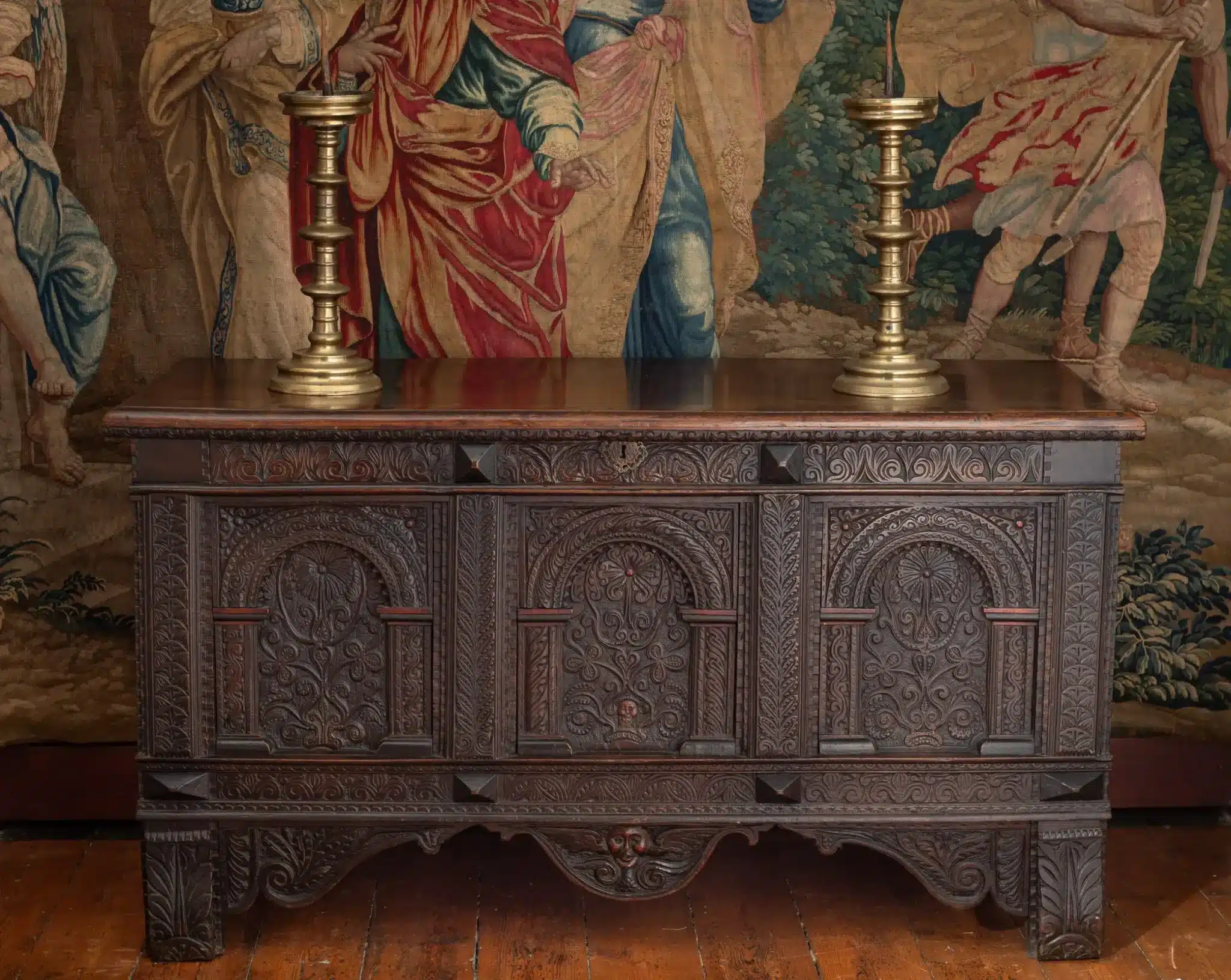
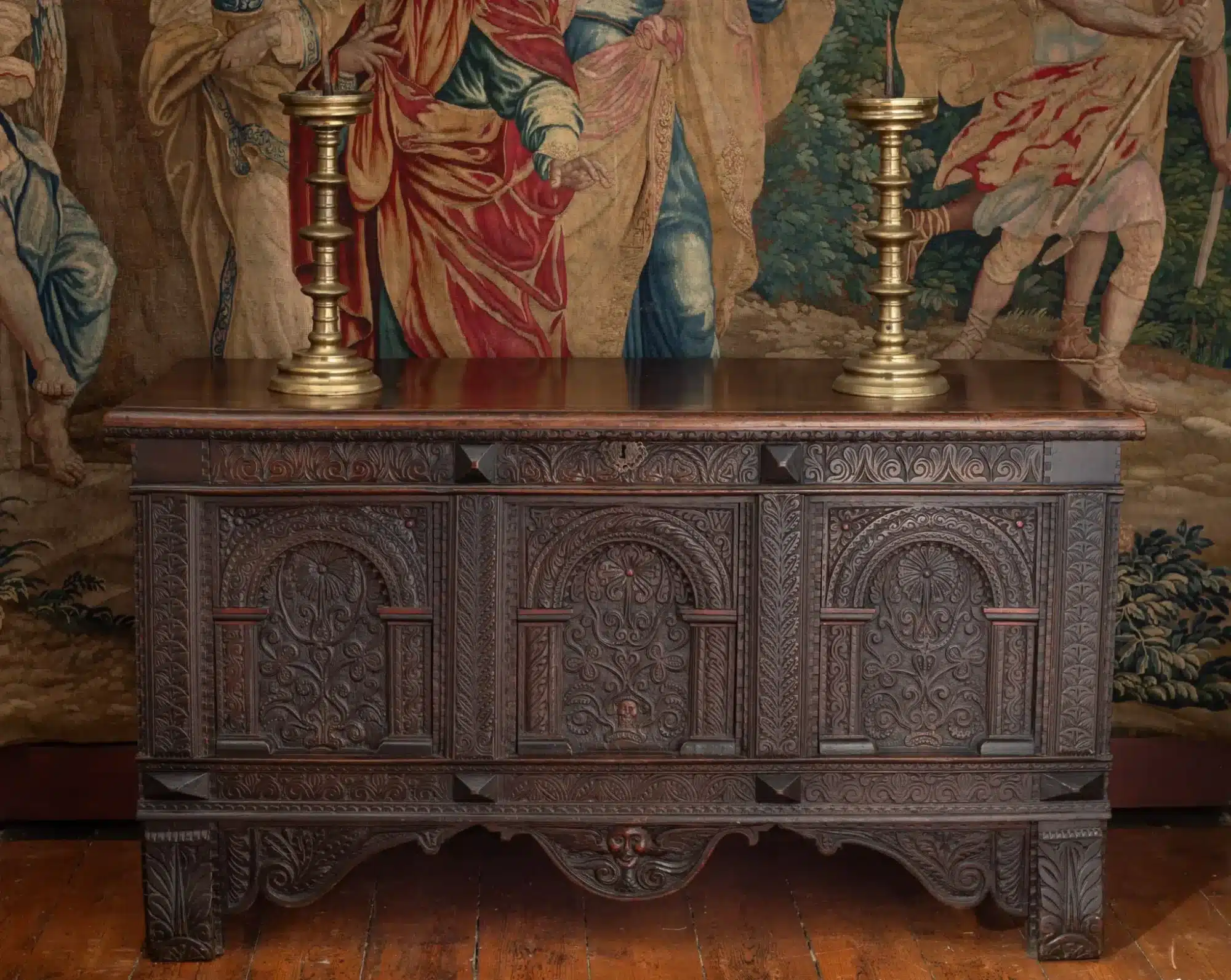
A superb and exceptionally well-preserved Elizabethan carved oak chest, of joined and pegged construction, richly decorated with arcaded panels, botanical motifs, and grotesque spandrels, and retaining significant traces of its original red and green polychromy- a survival of rare quality from the late Tudor period.
The front is composed of three deeply carved panels, each centred with a stylised flowering plant or tree of life motif, the stems rising beneath a semi-circular arcade supported by leafy columns. The spandrels are filled with scrolling foliage and grotesque masks, one bearing the initials “T.W.” carved in relief—almost certainly the initials of the original owner or craftsman. The frieze rail is profusely ornamented with running strapwork, lunettes, and interlacing foliage, punctuated by lozenges carved with alternating pyramidal bosses. The base rail is adorned with an exuberant scrolled apron and foliage-carved feet, while the top retains its original thick oak planks with pegged cleats.
The chest exhibits the most sophisticated West Country joinery and ornament of the Elizabethan period, combining architectural and botanical carving with regional exuberance. The decorative vocabulary—arched panels, tulip and vine tendrils, and grotesque masks—shows the influence of continental pattern sources such as Wendel Dietterlin’s Architectura (1598) and the widespread diffusion of Flemish strapwork ornament through the ports of Exeter and Plymouth. The use of polychromy—red lead and verdigris washes over burnished gesso grounds—echoes that found on other elite furniture pieces from Devon and Somerset of the same period.
This chest’s remarkable survival of paint traces is particularly important: the presence of original red and green pigments testifies to the colourful interiors of late Tudor gentry homes, challenging the common misconception of Elizabethan furniture as monochrome. The painted botanical panels, framed by sculptural architectural mouldings, represent the fusion of natural and architectural design central to Elizabethan art.
Condition: Outstanding condition for age. Retains extensive traces of original red and green pigment, particularly within the panel recesses. Old repairs to the top boards and one back leg, the latter with a well-executed spliced repair; hinges replaced. Expected minor shrinkage and surface wear consistent with age; rich dry patina throughout.