Anglo-Flemish Late Gothic Oak Cupboard
- Period
- Circa 1510 - 1530
- Origin
- Southern Netherlands or Eastern England
- Dimensions
- W 58"" × H 67 1/8"" × D 22 3/4""
- Reference
- #Marh3785
£12,500
Description
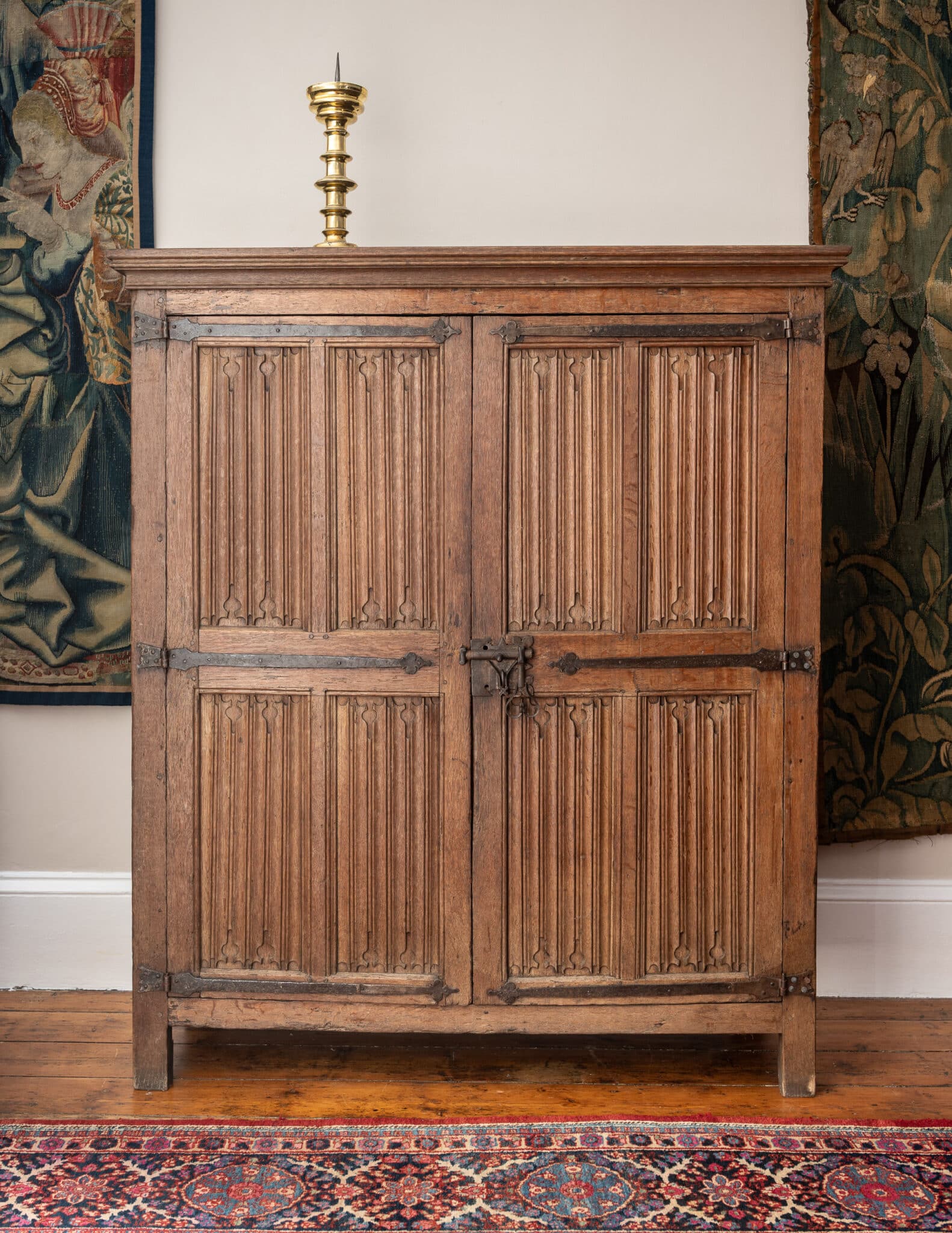
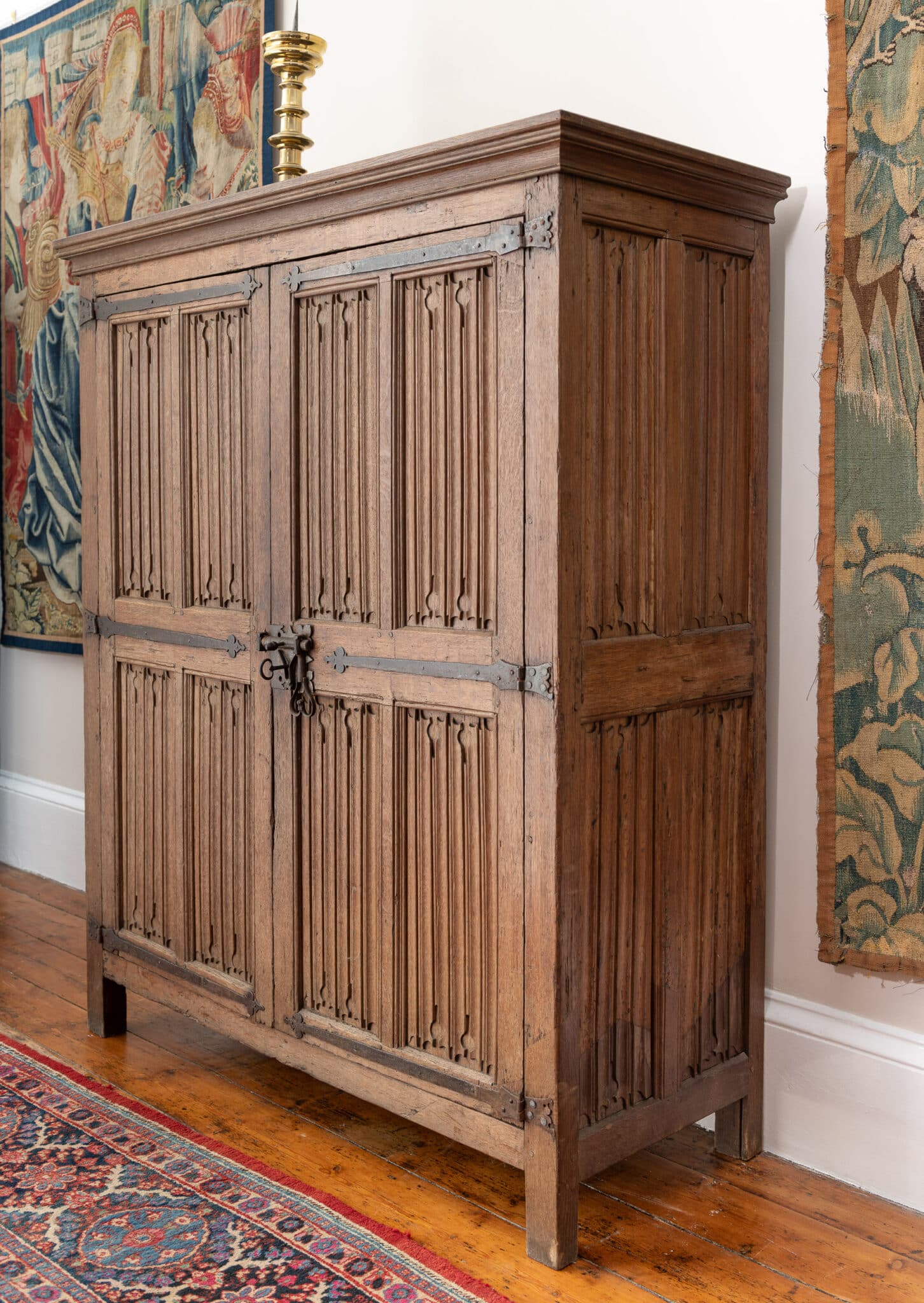
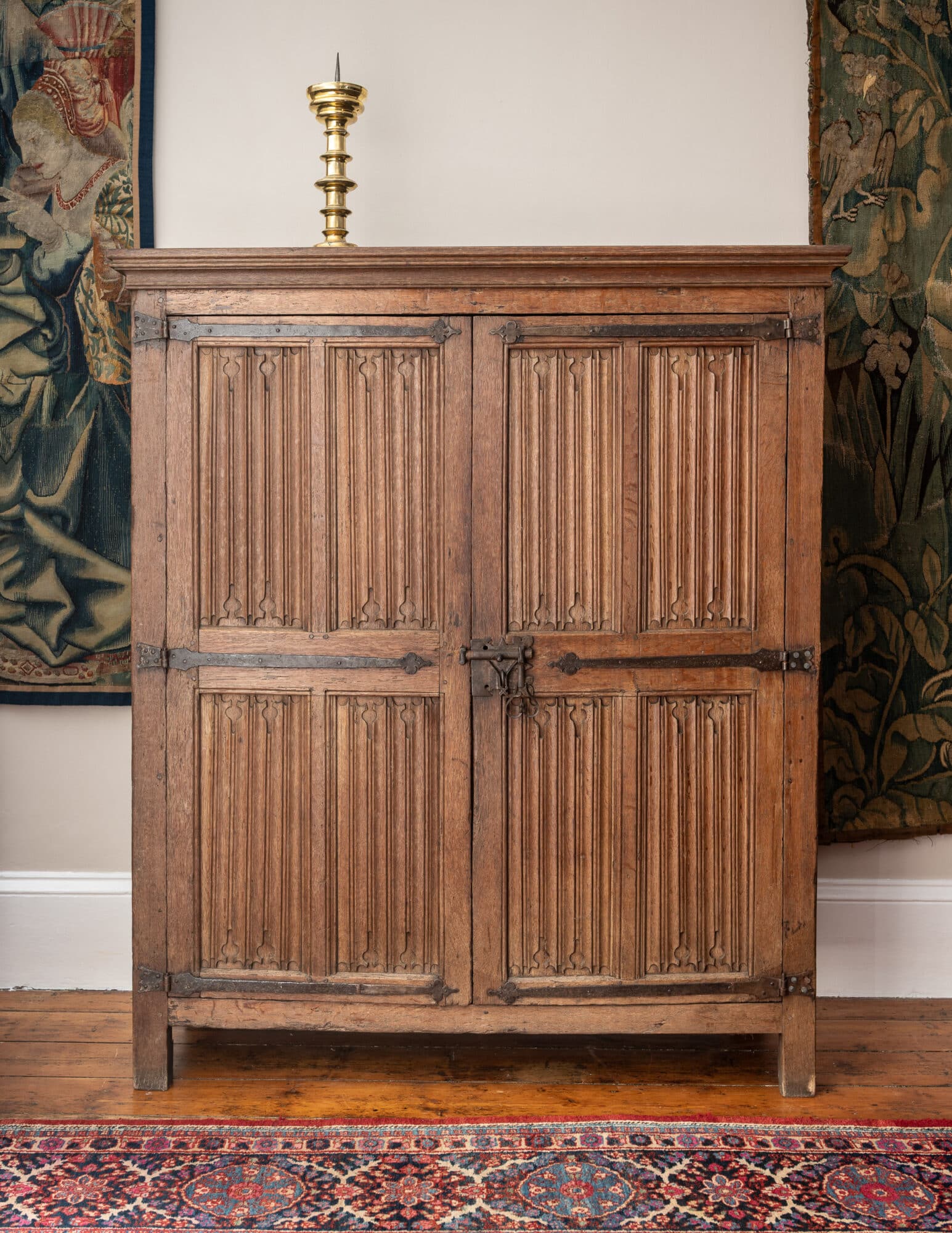
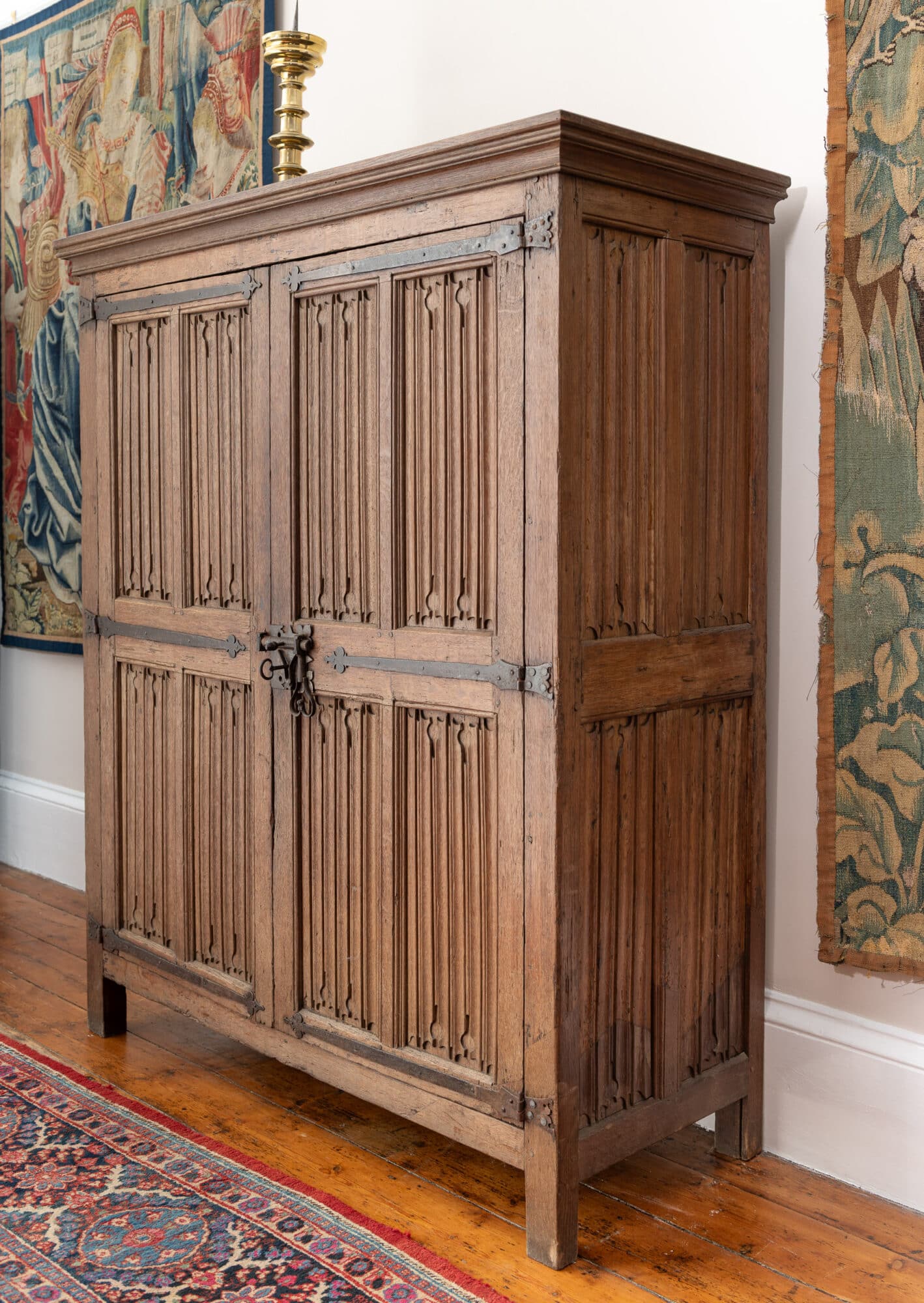
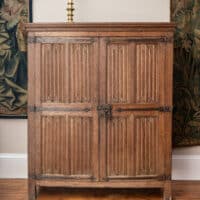
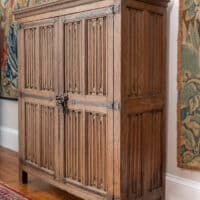
An early sixteenth-century oak cupboard, constructed in the late Gothic tradition and extensively decorated with narrow linenfold panels to both the doors and sides. The cupboard retains substantial early iron strap hinges and central lock furniture. Constructed principally from Baltic oak, it belongs to the closely interconnected tradition of English and Southern Netherlandish furniture production during the opening decades of the sixteenth century.
The imposing rectangular carcass is formed with two large doors, each divided horizontally and containing four linenfold panels, while corresponding linenfold decoration continues around the sides. The individual folds are particularly distinctive: long, narrow and strongly vertical, terminating in small cusped and expanded finials at their upper and lower extremities. The repetition creates an architectural effect closely related to contemporary fixed panelling and ecclesiastical woodwork.
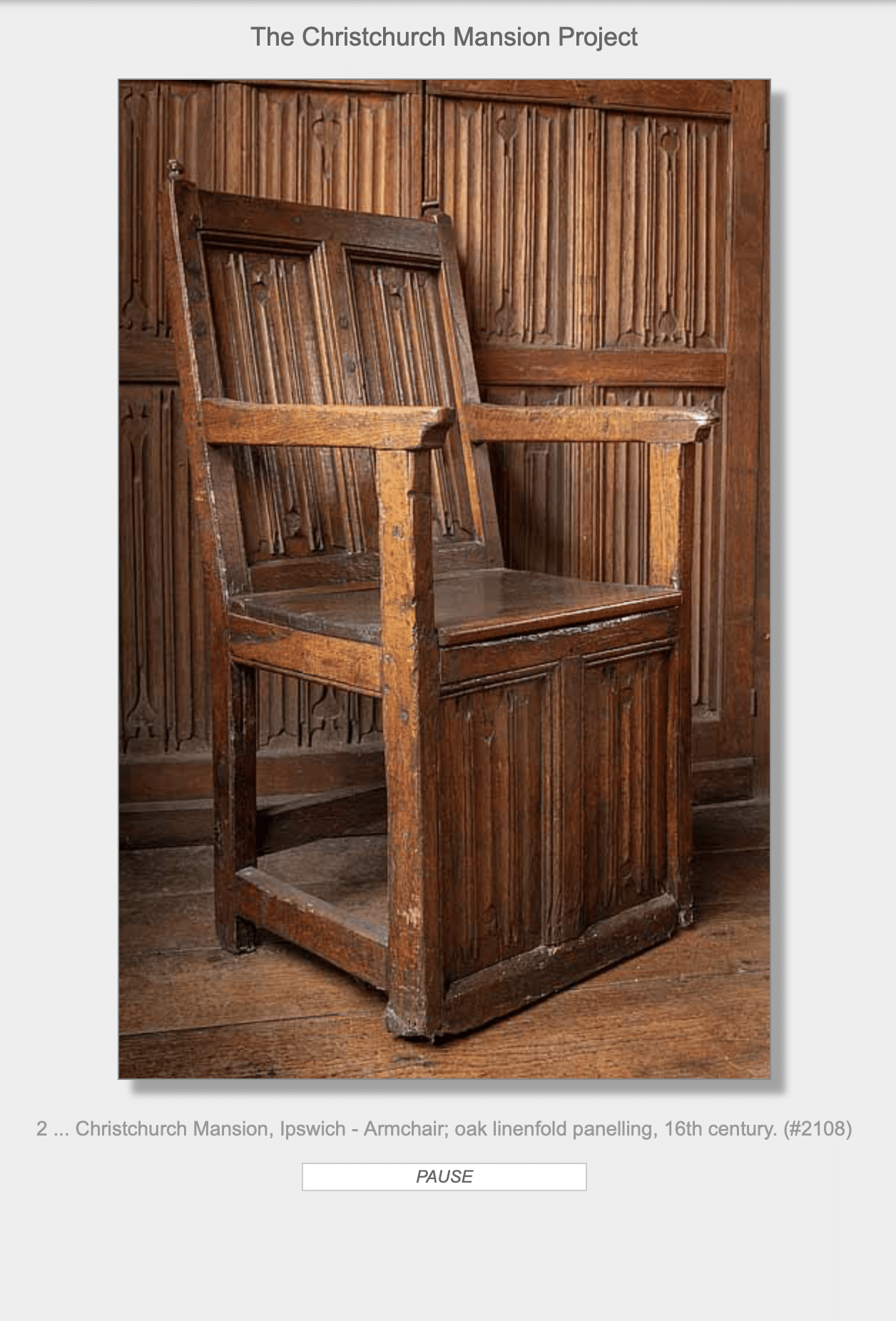
This particular form of linenfold has strong parallels in surviving English woodwork, notably in East Anglia. A particularly relevant comparison is provided by the extensive linenfold panelling preserved at Christchurch Mansion, Ipswich, where similarly elongated folds terminate in small cusped and pointed forms. Such comparisons demonstrate the extent to which the same decorative vocabulary circulated on both sides of the North Sea.
Rather than necessarily indicating a single place of manufacture, these similarities should be understood within the exceptionally close commercial relationship between eastern England and the Low Countries during the late fifteenth and early sixteenth centuries. English ports including Ipswich, King’s Lynn and Great Yarmouth participated in extensive North Sea trade with the great commercial centres of the Southern Netherlands, while finished objects, timber, craftsmen and patterns travelled alongside other commodities.
Furniture and carved woodwork formed part of this exchange. Netherlandish chests, cupboards and other furnishings were imported into England, while the stylistic vocabulary associated with the Southern Netherlands became deeply embedded within English late-Gothic woodworking. Conversely, objects intended for the English market could be manufactured in Continental workshops according to forms and decorative conventions already familiar to English patrons. Consequently, attempting to distinguish between an object made in Flanders for England and one produced in eastern England within a strongly Netherlandish woodworking tradition can sometimes impose a modern national distinction upon what was, in practice, a closely connected craft economy.
The use of Baltic oak is entirely consistent with this context. High-quality oak from the eastern Baltic was traded westwards in considerable quantities and supplied both the Low Countries and England. Its presence therefore does not by itself establish a place of manufacture; rather, it situates the cupboard within the wider northern European timber and furniture trade from which both English and Netherlandish workshops drew their materials.
The cupboard’s ironwork provides an important additional element of its early character. Long horizontal strap hinges extend across the framing of the doors and terminate in restrained decorative forms. The substantial central locking arrangement reinforces the essentially late-medieval conception of the piece. Ornament remains overwhelmingly Gothic: there is none of the developed classical Renaissance decoration that increasingly entered elite northern European furniture during the second quarter of the sixteenth century.
This combination of construction, ironwork and highly developed linenfold places the cupboard convincingly within the first three decades of the sixteenth century, circa 1510–1530.
The term Anglo-Flemish is therefore particularly appropriate. It acknowledges both the exceptionally close relationship with surviving English, and especially East Anglian, woodwork and the powerful Southern Netherlandish tradition from which this decorative language developed. The cupboard may have been produced in the Southern Netherlands for export to England, or within an English workshop operating within this shared North Sea tradition. In the absence of documentary evidence identifying its original workshop, a more categorical attribution would be difficult to sustain.
Condition: The upper board and associated top mouldings have been restored. Two linenfold panels to one side have undergone repair. The principal framed carcass, doors and extensive linenfold decoration survive together with substantial early ironwork.