
Paul Fitzsimmons logo
  • Current Stock
  • Archive
  • Notable Works
  • About Us
  • News
  • Contact
Home / Archive / Charles I Joined Oak…
Previous Next
Charles I Joined Oak Armchair, Welsh Borders Sold

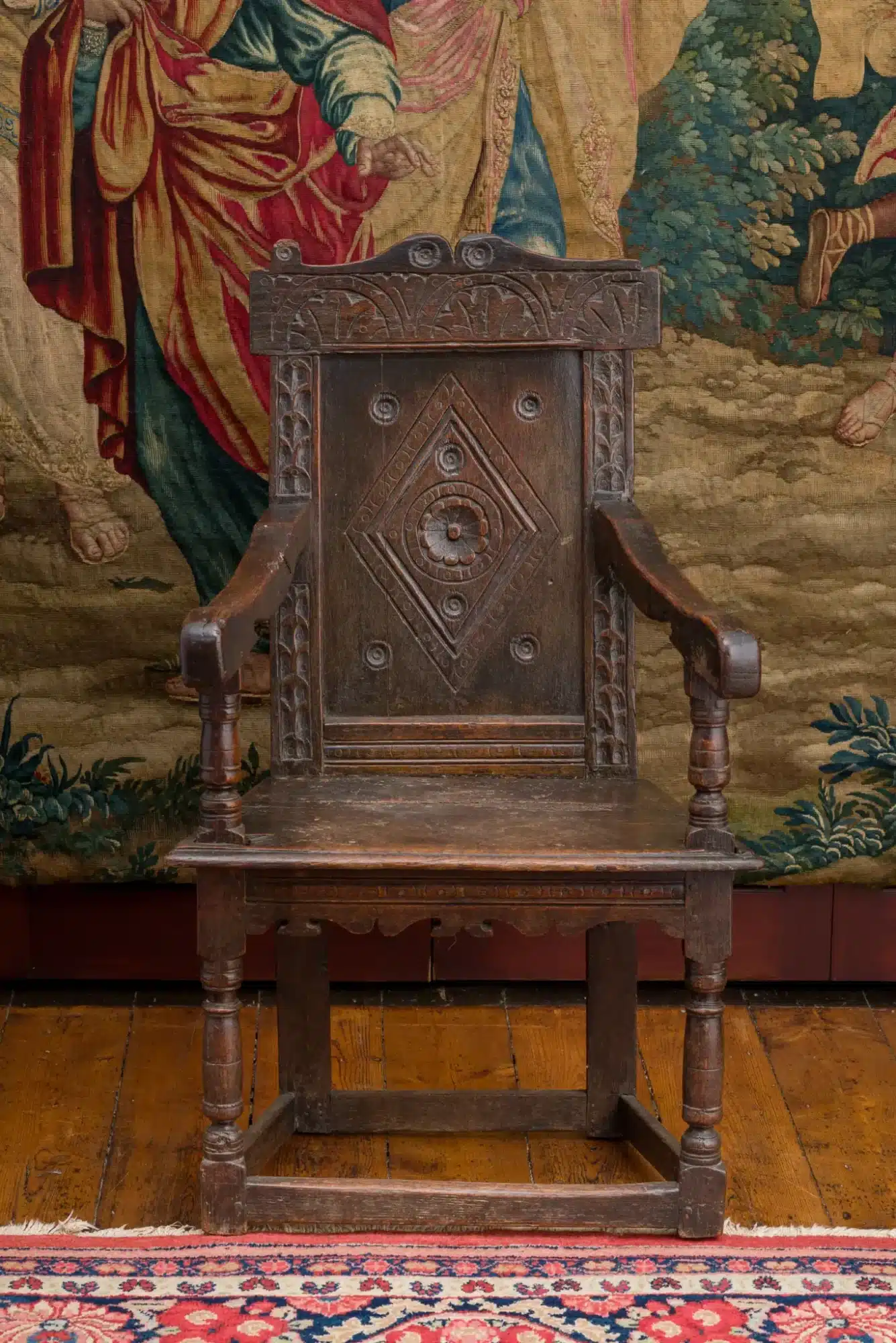
Charles I Joined Oak Armchair, Welsh Borders

Period
1630 - 1640
Origin
Welsh borders
Dimensions
W 26 1/2" × H 44" × D 21"
Reference
#Marh2840

This piece has been sold. It is shown here for reference in our archive.

Description

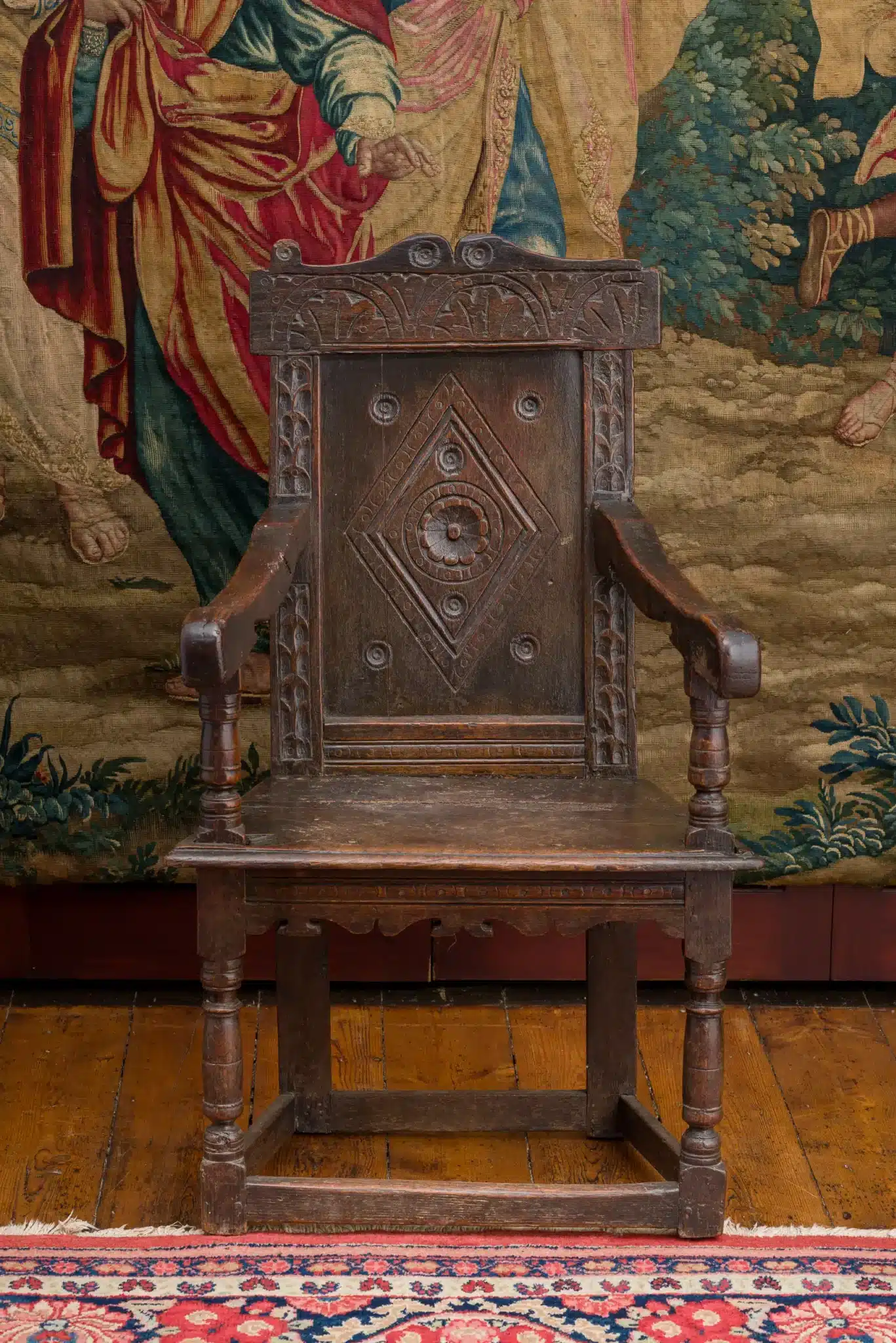
A rare survival from the Welsh Borders, this Charles I joined oak armchair demonstrates the regional vocabulary of carving, combining bold geometry with symbolic resonance. The back panel is dominated by a large central lozenge, centred with a carved rosette, surrounded by concentric bullseye roundels and framed with leafy spandrels. The lozenge motif was widely employed in early 17th-century Britain, symbolising protection, continuity, and stability — qualities particularly associated with domestic furniture intended to endure through generations. The flanking bullseye roundels likewise carried apotropaic meaning, serving as protective devices against misfortune.
The crest rail is carved with lunettes and additional bullseye decoration, echoing the lower frieze, creating a unified architectural rhythm across the chair. The baluster-turned forelegs and plain lower stretchers reinforce its strong, grounded stance, while the shaped arms provide a degree of comfort rare for chairs of this date.
Chairs of this type were important signifiers of authority within the household, often reserved for the master or for prominent display in the hall or parlour. Their survival rate is low, particularly with such a crisp surface and untouched colour as preserved here.
The Welsh Bullseye Motif
The concentric bullseye roundel is a defining motif of Welsh and Welsh Border oak carving in the 16th and 17th centuries. Its layered circles, often centred with a small boss, were not merely decorative but carried symbolic weight. Traditionally regarded as an apotropaic device, the bullseye was believed to deflect or “trap” the evil eye, protecting the household from malign influence. At the same time, its circular form evoked eternity, divine order, and unity, echoing medieval Christian symbolism. This motif, often combined with lozenge panels, is widely recognised as a hallmark of regional Welsh craftsmanship and remains one of the clearest identifiers of furniture made in this tradition.

Curator's Note

Previous English oak lion Next Charles II joined oa…
  • Charles I Joined Oak Armchair, Welsh Borders

Newsletter

New Stock, Direct to Your Inbox.

Be among the first to hear about new acquisitions and notable works.

Please enable JavaScript in your browser to complete this form.
Loading
Paul Fitzsimmons logo
  • Current Stock
  • Archive
  • Notable Works
  • About Us
  • News
  • Contact

Contact Us

+44 (0)777 903 8891

  • Pinterest
  • Instagram

By Appointment

Devon, England.

Paul Fitzsimmons

Specialist in early oak furniture and works of art.

© 2026 Paul Fitzsimmons | Website by Dancing Badger Ltd

  • Privacy Policy
  • Terms & Conditions

Search the collection

Search in
    1 / 1