Paul Fitzsimmons logo
  • Current Stock
  • Archive
  • Notable Works
  • About Us
  • News
  • Contact
Home / Archive / Charles I Joined Oak…
Previous Next
  • Charles I Joined Oak Hanging Livery Cupboard
  • Charles I Joined Oak Hanging Livery Cupboard
  • Charles I Joined Oak Hanging Livery Cupboard
Sold

Charles I Joined Oak Hanging Livery Cupboard

Period
Circa 1630
Origin
England
Dimensions
W 57 1/4" × H 33 1/4" × D 21"
Reference
#Marh3584

This piece has been sold. It is shown here for reference in our archive.

Description

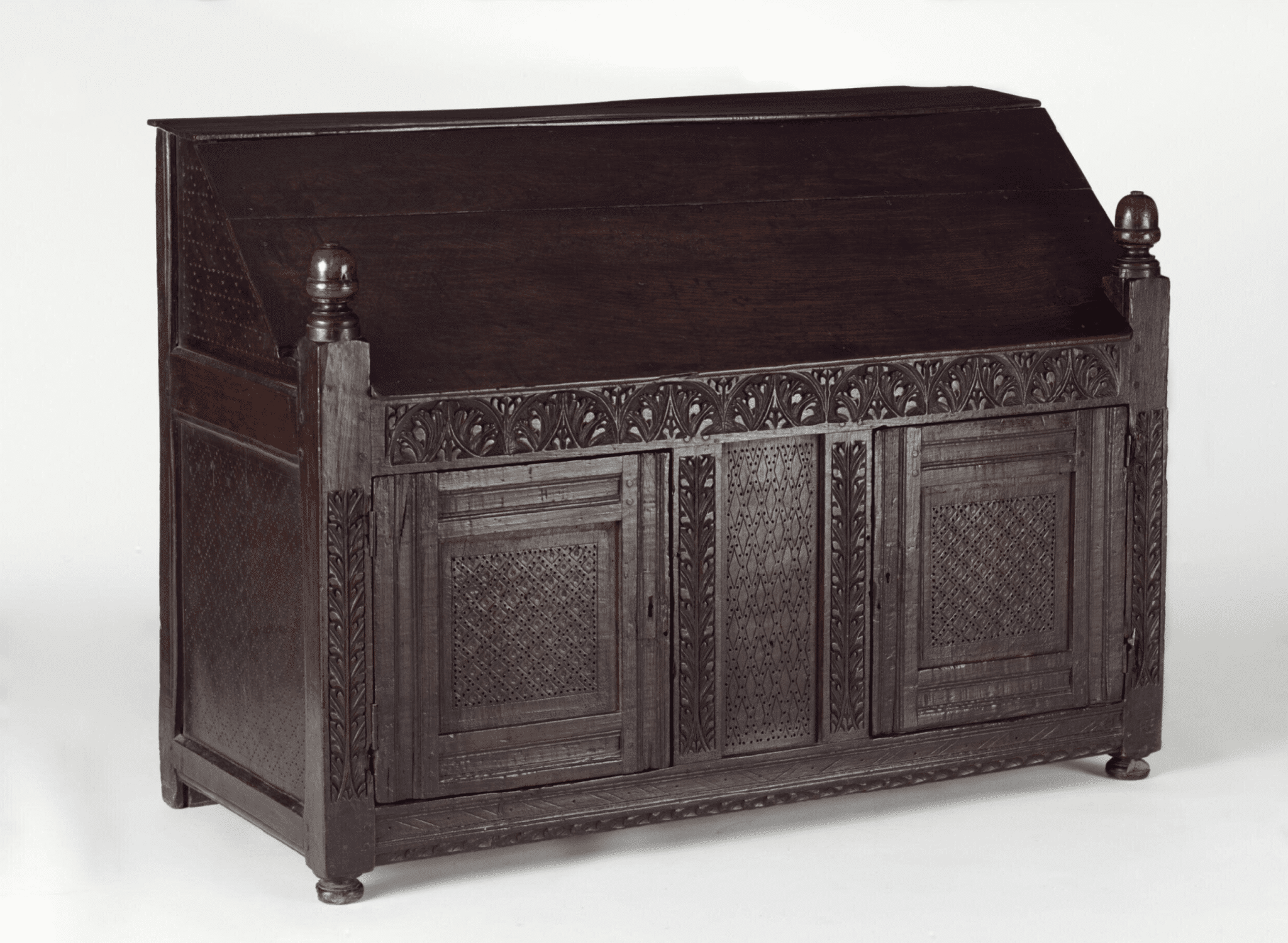
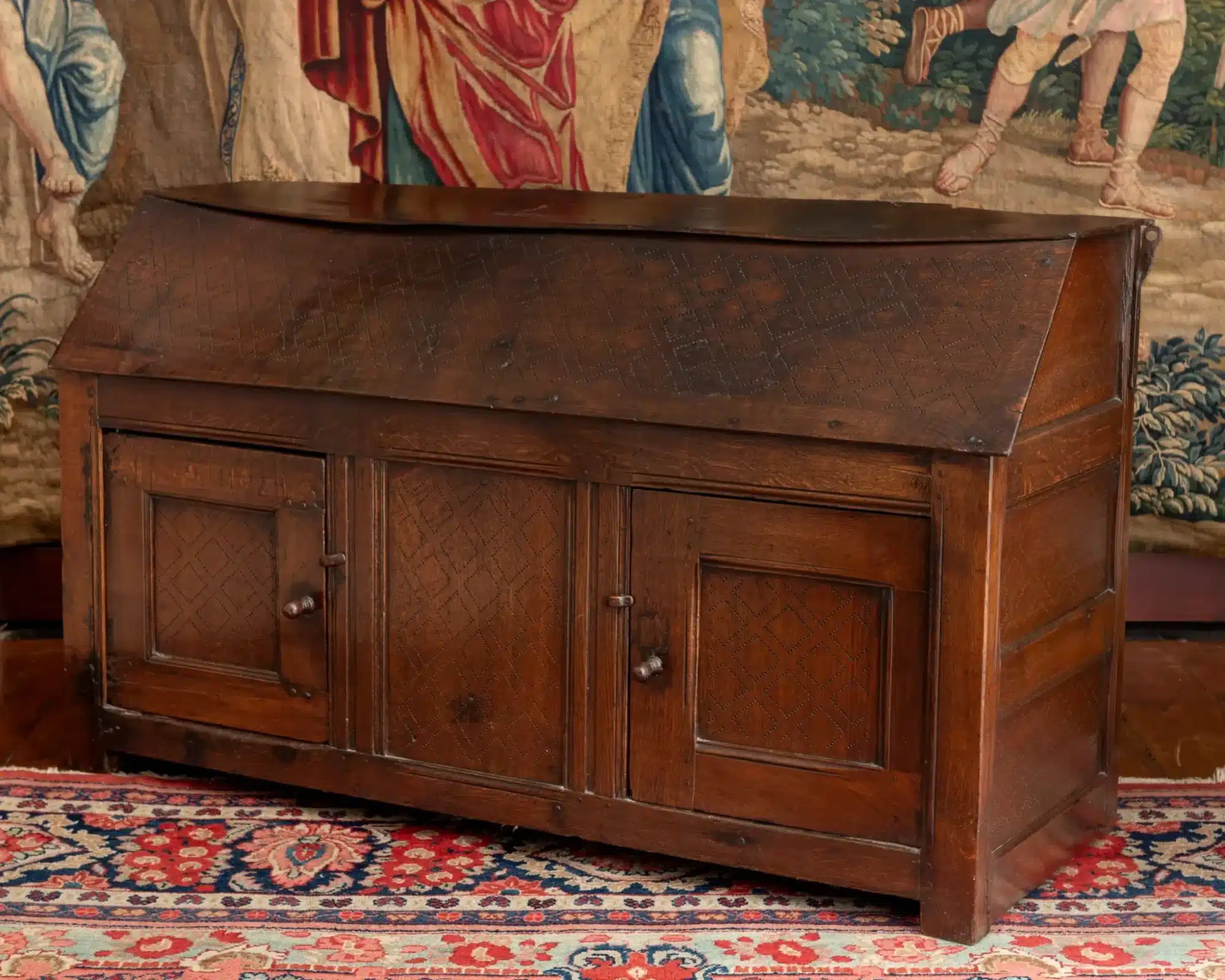
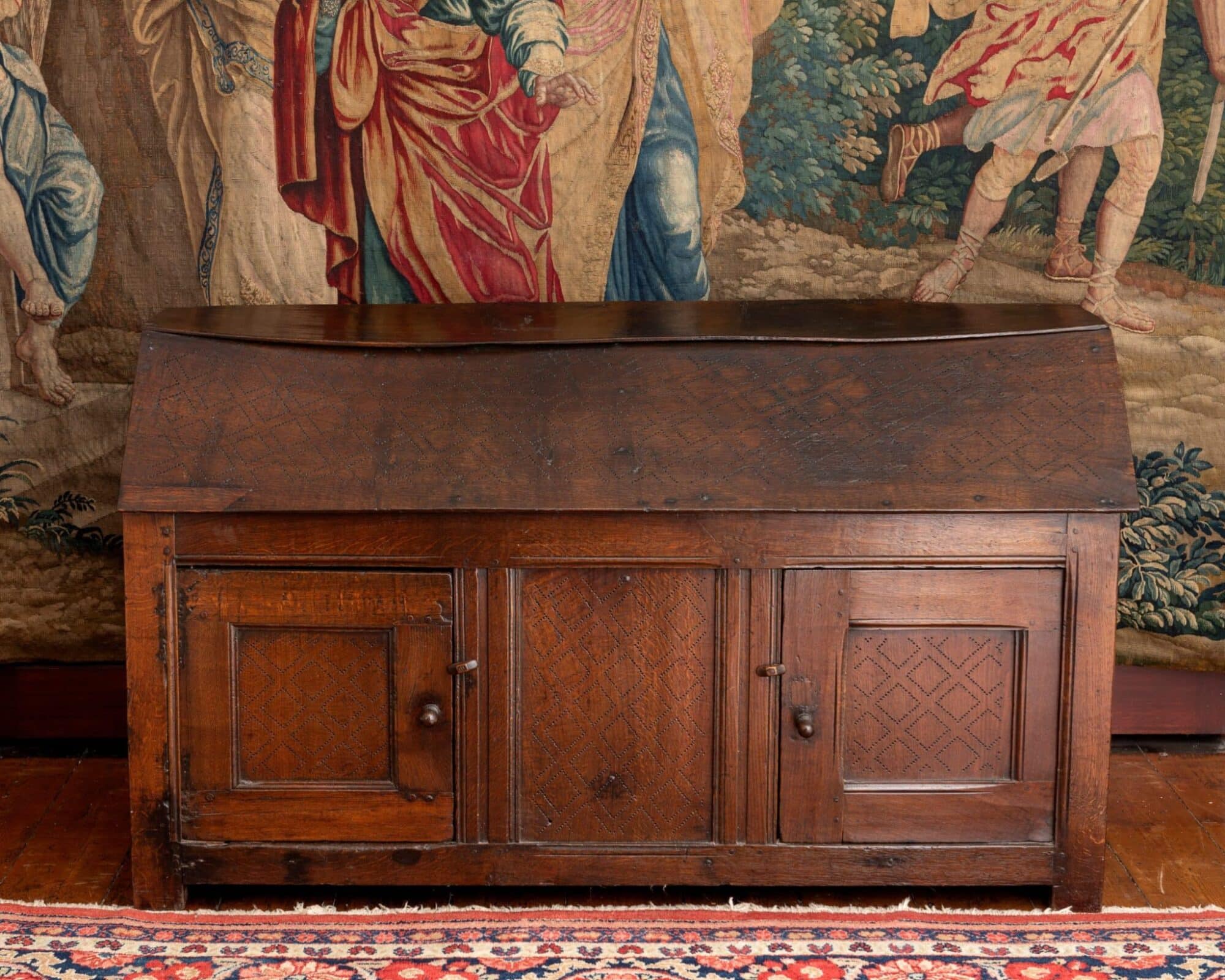
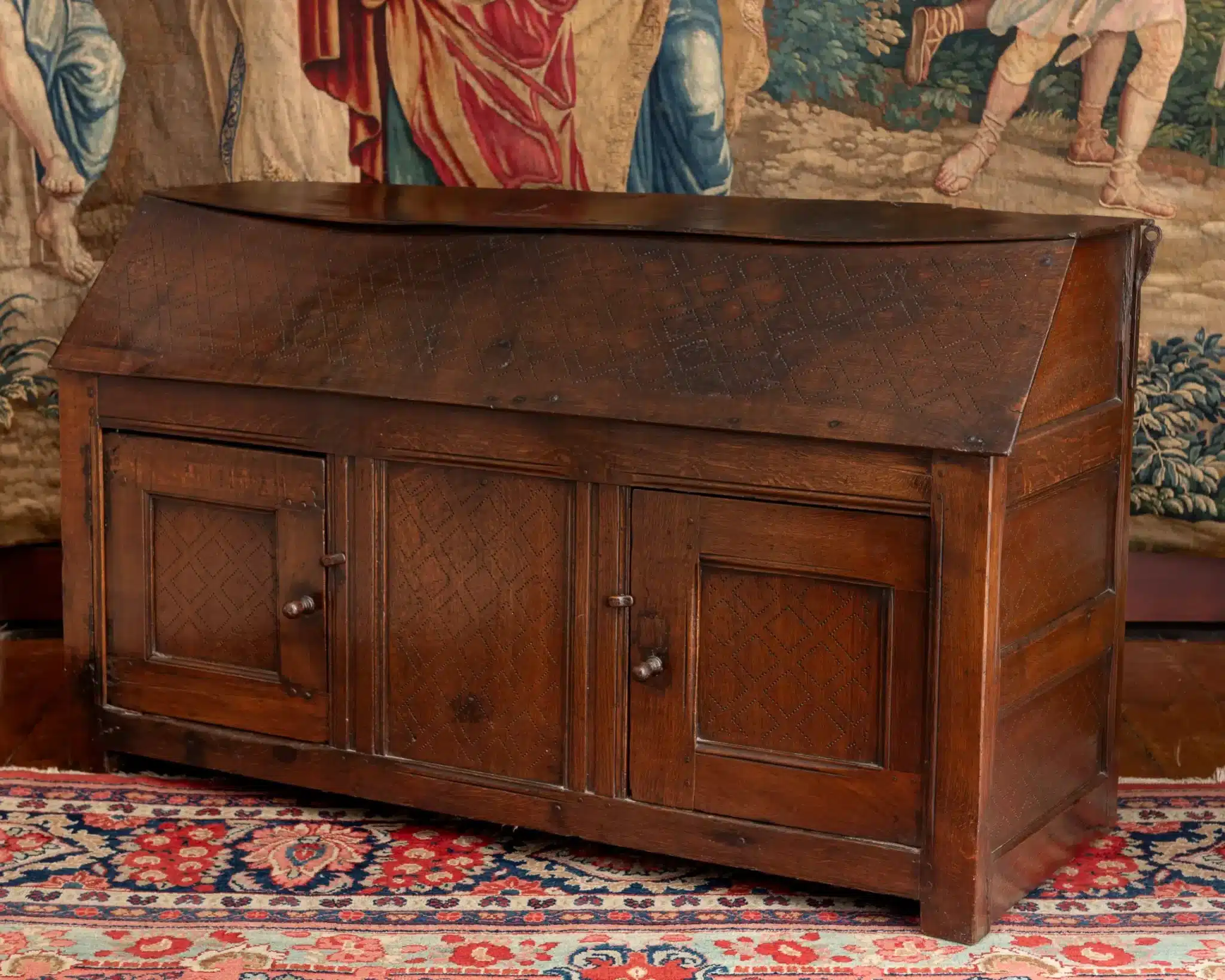
A rare survival of early 17th-century domestic furniture, this joined oak hanging livery cupboard is of characteristic Charles I form, the design both practical and ornamental. The front is composed of two doors of plain form with simple mouldings, flanking a fixed central panel. Each of these panels, along with the sides and the fixed sloping top board, is decorated with finely arranged pierced ventilation holes, set out in repeated diamond and lozenge motifs, serving both a functional purpose and creating a subtle geometric enrichment.
The cupboard was intended to store food and drink safely, and the pierced panels allowed for airflow whilst keeping out vermin. The sloped upper board also features this pierced patterning and is fixed in place, the joinery original throughout save for one small period patch repair. The sides retain their original wrought iron hanging straps, testifying to its intended use as a wall-hung livery cupboard rather than a floor-standing chest.
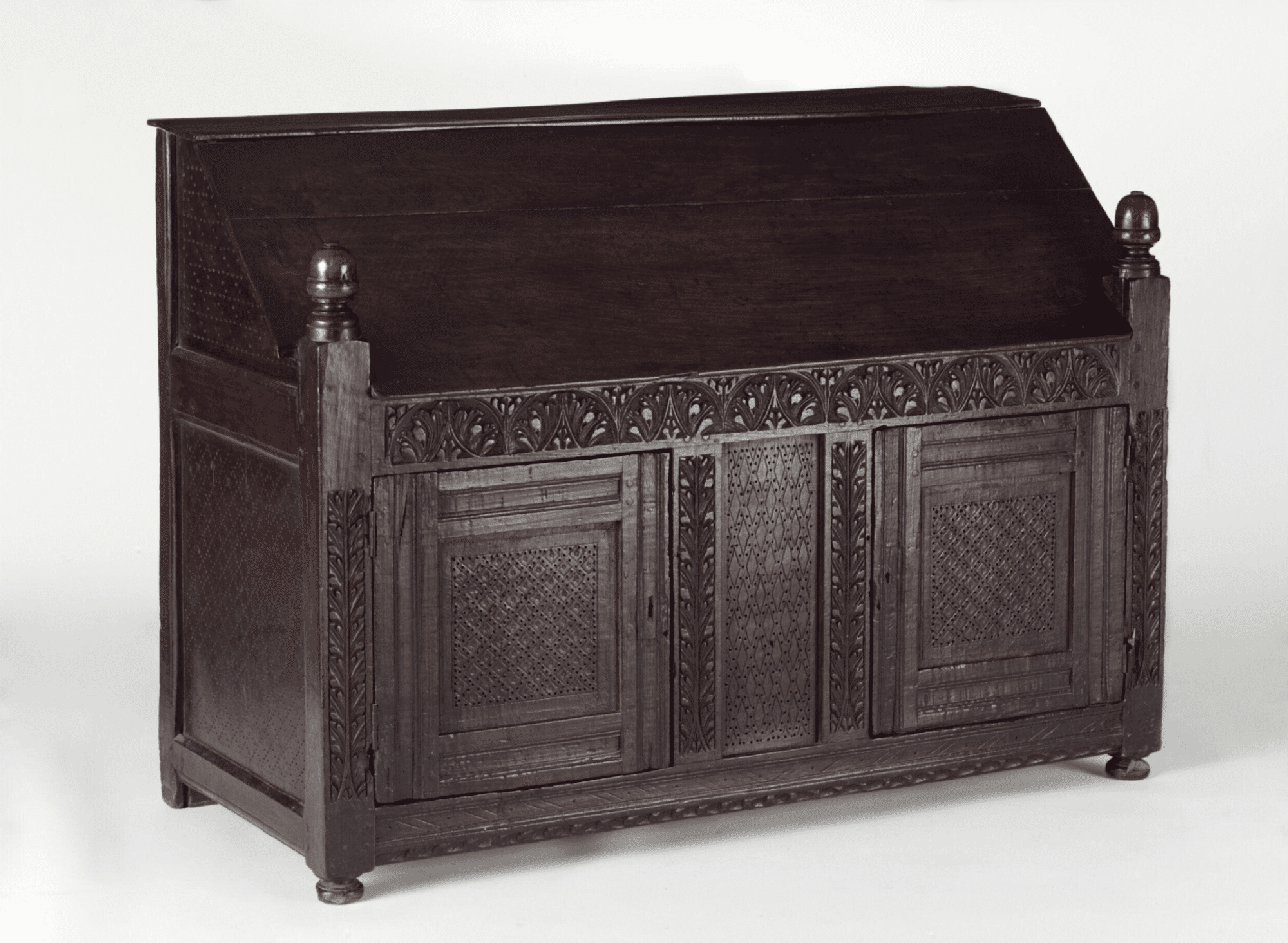
The form is extremely rare: David Knell records a related example (see English Country Furniture, p. 126, no. 132), while another is preserved in the Victoria & Albert Museum, London.
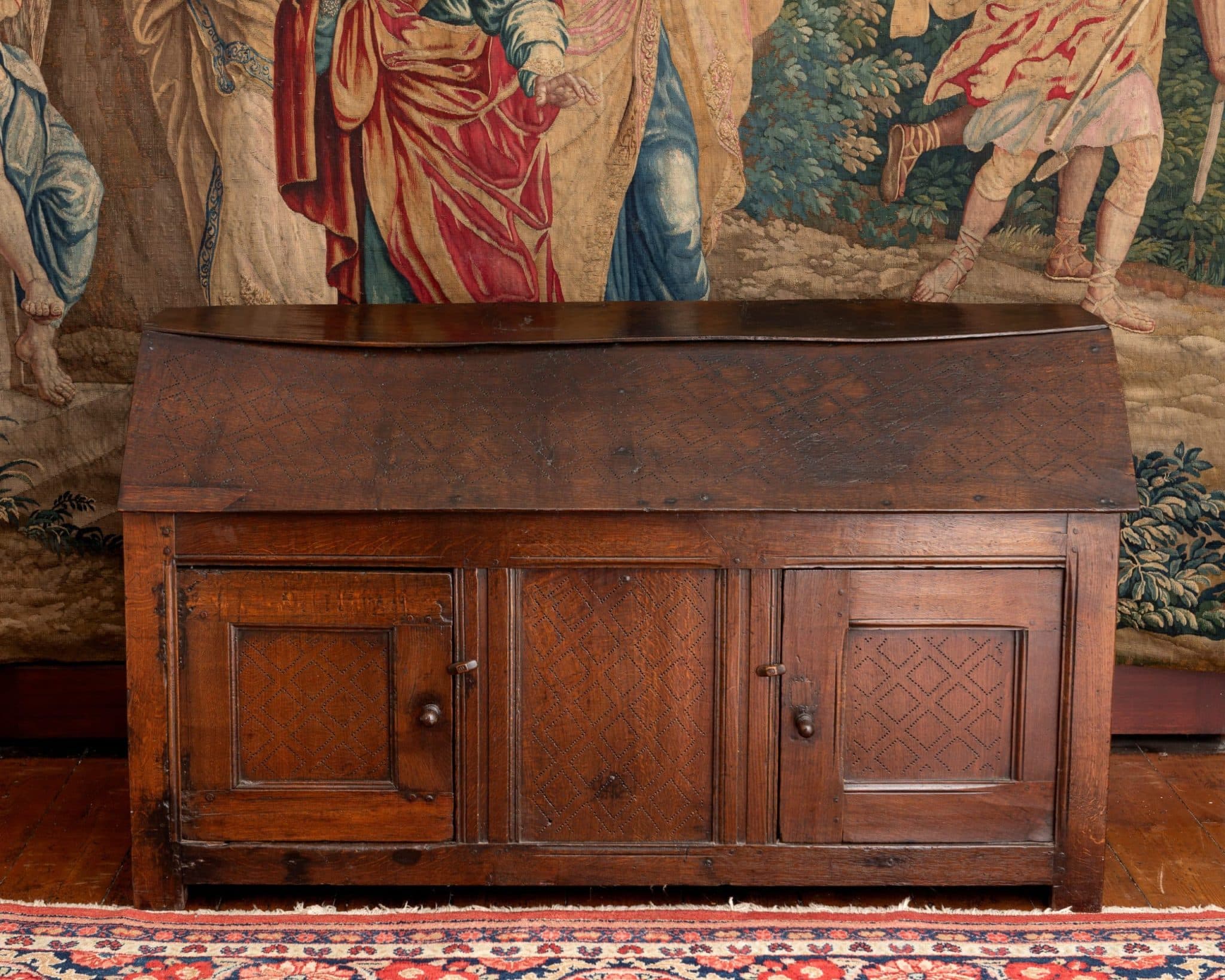
Hanging livery cupboards were a specialised form of domestic storage, used in the early 17th century to keep food, drink, or tableware in a cool and secure environment. The pierced patterns in the panels provided ventilation, preventing spoilage, while the raised or wall-hung design kept contents safe from vermin.
These cupboards were associated with households of wealth and status, often found in the service areas or private chambers of gentry and prosperous yeoman families. They are sometimes referred to as livery cupboards because they were also used to set aside portions of food and drink for household members or guests. Their rarity today suggests they were never made in large numbers and were intended for a more selective and affluent clientele.

Curator's Note

Previous Oil on canvas Gentle… Next Flemish Carved Walnu…
  • Charles I Joined Oak Hanging Livery Cupboard
  • Charles I Joined Oak Hanging Livery Cupboard
  • Charles I Joined Oak Hanging Livery Cupboard

Newsletter

New Stock, Direct to Your Inbox.

Be among the first to hear about new acquisitions and notable works.

Please enable JavaScript in your browser to complete this form.
Loading
Paul Fitzsimmons logo
  • Current Stock
  • Archive
  • Notable Works
  • About Us
  • News
  • Contact

Contact Us

+44 (0)777 903 8891

  • Pinterest
  • Instagram

By Appointment

Devon, England.

Paul Fitzsimmons

Specialist in early oak furniture and works of art.

© 2026 Paul Fitzsimmons | Website by Dancing Badger Ltd

  • Privacy Policy
  • Terms & Conditions

Search the collection

Search in
    1 / 1