 Sold
Sold
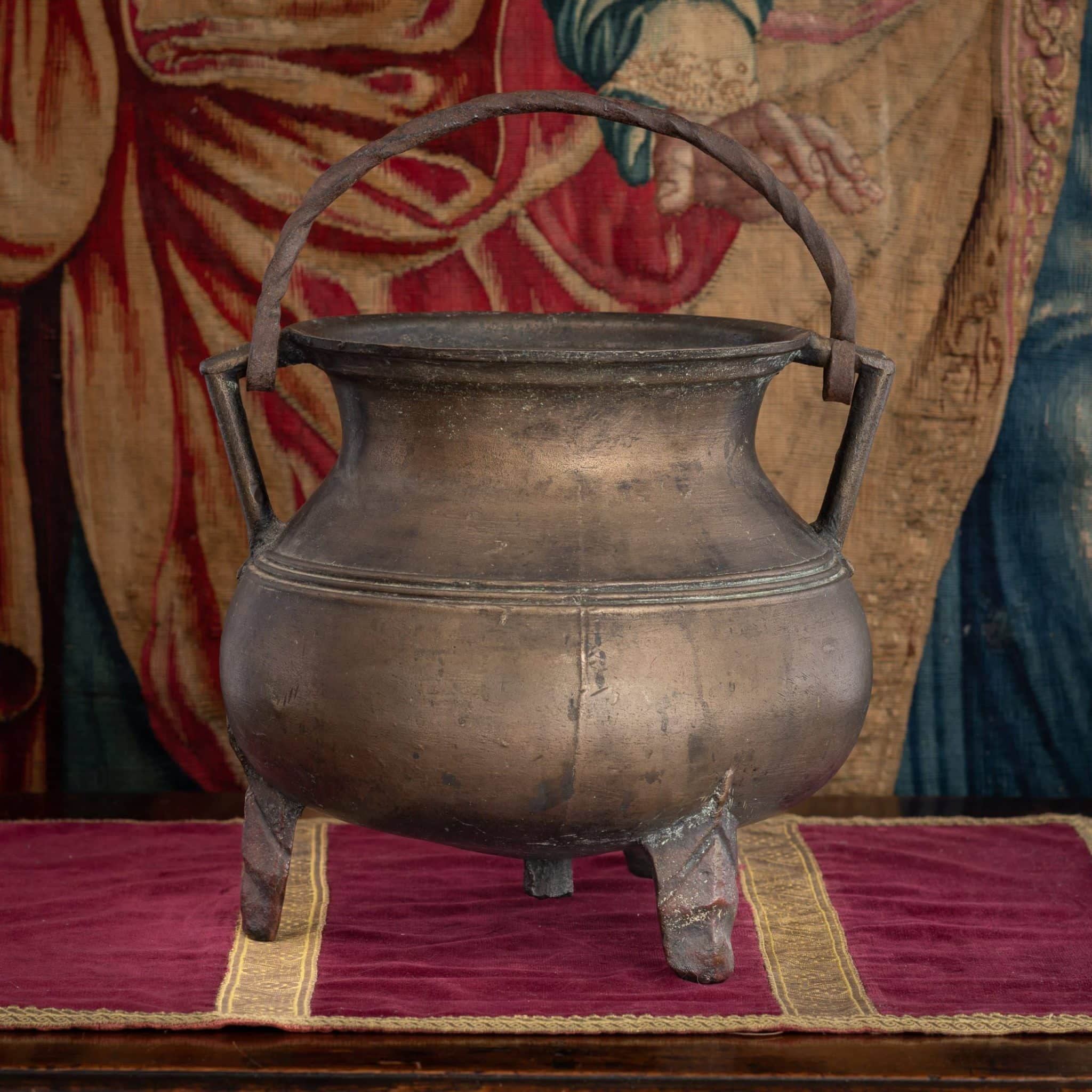
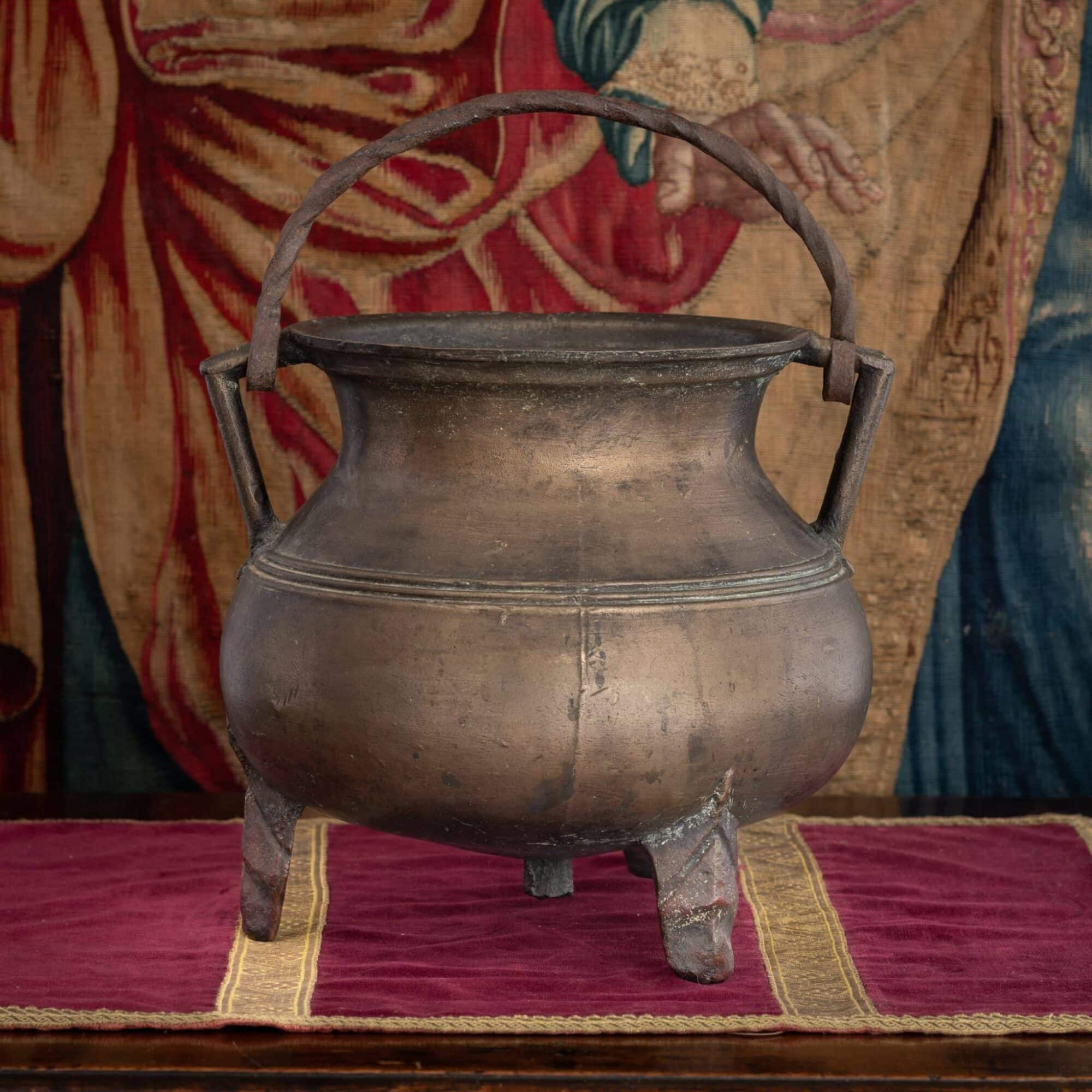
Dutch or Flemish Bronze Cauldron with Angular Handles
- Period
- 1550 - 1600
- Origin
- Netherlands or Flanders
- Dimensions
- W 10 3/4" diameter" × H 10 1/4"
- Reference
- #Marh3665
This piece has been sold. It is shown here for reference in our archive.
Description
A fine and early bronze cooking cauldron, cast in one piece with a bulbous body, angular integral handles, and three solid splayed legs, fitted with its original hand-forged iron swing handle of twisted form. The neck with a moulded double line beneath the rim, the surface showing excellent patina and signs of long domestic use.
This cauldron belongs to a distinct Northern European Renaissance type, produced in the Low Countries in the mid-sixteenth century, when bell-founding and bronze casting workshops in cities such as Dinant, Malines, and Antwerp were renowned throughout Europe. The form, with angular lug handles and sharply faceted legs, closely relates to examples excavated from sites in Holland and Flanders and to those illustrated in Michael Finlay, English Decorated Bronze Mortars (1988), figs. 3–4, where the author discusses their continental origins and import into England.