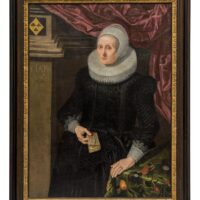
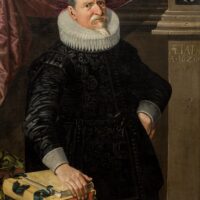

Pair of Portraits of a Gentleman and his Wife
- Period
- 1626
- Origin
- Low Countries
- Dimensions
- W Male 32" (frame 41") Female 31 1/2" (frame 39 3/4")" × H Male 47" (frame 55") Female 43 1/4" (frame 51 1/2")"
- Reference
- #Marh2595
This piece has been sold. It is shown here for reference in our archive.
Description
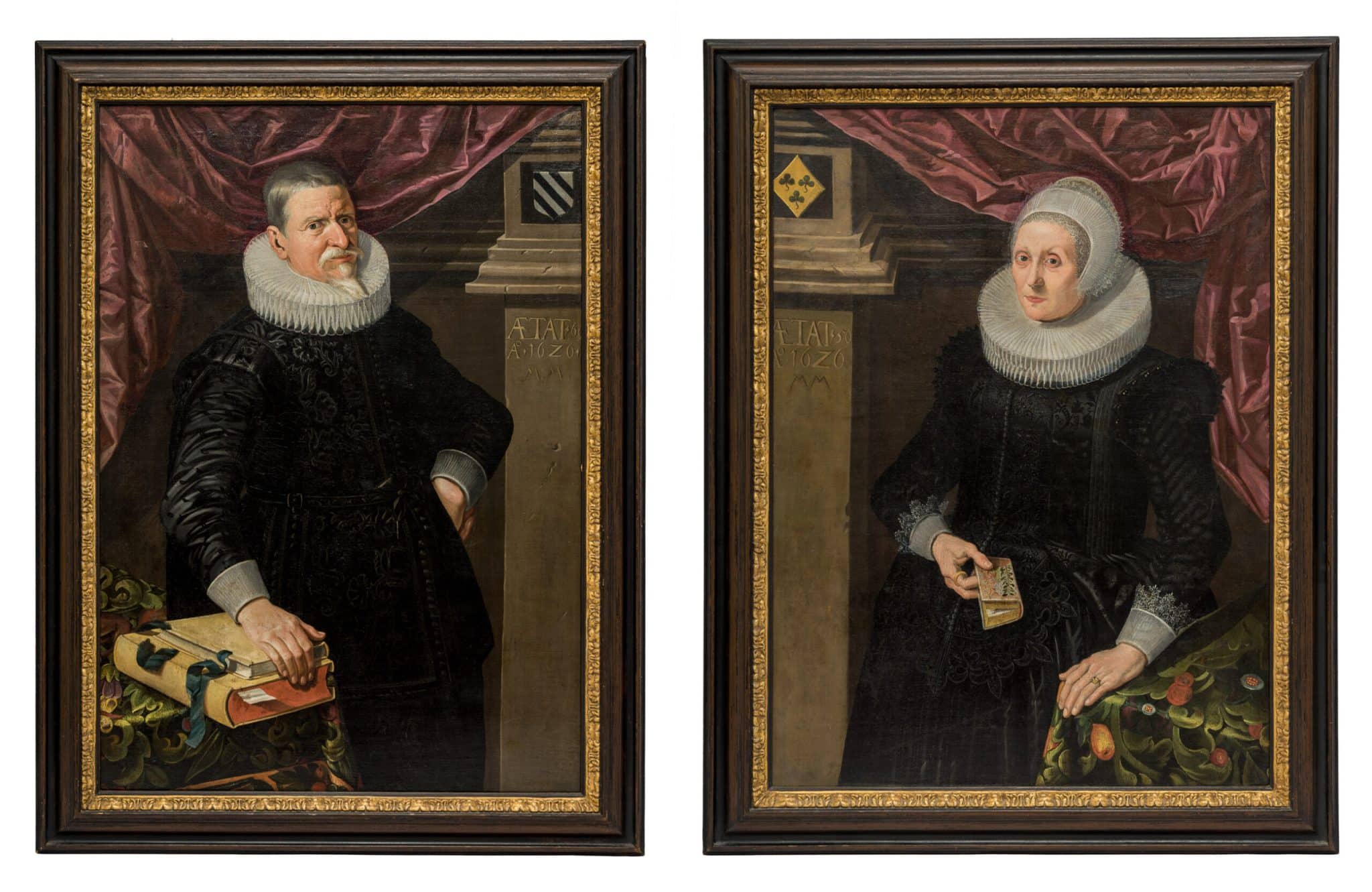
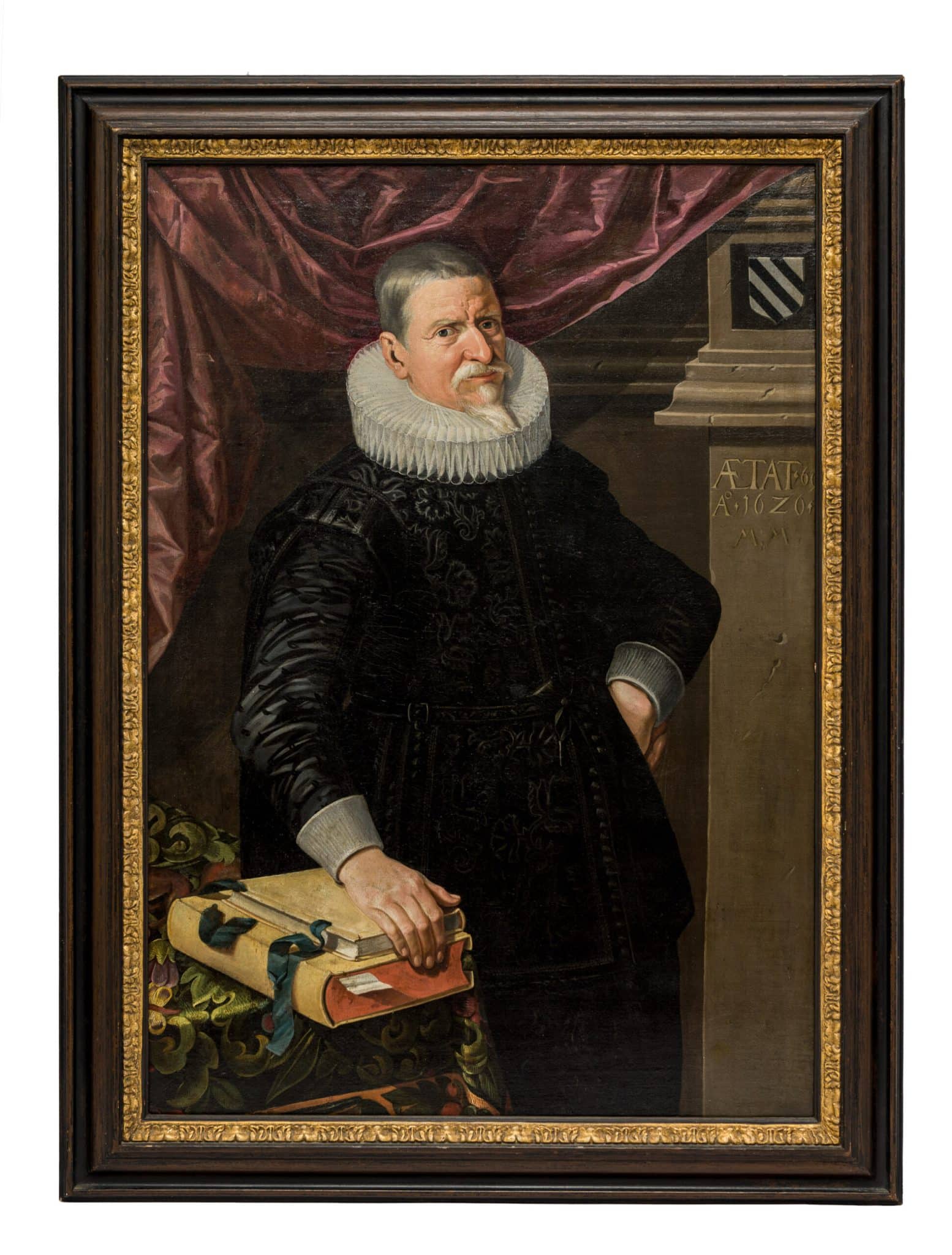
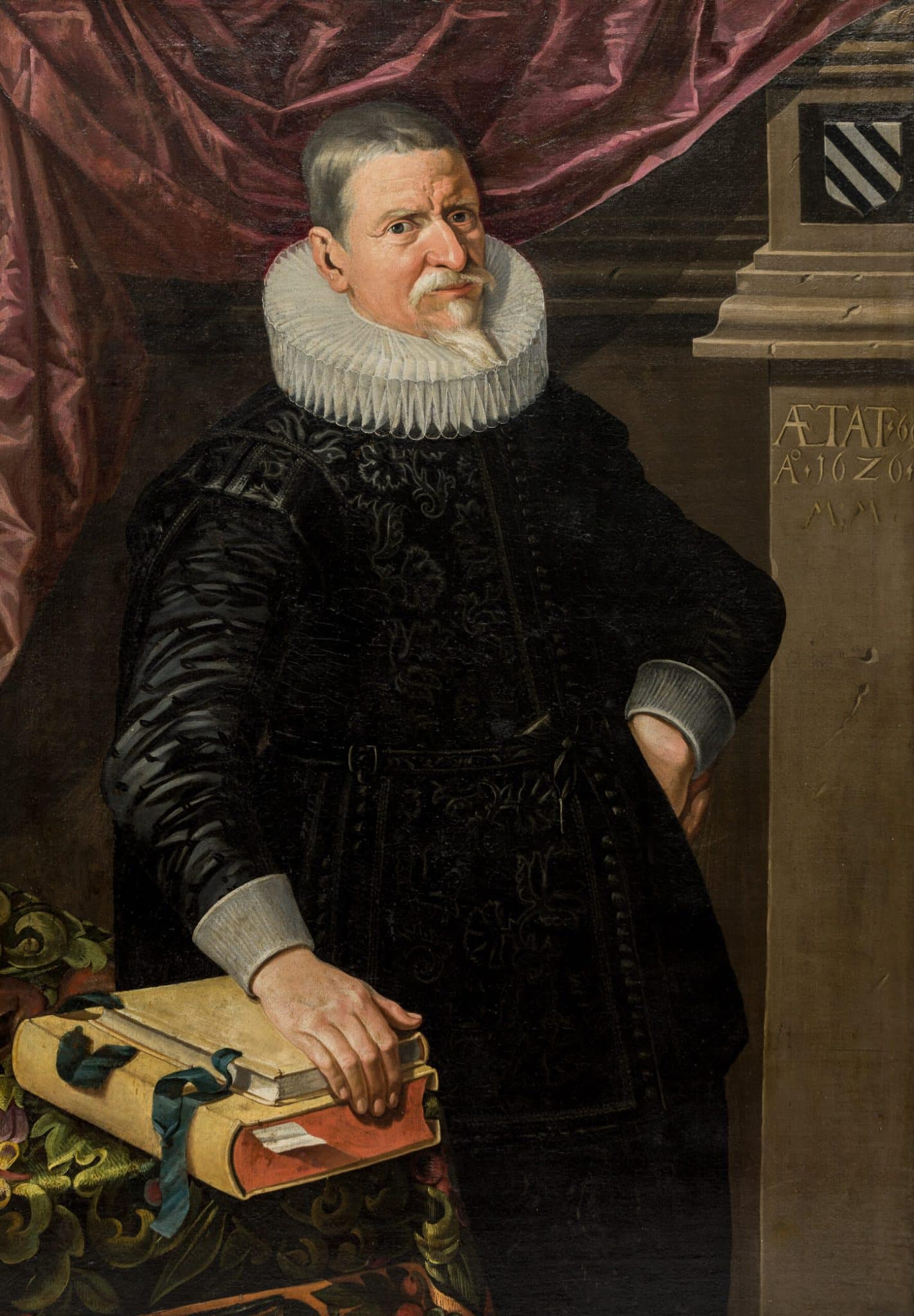
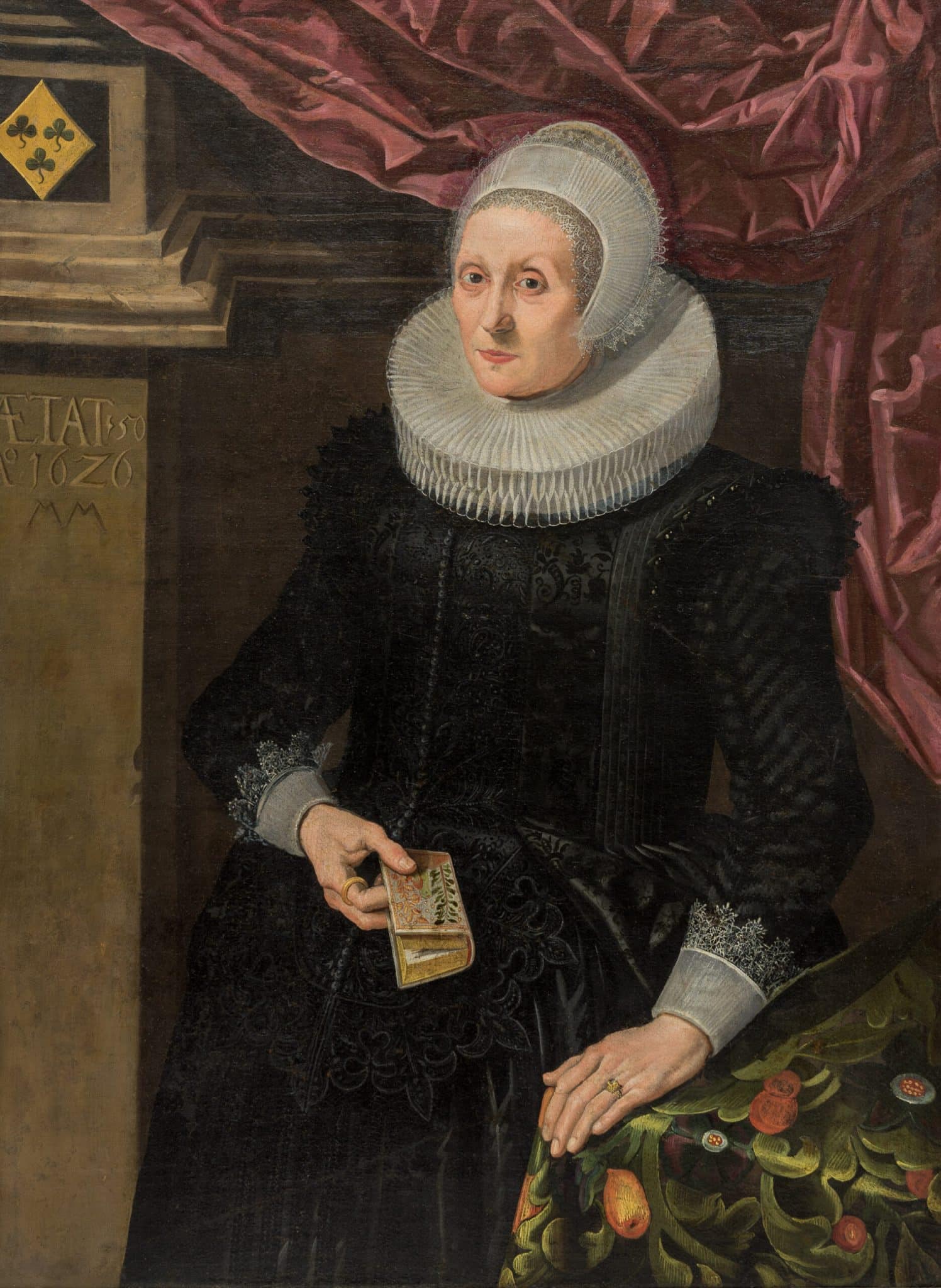
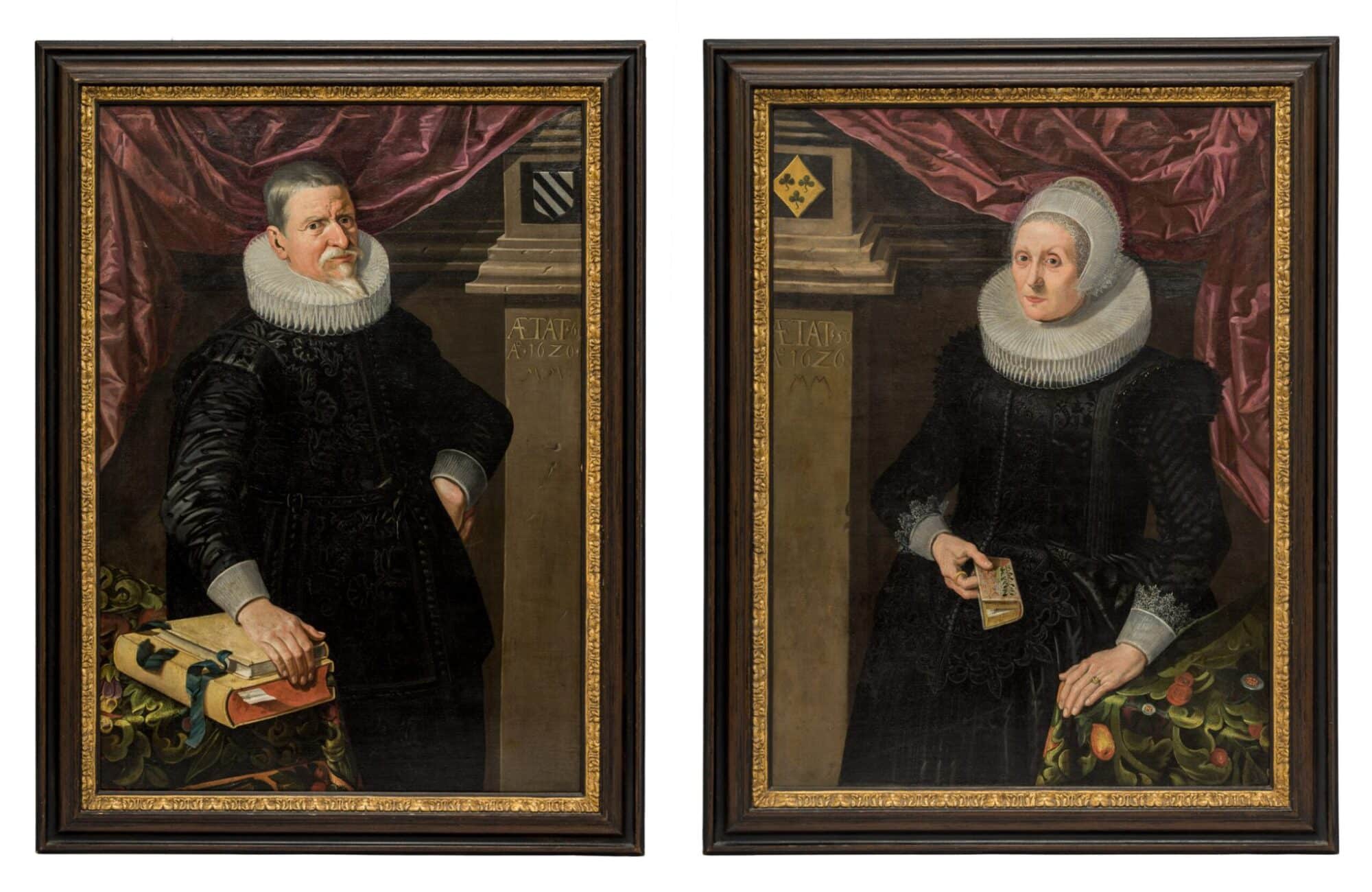
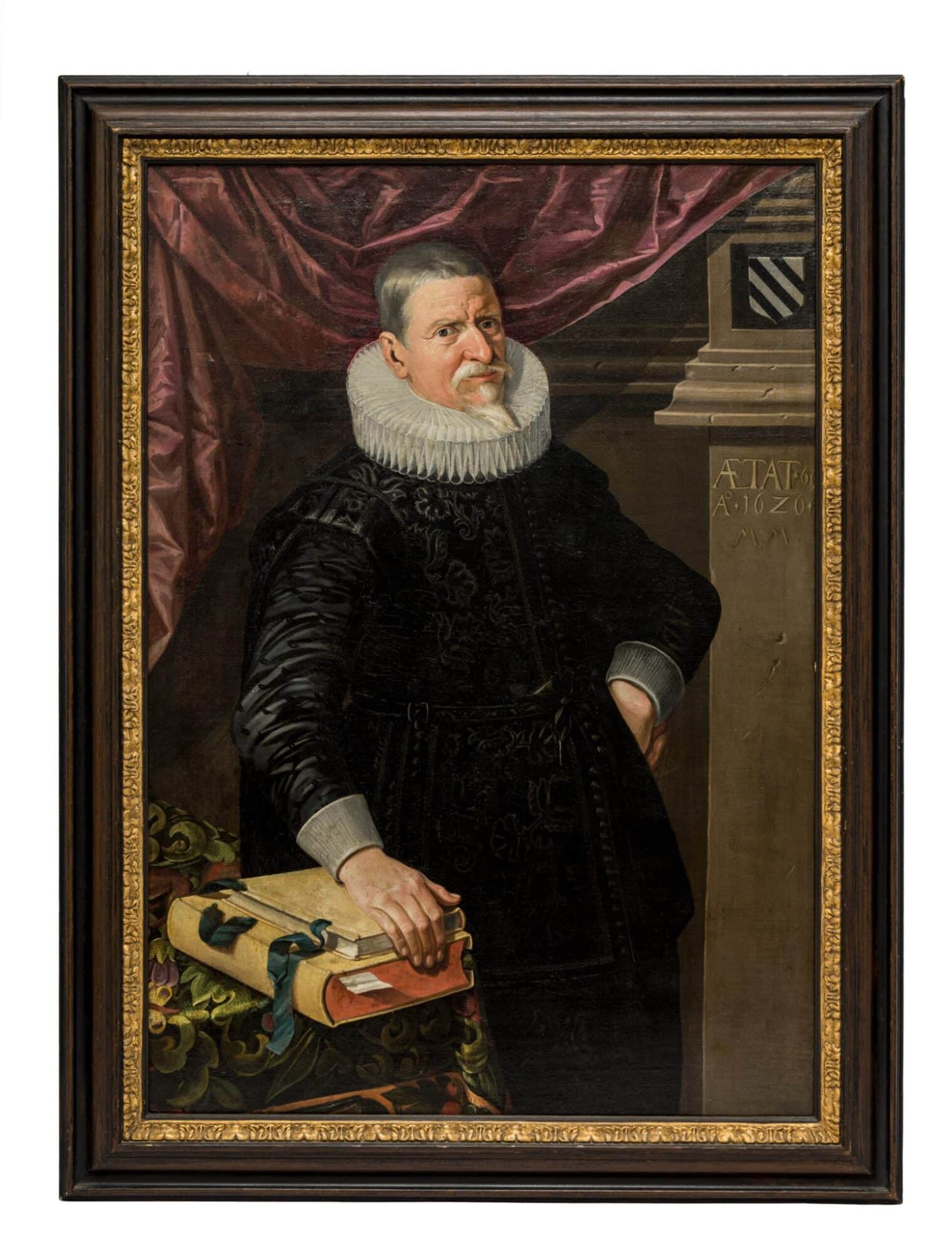
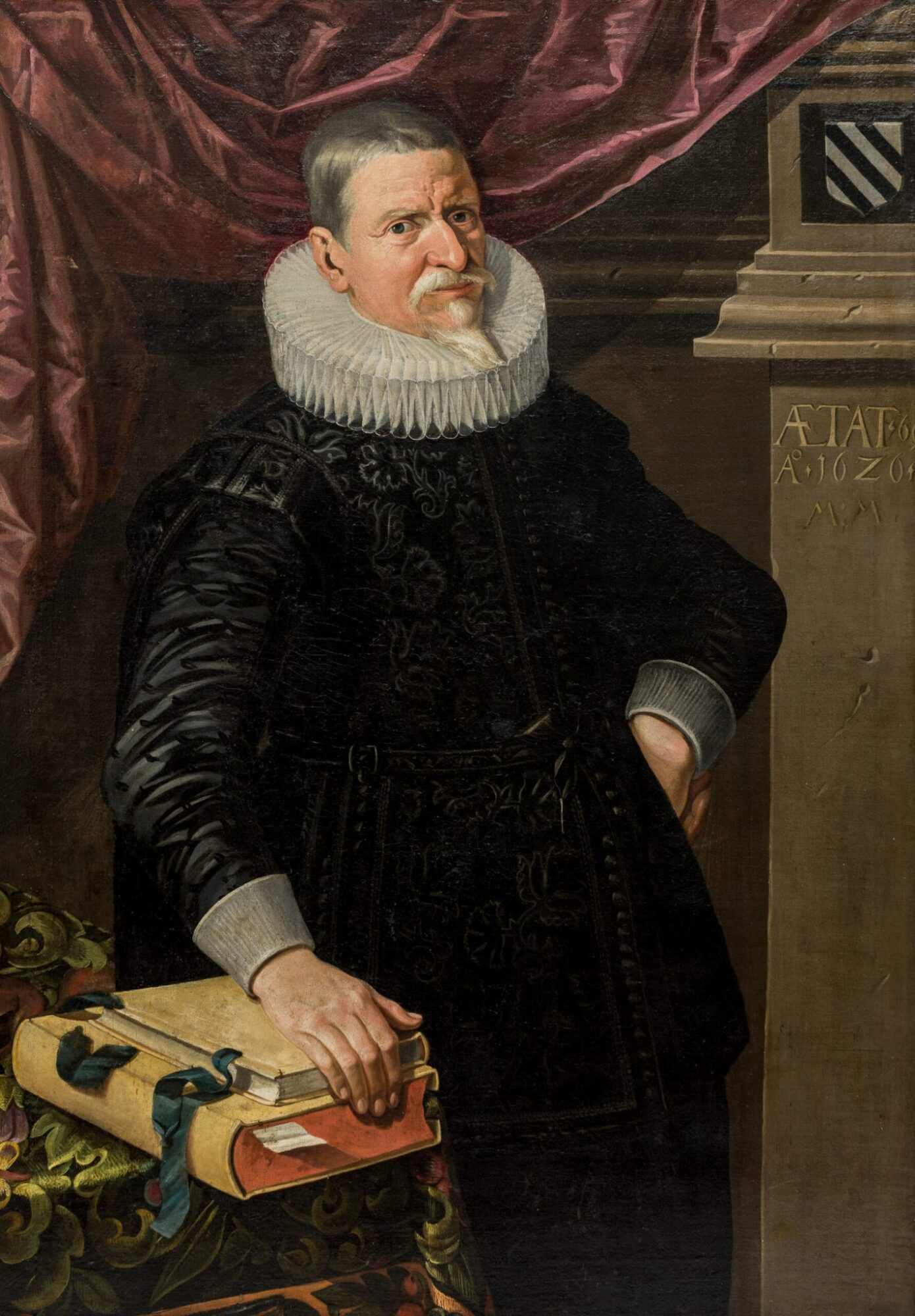
Oil on canvas, each inscribed and dated 1626 this finely preserved pair of early seventeenth-century portraits depicts a prosperous couple at the height of their maturity, painted in the year 1626. The husband, aged fifty-six according to the inscription, stands beside a table covered in a rich patterned cloth with a pair of books bound in ribbon, symbols of learning and piety. He wears a sober yet costly black doublet and cloak with silver embroidery, his white ruff crisply rendered, and rests one hand on his hip in a pose of authority. Behind him rises a stone plinth bearing his armorial shield.
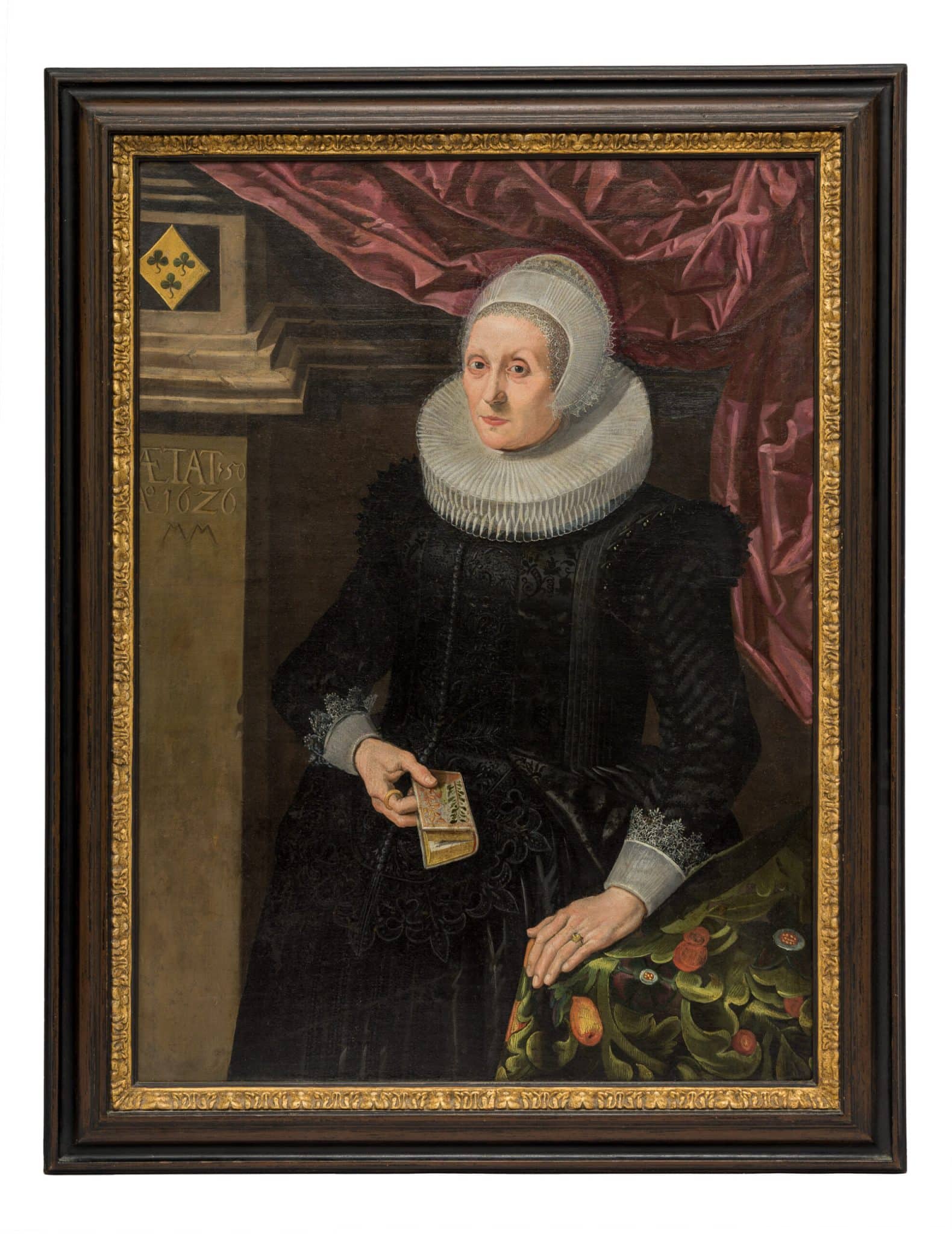
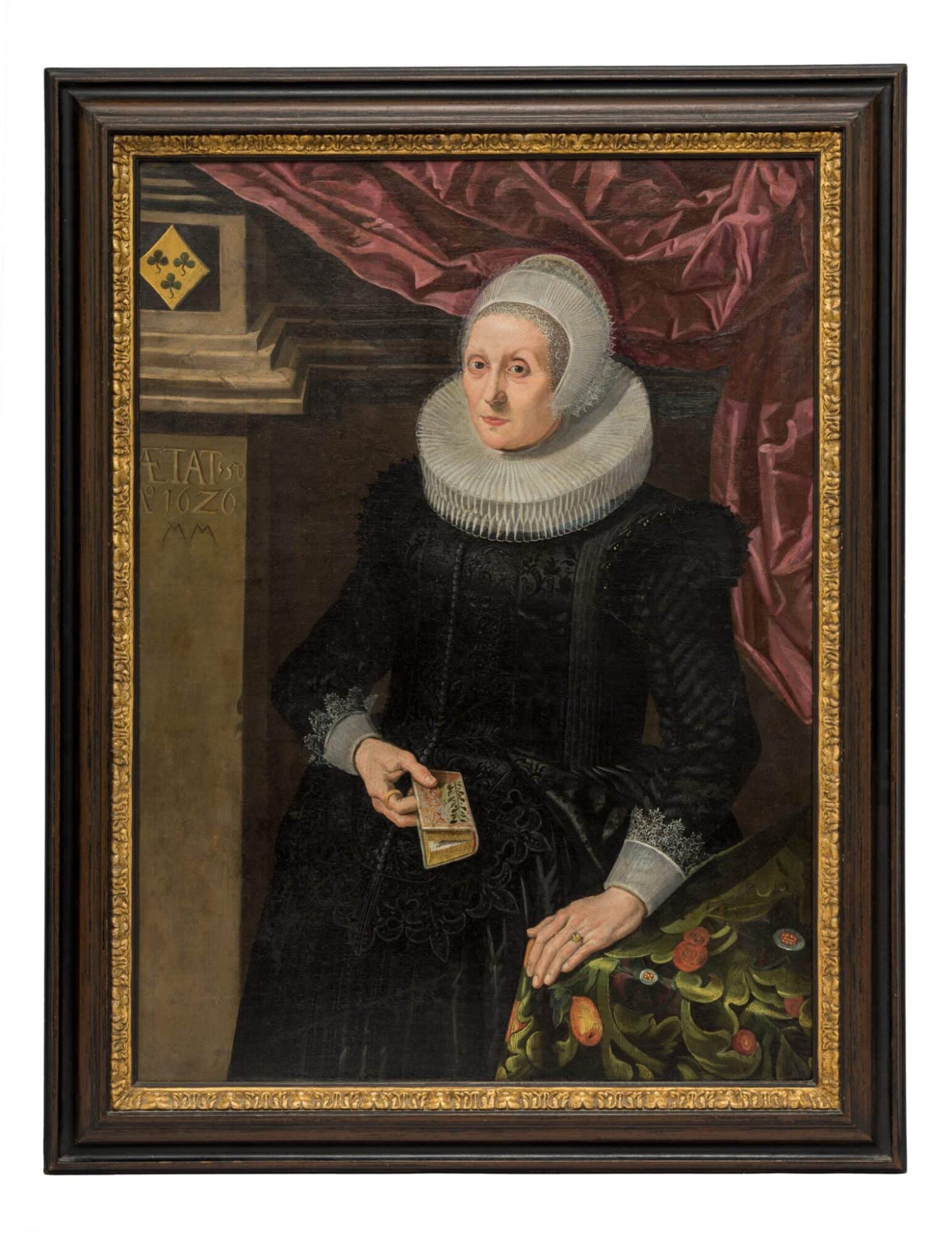
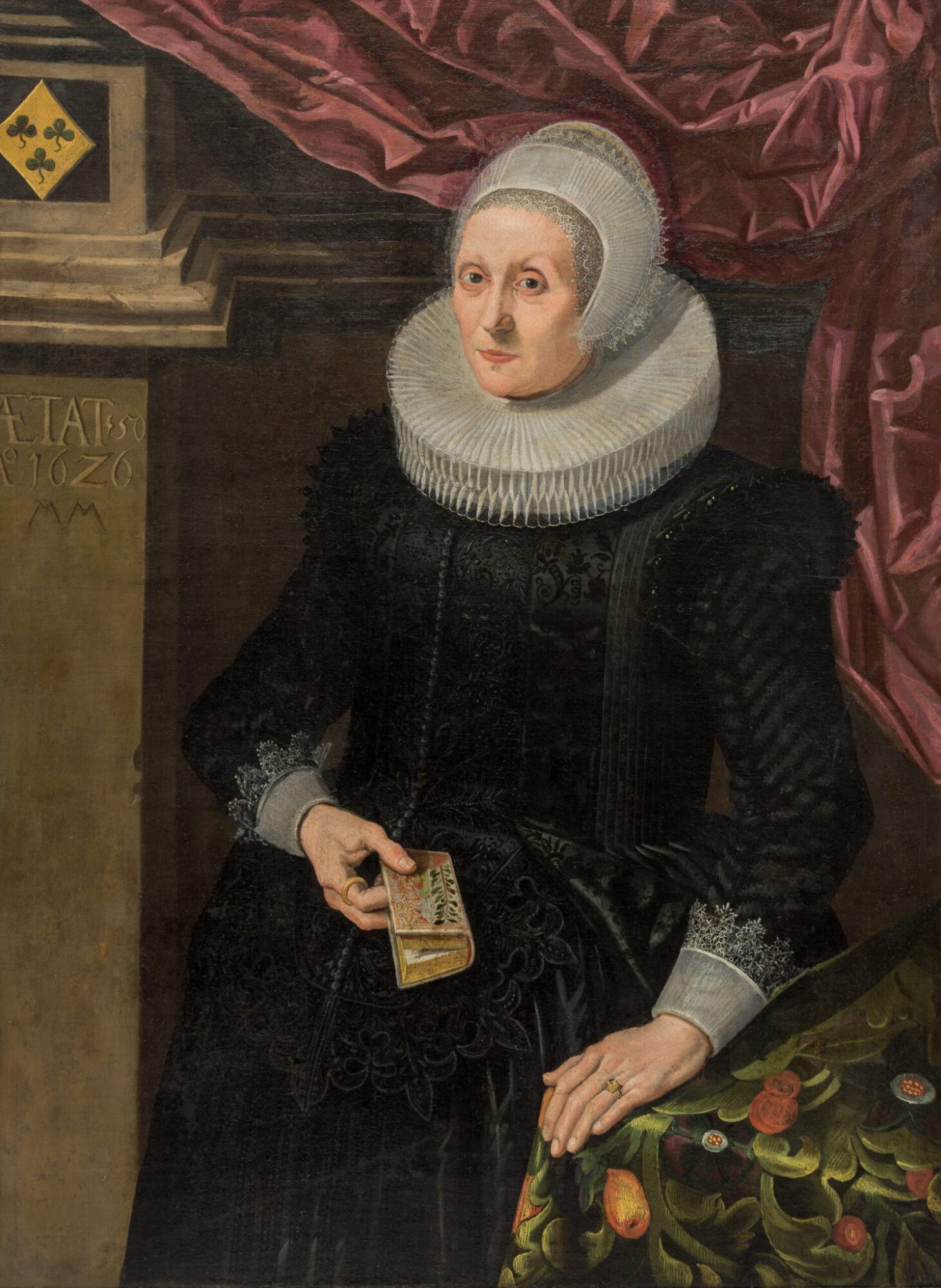
His wife, aged fifty-eight, is shown opposite, seated before a table similarly draped with figured velvet embroidered with fruit. She holds a small devotional book, a conventional emblem of her virtue and literacy, and wears a black gown of figured silk with lace cuffs and a broad, starched cartwheel ruff. Her head is veiled by a close coif, emphasising modesty and decorum. On the plinth behind appears her paternal arms, here set on a lozenge in keeping with heraldic convention.
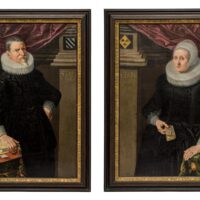
The pair clearly function as marriage portraits, conceived to be hung together, the sitters facing one another in complementary poses beneath curtain backdrops. Their scale, the carefully noted ages, and the heraldry establish a strong sense of dynastic continuity and social standing. The restrained palette of black costume, enlivened with touches of embroidery, books, and heraldic devices, is characteristic of Northern European portraiture of the period, reflecting both Protestant sobriety and patrician pride.
Stylistically the paintings align with the Netherlandish and North German tradition of the early seventeenth century, comparable to works by Michiel Jansz. van Mierevelt and his circle, though painted with a slightly more provincial hand. They embody the values of dignity, piety, and prosperity that defined the visual culture of Europe’s urban elites in the decades around 1620.