
Paul Fitzsimmons logo
  • Current Stock
  • Archive
  • Notable Works
  • About Us
  • News
  • Contact
Home / Archive / Elizabeth I Carved a…
Previous Next
  • Elizabeth I Carved and Inlaid Oak Chest
  • Elizabeth I Carved and Inlaid Oak Chest
Sold

Elizabeth I Carved and Inlaid Oak Chest

Period
1580 - 1600
Origin
England
Dimensions
W 53 1/2" × H 28" × D 24"
Reference
#Marh2483

This piece has been sold. It is shown here for reference in our archive.

Description

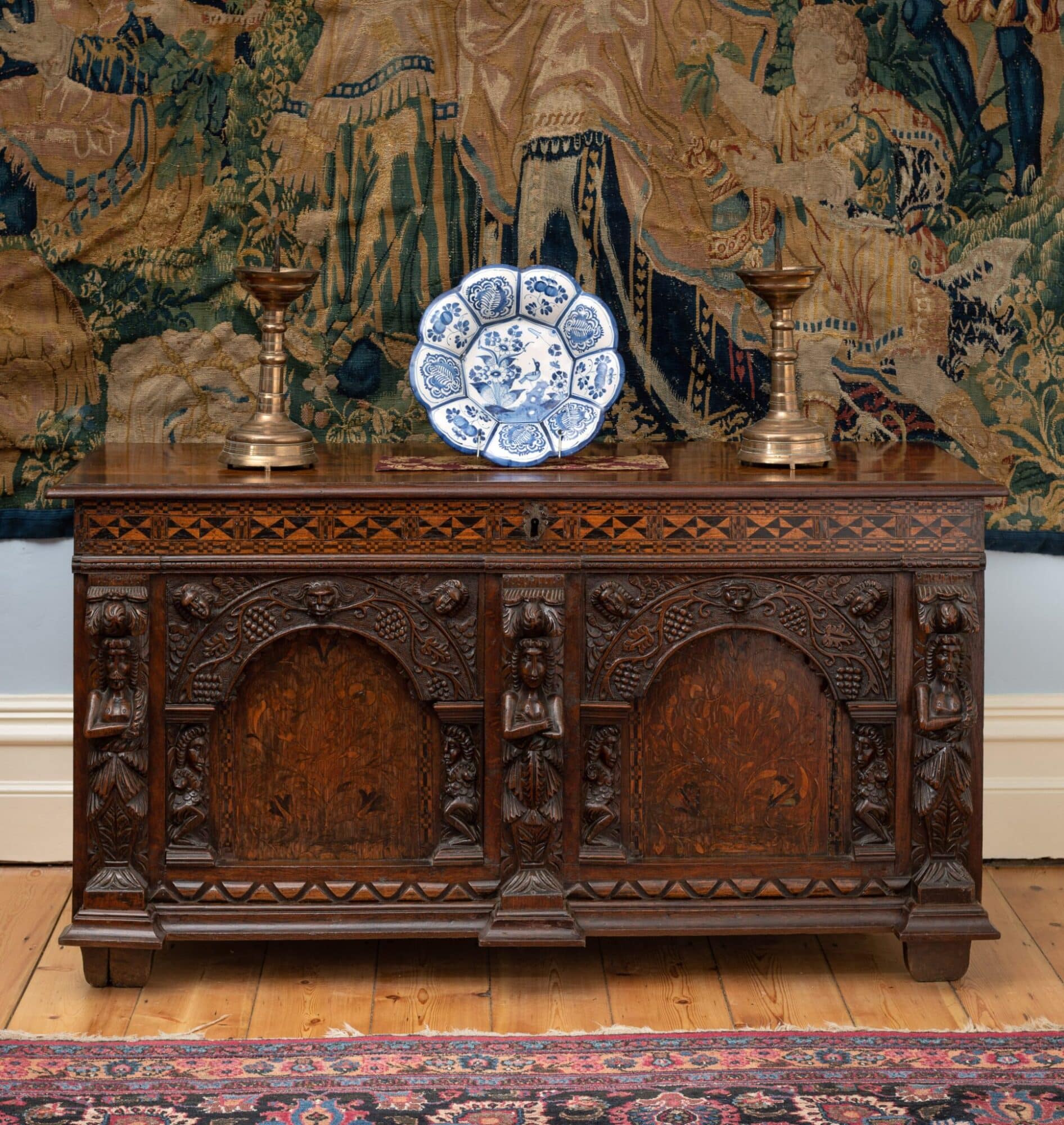
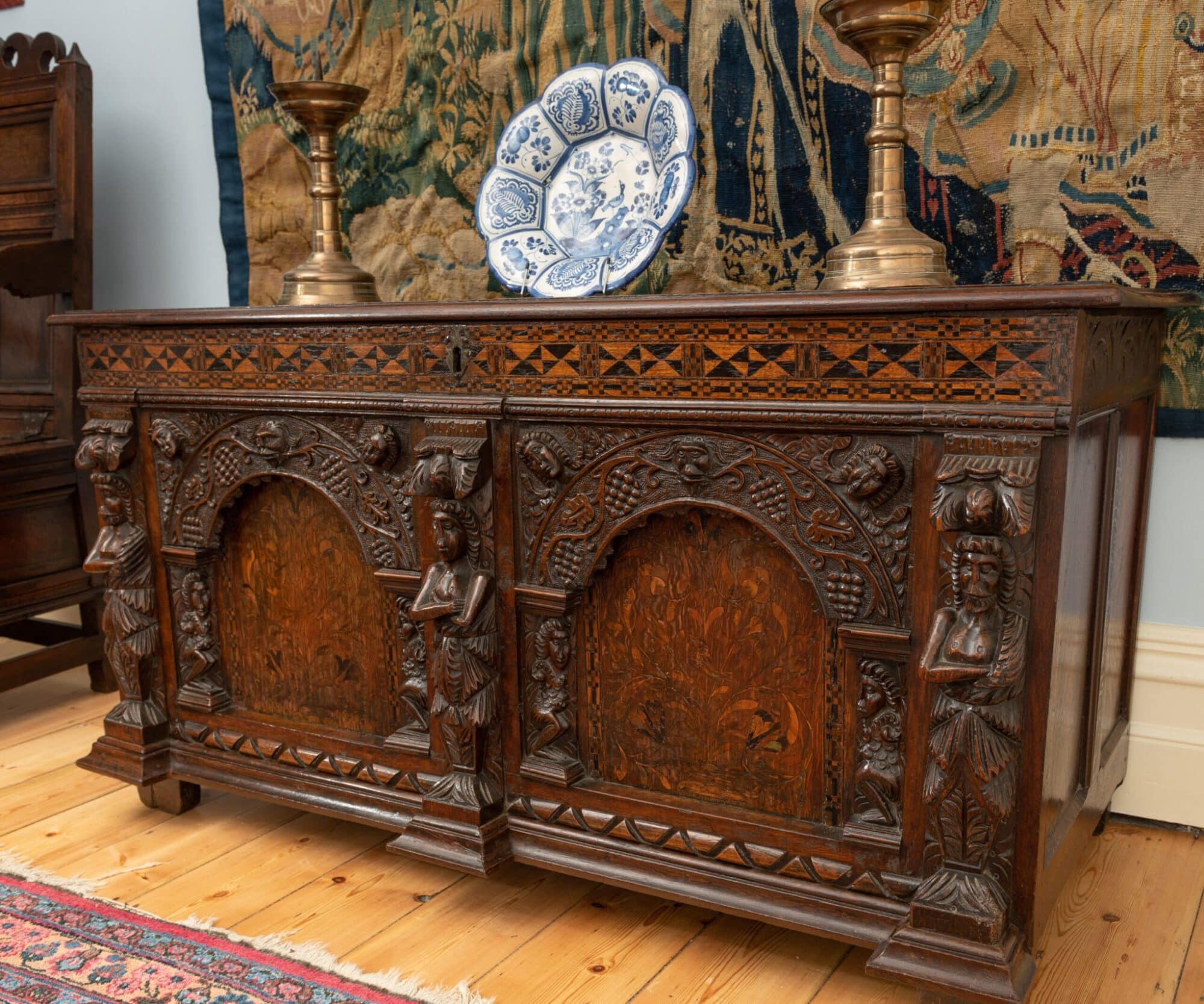
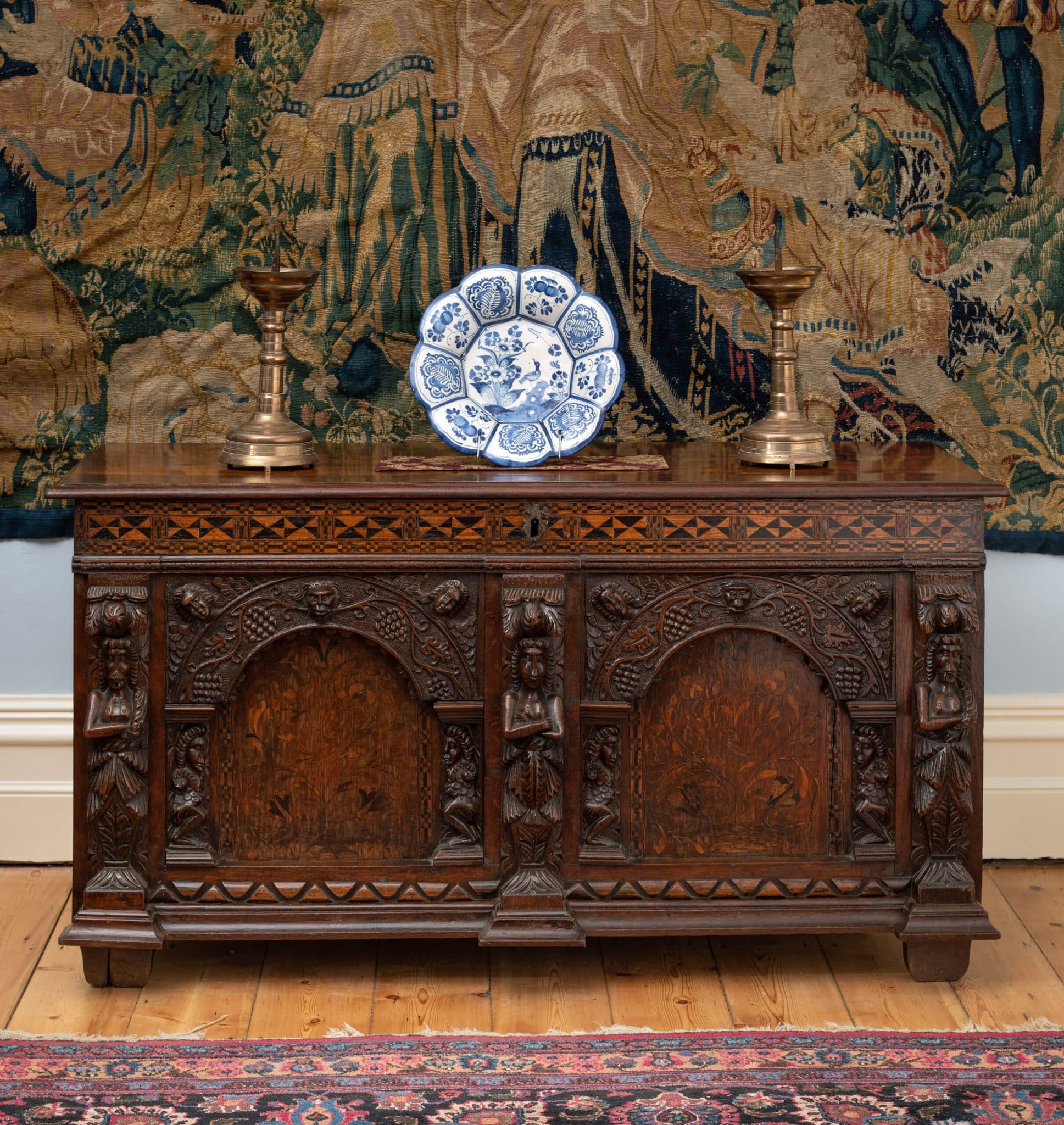
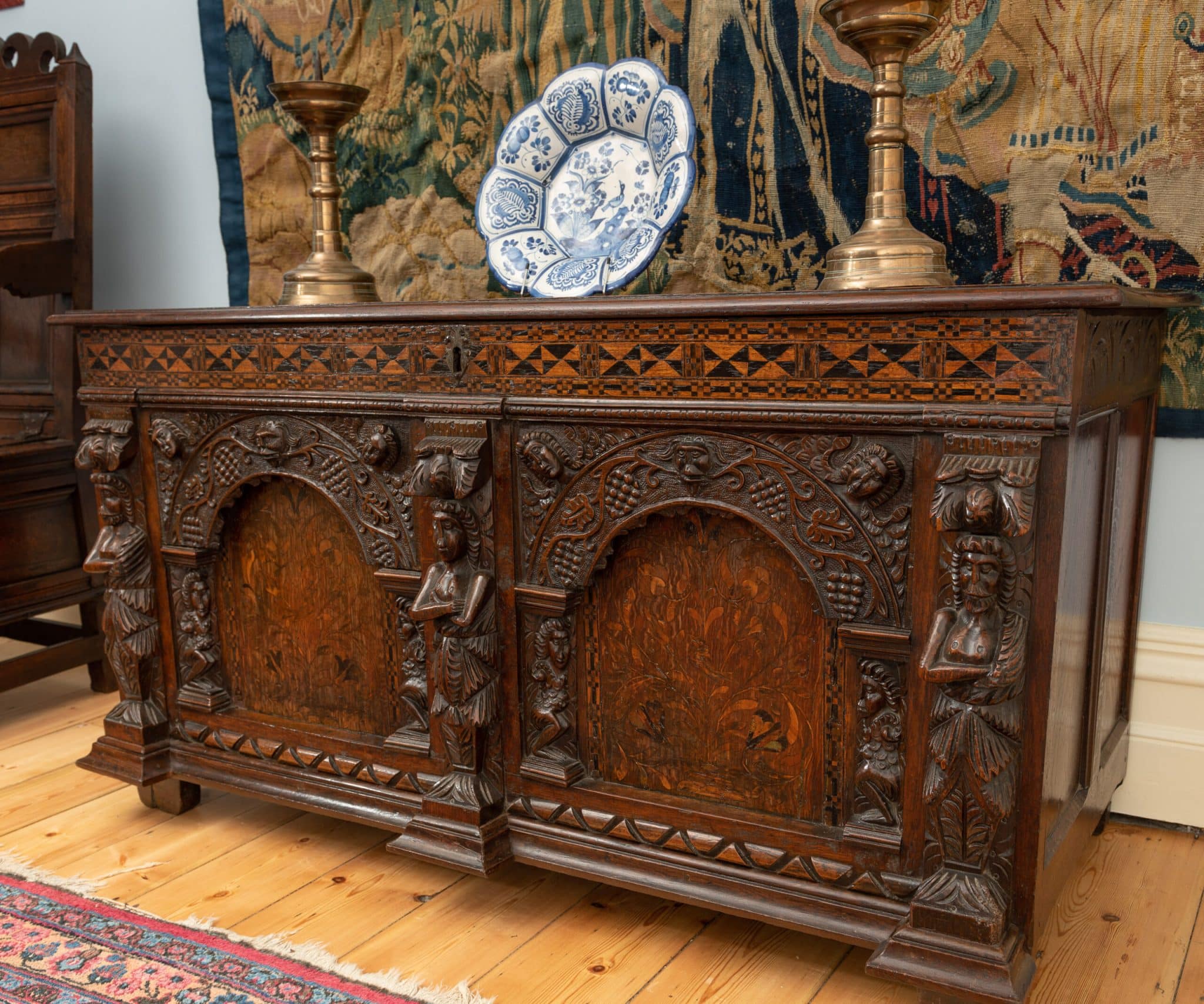
A substantial Elizabeth I carved and inlaid oak chest, of architectural form, its design echoing the Renaissance vocabulary that was reshaping elite interiors in late sixteenth-century England. The front with two broad arched panels inlaid with stylised floral sprays, set within applied arcades enriched with trailing vines, grotesque masks, and winged angel spandrels. The vertical divisions are carved as bold caryatids and atlantes, embodying both classical allusion and moral symbolism. The frieze rail is finely inlaid with a geometric chequer pattern, a typical Elizabethan motif, while the lower moulded rail is a later replacement.
The combination of inlay and carving, especially of this quality, signals a piece made for a household of status, reflecting the period’s appetite for rich surface pattern and symbolic decoration. The contrast of oak carving with fruitwood or holly inlay draws directly on imported continental models, yet its execution is distinctly English, aligning with furniture associated with great West Country and Midlands houses of the period.
Symbolism in the Decoration
The decorative programme of this Elizabethan chest is unusually rich in symbolic meaning. The trailing vine arcades represent both the Biblical vine of Christ and the earthly abundance of harvest, a dual metaphor for divine blessing and prosperity. Above them, winged angel spandrels reinforce ideas of spiritual guardianship, acting as protectors over the chest’s contents.
The caryatids and atlantes—human figures supporting the structure—speak to Renaissance ideals of classical architecture and the human body as a vessel of strength and moral virtue. Their upright stance symbolises order, stability, and the support of the household.
At the crown of each arch appears the green man, the ancient foliate face symbolising renewal, fertility, and the cyclical vitality of nature. By the Elizabethan period, he had also come to signify continuity between pagan tradition and Christian belief, making him an apt guardian in domestic furniture.
In striking contrast, the inclusion of satyrs within the arcades reflects a Renaissance fascination with classical myth but also serves as a moral warning. Satyrs embodied vice, lust, and untamed appetite, reminding the viewer of the ever-present struggle between worldly temptation and godly order. Their presence, set deliberately alongside angels, vines, and green men, creates a moral dialogue across the chest: a visual allegory of virtue against vice, spiritual order against pagan folly, renewal against corruption.
Together these motifs made the chest not only a practical furnishing but also a statement of learning, faith, and cultural refinement in the Elizabethan household.

Curator's Note

Previous Renaissance sculptur… Next Renaissance Oak Reli…
  • Elizabeth I Carved and Inlaid Oak Chest
  • Elizabeth I Carved and Inlaid Oak Chest

Newsletter

New Stock, Direct to Your Inbox.

Be among the first to hear about new acquisitions and notable works.

Please enable JavaScript in your browser to complete this form.
Loading
Paul Fitzsimmons logo
  • Current Stock
  • Archive
  • Notable Works
  • About Us
  • News
  • Contact

Contact Us

+44 (0)777 903 8891

  • Pinterest
  • Instagram

By Appointment

Devon, England.

Paul Fitzsimmons

Specialist in early oak furniture and works of art.

© 2026 Paul Fitzsimmons | Website by Dancing Badger Ltd

  • Privacy Policy
  • Terms & Conditions

Search the collection

Search in
    1 / 1