
Paul Fitzsimmons logo
  • Current Stock
  • Archive
  • Notable Works
  • About Us
  • News
  • Contact
Home / Archive / Elizabeth I Joined O…
Previous Next
Elizabeth I Joined Oak Armchair Sold

Elizabeth I Joined Oak Armchair

Period
1580 - 1600
Origin
England
Dimensions
W 27 1/2" × H 48" × D 22"
Reference
#Marh3538

This piece has been sold. It is shown here for reference in our archive.

Description

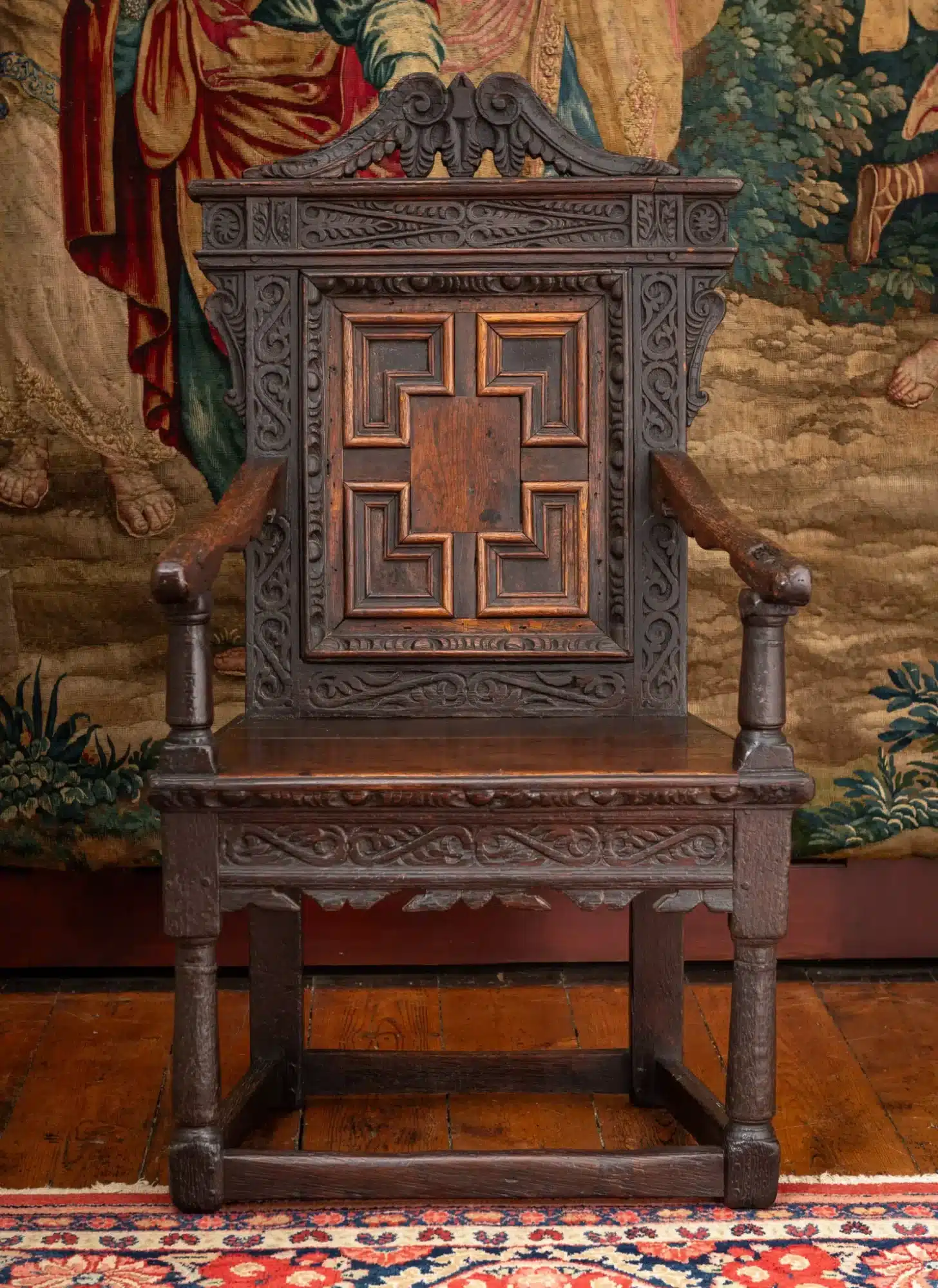
A superb and imposing Elizabeth I joined oak armchair, of excellent colour and worn surface, testifying to long and distinguished use. The chair is constructed with column-turned front supports joined by plain stretchers, the seat rails carved with scrolling S-motifs and leafy cut-out decoration. The backrest panel is particularly striking, centred with applied mouldings in the form of a formal knot-garden design, framed by a bold egg-and-dart border and flanked by uprights enriched with vigorous scrollwork. The cresting rail rises to a finely pierced and scrolled foliate arcade, lending the chair a commanding architectural quality.
This armchair, with its weighty proportions, richly carved ornament, and emblematic panel design, reflects the grandeur and authority of the Elizabethan household. Such chairs were often symbols of rank, reserved for the master or mistress of the house, and they embody the Renaissance spirit expressed through geometric formality and intricate carving.
The surface bears the rich patina of centuries of use, its deep, mellow colour enhancing the sculptural carving and lending the chair great presence.
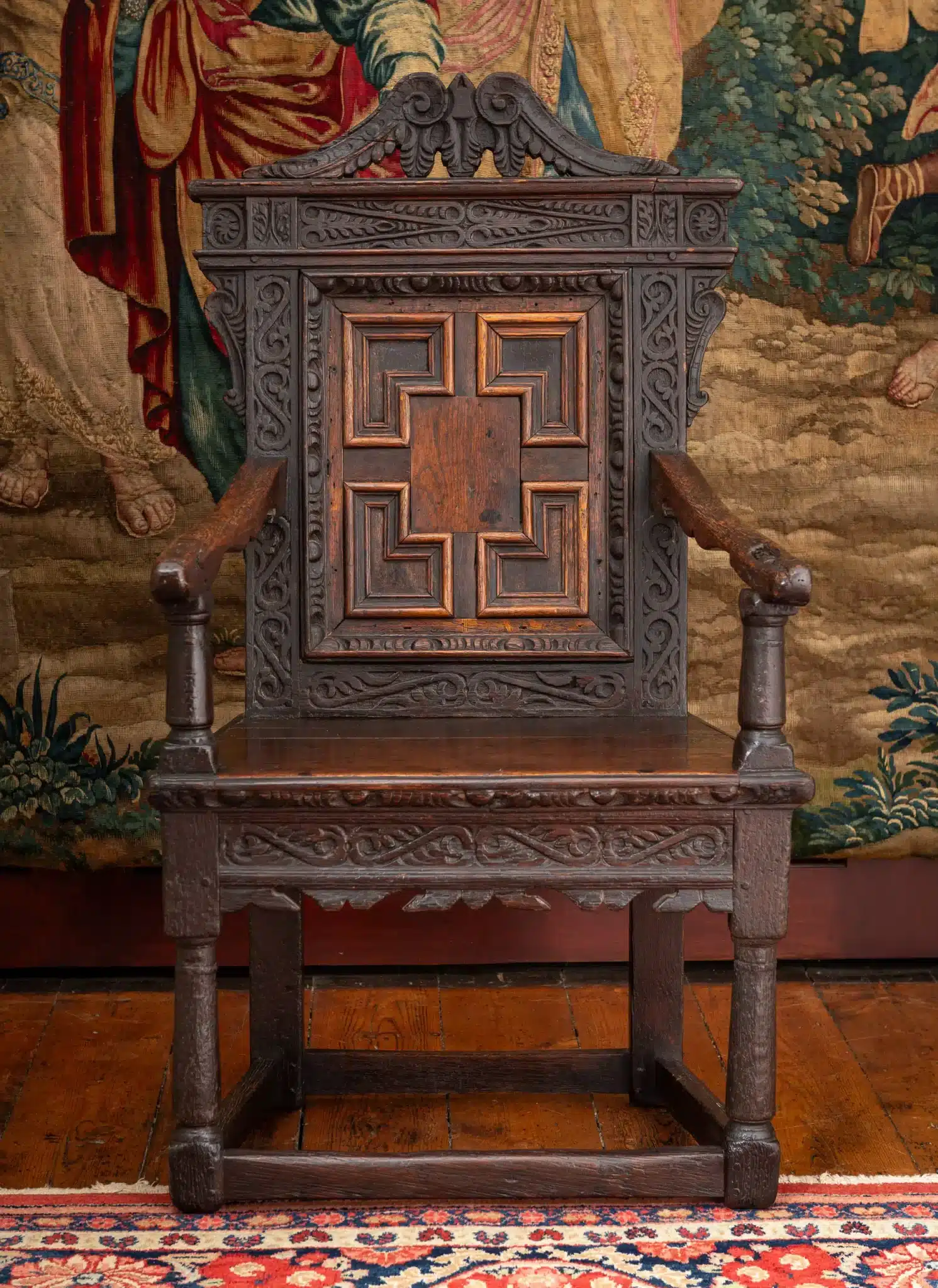
This finely carved oak armchair was made during the later years of the reign of Elizabeth I (1558–1603), a period of immense political and cultural transformation in England. Chairs of this type were rare and prestigious in the sixteenth century, often reserved for the head of the household or a distinguished guest. Their very presence signified status and authority, in sharp contrast to the stools and benches used by most.
The final two decades of Elizabeth’s reign were marked by both triumph and tension. England had defeated the Spanish Armada in 1588, a victory that secured Elizabeth’s reputation as a formidable monarch, yet political uncertainty grew as the Queen aged without an heir. In this climate, expressions of loyalty, continuity, and order became vital in both court and country houses. Furniture such as this armchair embodied those ideals: the strong architectural form, the geometric knot-garden panel symbolising order and control, and the vigorous Renaissance ornament all spoke to a world where the projection of authority was paramount.
At the same time, the patronage of such richly ornamented furniture reflected the aspirations of the Elizabethan gentry, who sought to emulate the grandeur of the court. The use of formal motifs—S-scrolls, egg-and-dart carving, and the foliate cresting—echoed Renaissance design circulating through pattern books and continental influence, but translated into native English oak and a more robust vernacular form.
This chair therefore belongs not just to the history of design, but to the charged political atmosphere of Elizabeth’s later reign: a time of national pride, dynastic uncertainty, and the growing assertion of social status within the English household.

Curator's Note

Previous Early 17th Century D… Next Charles I Joined Oak…
  • Elizabeth I Joined Oak Armchair

Newsletter

New Stock, Direct to Your Inbox.

Be among the first to hear about new acquisitions and notable works.

Please enable JavaScript in your browser to complete this form.
Loading
Paul Fitzsimmons logo
  • Current Stock
  • Archive
  • Notable Works
  • About Us
  • News
  • Contact

Contact Us

+44 (0)777 903 8891

  • Pinterest
  • Instagram

By Appointment

Devon, England.

Paul Fitzsimmons

Specialist in early oak furniture and works of art.

© 2026 Paul Fitzsimmons | Website by Dancing Badger Ltd

  • Privacy Policy
  • Terms & Conditions

Search the collection

Search in
    1 / 1