 Sold
Sold
Early 17th Century Dutch Carved Overmantel
- Period
- Circa 1600
- Origin
- Dutch
- Dimensions
- W 68 1/4" × H 24" × D 1 1/2"
- Reference
- #Marh3537
This piece has been sold. It is shown here for reference in our archive.
Description
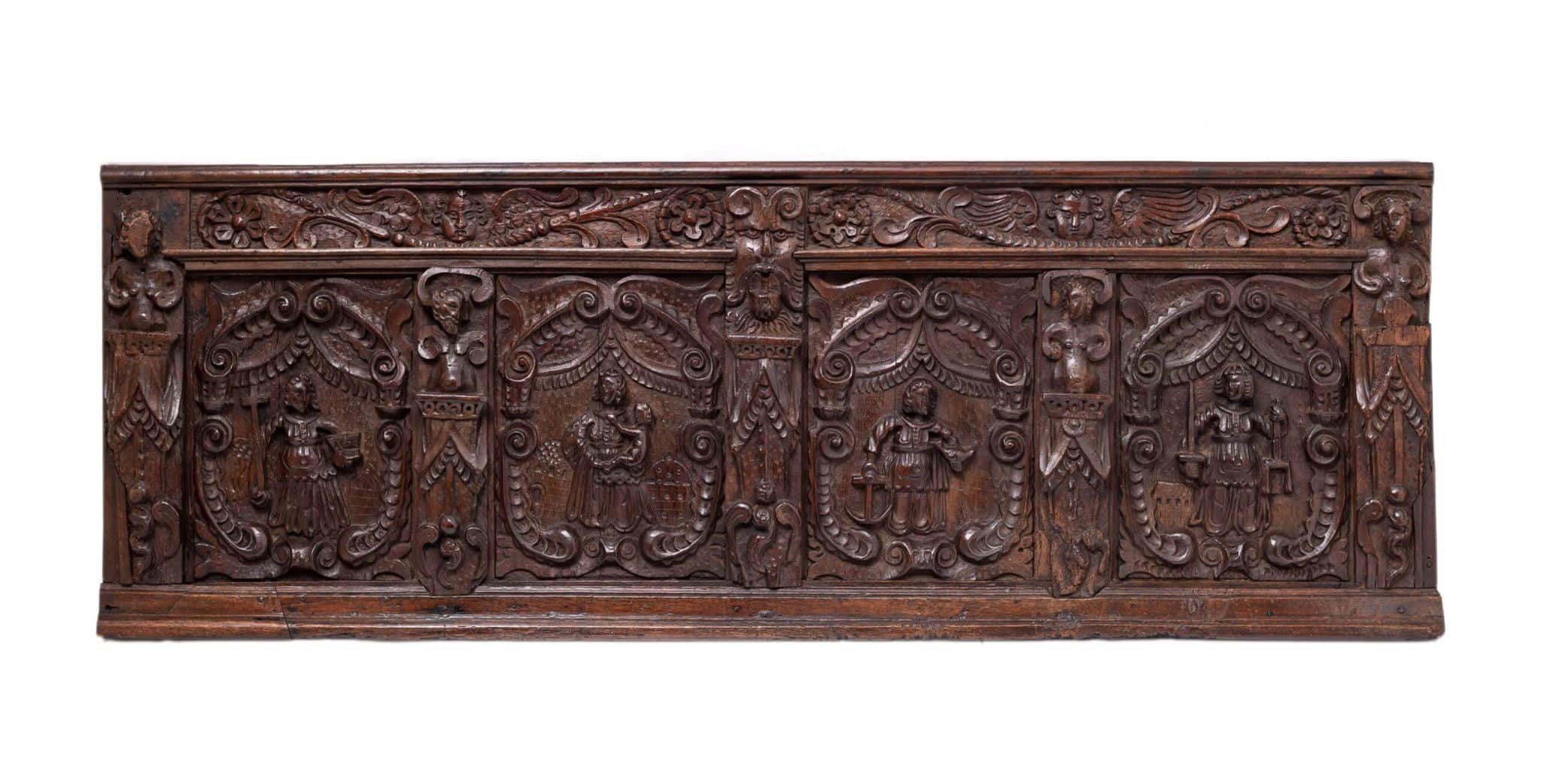
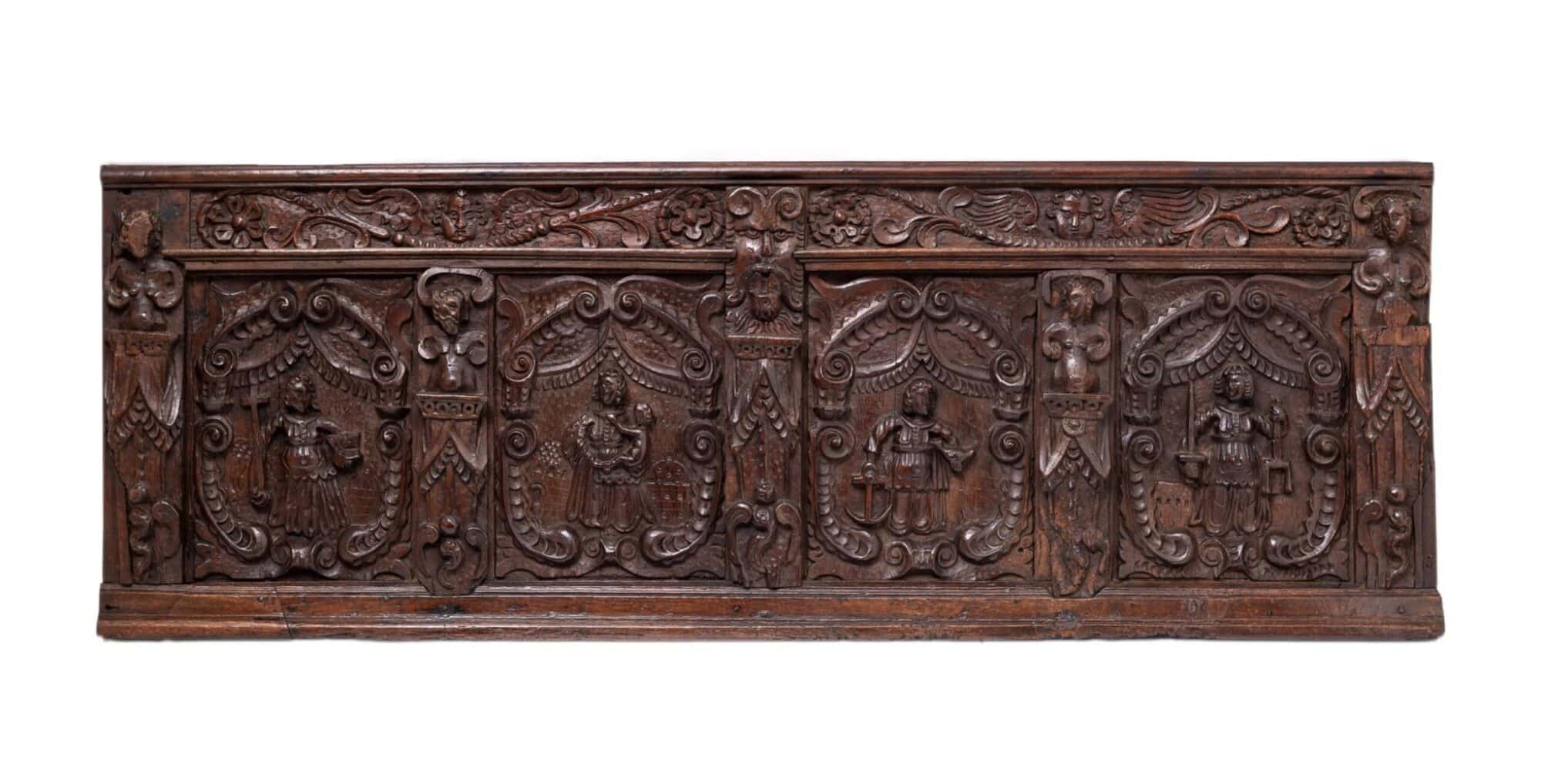
A richly carved early 17th century Dutch oak overmantel, originally fashioned from the front of a chest, and later re-purposed for architectural display. This finely detailed panel is divided into four cartouche-framed compartments, each depicting a saint beneath a draped canopy, the figures set within scrolling foliage and flanked by pilasters of carved busts and angels. The frieze rail above is ornamented with a procession of winged angel heads and interlacing floral designs, a testament to the enduring vitality of Northern European Renaissance ornament.
Iconography
The four saints represented within the panel would have offered both devotional focus and protective symbolism for the household:
Panel 1 – A saint holding a cross-staff, possibly St Michael in his guise as defender of the faithful, or a martyred saint bearing the sign of salvation.
Panel 2 – St Christopher, carrying the Christ Child, a powerful emblem of safe travel and divine guardianship.
Panel 3 – St Clement of Rome, grasping an anchor, his traditional attribute recalling his martyrdom by drowning; also a broader symbol of steadfast faith and hope.
Panel 4 – St Michael the Archangel, depicted with scales, weighing souls at the Last Judgement, a reminder of divine justice and eternal salvation.
Together these figures reflect the central concerns of early modern Christian life — protection, constancy in faith, safe passage, and the ultimate fate of the soul.