 Sold
Sold
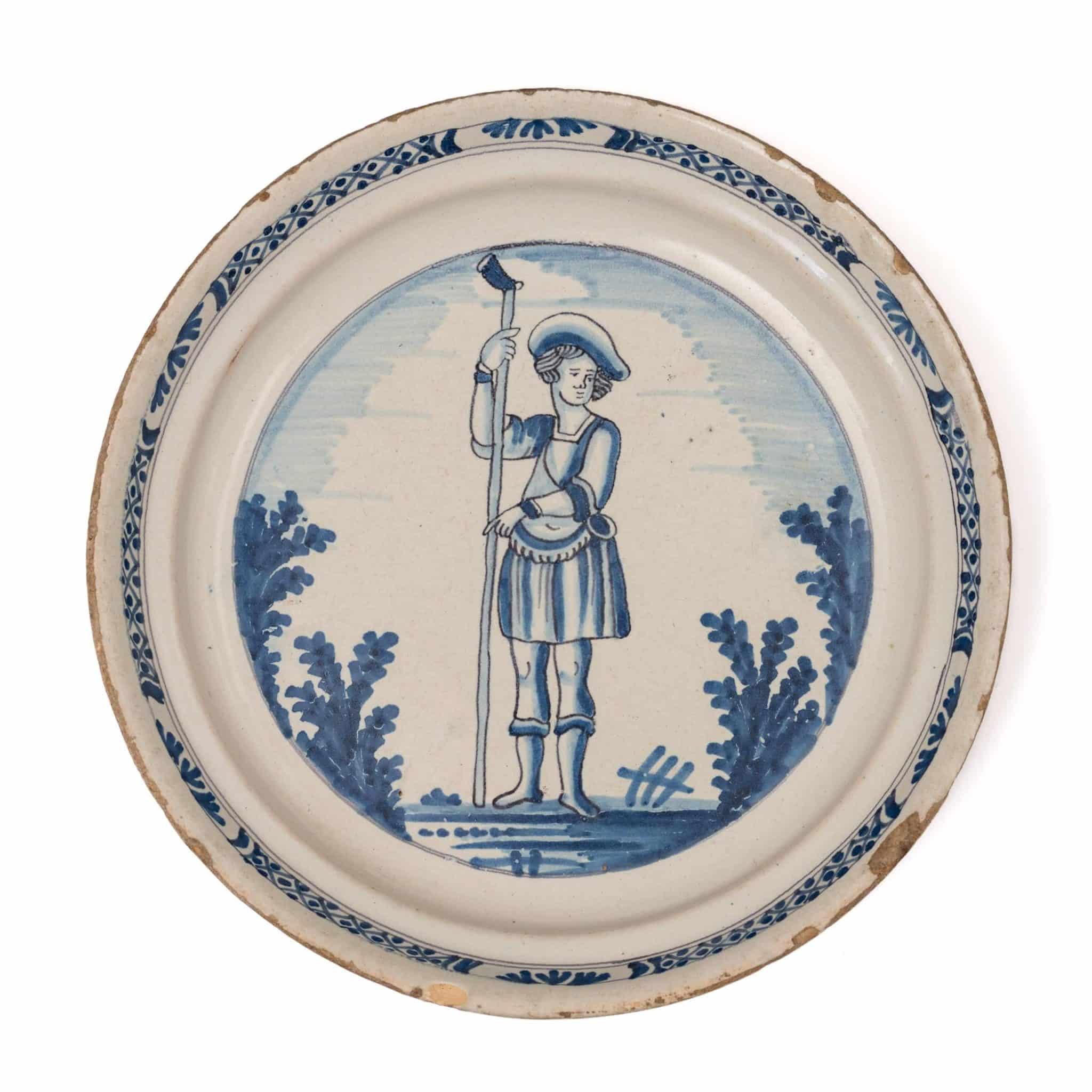
English Delftware Blue and White Plate, London or Bristol
- Period
- 1680 - 1720
- Origin
- London or Bristol
- Dimensions
- W 9" diameter" × H 1 1/2"
- Reference
- #Marh3607
This piece has been sold. It is shown here for reference in our archive.
Description
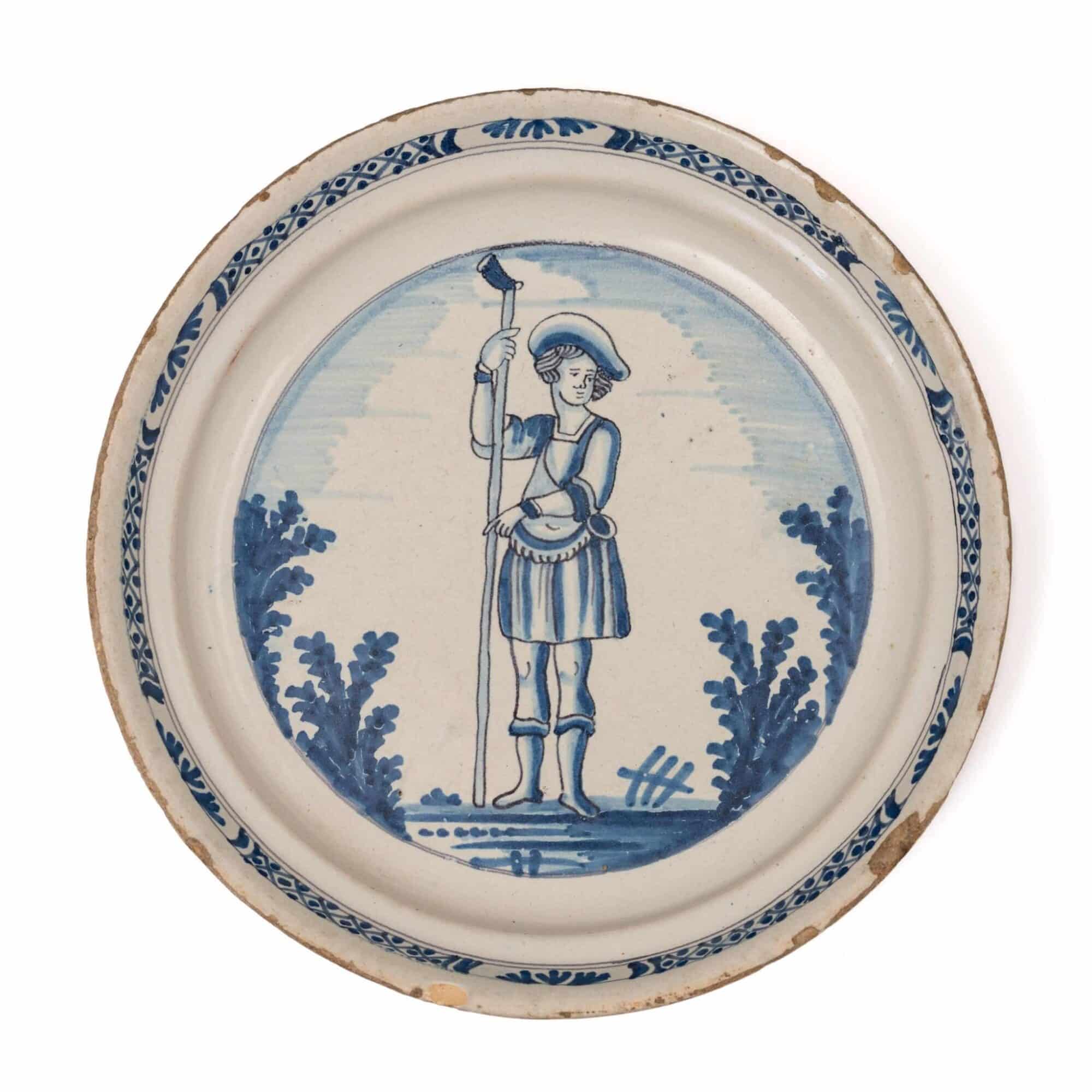
Painted in cobalt blue with a standing figure of a man in contemporary costume, holding a long staff with an axe head, possibly a halberd, set against a stylised ground with foliage to either side. The figure is framed within a circular reserve, the border decorated with a repeated foliate and trellis motif around the rim.
This type of figural decoration was popular in English delftware of the late 17th century – early 18th century, drawing inspiration from both Dutch tin-glazed prototypes and vernacular English tastes. The figure may represent a rustic or guard, part of the wider repertoire of “standing figures” commonly painted in blue on white delftwares at London and Bristol. The simplified landscape setting and border pattern are typical of these workshops, where freehand brushwork was favoured over precise transfer designs.
Plates of this type were both decorative and functional, often displayed on dressers in prosperous households as indicators of taste and status. Surviving examples with figural decoration remain relatively uncommon compared with floral and chinoiserie subjects.
Provenance: Private collection.
Condition: Expected rim fritting and minor glaze losses; otherwise in good condition with strong glaze and colour.
Literature:
Michael Archer, Delftware: The Tin-Glazed Earthenware of the British Isles (London, 1997), for comparable figural plates.
Frank Britton, London Delftware (London, 1987), for discussion of the standing figure motif in English delft.