English Tudor Gilt-Latten Processional Cross
- Period
- 1485–1520
- Origin
- England, probably London or Westminster
- Dimensions
- W 12 1/2" × H 13 1/2" × D 1"
- Reference
- #Marh3724
This piece has been sold. It is shown here for reference in our archive.
Description
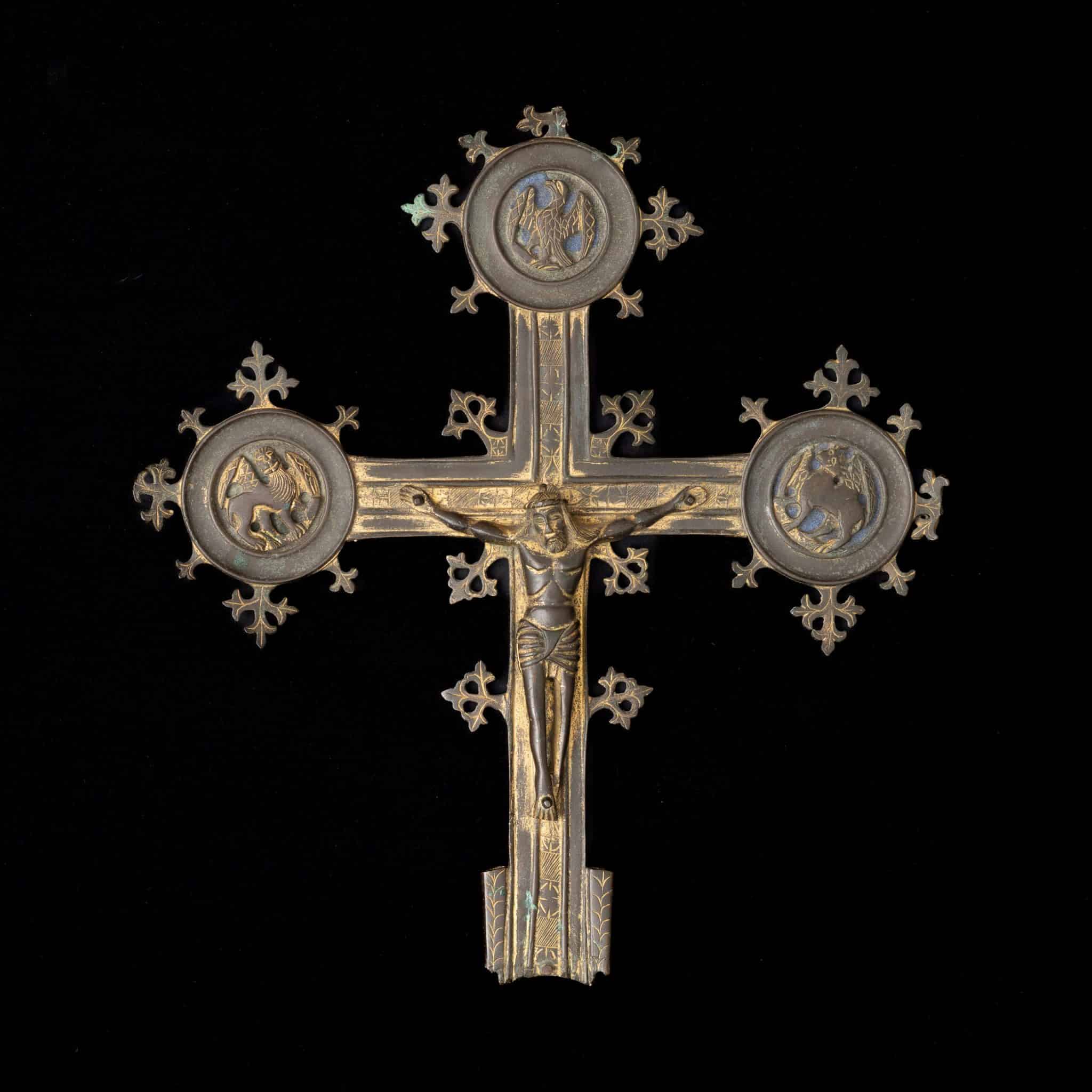
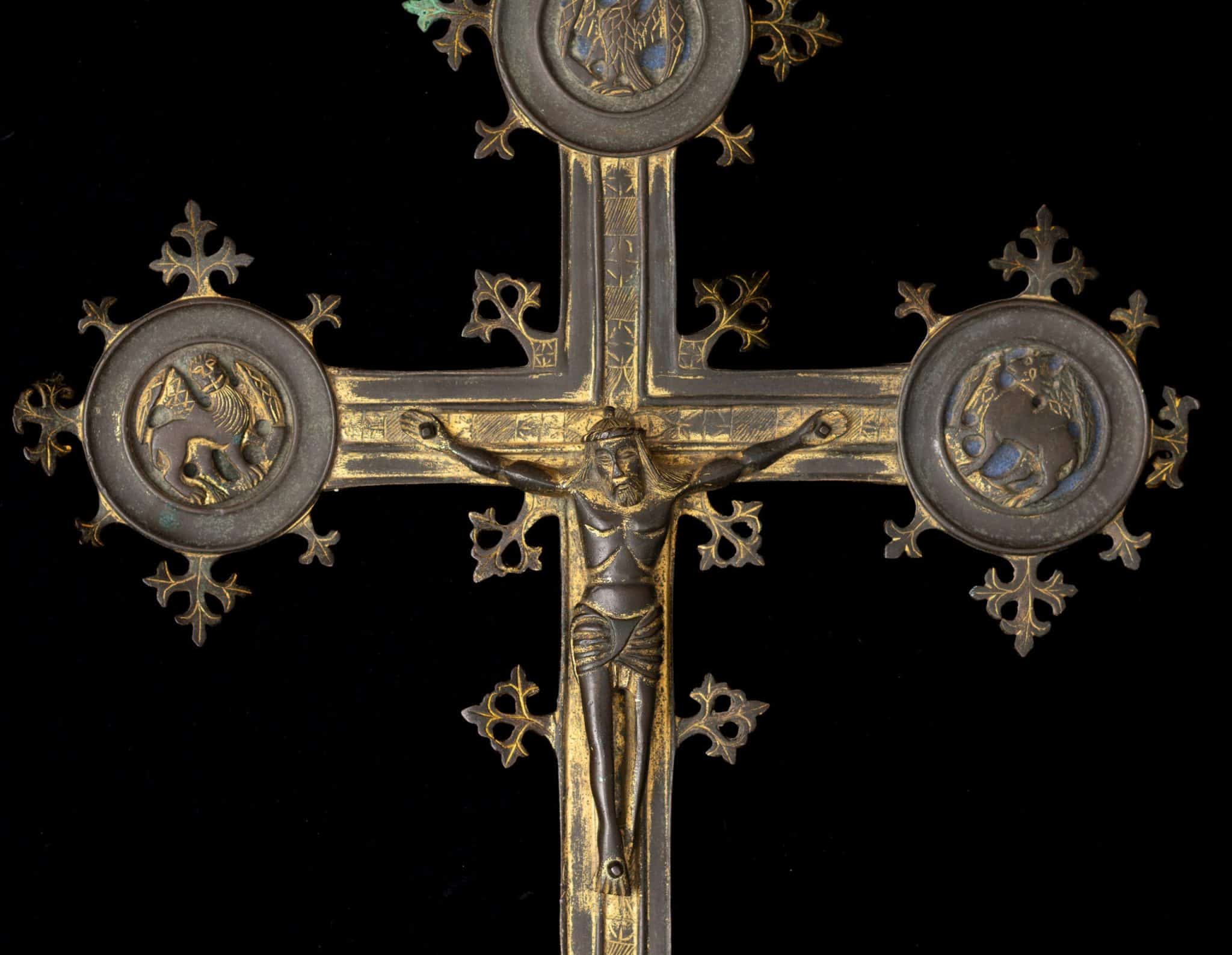
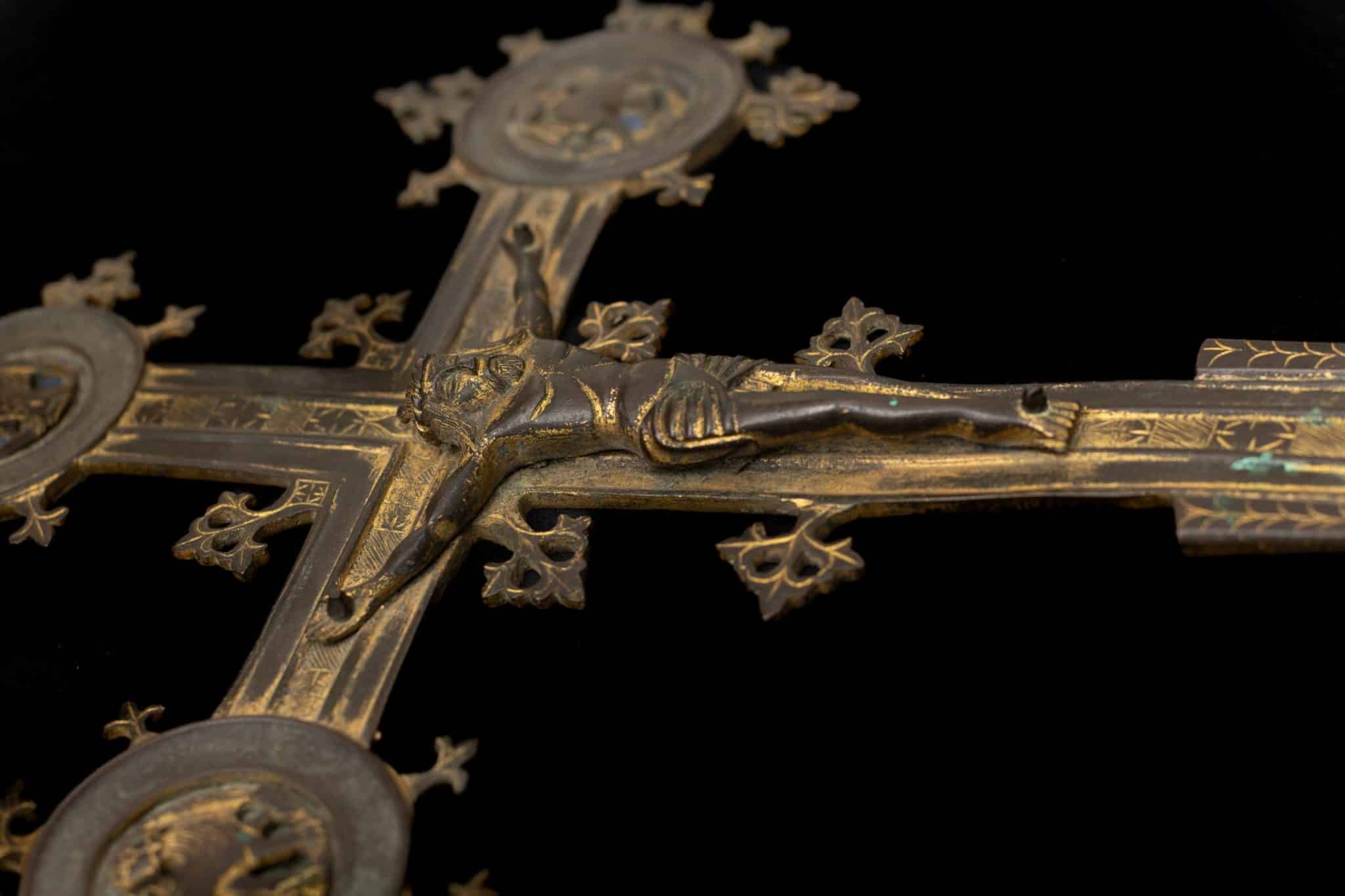
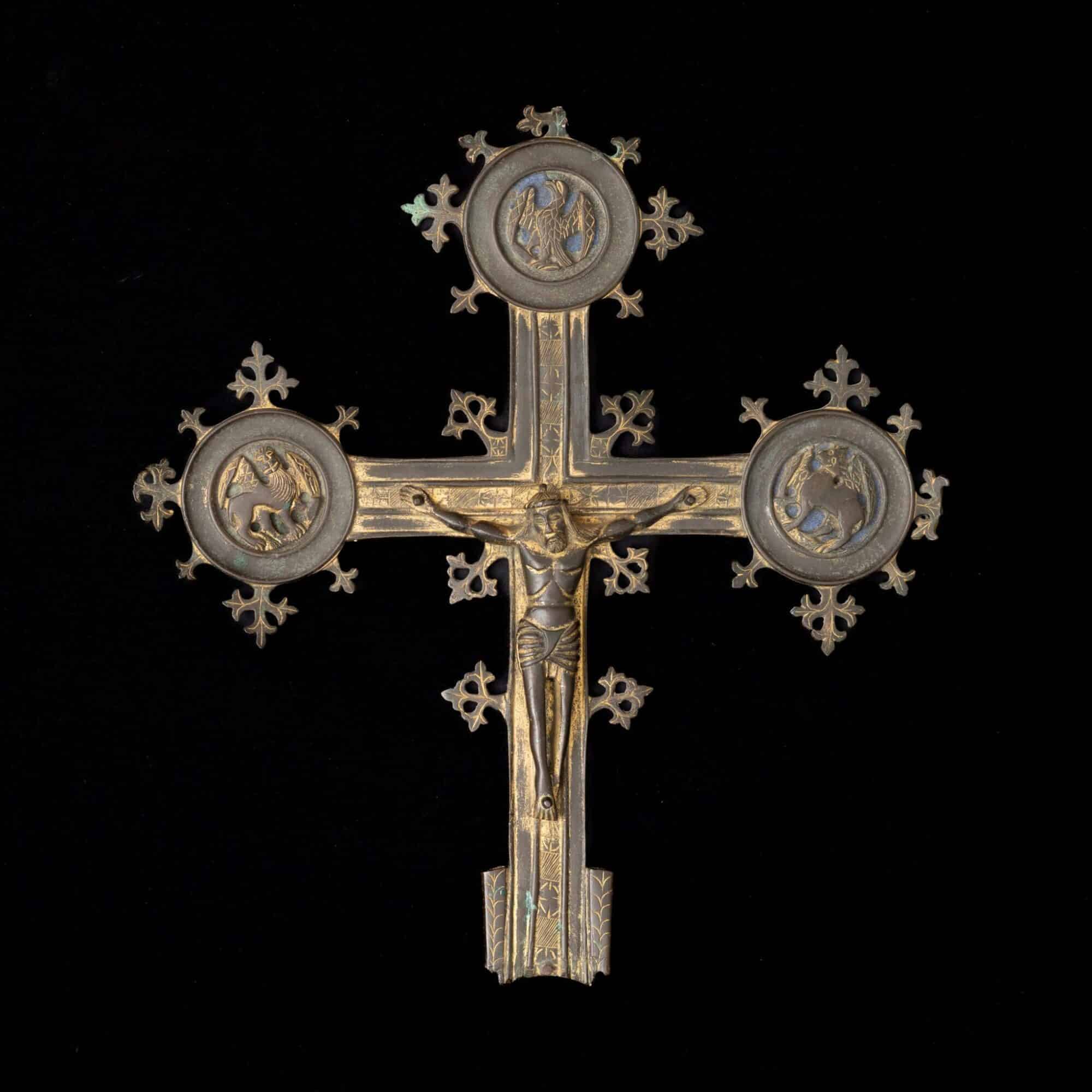
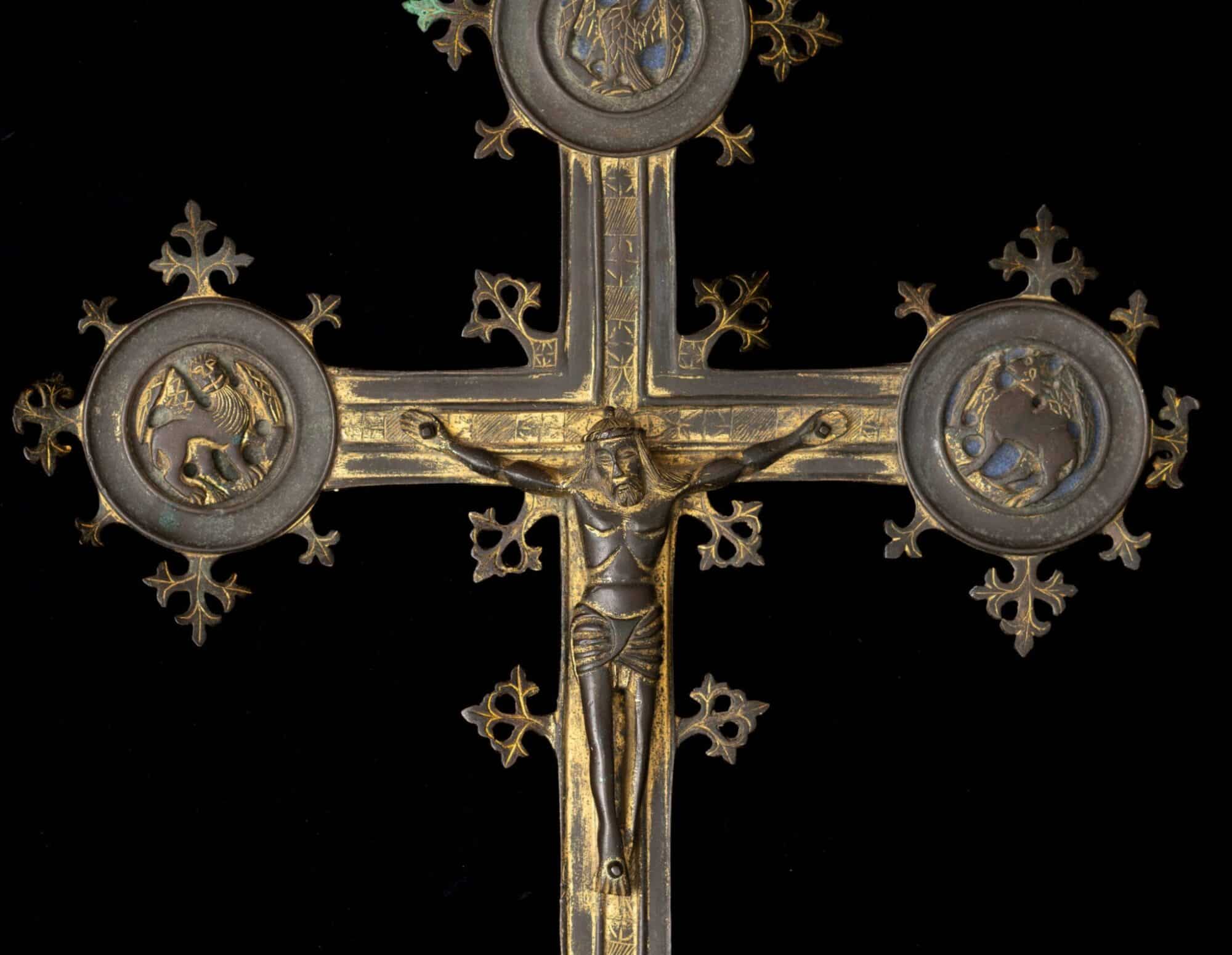
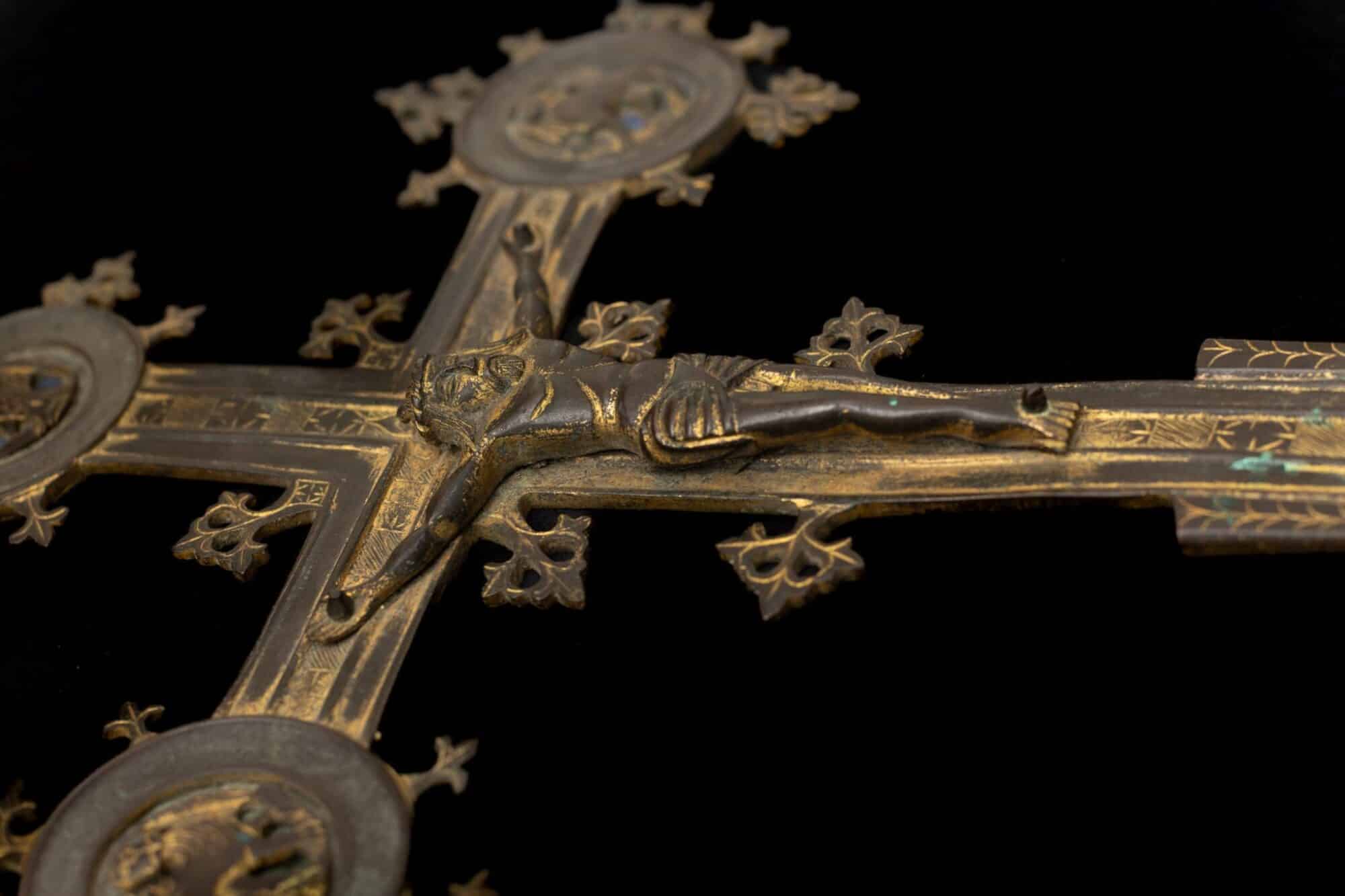
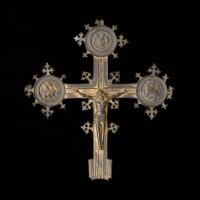
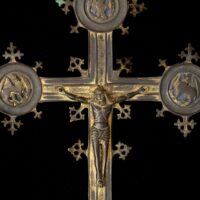
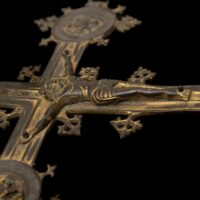
A rare late medieval English processional cross of gilt latten, cast in separate elements and assembled with engraved and pierced decoration. At the centre, Christ crucified, his elongated body rendered in restrained late Gothic manner, with sharply modelled ribs, knotted short perizonium and inclined head.
The three terminals of the cross expand into circular bosses each surrounded by an openwork circlet of cusped leaves. Set within these bosses are the symbols of three of the four Evangelists:
the winged lion of St Mark (left)
the winged ox of St Luke (right)
the eagle of St John (top)
Each is cast in high relief against a recessed and originally coloured ground, fragments of original blue pigment surviving in protected areas — an exceptionally rare survival in English liturgical metalwork of this period.
The symbol of St Matthew (the human/angel emblem) is omitted by design, an iconographic variation known in a very small number of English late Gothic crosses and likely reflecting the theological association of Christ himself with the human element of the Tetramorph.
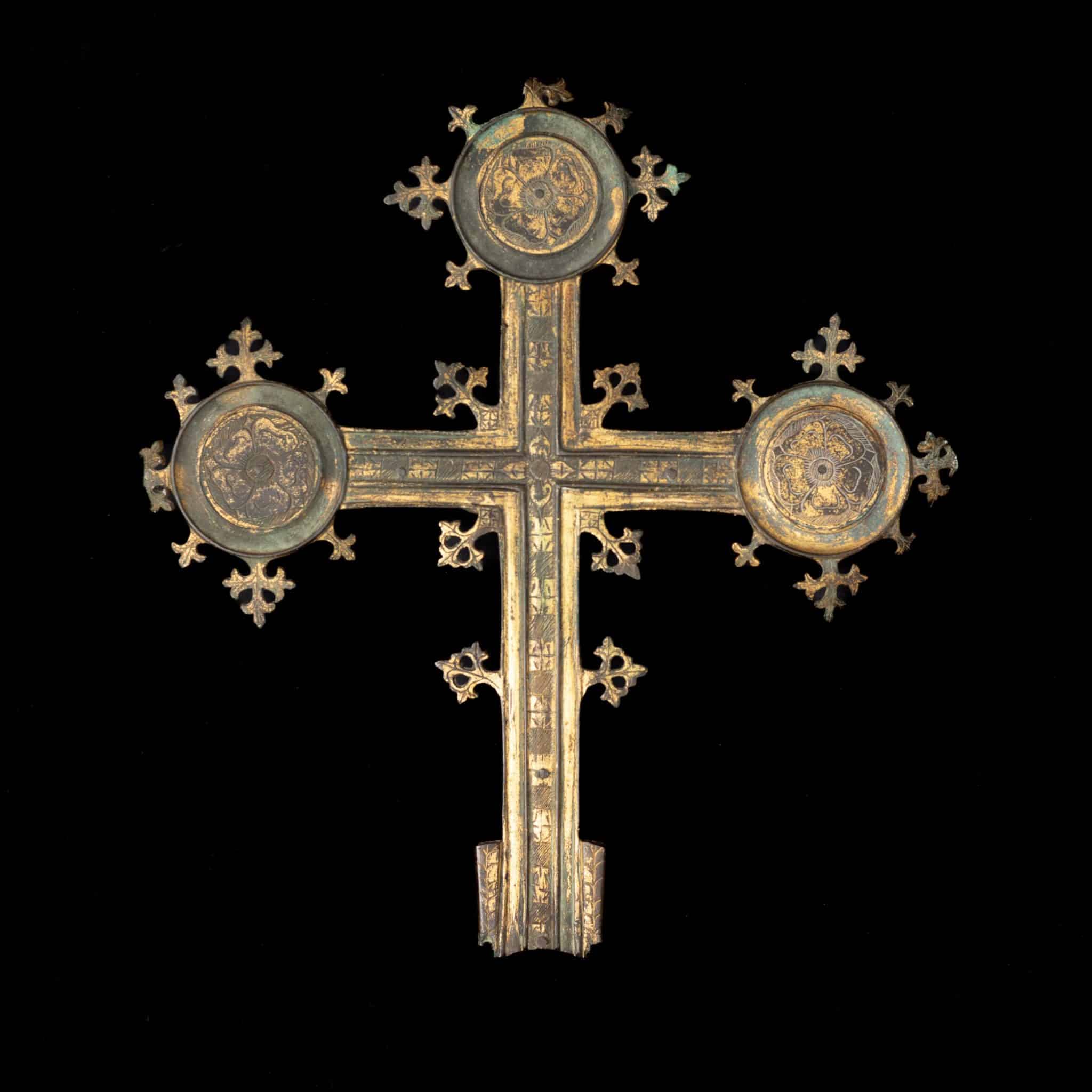
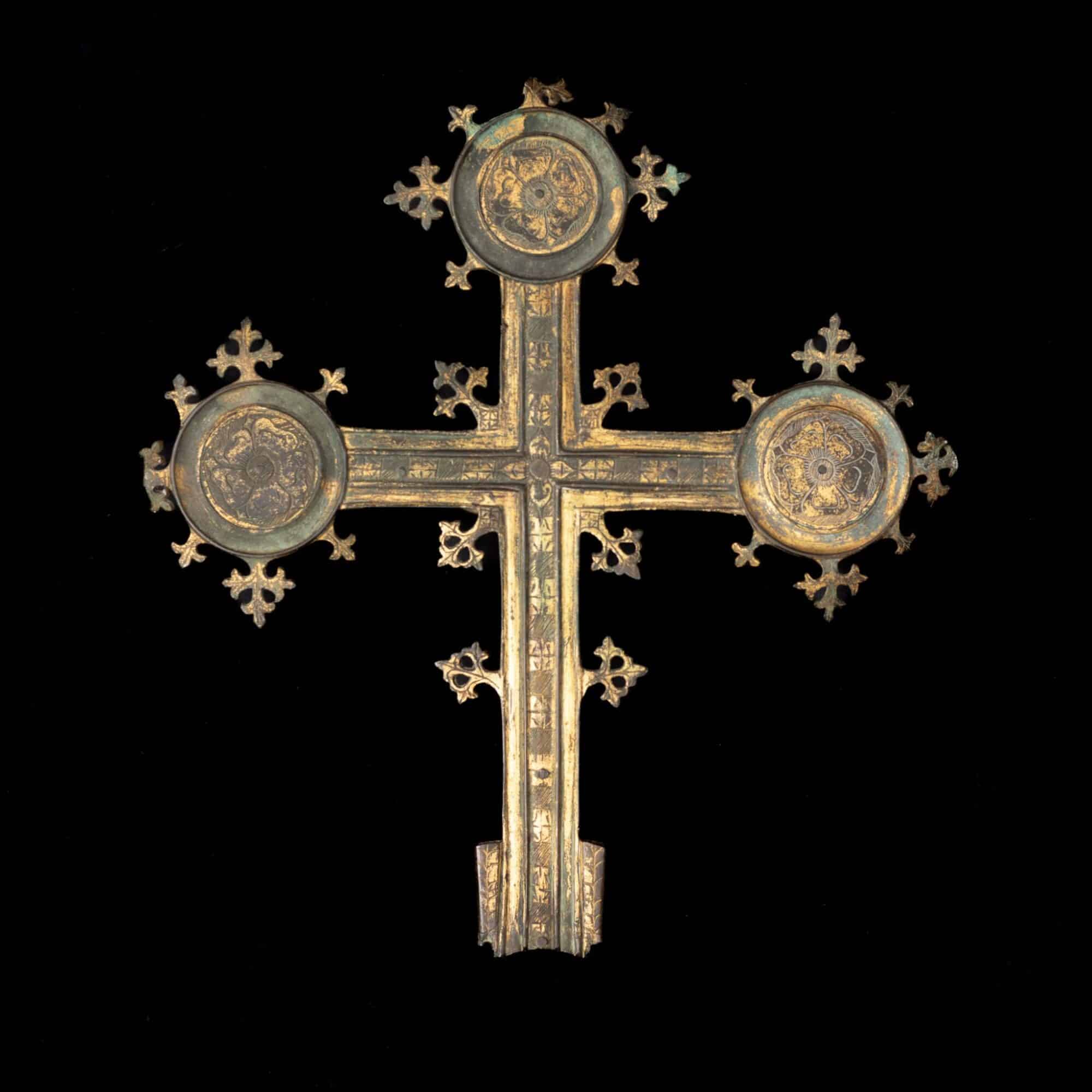
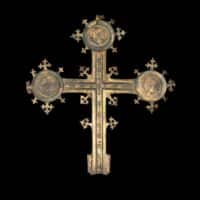
The reverse repeats the circular bosses but with engraved double Tudor roses, finely chased with inner and outer petal rings and a central seed pod. Their presence is of high dynastic significance and establishes a terminus post quem of 1485, the first year of Henry VII’s reign.
The cross-arms are decorated with engraved lozenge and chequer diapering contained within raised linear borders. The lower terminal finishes in the facetted remains of the original ferrule for attachment to its processional staff.
The surface retains extensive original fire-gilding, visible as burnished gold along ridges and protected recesses, with a deep brown latten patina elsewhere. The crispness of the engraving and the surviving pigment confirm minimal abrasive cleaning and excellent long-term preservation.
This cross belongs to the small but important group of English gilt-latten processional crosses produced in the late 15th and early 16th centuries, including:
The Bosworth Cross, Leicester Museum & Art Gallery (found near Ambion Hill, c.1480–1490).
Processional Cross, Victoria & Albert Museum, London (M.147-1911), English, c.1500.
St Davids Cathedral Cross, Amgueddfa Cymru / National Museum Wales (inv. 32.233), late 15th century, found within the cathedral precincts.
Georges Davioud Collection Cross, Saint-Cloud, 22 June 2024, wrongly catalogued as Spanish XVᵉ–XVIᵉ s.; realised €20,160 — of closely related form but without Tudor iconography.
The present cross is distinguished within this corpus by:
Its three-Evangelist iconographic plan,
Surviving areas of original colour,
And the fully developed Tudor rose engraving on the reverse — absent from Bosworth and St Davids.
Provenance:
Private antiquarian collection, Wolverhampton (collector deceased);
Acquired from that estate by a Shrewsbury dealer;
Thence to the present collection.
The Wolverhampton–Shrewsbury region lay along Henry Tudor’s 1485 campaign route and housed multiple collegiate foundations that maintained processional crosses of this quality.
Condition:
Exceptional survival for a pre-Reformation English cross.
Corpus and all Evangelist bosses intact; original fire gilding and pigment retained.
Minor historic losses to some foliate knops.
Lower ferrule truncated. No structural damage or abrasive cleaning.
English medieval processional crosses are extremely scarce; most were destroyed under the Edwardian Injunctions (1547–53).
This example provides rare evidence of:
Liturgical metalwork at the threshold of the Tudor age,
The introduction of royal Tudor iconography into ecclesiastical objects,
and variation within the Evangelist programme of English late Gothic workshops.
Its completeness and iconographic distinctiveness place it among the most important privately held examples of its type.