Flemish Copper-Alloy Chandelier Lion
- Period
- late 14th or early 15th century
- Origin
- Flanders
- Dimensions
- W 3 1/2"" × H 2 1/4"" × D 1 1/4""
- Reference
- #Marh3779
£2,250
Description
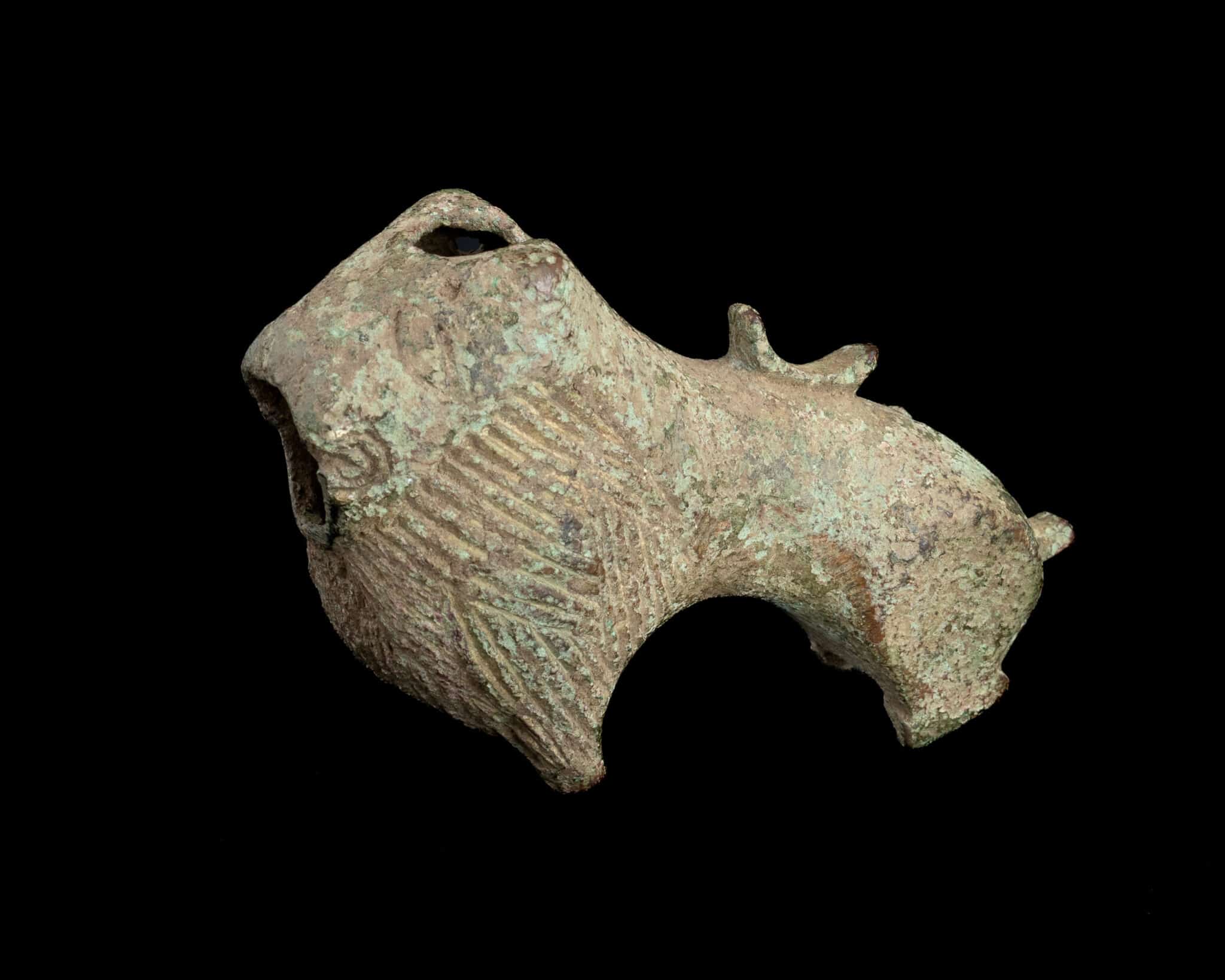
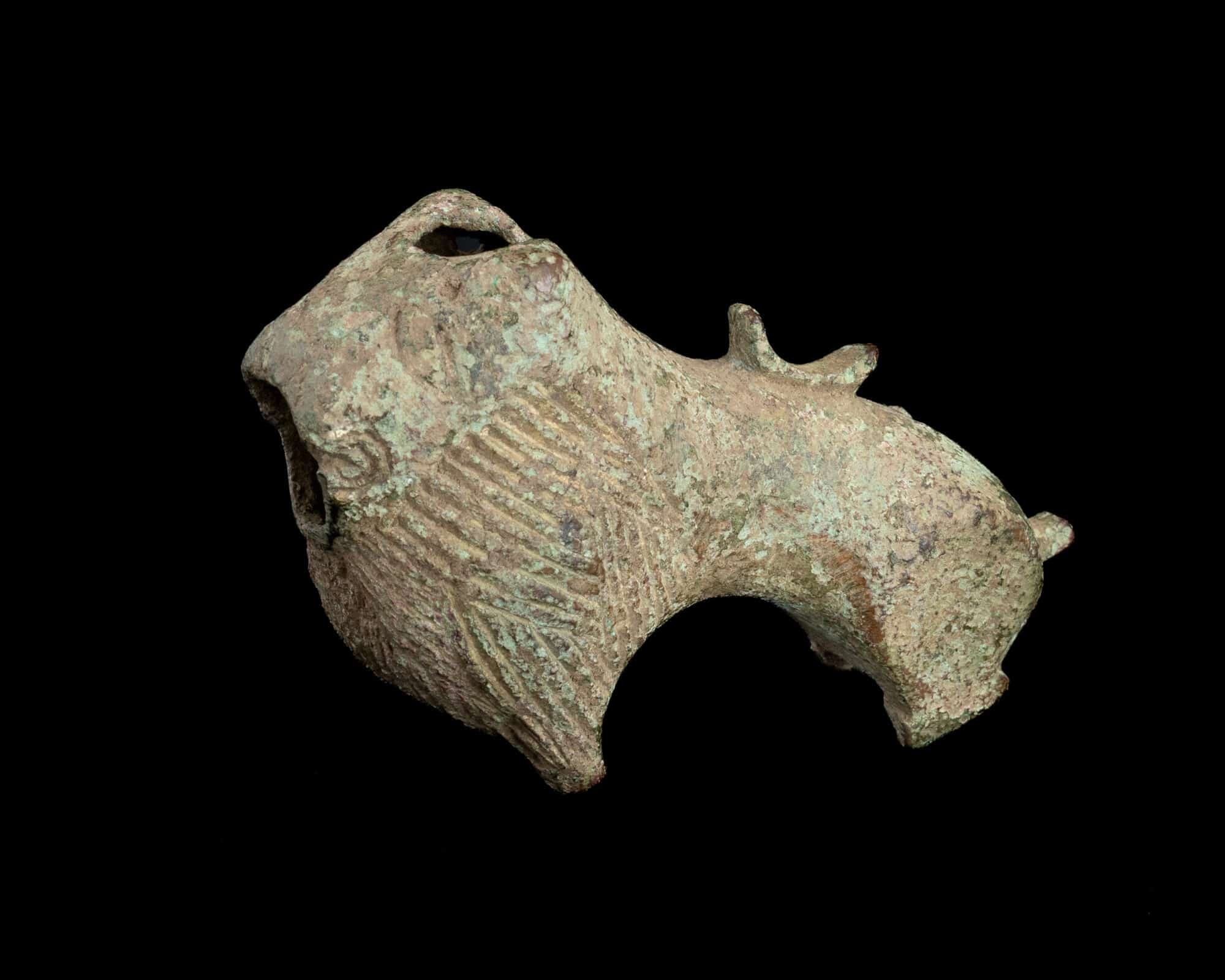
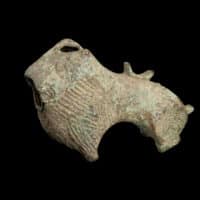
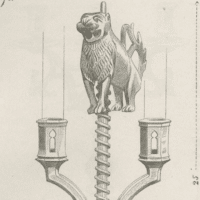
A late medieval hollow-cast copper-alloy lion, originally forming a functional component of an adjustable candlestick or chandelier. The animal is represented crouching, its surviving body pierced vertically by a substantial aperture through which the central shaft of the lighting apparatus originally passed.
Although preserved in excavated and fragmentary condition, with losses to the head, legs and much of the tail, sufficient original detail survives to establish the form. Particularly distinctive is the strongly projecting mane, worked with a series of deeply cut and undercut diagonal ribs. Rather than being represented simply by engraved surface decoration, the mane forms a pronounced sculptural mass around the breast and neck, creating alternating ridges and recessed channels.
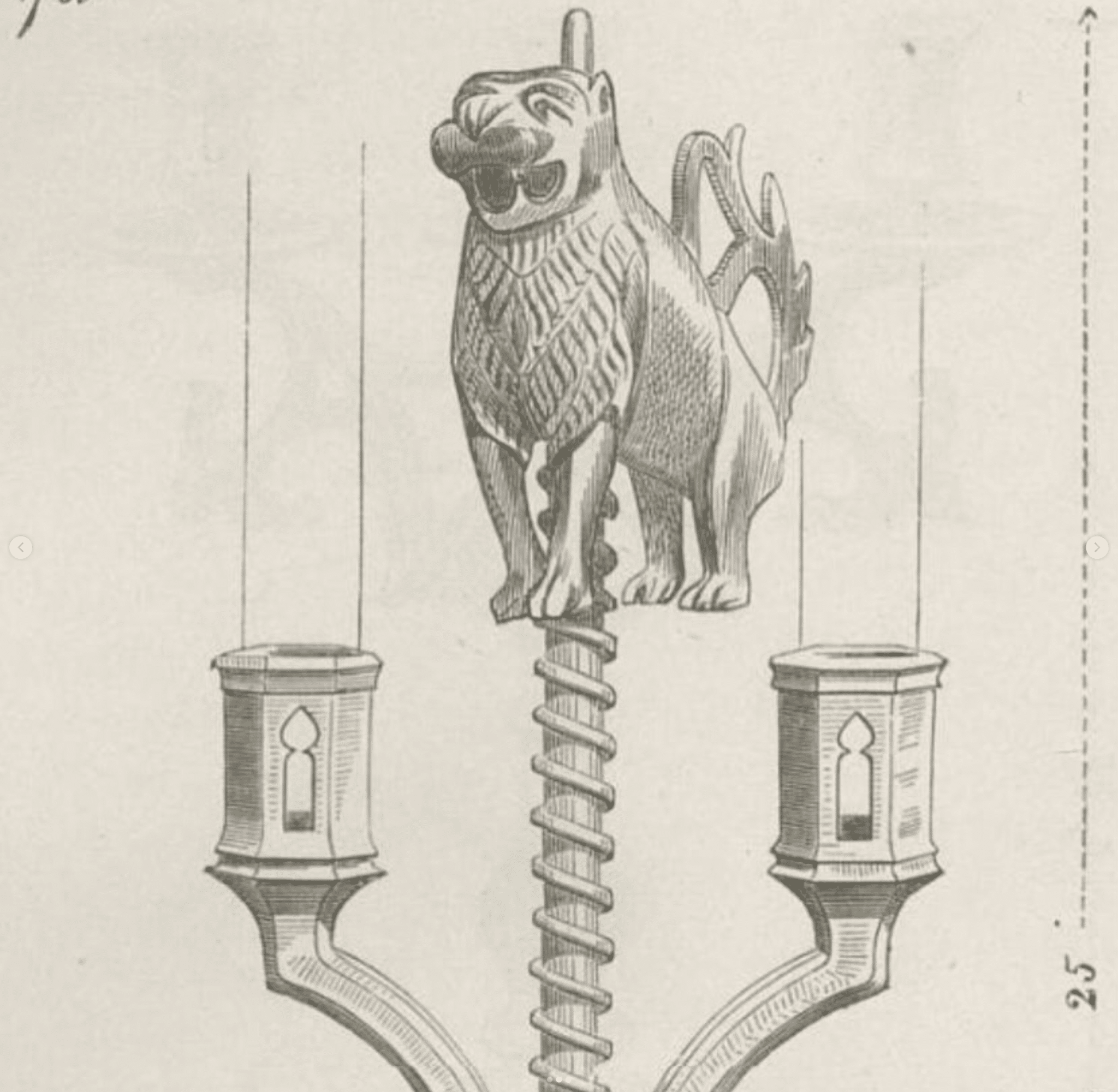
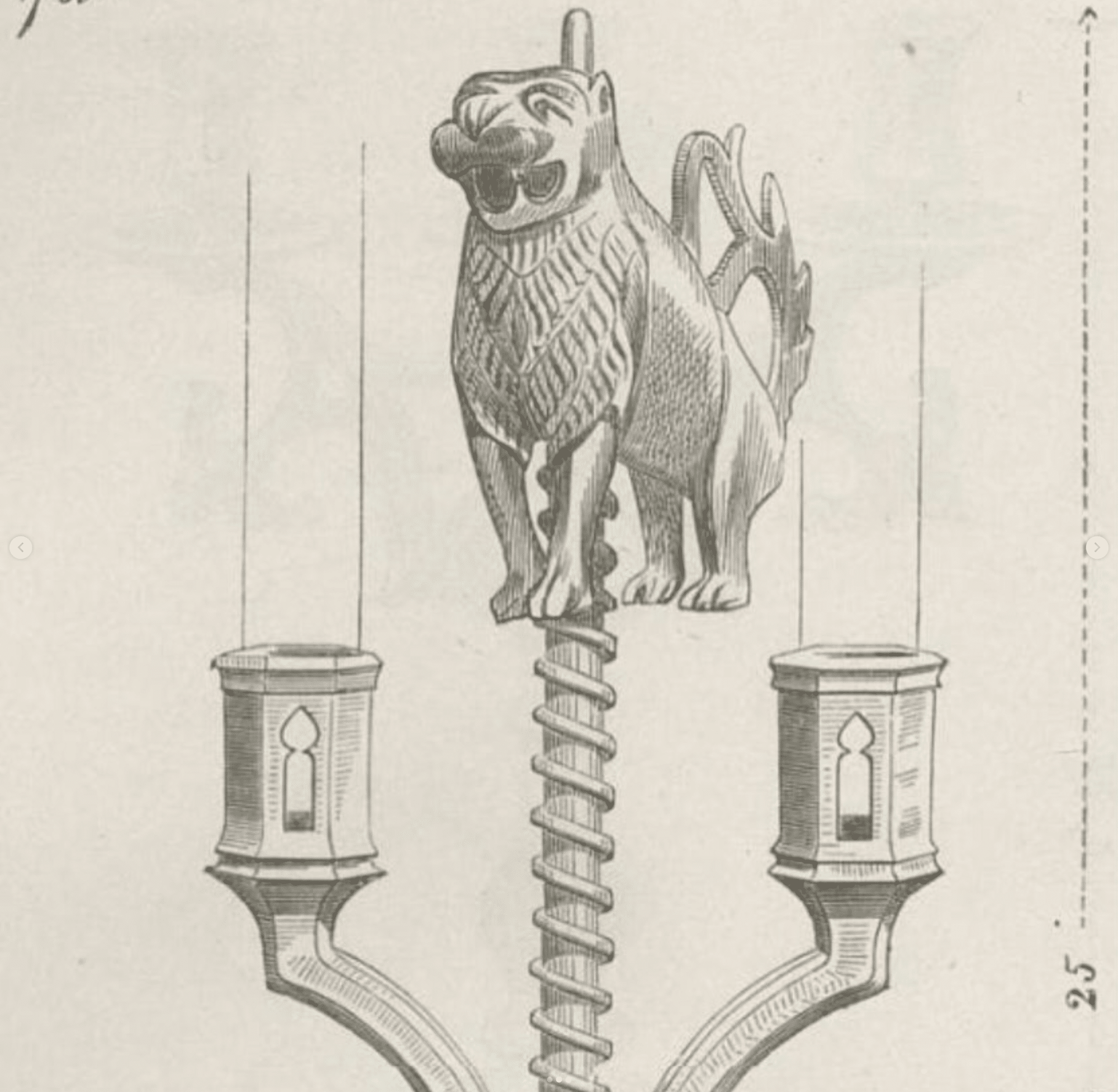
The remains of the raised tail and the large vertical aperture through the body are characteristic of a small group of surviving medieval chandelier lions. In complete examples the tail terminates in an elaborate recurved or looped formation and served as a means by which the animal could be rotated around the central shaft of the lighting mechanism.
The attribution to Flanders is supported by comparison with a related fifteenth-century chandelier element preserved in the Victoria and Albert Museum, London (inv. M.16-1953), catalogued as Flemish. A remarkably close example, measuring 8.5 cm in length, was offered by Aguttes in Paris in July 2026 and dated to the second half of the fourteenth or beginning of the fifteenth century. The Aguttes catalogue itself compares that object with the V&A example and with the so-called Wenhaston Lion discovered in Suffolk.
The Wenhaston Lion (PAS NMS-11D931), although formerly given an earlier date, provides an especially significant morphological comparison. Measuring 8.8 cm in length, it has a vertically pierced body, hatched or ribbed treatment of the chest and a recurved serrated tail terminating in a loop. The present lion measures 8.9 cm in length, making the dimensions of the two examples virtually identical.
The close correspondence in scale, construction and treatment of the mane places the present lion within this highly distinctive group of medieval zoomorphic lighting fittings. Its archaeological condition is consistent with prolonged burial, while preserving enough of its original construction to demonstrate both its sculptural character and mechanical purpose.
Comparative Literature and Examples
Victoria and Albert Museum, London, inv. M.16-1953: chandelier element in the form of an animal, Flanders, 15th century.
Portable Antiquities Scheme, NMS-11D931: the ‘Wenhaston Lion’, discovered near Wenhaston, Suffolk.
Aguttes, Haute Époque, 8 July 2026, lot 146: hollow-cast copper-alloy chandelier lion, France, second half of the 14th or beginning of the 15th century, 7 × 8.5 cm.
E. Viollet-le-Duc, Dictionnaire raisonné du mobilier français, Paris, 1874, vol. II, pp. 62–63.
G. Egan, The Medieval Household: Daily Living c.1150–c.1450, London, 2010, item 425.
Christopher Bangs, The Lear Collection: A Study of Copper-Alloy Socket Candlesticks A.D. 200–1700, 1995.