Late Gothic Gilt and Polychrome Wall Canopy for a Devotional Sculpture
- Period
- Circa 1470–1500
- Origin
- Upper Rhine or South Germany
- Dimensions
- W 35 1/2"" × H 20 3/4"" × D 8 1/4""
- Reference
- #Marh3780
£3,850
Description
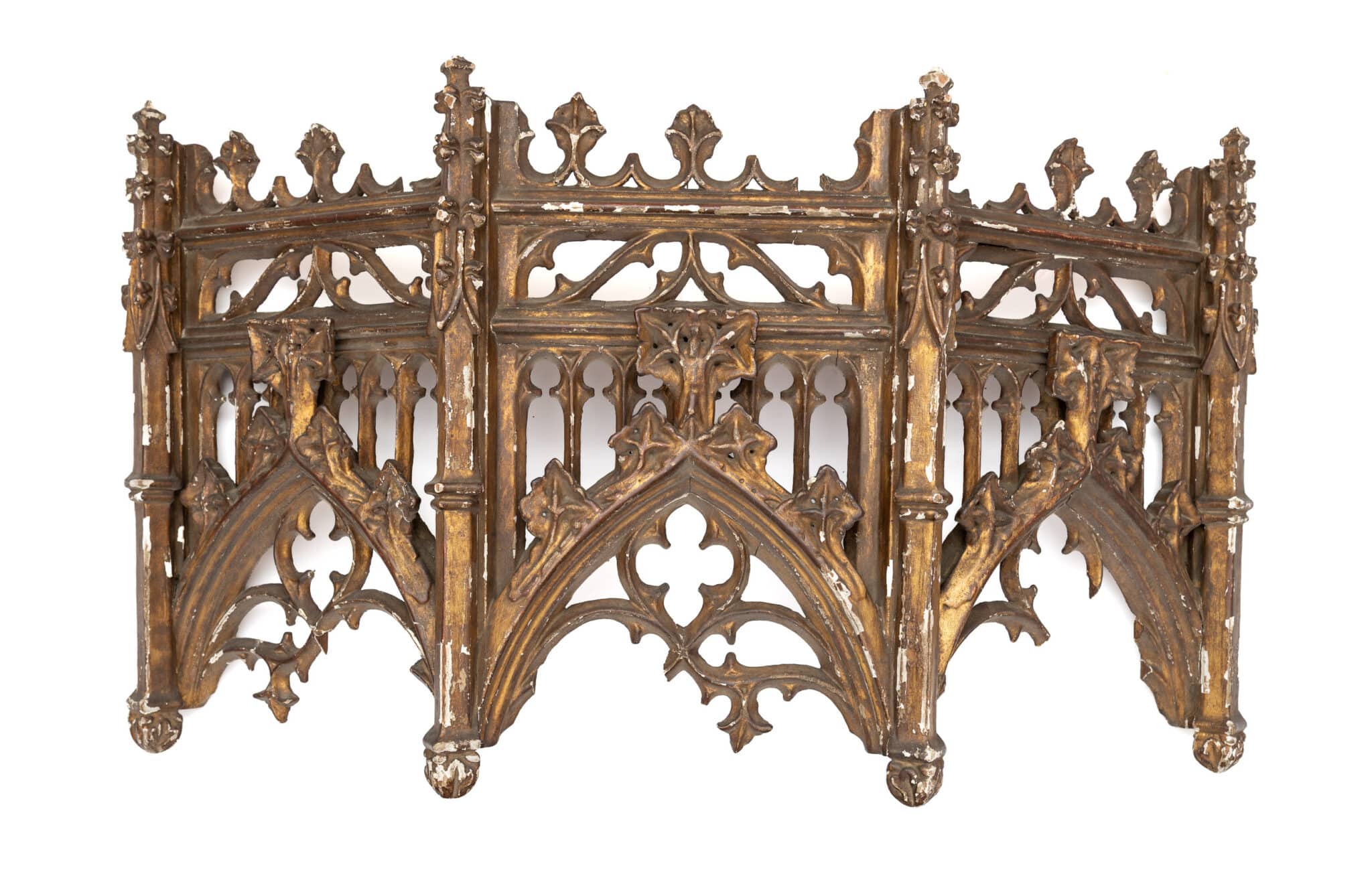
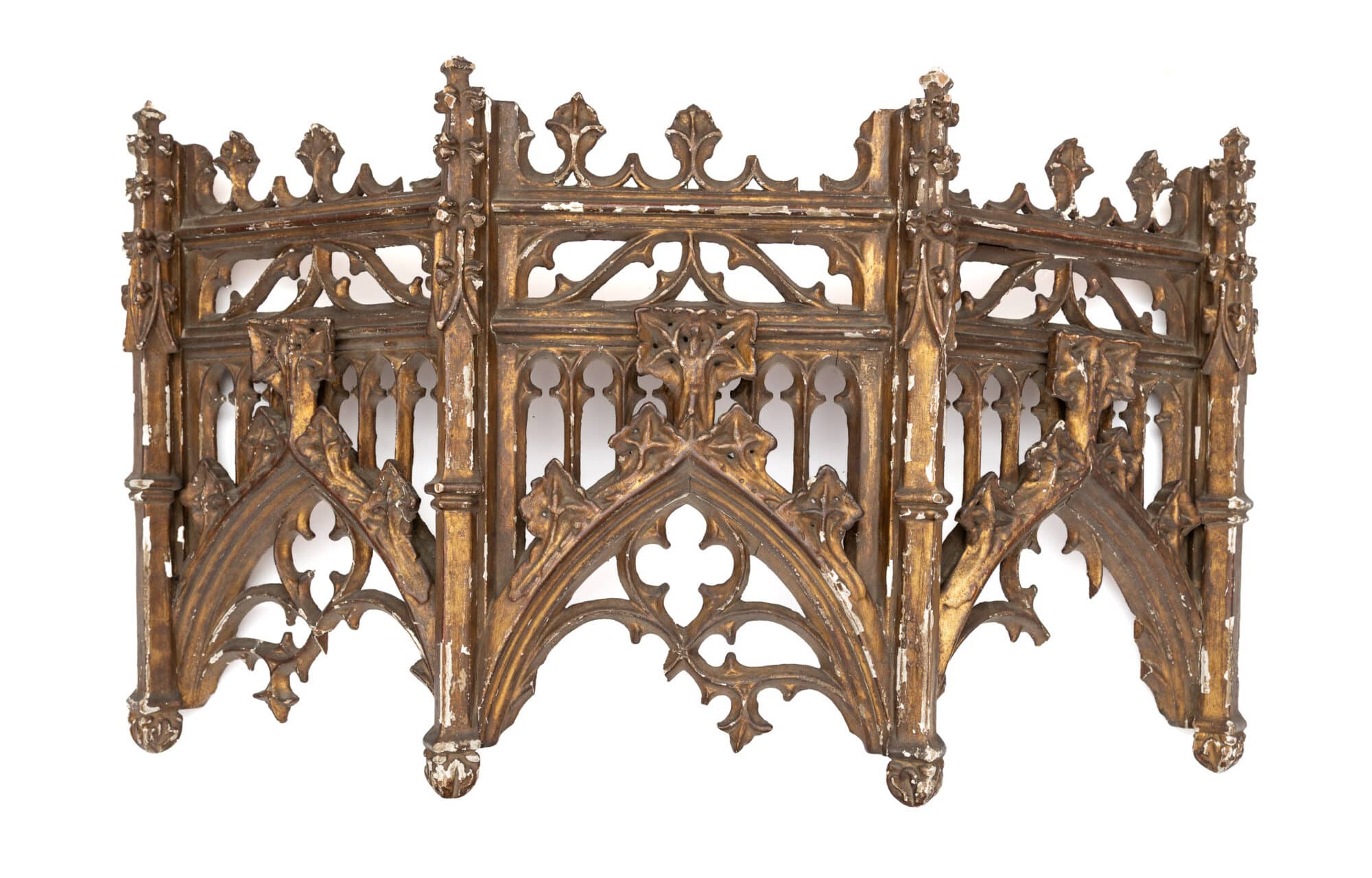
A late fifteenth-century Gothic wall canopy, conceived as a richly architectural setting for a devotional sculpture. Constructed in three sections with a broad frontal elevation and projecting sides beneath a boarded tester, the canopy is extensively pierced and carved with an elaborate arrangement of pointed and ogee arches, cusped tracery, quatrefoils, miniature lancets and scrolling foliate ornament.
The principal elevation is divided into three bays by slender projecting buttresses enriched with applied crockets and terminating in carved pendant motifs. Each bay is surmounted by openwork tracery and a cresting of alternating foliate finials and cusped ornament, creating the appearance of a miniature Gothic architectural enclosure. The central bay is particularly strongly articulated by a large pointed arch containing a quatrefoil and sweeping cusped tracery, its apex enriched with vigorously carved foliage.
The outward-facing architectural surfaces retain extensive evidence of gilding, laid over a prepared ground, while the interior preserves substantial remains of red polychromy. This contrast between the brilliant gilded exterior and red-painted interior would originally have provided a particularly rich setting for the sculpture positioned beneath the canopy.
The light weight and apparent character of the timber suggest a softwood rather than oak. Lime or linden, widely employed by late Gothic carving workshops within the German-speaking regions, is a possibility, although the timber species has not been scientifically identified and is therefore conservatively described here simply as softwood.
The combination of deeply modelled foliate ornament, pierced architectural tracery and extensive gilding belongs to the flourishing tradition of ecclesiastical woodcarving of the later fifteenth century. The character of the carving and probable use of softwood suggest an origin in South Germany or the Upper Rhine, although a French origin cannot presently be entirely excluded.
Originally intended to project from a wall, the canopy would have sheltered and framed a substantial figure or devotional group—perhaps an image of the Virgin and Child, a saint or related sacred subject—creating a miniature architectural shrine around the sculpture.