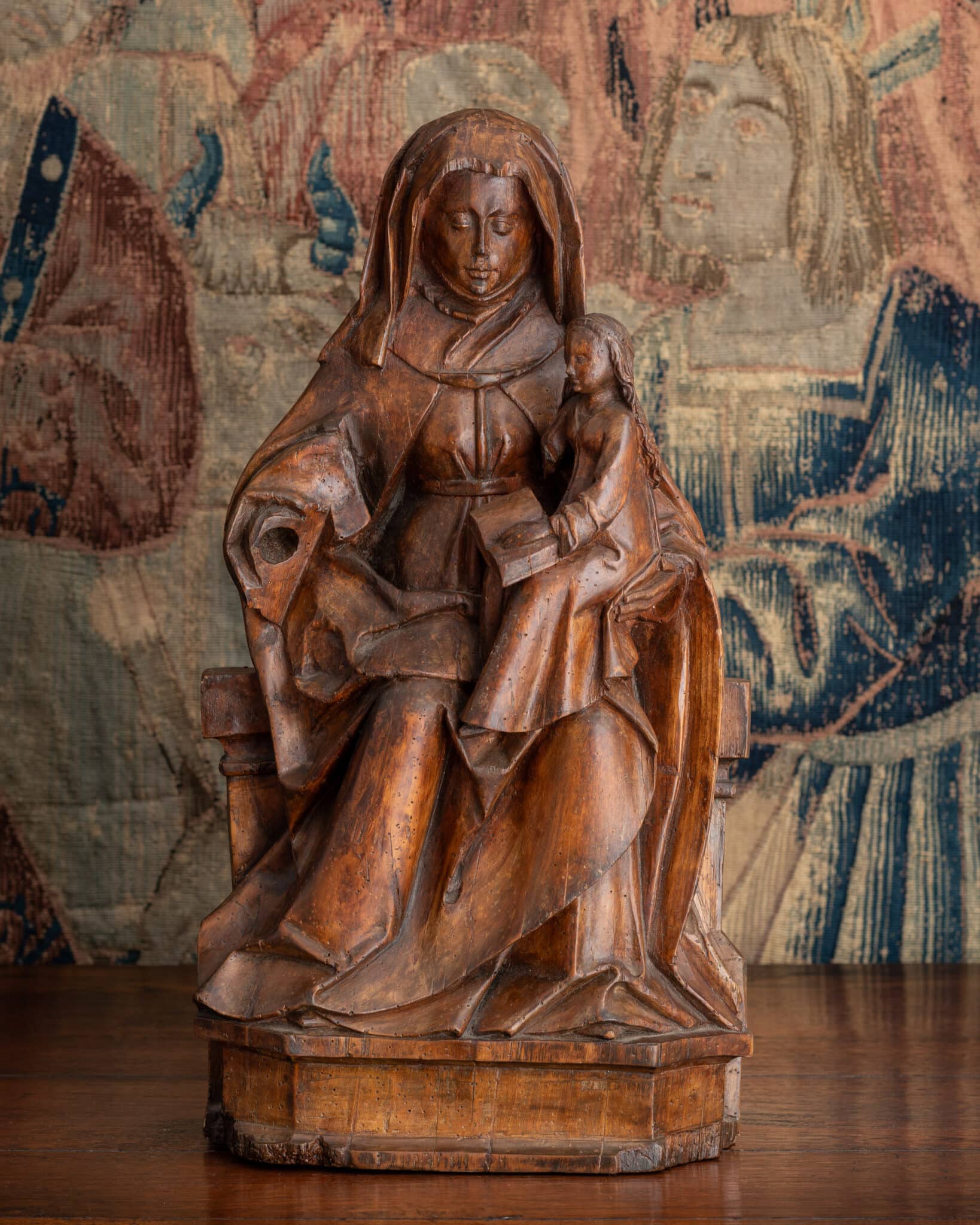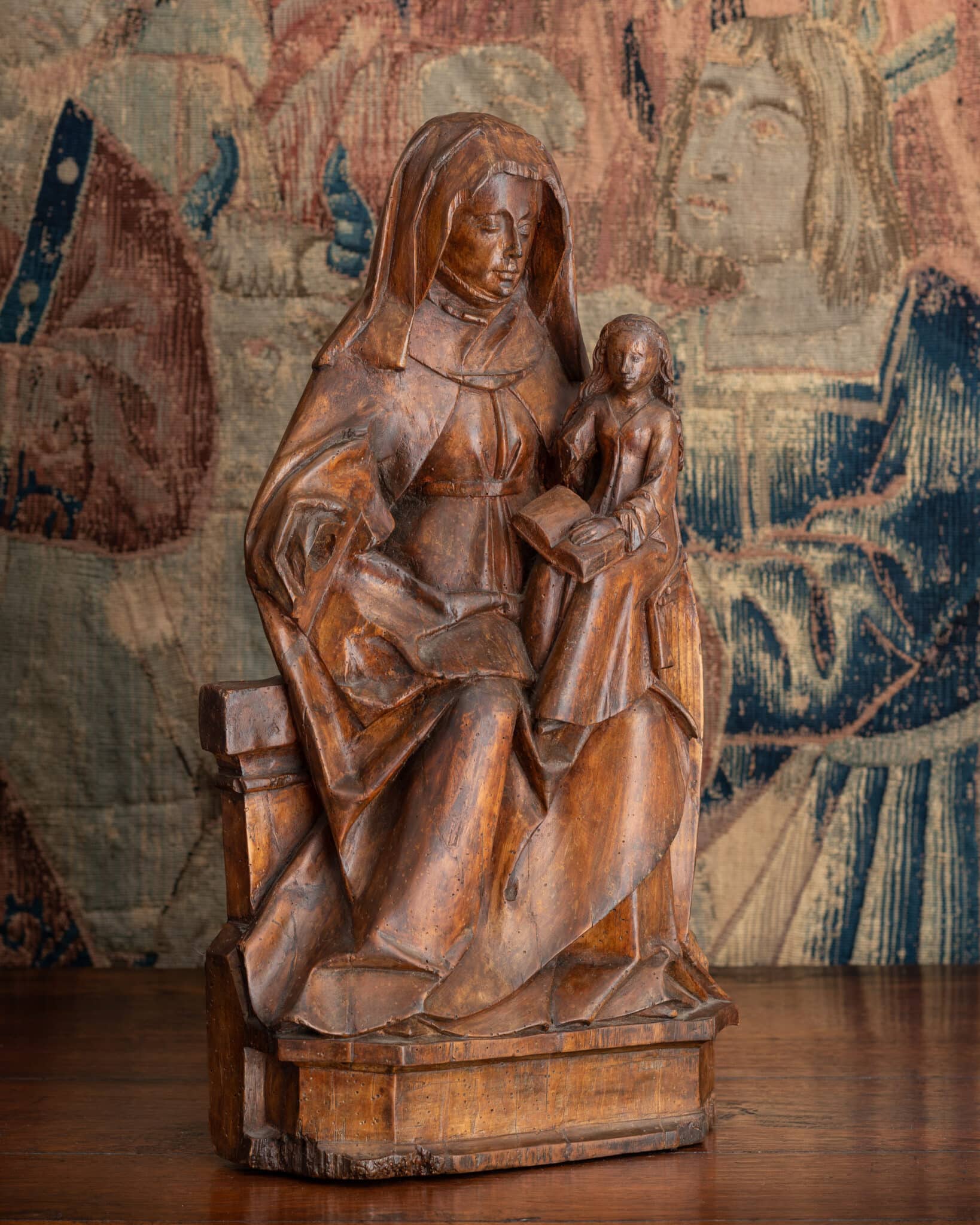
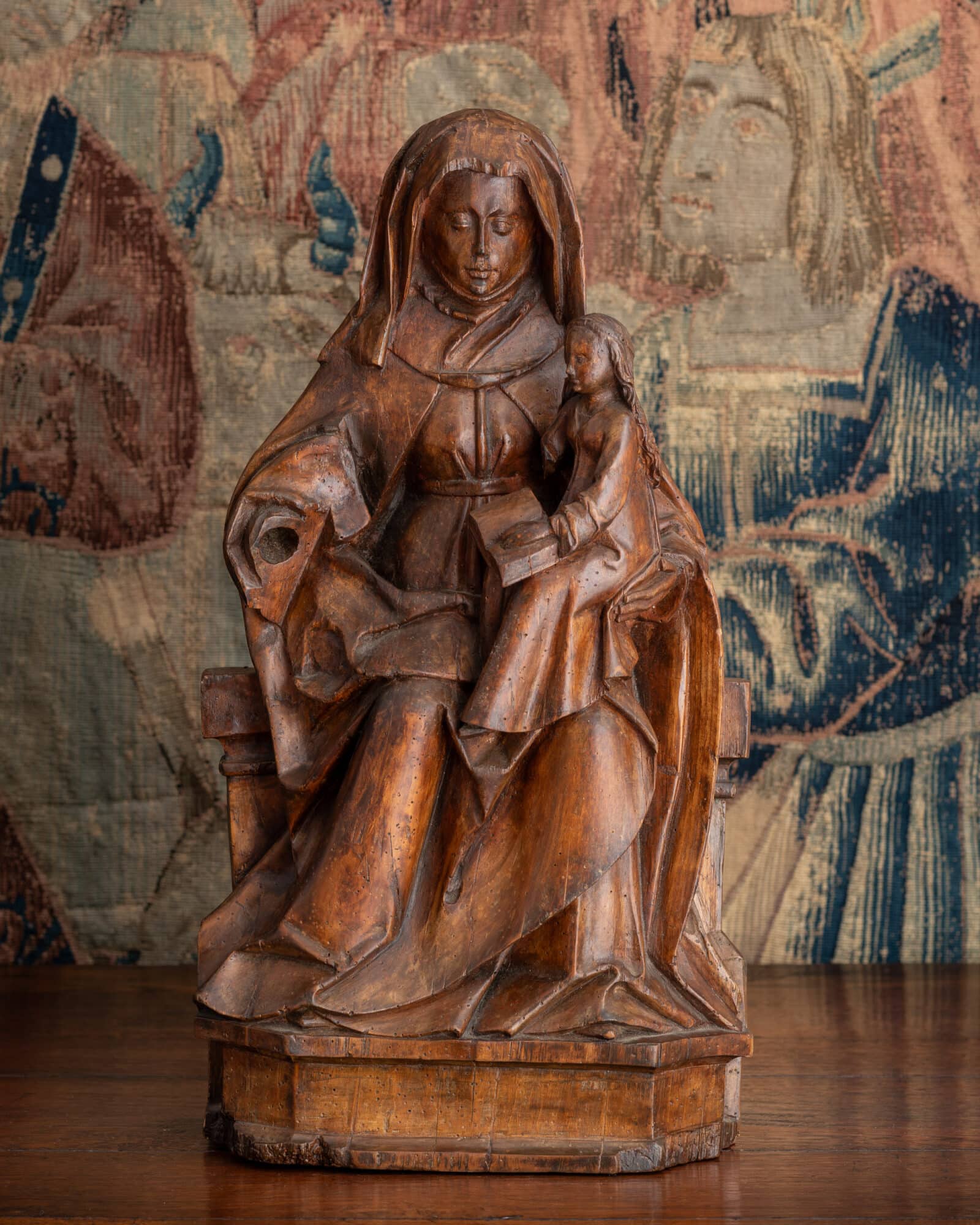
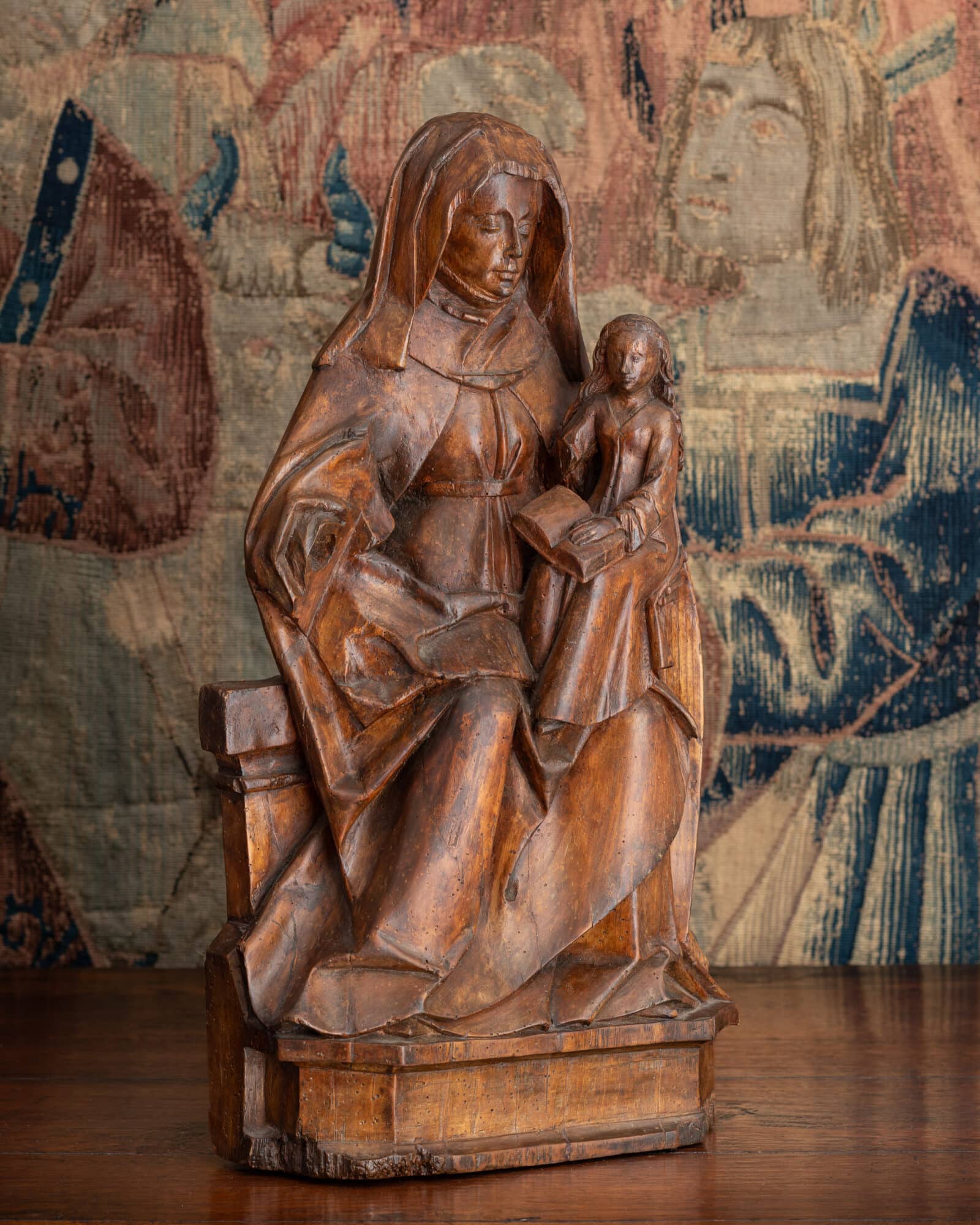
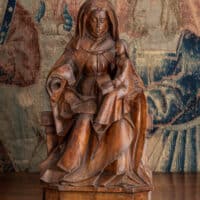
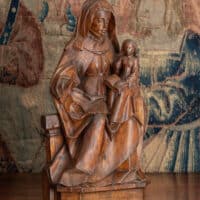
Saint Anne Teaching the Virgin to Read
- Period
- Circa 1480–1500
- Origin
- Brabant, Southern Netherlands
- Dimensions
- W 12"" × H 22 3/4"" × D 5""
- Reference
- #Marh3781
£6,850
Description
A late Gothic walnut sculpture depicting Saint Anne instructing the young Virgin Mary in reading, produced in the Duchy of Brabant during the closing decades of the fifteenth century.
Saint Anne is represented seated and enveloped in a long mantle and veil, her monumental figure providing the architectural framework for the composition. Beside her stands the youthful Virgin, distinguished by her long, freely falling hair and youthful features. Before her is an open book, upon which she places her hand, identifying the subject as the Education of the Virgin. The book alludes to Anne’s traditional role as Mary’s teacher and to Mary’s preparation for her future place within the history of Salvation.
The carving displays characteristics associated with late fifteenth-century Brabantine sculpture: the restrained and contemplative facial types, strongly delineated features, broad treatment of the principal forms and the angular, deeply folded drapery concentrated around Anne’s knees and feet. Particularly engaging is the contrast between the solemn monumentality of Saint Anne and the considerably smaller, delicately conceived figure of the young Virgin.
Carved from walnut, the group is exceptionally shallow in relation to its height. The largely unworked, flat reverse demonstrates that it was intended to be seen principally from the front and oblique angles, most probably having originally formed part of an ecclesiastical furnishing or altarpiece, or having stood within an architectural niche against a wall. The faceted integral plinth further emphasises its original architectural character.
The sculpture belongs to the important tradition of walnut carving practised in Brabant during the later fifteenth century, particularly within the northern part of the duchy, where a number of distinctive workshops—including those conventionally grouped around the Masters of Koudewater, Soeterbeeck and Leende—produced devotional sculpture characterised by restrained expression and strongly constructed late Gothic drapery.