Late Gothic Oak and Wrought-Iron Revolving Lectern or Reading Desk
- Period
- Circa 1500–1550
- Origin
- Netherlandish or Lower Rhenish
- Dimensions
- W 18 1/4"" × H 54 1/4"" × D 17 1/4""
- Reference
- #Marh3782
£5,850
Description
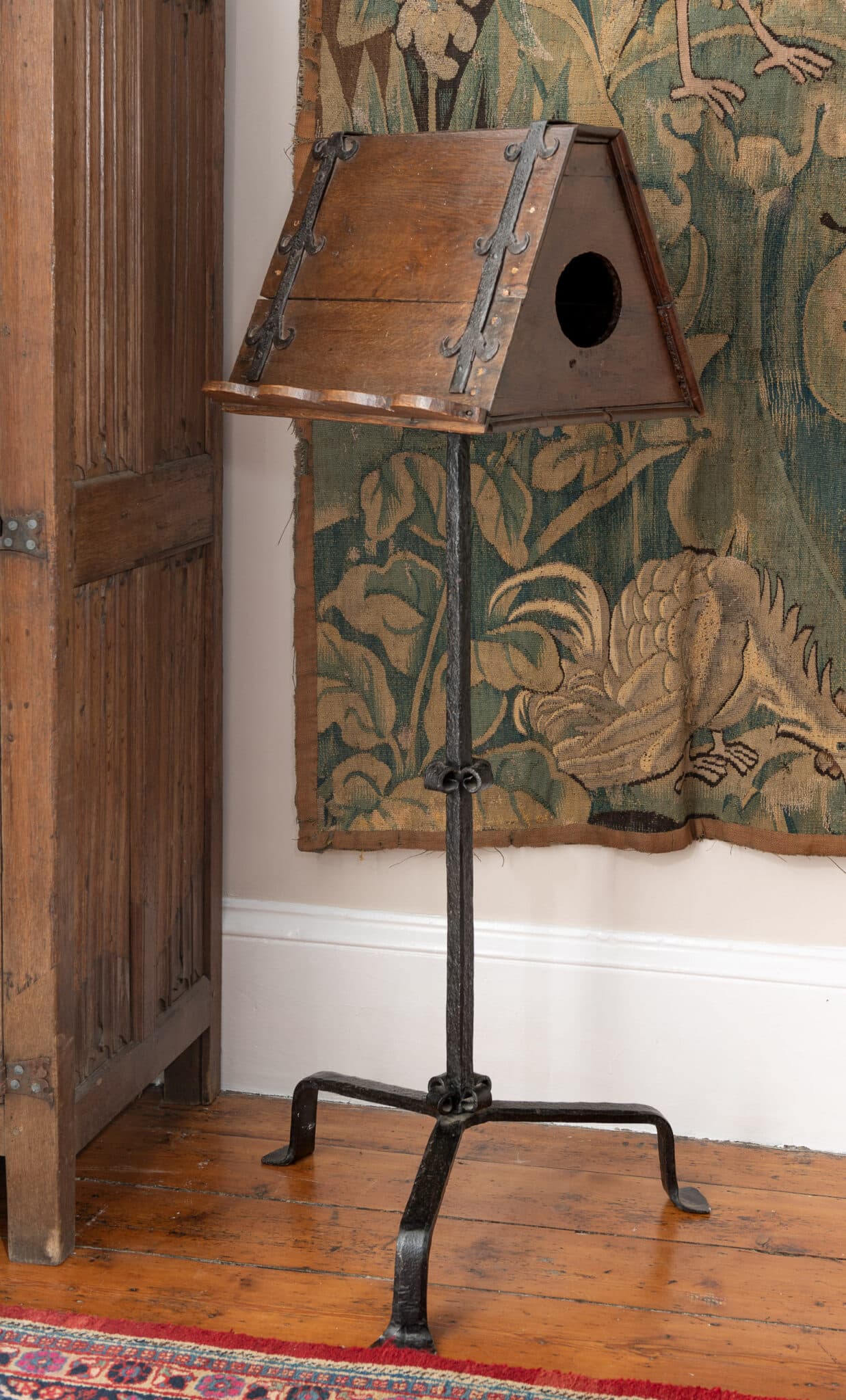
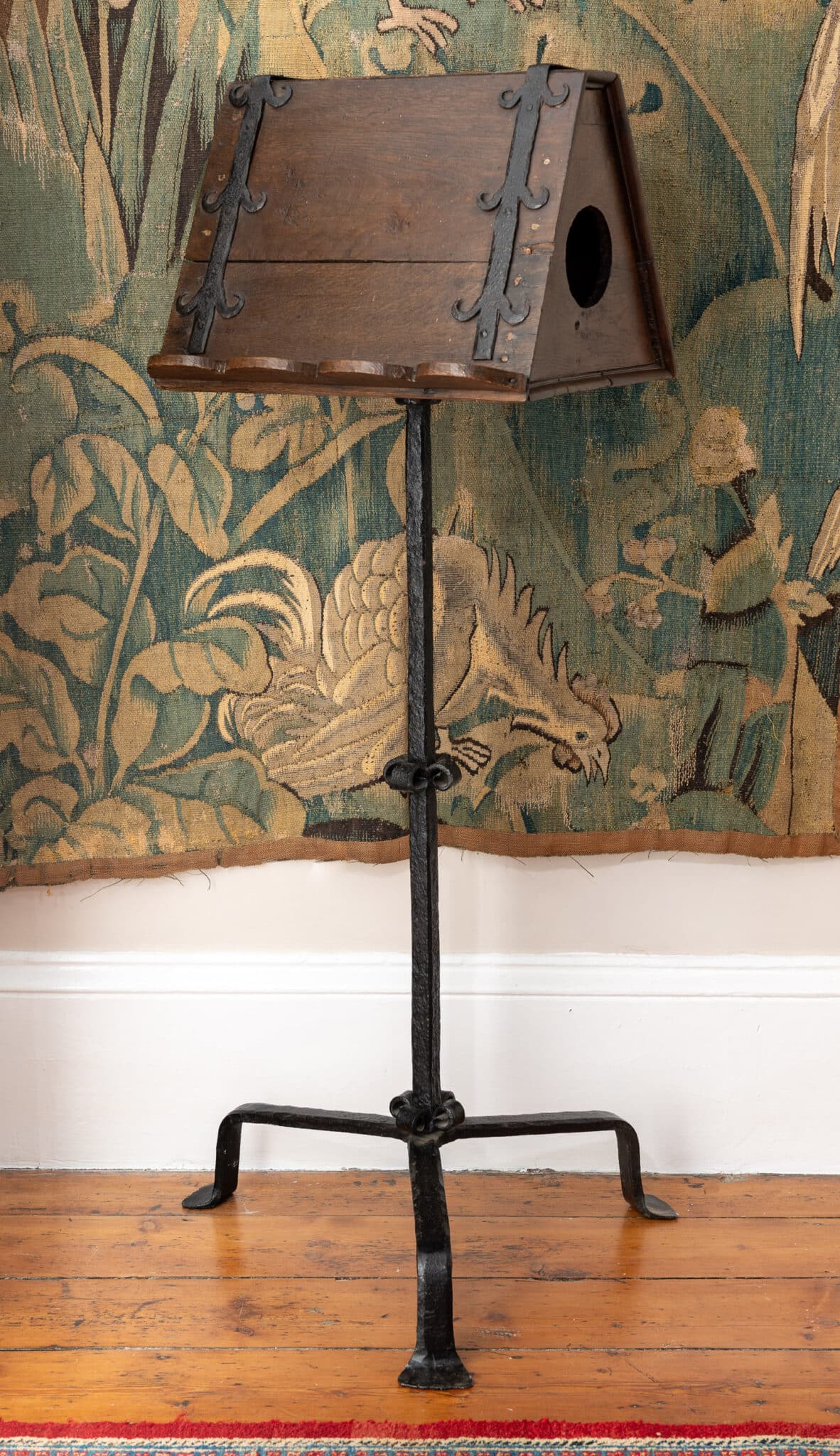
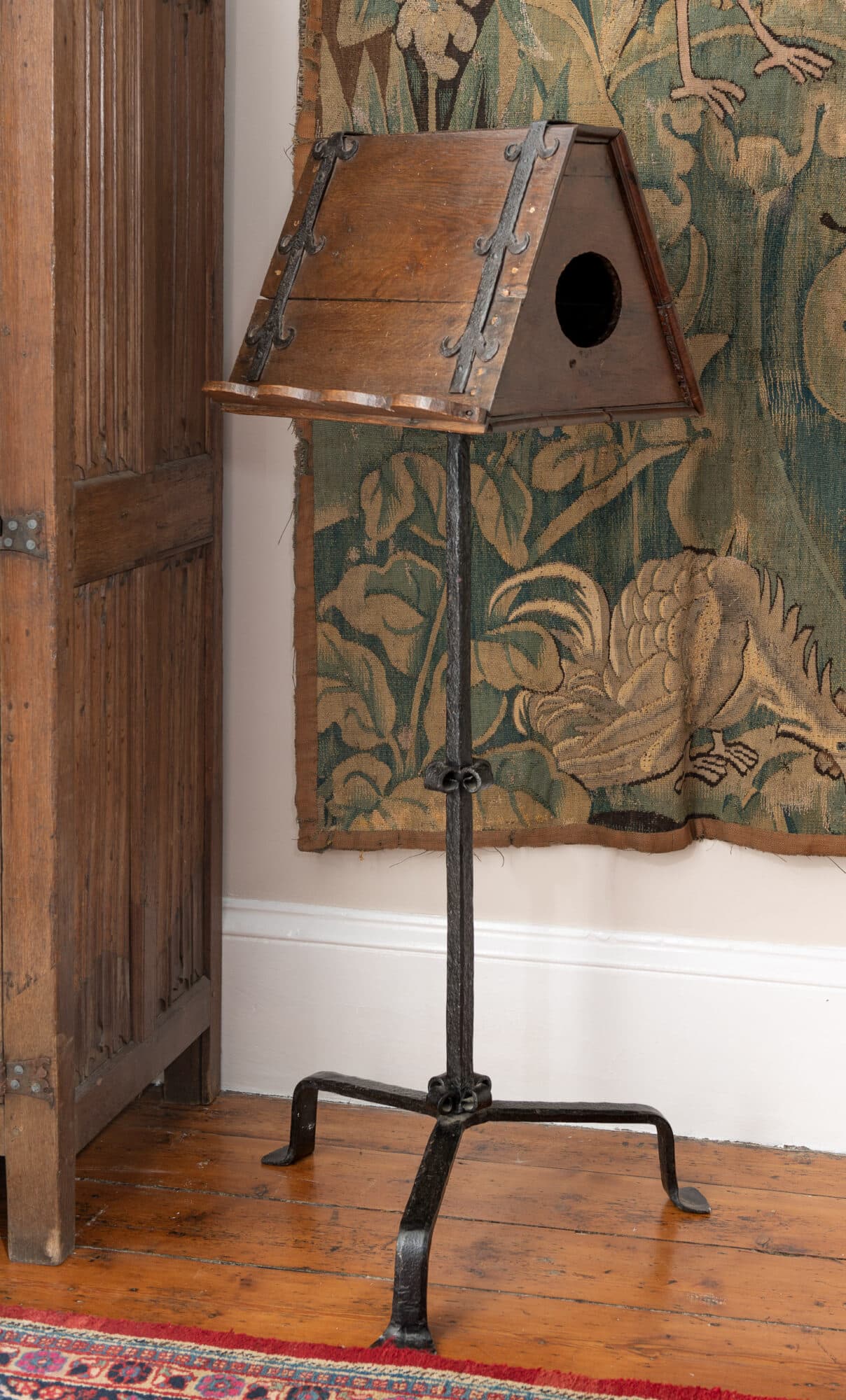
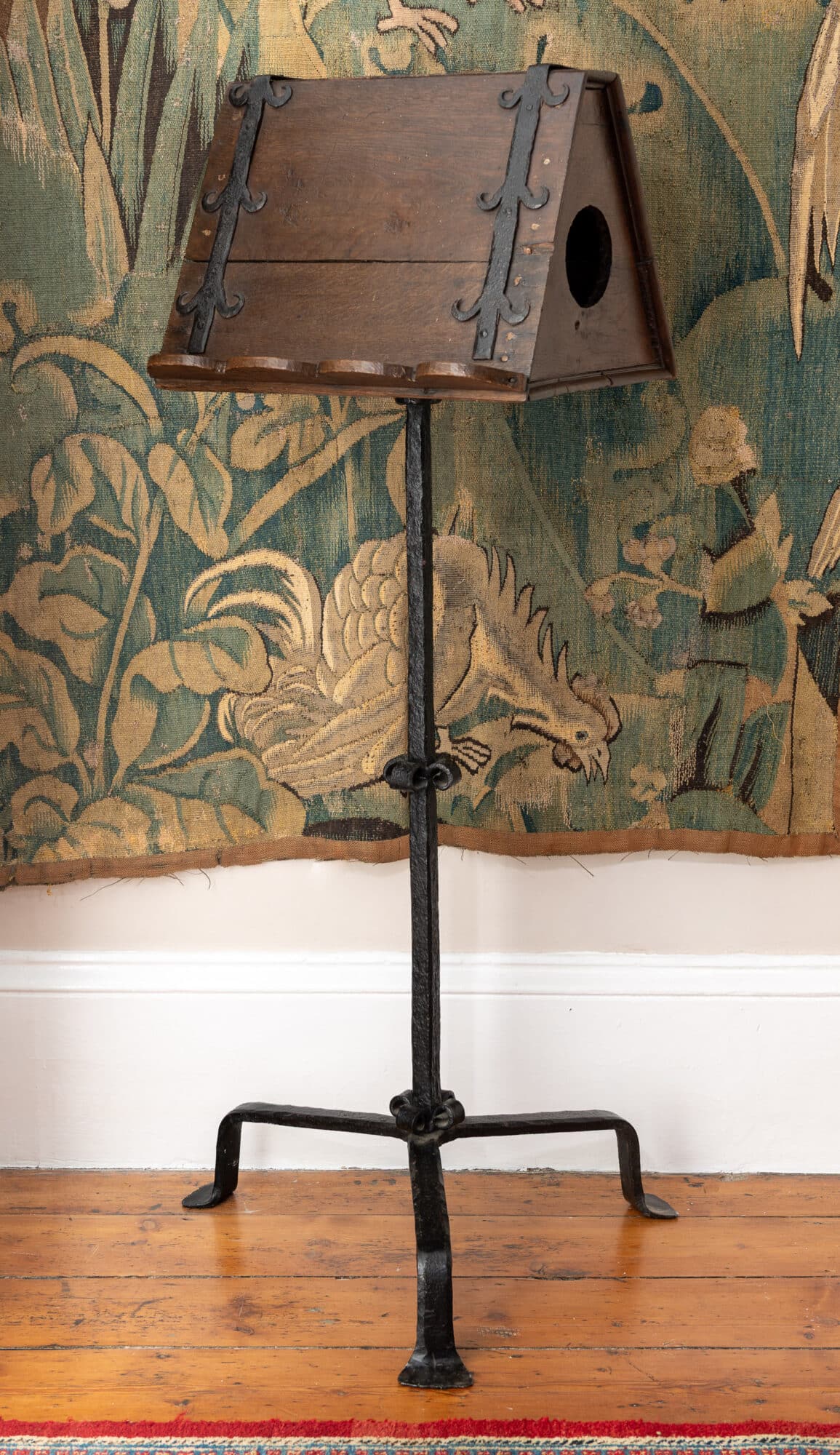
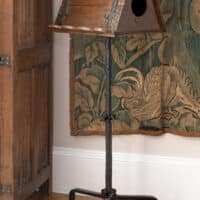
An early sixteenth-century standing lectern or reading desk, constructed in oak and wrought iron and retaining an unusual revolving mechanism by which the desk may be turned upon its supporting pedestal.
The enclosed oak superstructure is constructed in the form of a steeply pitched reading desk, the broad sloping face formed from horizontal oak boards and terminating below in a projecting moulded ledge intended to support an open book or manuscript. The desk is reinforced by substantial wrought-iron straps terminating in characteristic paired scrolling hooks, combining structural purpose with restrained late Gothic ornament.
Unlike the more familiar open book-rest form of lectern, the present example incorporates a hollow enclosed compartment beneath the reading slope. The triangular end is pierced by a large circular aperture, evidently connected with the original function of the compartment, although its precise purpose remains uncertain. This unusual box-like construction places the object within the broader tradition of portable and standing reading furniture in which the lectern could simultaneously provide a writing or reading surface and enclosed storage.
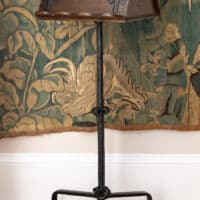
The wooden desk is supported upon a tall wrought-iron pedestal, the square-section upright displaying the irregularities and surface character associated with hand-forged iron. It terminates in a stable tripod base composed of three spreading legs, each descending through an angular knee to a broad flattened foot.
Of particular interest are the groups of tightly rolled C-scrolls or volutes applied at the junction of the upright and base and at intervals upon the stem. Closely related scrolling forms occur upon the iron straps securing the oak desk, creating a coherent decorative vocabulary between the wooden and metal components. Their deliberately limited ornamentation, together with the vigorous construction of the stand, is characteristic of the continuing late Gothic tradition of metalwork in northern Europe during the opening decades of the sixteenth century.
The desk is mounted so that it can revolve upon the iron pedestal, allowing the reading surface to be turned independently of the base. Revolving lecterns were known in northern Europe during the later Middle Ages and Renaissance, although surviving examples are exceptionally uncommon and are more frequently encountered in ecclesiastical contexts and in metal rather than in the present combination of oak and wrought iron.