Paul Fitzsimmons logo
  • Current Stock
  • Archive
  • Notable Works
  • About Us
  • News
  • Contact
Home / Archive / Gothic Giltwood Tabe…
Previous Next
  • Gothic Giltwood Tabernacle With Original Gilding and Blue Painted Decoration
  • Gothic Giltwood Tabernacle With Original Gilding and Blue Painted Decoration
  • Gothic Giltwood Tabernacle With Original Gilding and Blue Painted Decoration
  • Gothic Giltwood Tabernacle With Original Gilding and Blue Painted Decoration
Sold

Gothic Giltwood Tabernacle With Original Gilding and Blue Painted Decoration

Period
1450 - 1500
Origin
Northern France or Southern Netherlands
Dimensions
W 22 3/4" × H 26 3/4" × D 12"
Reference
#Marh3718

This piece has been sold. It is shown here for reference in our archive.

Description

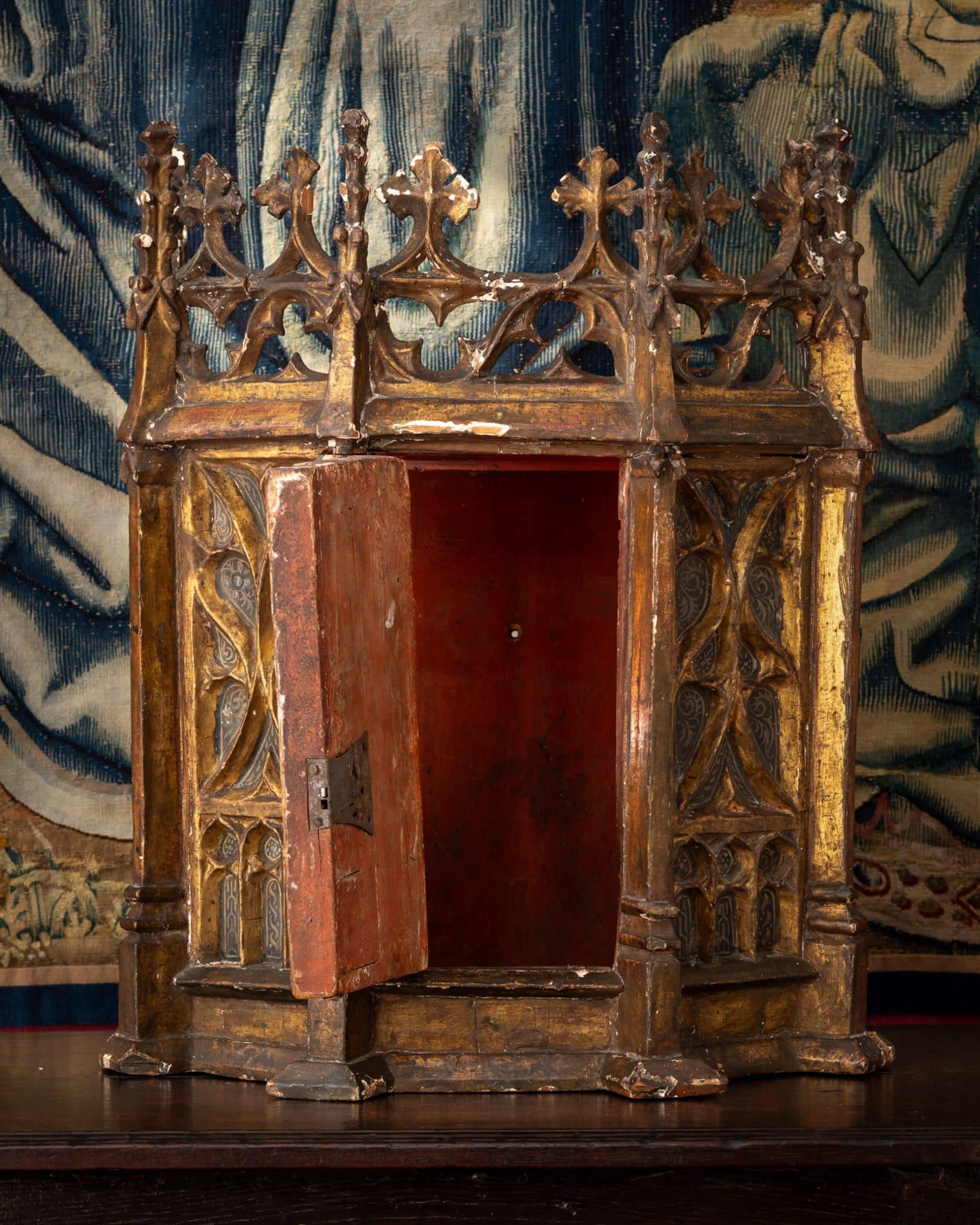
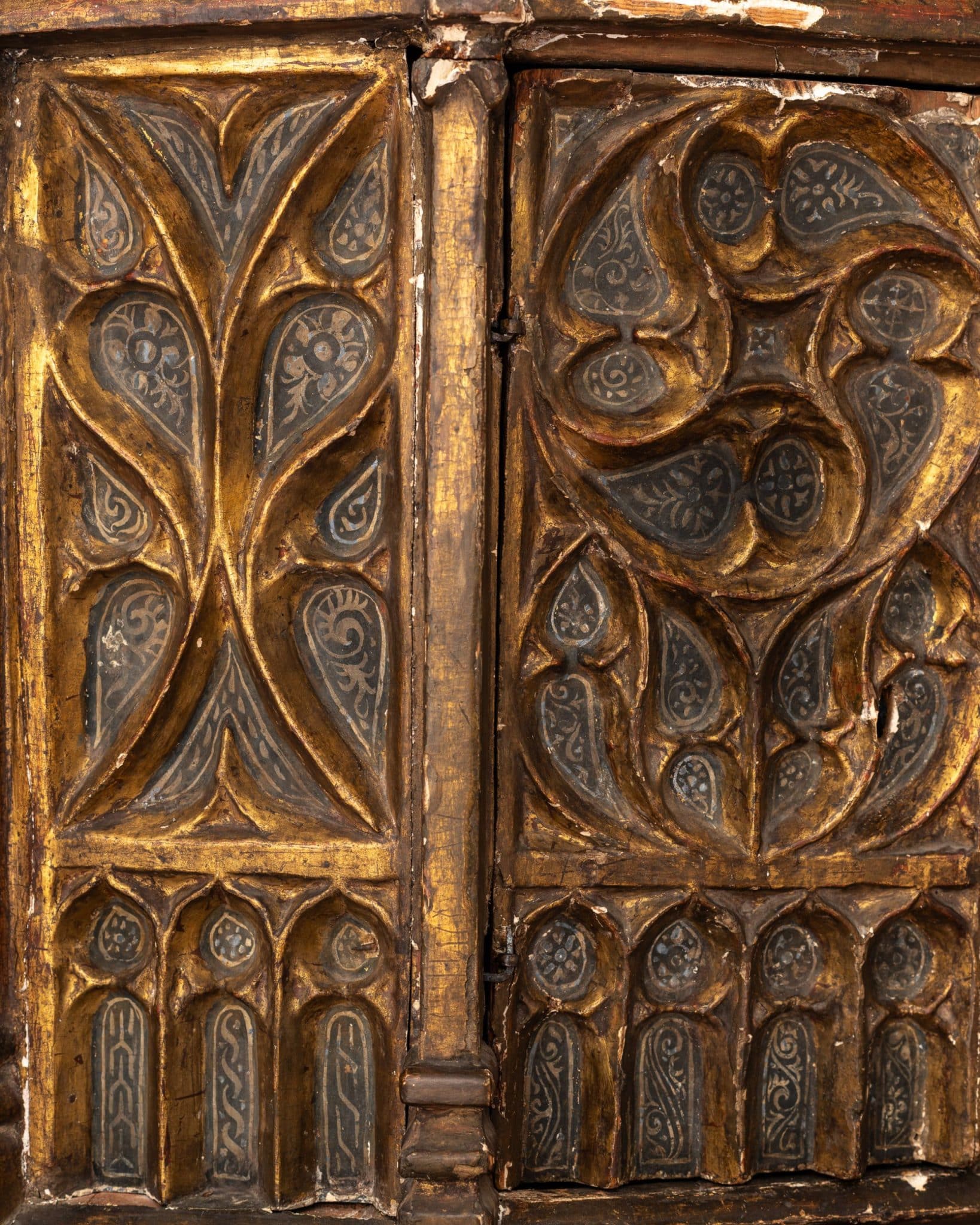
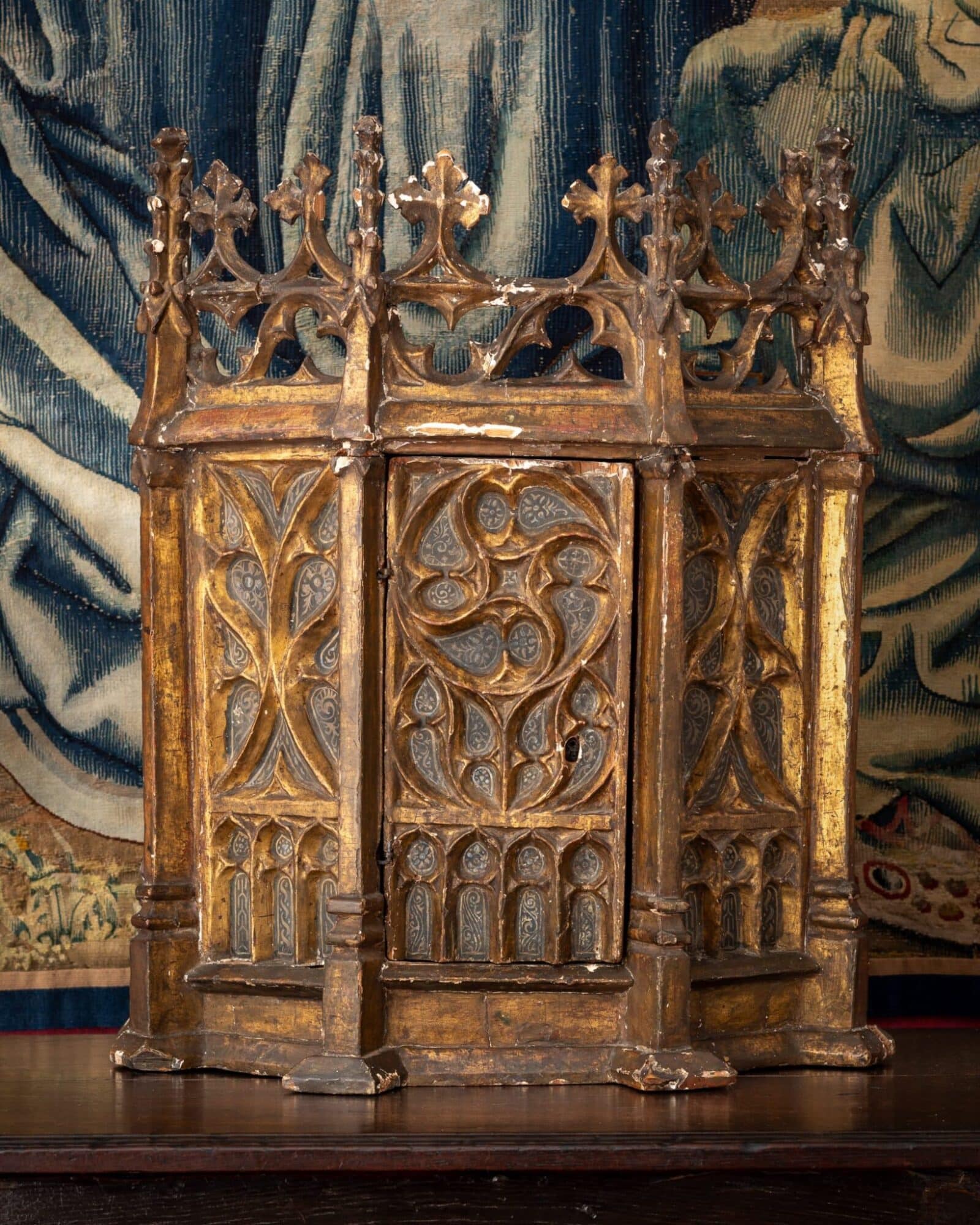
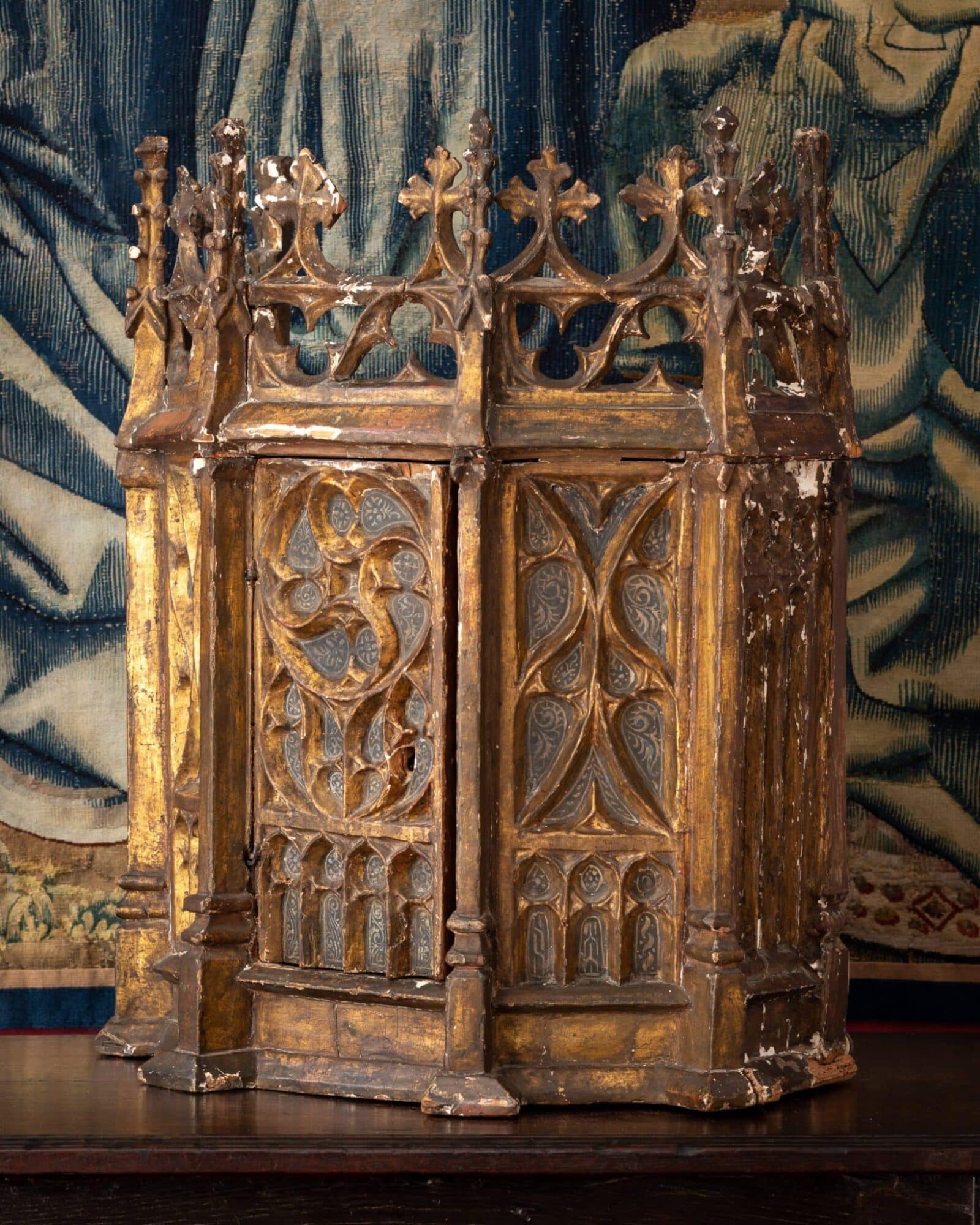
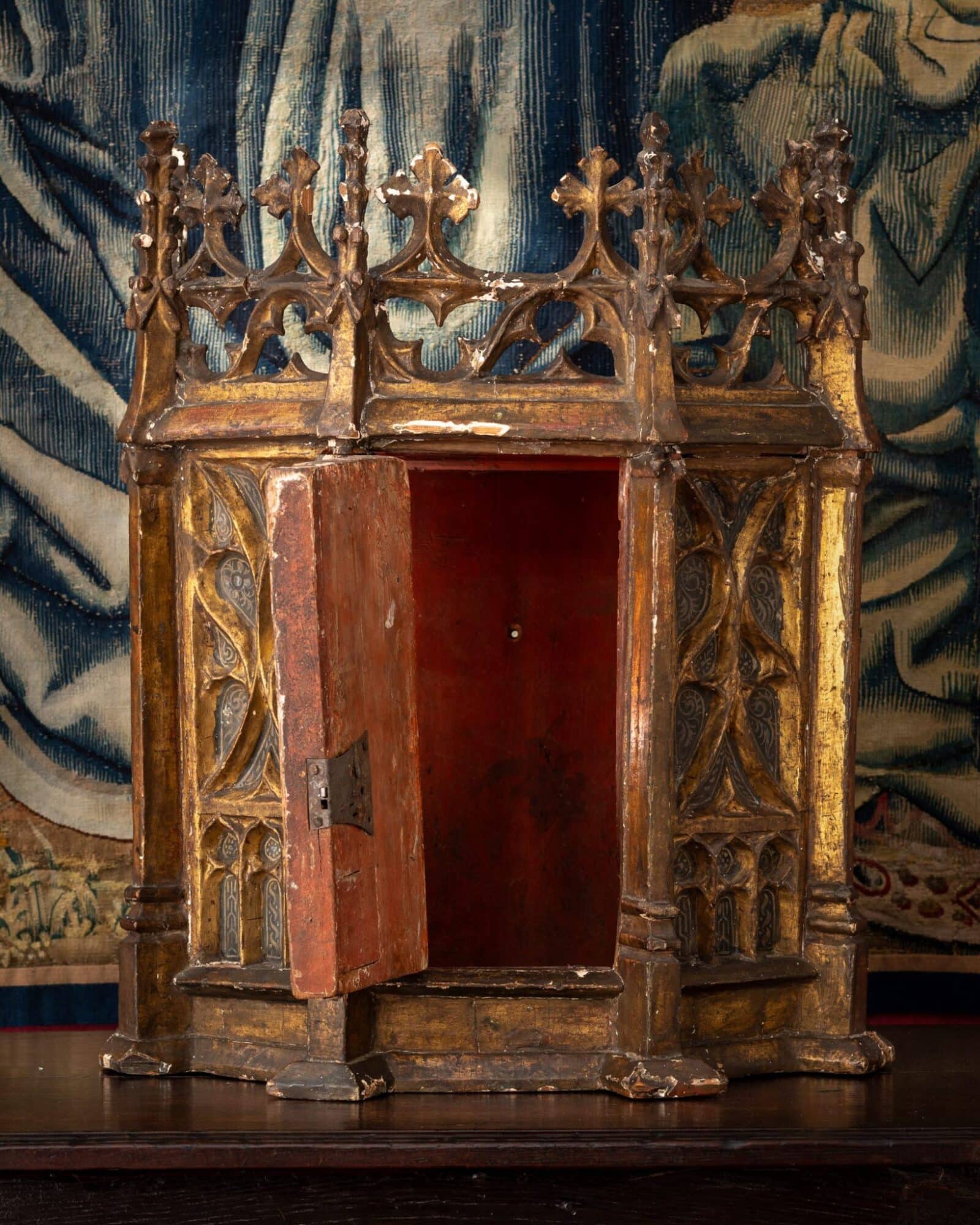
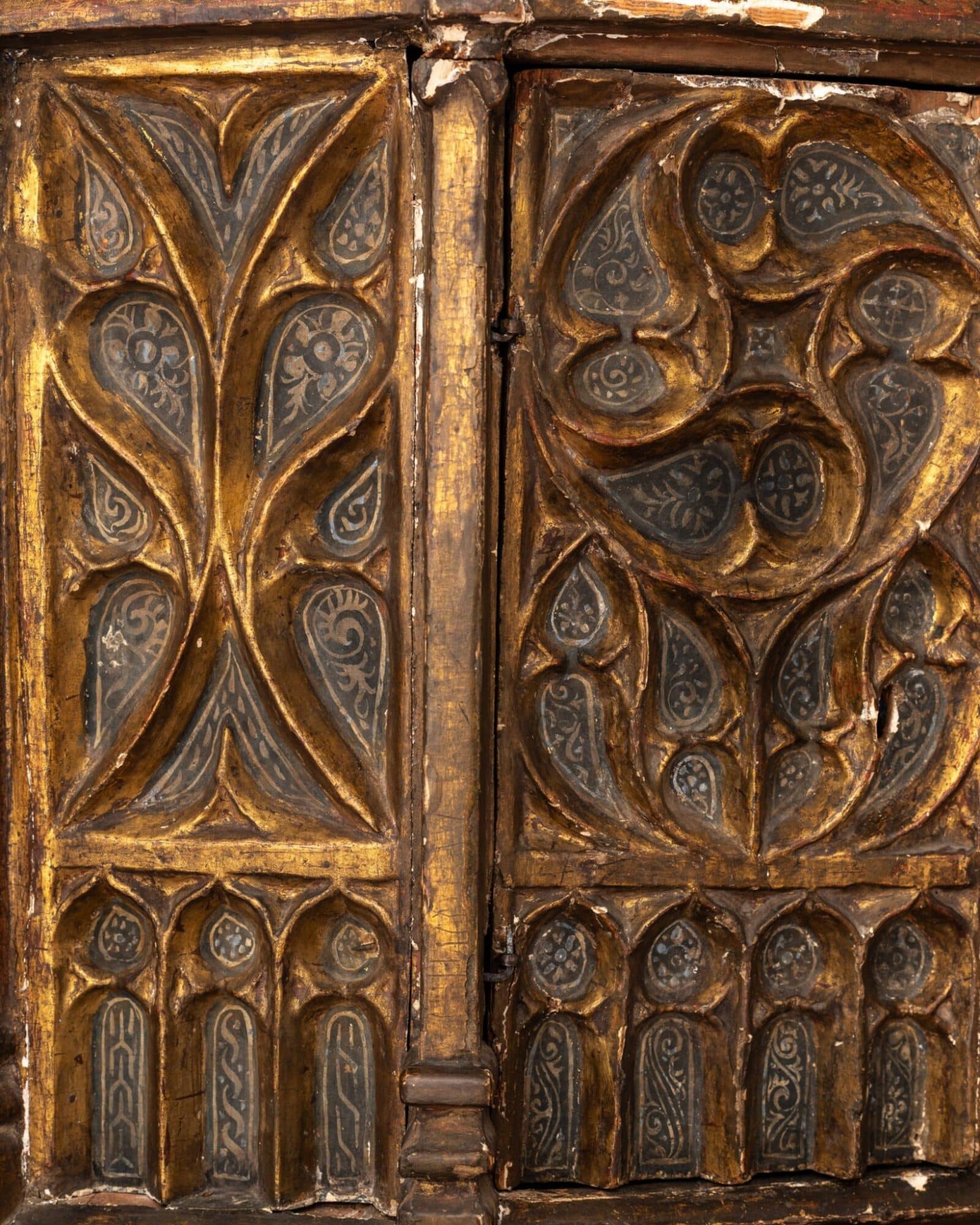
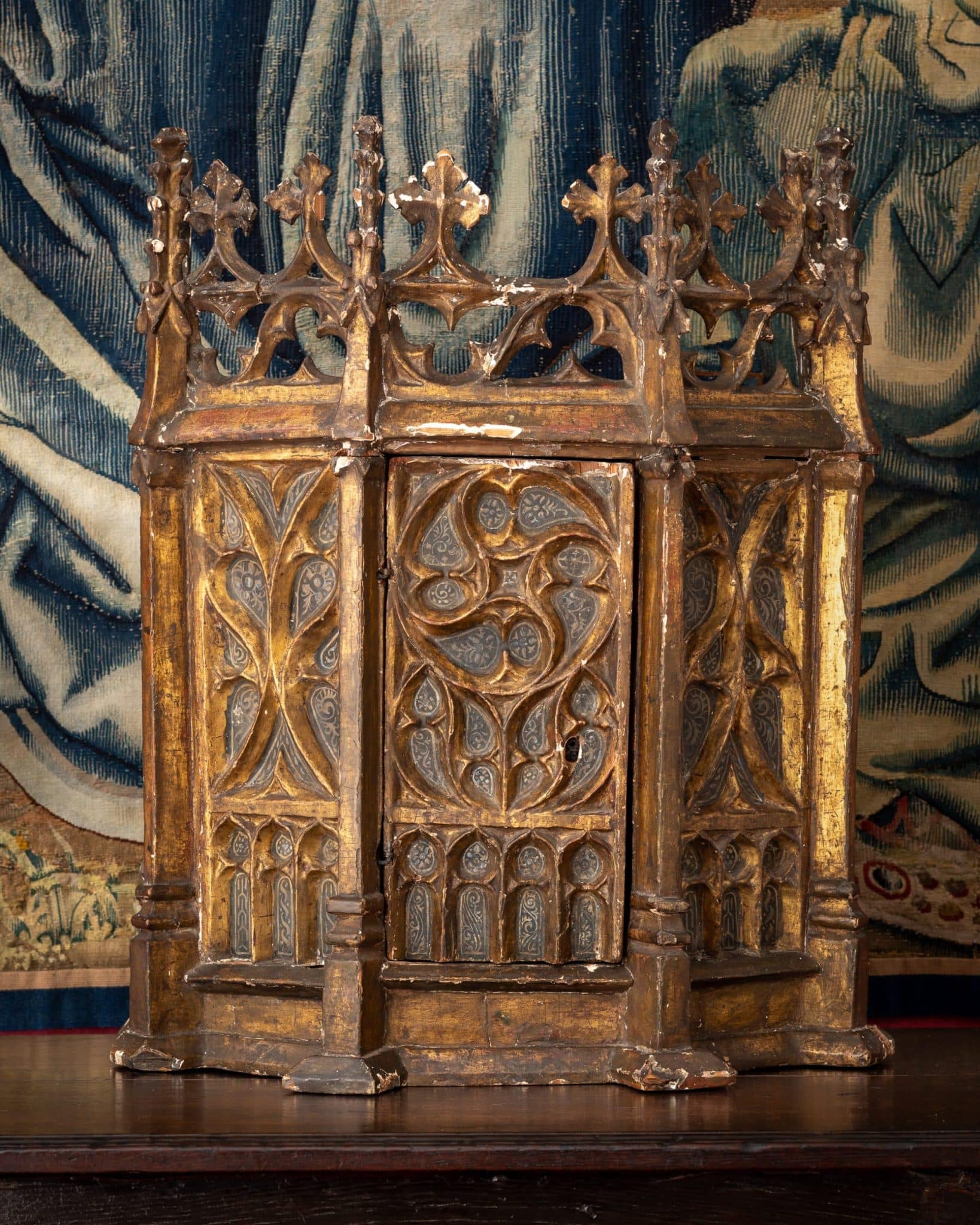
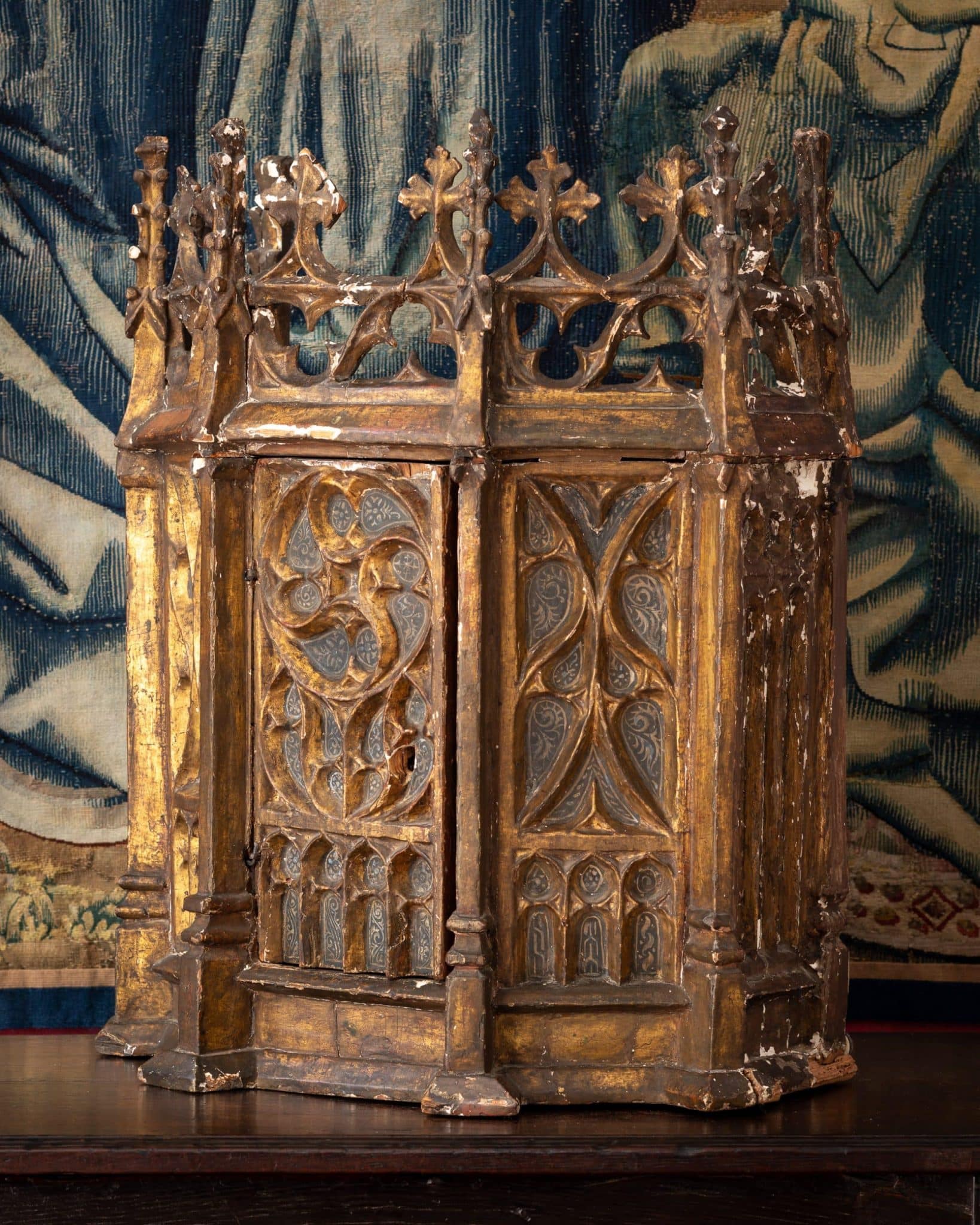
A remarkably rare late-medieval devotional tabernacle of five-sided architectural form, carved in deep Gothic relief and retaining its original fifteenth-century gilding and paint. Each of the five facets is framed by buttressed uprights and enriched with pierced tracery above a register of blind cinquefoil arcading. Behind the openwork foliate forms lie painted blue grounds ornamented with scrolling designs, a decorative technique characteristic of Burgundian-Netherlandish workshop practice, intended to evoke translucent enamel or stained glass.
One side forms the original hinged door, opening to reveal a red-painted cavity which would have contained a small devotional sculpture, a relic, or the reserved Host. The medieval iron hinge survives, together with an early latch. The original openwork cresting with crocketed finials remains intact above. The entire object is carved in softwood, finished in water gilding over red bole; all principal paint layers appear original and unrestored, with expected devotional wear to projecting elements.
Portable five-sided tabernacles of this period very rarely survive in complete and unmutilated condition, most being destroyed or stripped of their polychromy during post-Reformation reform.
An exceptional survival of late-medieval domestic devotion, retaining its original architectural form, Gothic cresting, and untouched polychromy.
CONDITION
The tabernacle survives in unusually original condition for a mid-fifteenth-century devotional object. The water gilding and painted polychromy are substantially intact, with expected wear and small losses to projecting carved elements. Minor rubbing to the cresting and high points is consistent with historic handling and devotional use. The blue painted grounds beneath the tracery retain strong colour and show no evidence of later overpainting. The original medieval hinge remains functional. The structure is stable, with no signs of later reconstruction, inserted elements, or modern repaint. No areas of the gilding appear to have been regilded or toned. Surface dirt and natural oxidation have been left undisturbed to preserve the historic finish.
In summary: Minor losses throughout, structurally sound, and retaining untouched medieval surfaces with authentic devotional wear.
HISTORICAL CONTEXT
In the fifteenth century, portable tabernacles of this type formed part of the devotional furnishing of aristocratic households, small chapels, and female religious houses. Unlike the monumental stone sacrament houses found in parish churches, domestic tabernacles were designed to stand upon chests or cupboards and could be moved when households travelled, as noble families frequently did. Their function was not limited to the reserved Host: they also housed relics, devotional statuettes, or Passion images used for personal contemplation.
The blue painted grounds behind the Gothic tracery imitate the appearance of enamel or stained glass and belong to the refined Franco-Flemish court aesthetic of the Burgundian duchy under Philip the Good (r. 1419–1467). This was the same visual culture that produced the famous manuscript Books of Hours and Netherlandish panel paintings. Very few examples of such domestic devotional furniture survive today, as they were both physically fragile and subject to destruction or defacement during Reformation iconoclasm in the sixteenth century.
The present tabernacle therefore belongs to a small group of Gothic objects that preserve not only their original architectural form but also their original polychromy, offering an exceptional insight into private lay piety in the later Middle Ages.

Curator's Note

Previous Late Gothic Softwood… Next Spanish Tin-Glazed E…
  • Gothic Giltwood Tabernacle With Original Gilding and Blue Painted Decoration
  • Gothic Giltwood Tabernacle With Original Gilding and Blue Painted Decoration
  • Gothic Giltwood Tabernacle With Original Gilding and Blue Painted Decoration
  • Gothic Giltwood Tabernacle With Original Gilding and Blue Painted Decoration

Newsletter

New Stock, Direct to Your Inbox.

Be among the first to hear about new acquisitions and notable works.

Please enable JavaScript in your browser to complete this form.
Loading
Paul Fitzsimmons logo
  • Current Stock
  • Archive
  • Notable Works
  • About Us
  • News
  • Contact

Contact Us

+44 (0)777 903 8891

  • Pinterest
  • Instagram

By Appointment

Devon, England.

Paul Fitzsimmons

Specialist in early oak furniture and works of art.

© 2026 Paul Fitzsimmons | Website by Dancing Badger Ltd

  • Privacy Policy
  • Terms & Conditions

Search the collection

Search in
    1 / 1