

Paul Fitzsimmons logo
  • Current Stock
  • Archive
  • Notable Works
  • About Us
  • News
  • Contact
Home / Archive / Gothic Oak and Pine…
Previous Next
  • Gothic Oak and Pine Linenfold Bench
  • Gothic Oak and Pine Linenfold Bench
  • Gothic Oak and Pine Linenfold Bench
Sold

Gothic Oak and Pine Linenfold Bench

Period
Circa 1460 - 1480
Origin
France
Dimensions
W 70 1/4" × H 39" × D 15 1/2"
Reference
#Marh3113

This piece has been sold. It is shown here for reference in our archive.

Description

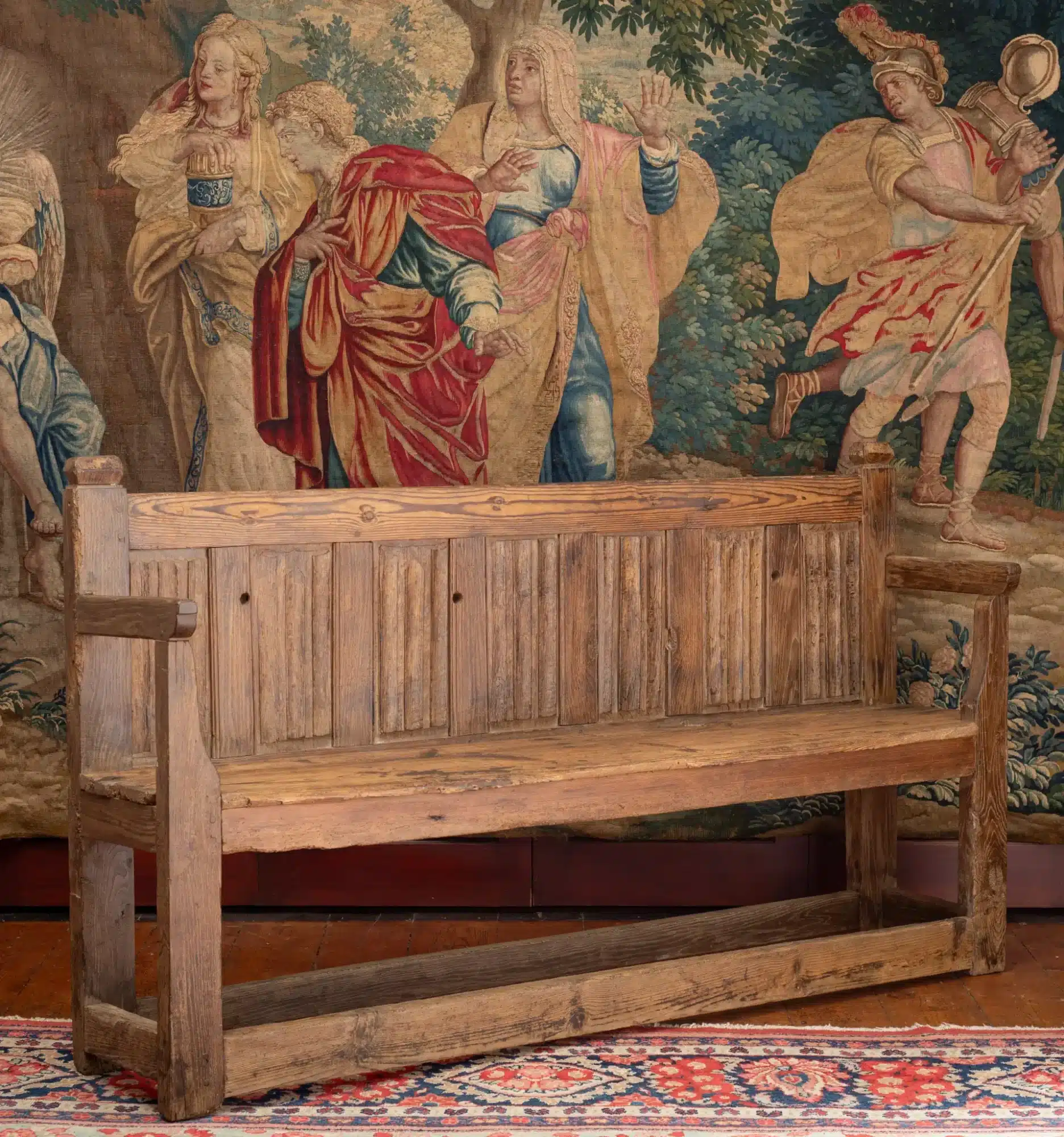
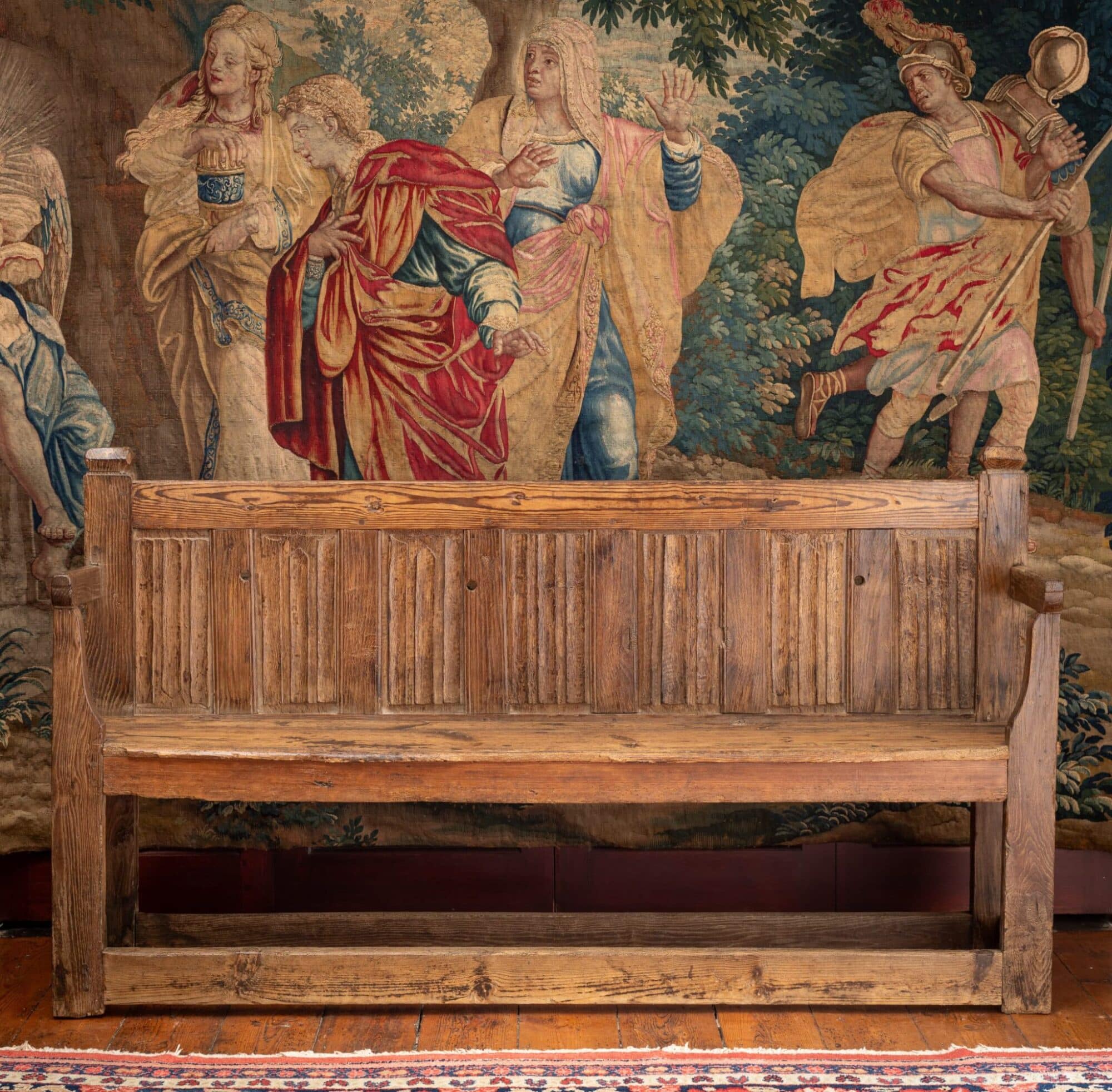
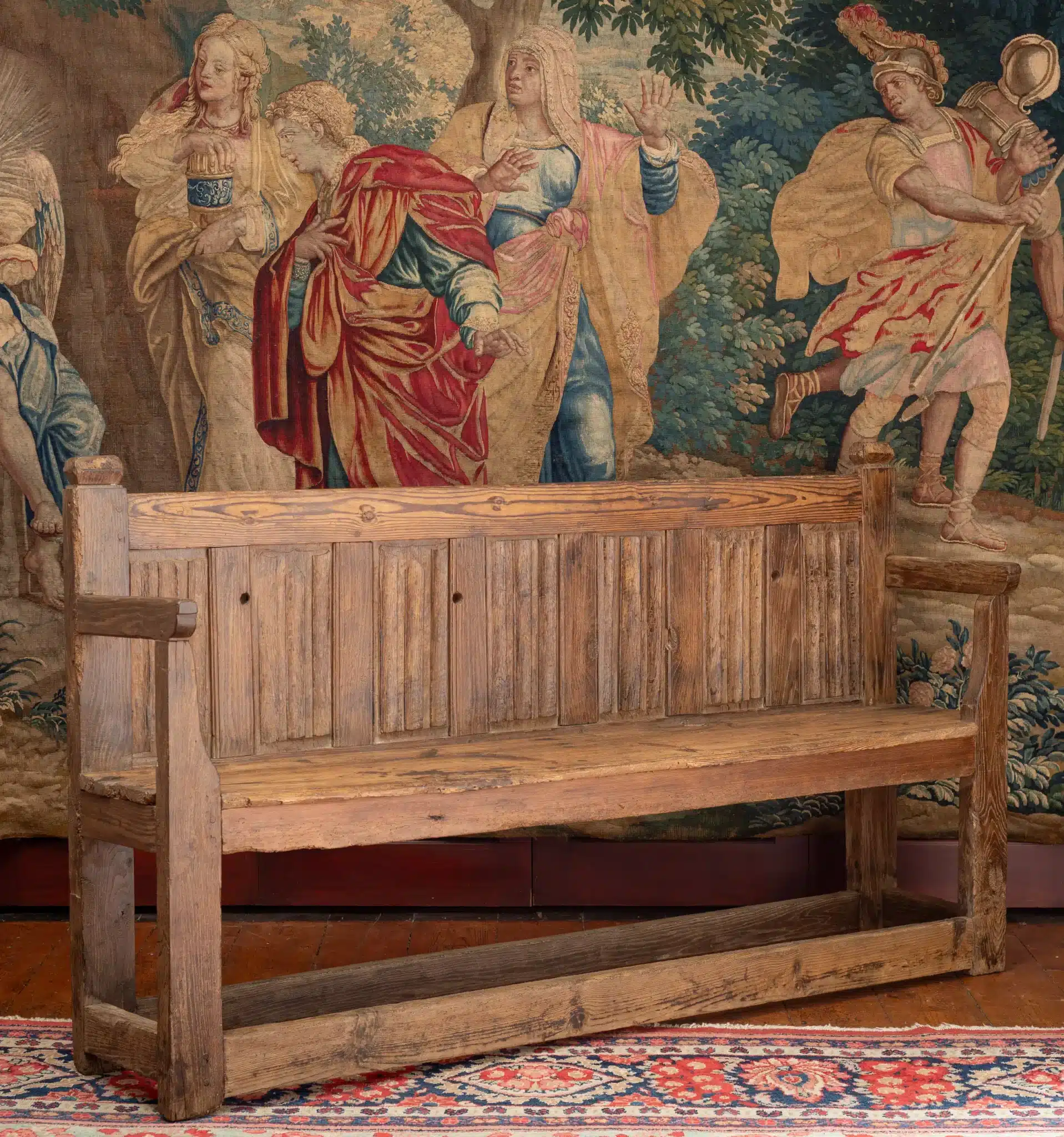
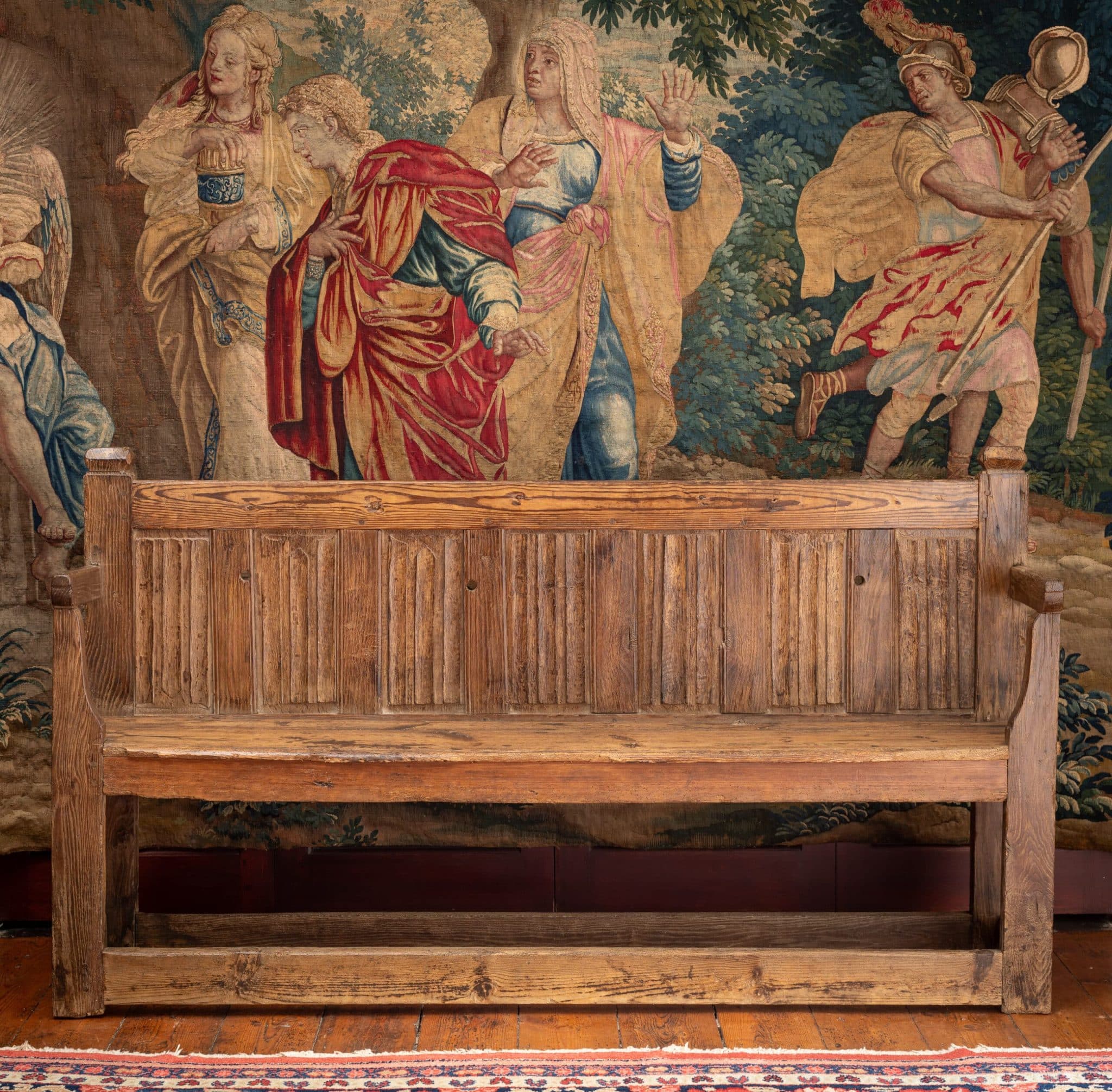
An exceptionally rare late Gothic oak and pine bench, the tall back rest formed of seven deeply-carved oak linenfold panels, set within a robust oak and pine frame. The side uprights terminate in shaped finials, while the flat arms rest on boldly cut supports, their simplicity balancing the sculptural strength of the linenfold. The seat is fashioned from a single plank of pine, worn to a soft surface by centuries of use, and supported by a plain box base of remarkable honesty and integrity.
Benches of this monumental type would have served both liturgical and domestic functions. Their presence is recorded in monastic refectories, collegiate halls, and the great chambers of important households, where their length and upright presence marked them out as seating for status and community. The linenfold motif itself — derived from the folds of drapery in illuminated manuscripts — carried strong symbolic resonance in ecclesiastical settings, evoking sacred text and divine order.
Provenance: Acquired from a monastery in Northern France.
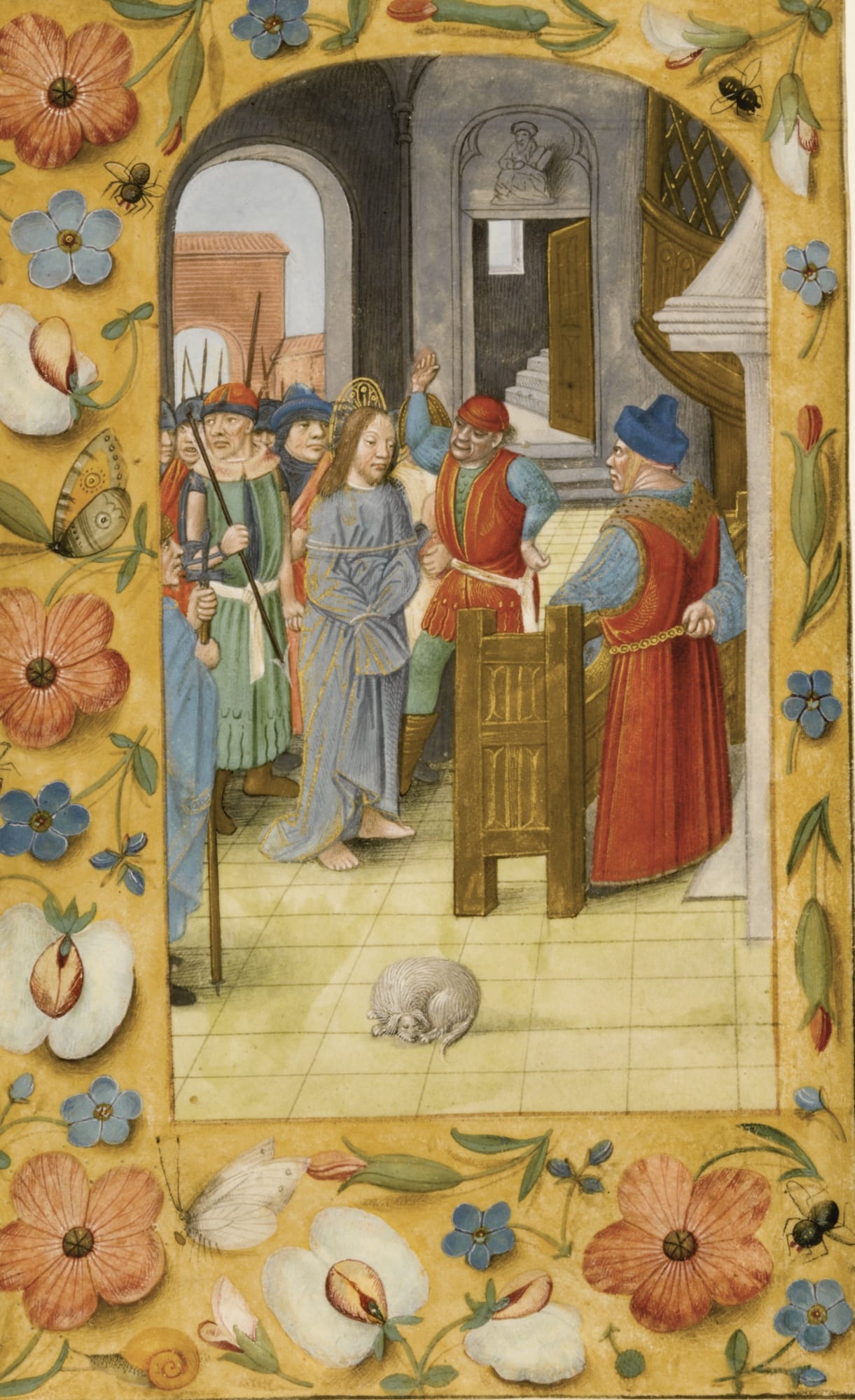
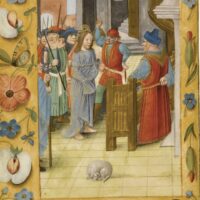
Benches of this form rarely survive outside institutional collections. A near-contemporary depiction appears in a late 15th-century French Book of Hours, where a similar bench is shown in a Passion scene (see attached image), confirming both the dating and the ecclesiastical context of such forms.
Symbolism of the Linenfold Motif
The linenfold motif, seen here in the deeply carved back panels, emerged in Northern Europe in the 14th century and became one of the most enduring Gothic decorative schemes through the 15th and early 16th centuries. Its stylised folds evoke draped parchment or folded cloth, symbolising both sacred and domestic order. In ecclesiastical contexts, the motif resonated with the imagery of altar cloths, vestments, and scriptural parchment, lending a sense of sanctity to choir stalls and benches. In secular interiors, linenfold suggested refinement and continuity with sacred traditions, while also providing rhythmic visual unity. The bold, deeply cut folds of this bench are characteristic of mid-15th-century French carving, before the motif became shallower and more schematic in the early Renaissance period.

Curator's Note

Previous Flemish Ebonised and… Next Pair of Netherlandis…
  • Gothic Oak and Pine Linenfold Bench
  • Gothic Oak and Pine Linenfold Bench
  • Gothic Oak and Pine Linenfold Bench

Newsletter

New Stock, Direct to Your Inbox.

Be among the first to hear about new acquisitions and notable works.

Please enable JavaScript in your browser to complete this form.
Loading
Paul Fitzsimmons logo
  • Current Stock
  • Archive
  • Notable Works
  • About Us
  • News
  • Contact

Contact Us

+44 (0)777 903 8891

  • Pinterest
  • Instagram

By Appointment

Devon, England.

Paul Fitzsimmons

Specialist in early oak furniture and works of art.

© 2026 Paul Fitzsimmons | Website by Dancing Badger Ltd

  • Privacy Policy
  • Terms & Conditions

Search the collection

Search in
    1 / 1