Gothic Oak and Wrought-Iron Strongbox
- Period
- Circa 1450 - 1480
- Origin
- Germany, probably Westphalia or the Rhineland
- Dimensions
- W 12 1/2"" × H 8 1/4"" × D 11 1/2""
- Reference
- #Marh3789
£3,850
Description
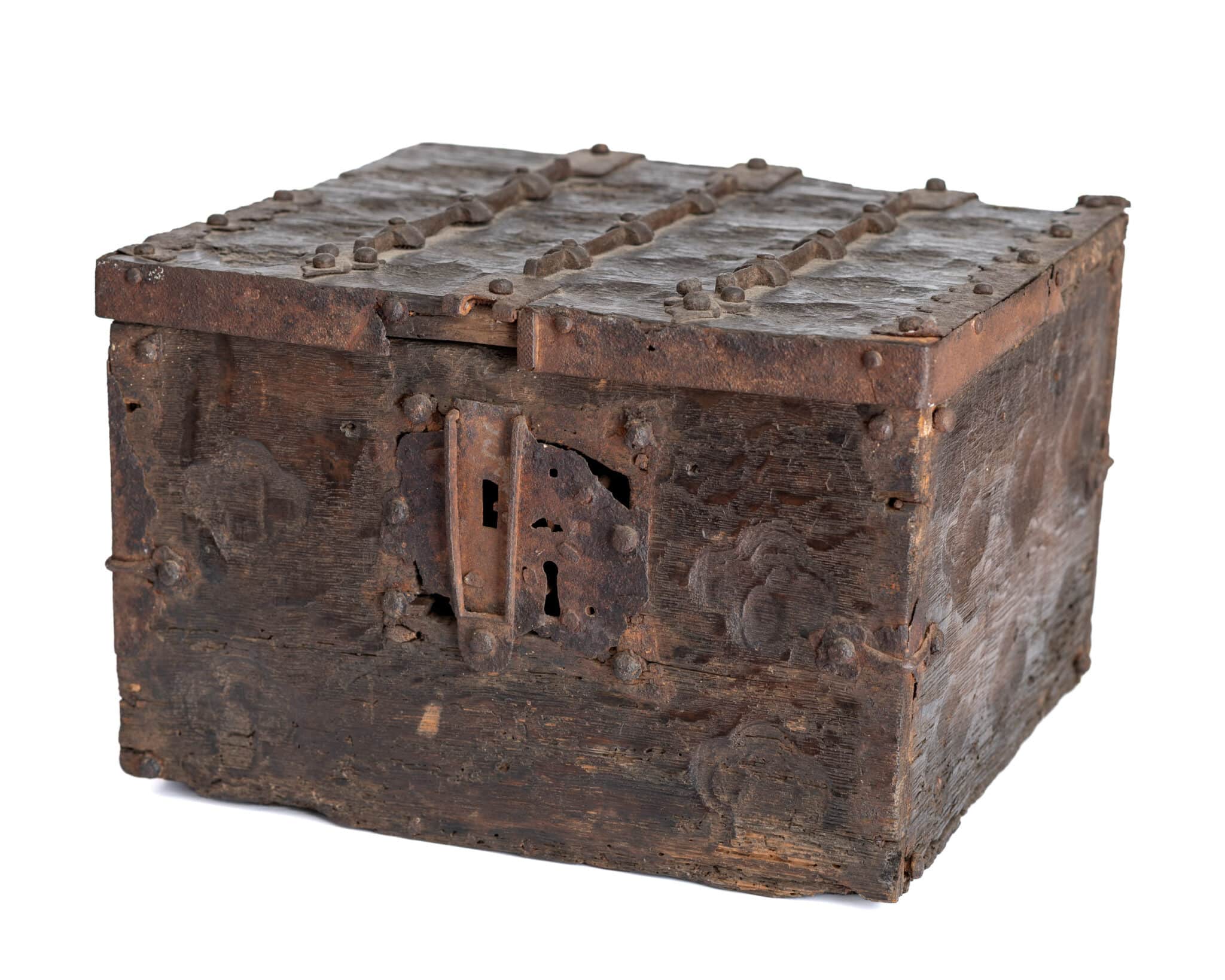
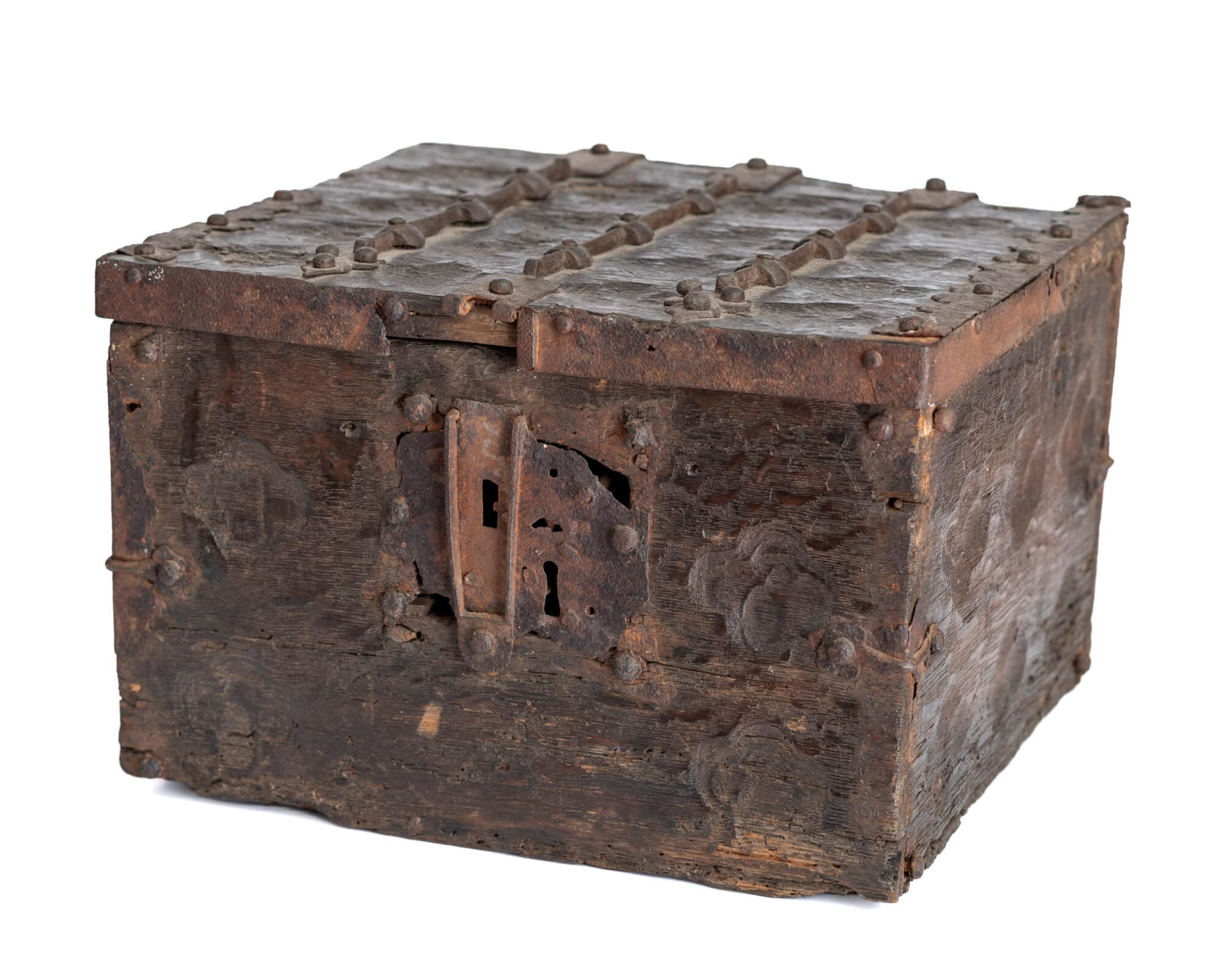
A late medieval German oak strongbox of compact rectangular boarded construction, extensively reinforced with its original wrought-iron fittings and retaining a substantial Gothic lock mechanism.
The thick oak boards are ornamented throughout with a repeated scheme of shallow-cut four-petalled flower-heads, distributed across the lid, front and sides and deliberately positioned within the fields formed by the ironwork. Now softened through centuries of surface wear, these large floral devices were cut directly into the timber and would probably originally have been enhanced with polychromy. Their arrangement indicates that the decoration of the oak and the applied ironwork were conceived together, creating a strongly patterned exterior in which painted or coloured ornament contrasted with the dark iron straps.
The lid is secured by three long wrought-iron strap hinges extending across its surface, each fixed with hand-forged domed nails and incorporating shaped Gothic terminals and junctions. Further iron bands protect the perimeter of the lid and continue around the body. The front retains its large centrally positioned lockplate , accompanied by additional iron fittings and the same repeated flower-head decoration cut into the surrounding oak.
Internally, the box retains the simplicity of its medieval boarded construction. The underside of the lid displays further evidence of its long working history, while the substantial thickness of the timber and extensive external reinforcement emphasise the secure function for which the object was made.
The combination of oak boarded construction, extensive wrought-iron reinforcement, prominent hand-forged fixings and Gothic ornament places the box within the established tradition of fifteenth-century German chest making. Comparable iron-bound oak chests survive particularly from Westphalia and the Rhineland, where the practical strength of iron reinforcement was frequently integrated into the decorative treatment of the object.
The repeated four-petalled flowers cut into the timber are an important aspect of the present box. Rather than functioning as isolated carved embellishments, they occupy the spaces between the iron straps across several faces of the object, suggesting a deliberately coordinated decorative programme. If, as their treatment suggests, these motifs were originally picked out in colour, the appearance of the box in the fifteenth century would have been considerably more vivid than its present dark and time-worn surface implies.
The robust Gothic character of the ironwork and the treatment of the floral ornament support a date in the third quarter of the fifteenth century, circa 1450–1480, with a probable origin in western Germany, perhaps Westphalia or the Rhineland.
Condition
The box is of sound and stable construction, retaining an extensive proportion of its medieval wrought-iron mounts and its deeply patinated oak surfaces. Consistent with its considerable age and long history of use, there are areas of wear, old losses and movement to the timber and ironwork.
The original wrought-iron hasp is presently detached and preserved inside the box, together with several other early iron elements which have become detached over time. These components have deliberately been retained with the object rather than replaced or subjected to unnecessary restoration, allowing their original material and construction to remain available for examination and, should a future owner wish, sympathetic conservation and reinstatement.
The surviving ironwork displays oxidation and surface variation consistent with age, while the oak retains extensive historic surface, wear and evidence of use. The repeated four-petalled decoration remains visible across the lid, front and sides.
The box is structurally sound and presents particularly well as an unrestored late medieval object, with the detached original iron elements preserved within it.