
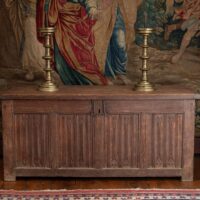
Henry VIII Joined Oak Linenfold Chest
- Period
- 1520 - 1540
- Origin
- East Anglia (probably Suffolk)
- Dimensions
- W 56 3/4" × H 25" × D 21 3/4"
- Reference
- #Marh3522
£4,850
Description
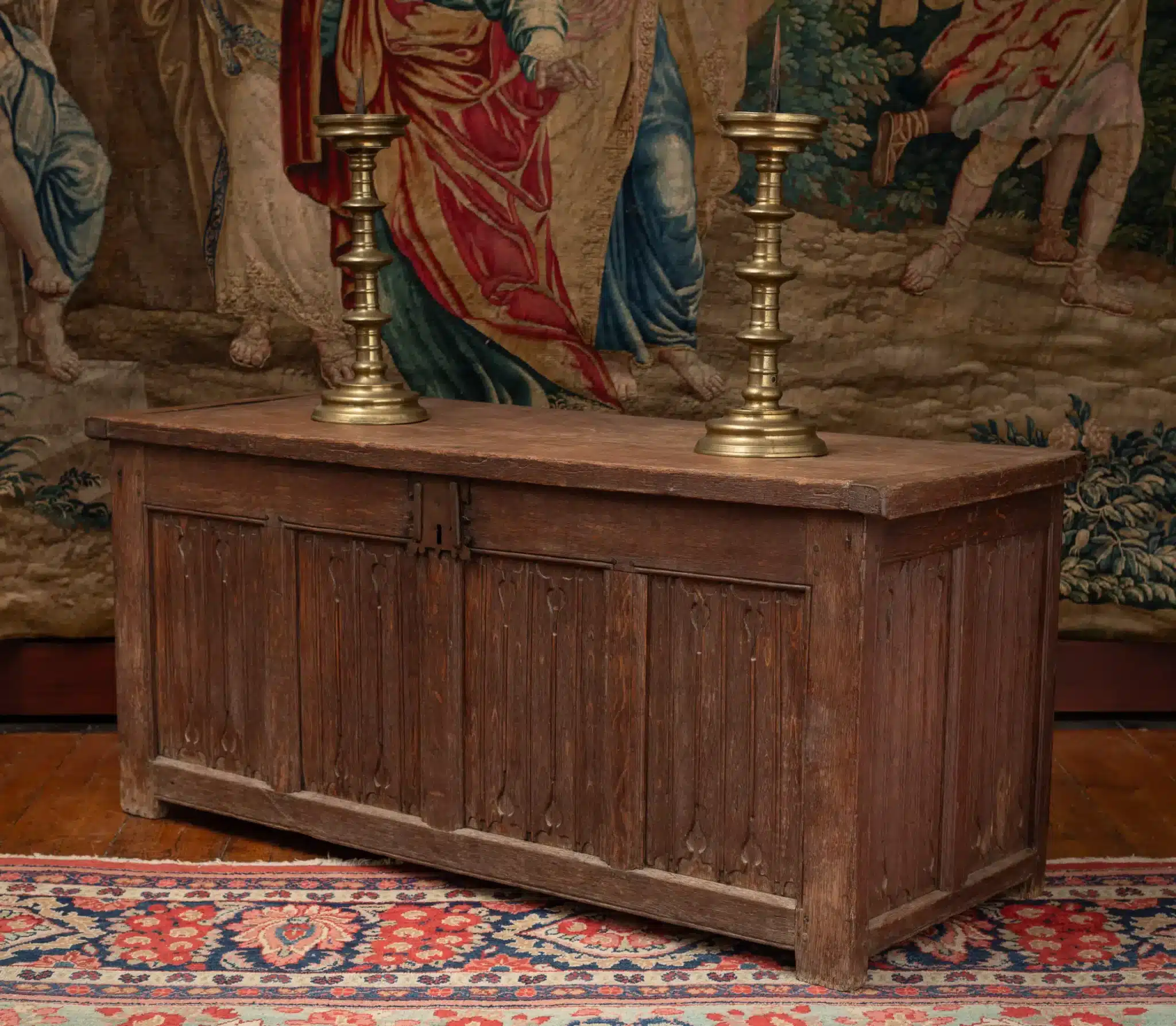
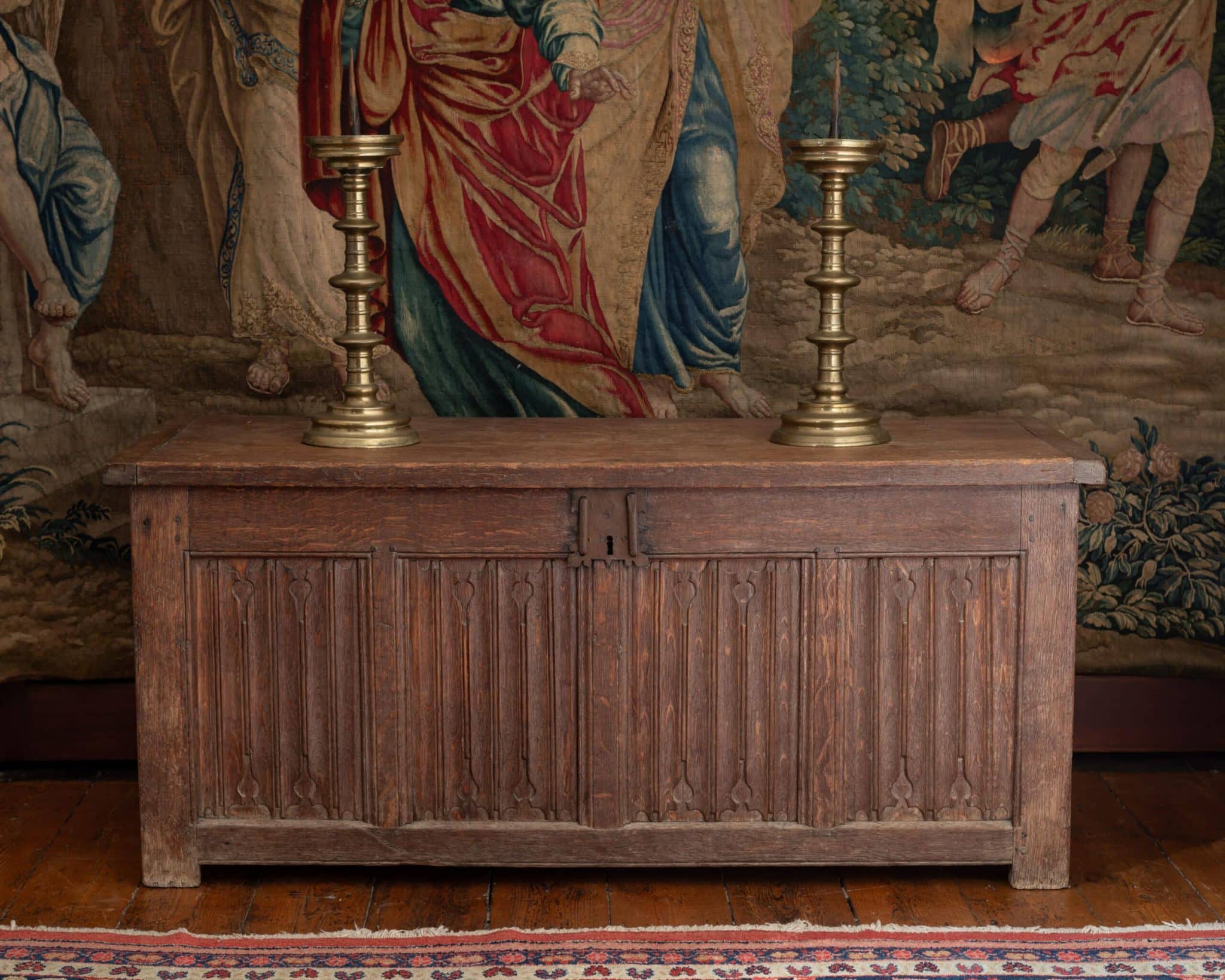
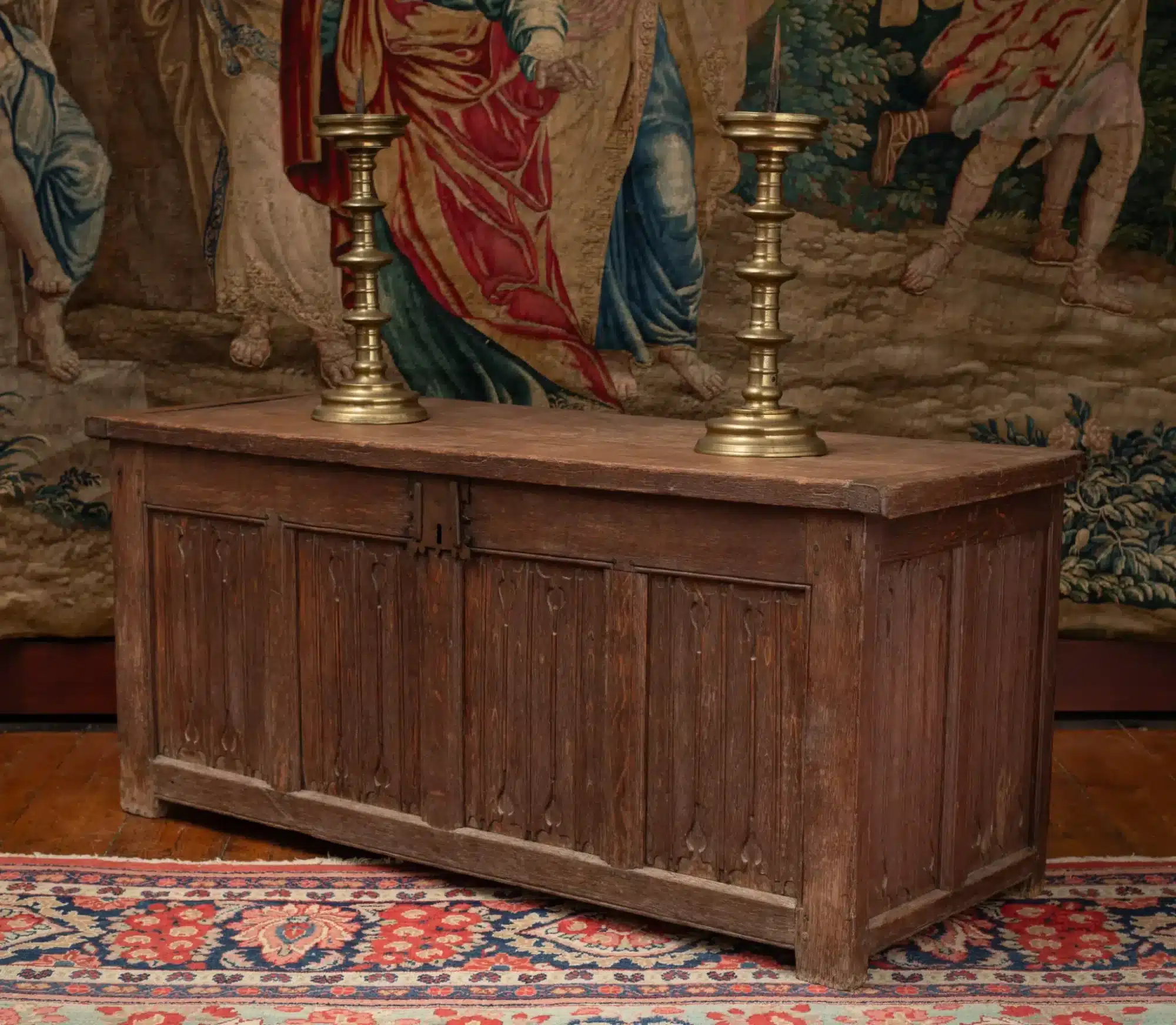
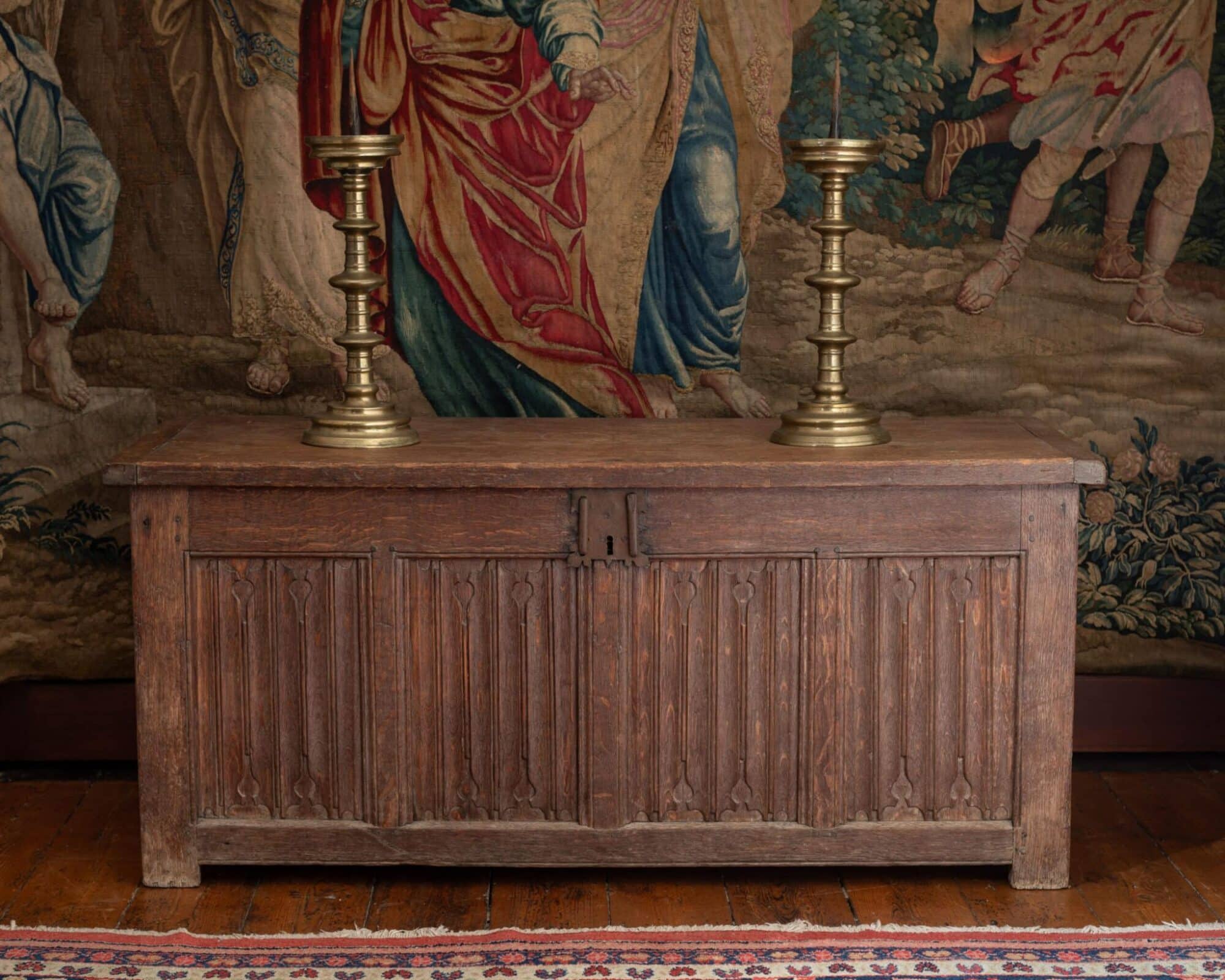
An early Tudor joined oak chest, the front with four tall linenfold panels and each side with twin panels, the whole framed within plain stiles and rails of characteristically restrained East Anglian form. The oak is of fine imported Baltic quality, a timber widely used in East Anglia in the early 16th century, shipped through the wool ports of Ipswich and King’s Lynn.
The tall, narrow linenfolds, with their pointed upper folds and vertical emphasis, are directly comparable to surviving panelling in Suffolk parish houses, guildhalls, and manor houses of the period, such as those at Long Melford and Lavenham. This more architectural and linear style of linenfold contrasts with the deeper, curled folds of contemporary Flemish work, underlining the English, and specifically East Anglian, origin of this example.
Chests of this type were both practical and symbolic. They provided secure storage for clothing, valuables, or documents within prosperous gentry or merchant households, and may also have been used in parish contexts to hold vestments or communal goods. The strong, repeating linenfold pattern echoed the architectural language of Tudor interiors, where panelling, stalls, and furniture formed a unified decorative scheme.