Henry VIII / Edward VI Welsh Joined Oak Linenfold Chest
- Period
- 1530 - 1560
- Origin
- Wales
- Dimensions
- W 57 1/4" × H 20 3/4" × D 17 1/4"
- Reference
- #Marh2863
This piece has been sold. It is shown here for reference in our archive.
Description
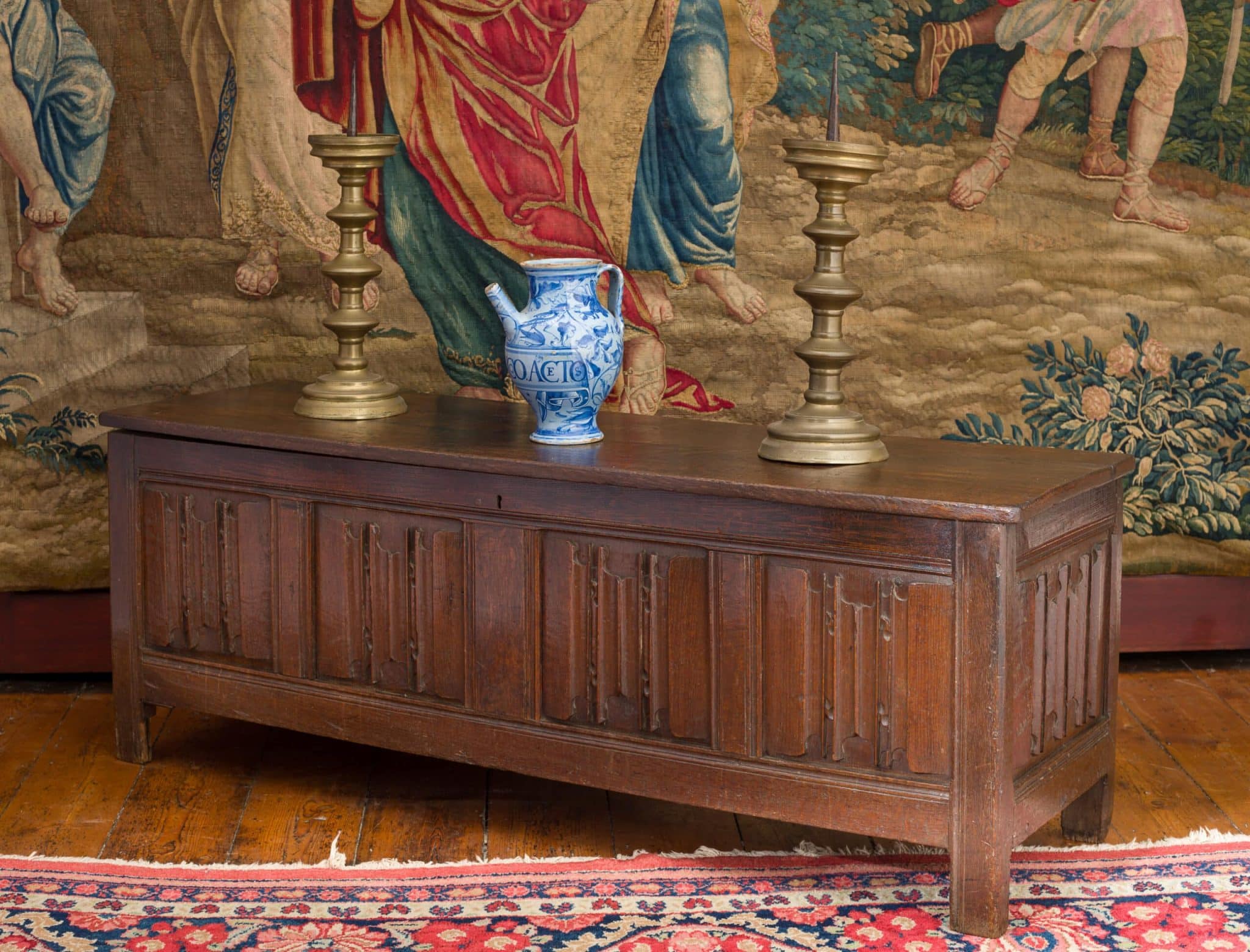
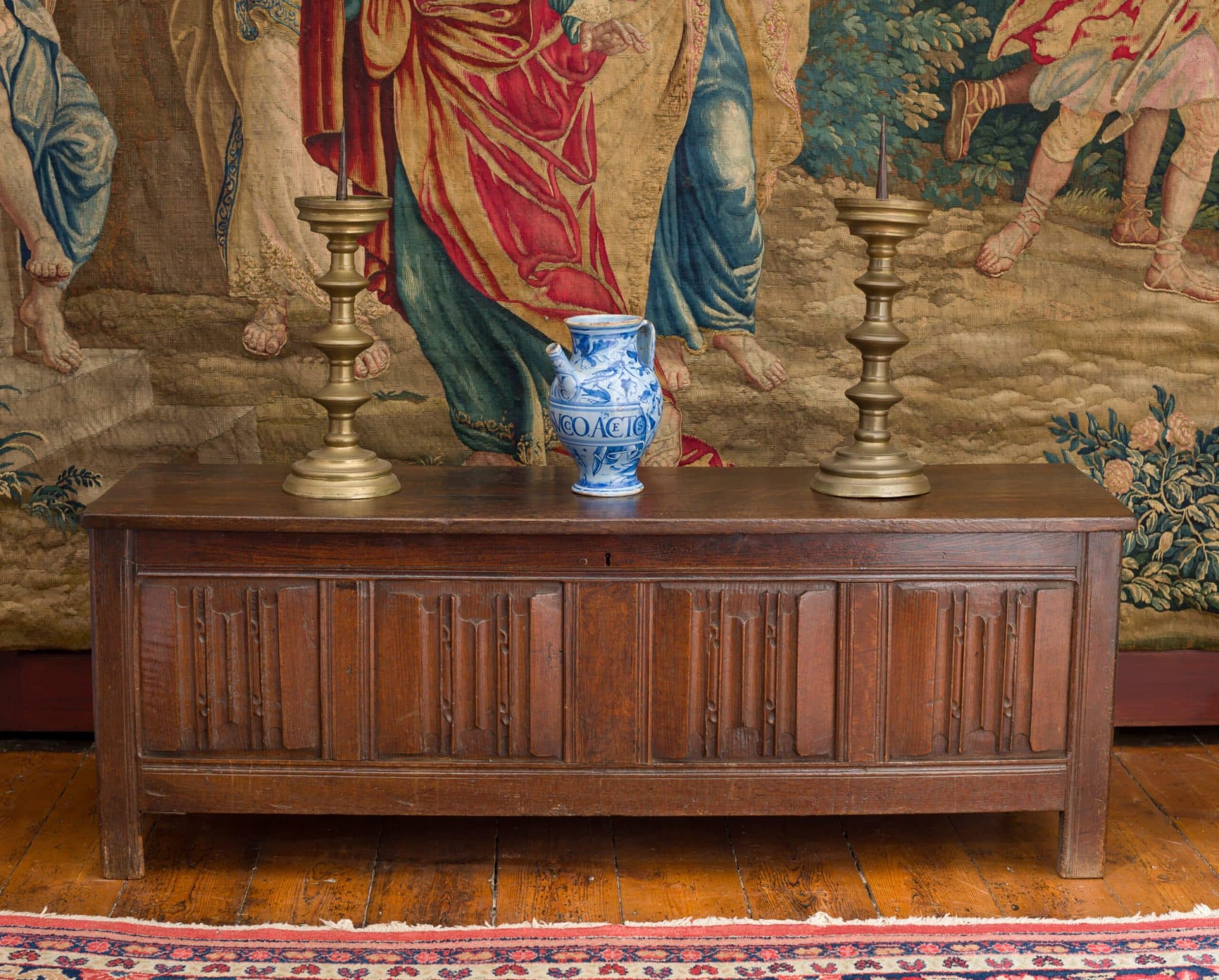
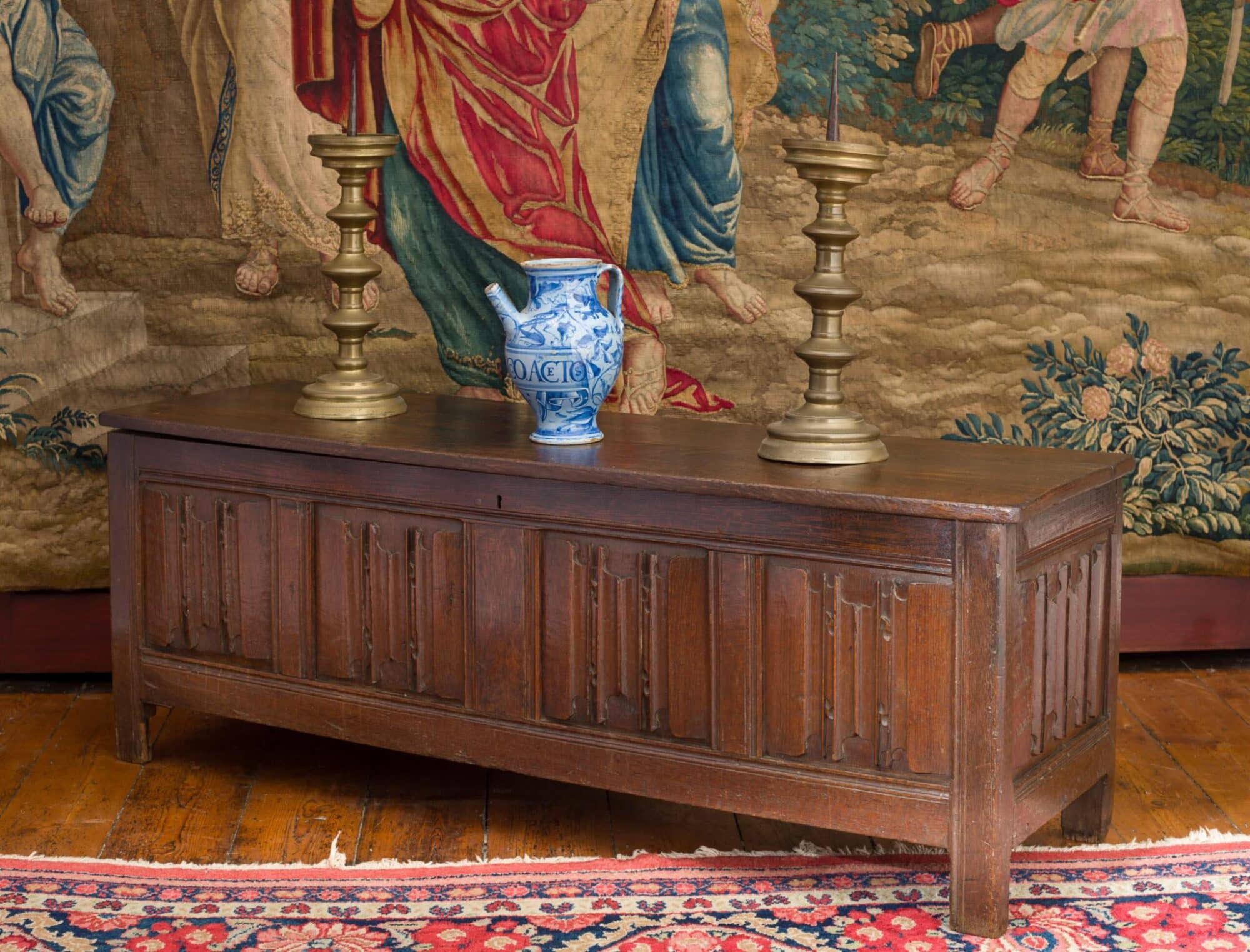
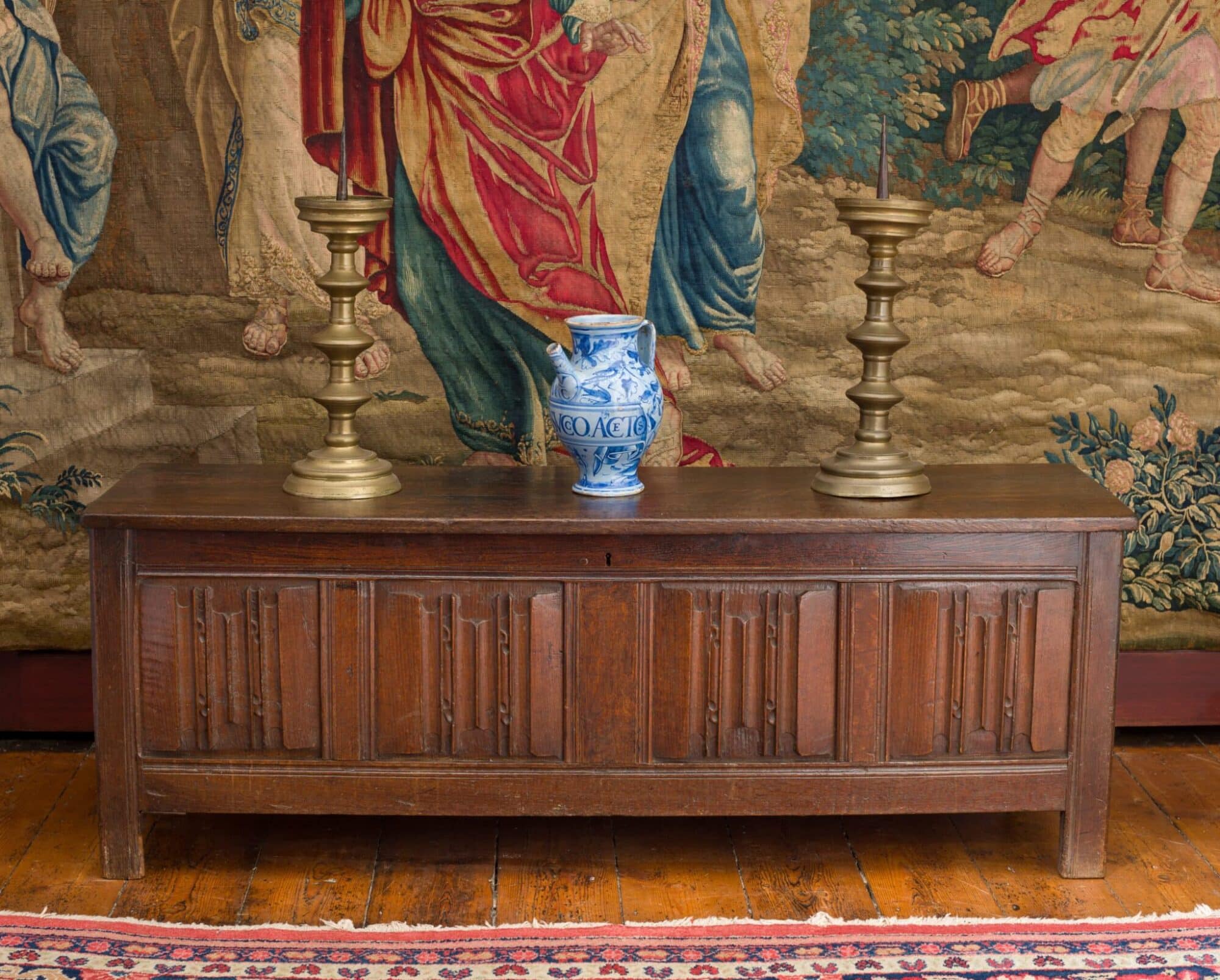
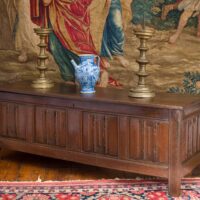
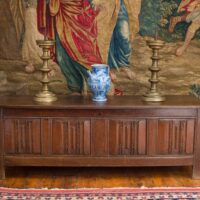
A rare and unusually long and low joined oak chest, almost certainly of Welsh origin, carved with a continuous run of linenfold panels to the front and single panels to the sides. The proportions—long, narrow, and shallow—distinguish this example from the more standard Tudor chests, marking it out as a highly unusual survival.
The linenfold carving, with its simplified folds and vertical rhythm, reflects a distinctly regional interpretation of a pan-European motif that had been popular in England since the late 15th century. While provincial in execution, the panels retain their crispness and integrity, showing that this chest was the product of a skilled rural workshop, probably in the border region of the Black Mountains. The chest was discovered in a Welsh farmhouse, and its form, with no evidence of a lockplate, suggests it was made for secure but practical storage in a domestic setting rather than high courtly use.
Such chests were commissioned by prosperous yeoman farmers and gentry, whose increasing wealth during the reigns of Henry VIII and Edward VI allowed them to furnish their homes with furniture that echoed the styles of more metropolitan centres, while retaining strong regional characteristics. The long, narrow form may have been designed for storage in smaller domestic interiors, or for positioning along a wall as both storage and seating.
Condition: Later replacement top; no evidence of ever having a lockplate. Otherwise an exceptionally rare survival of a regional Tudor chest in an unusual form.