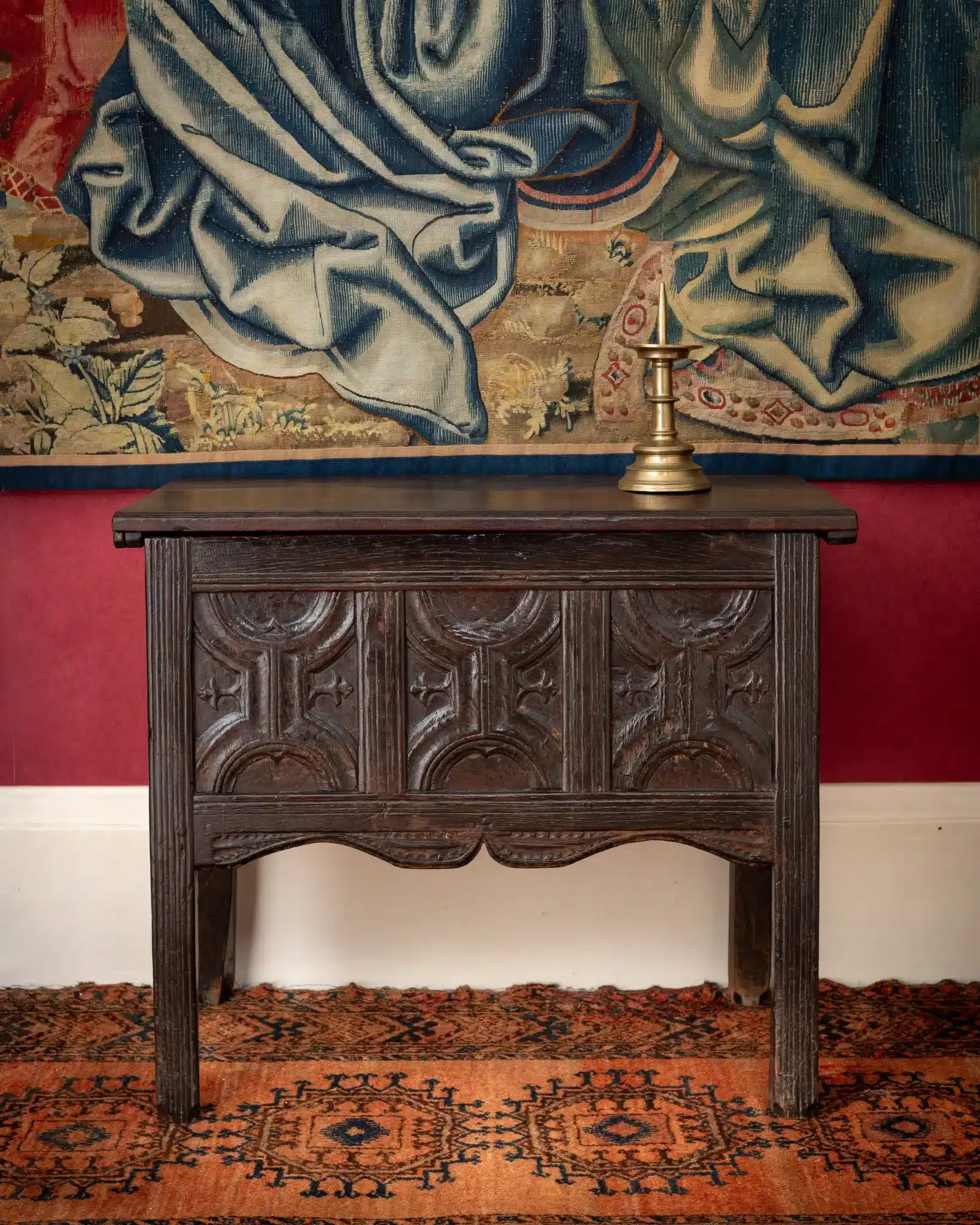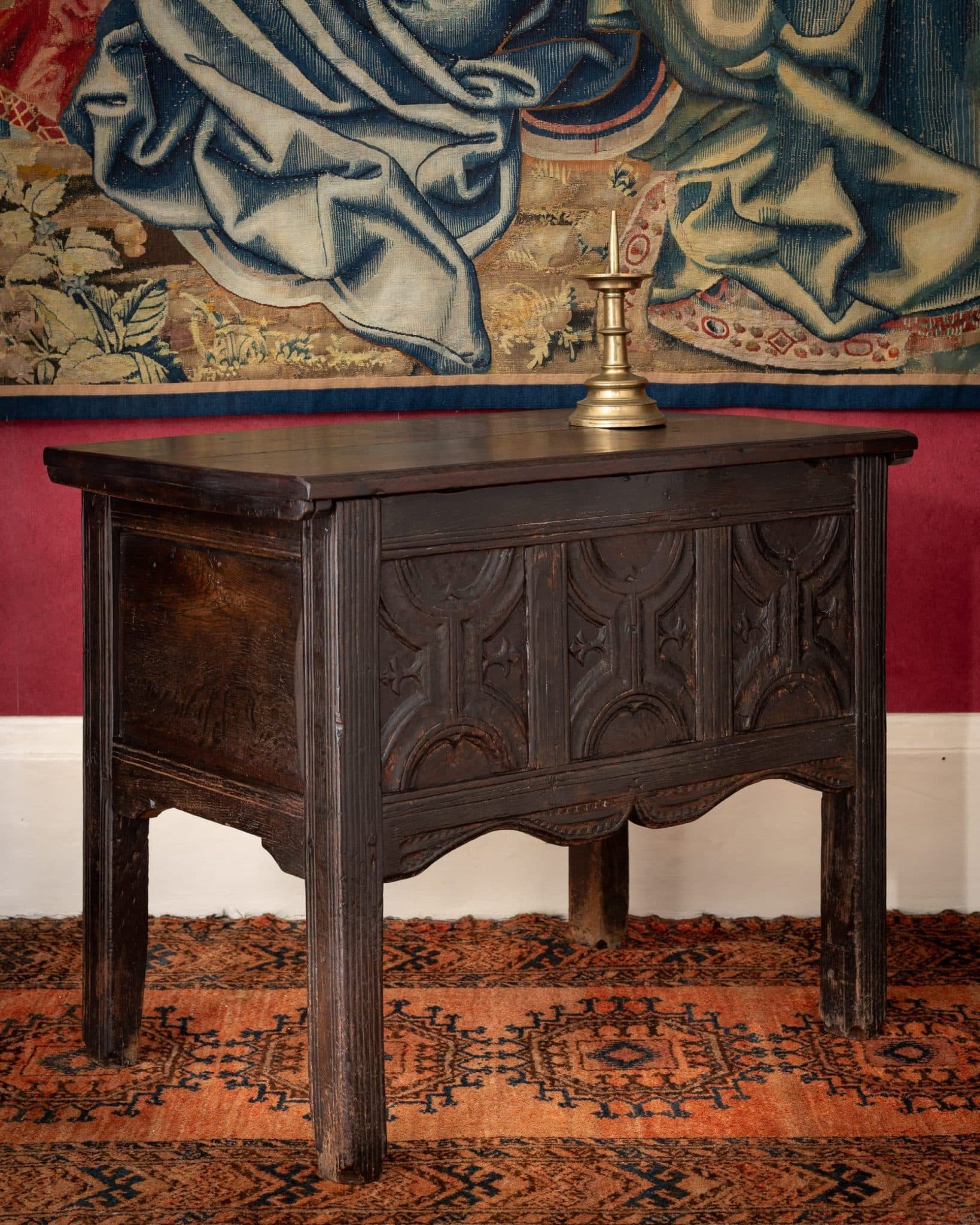
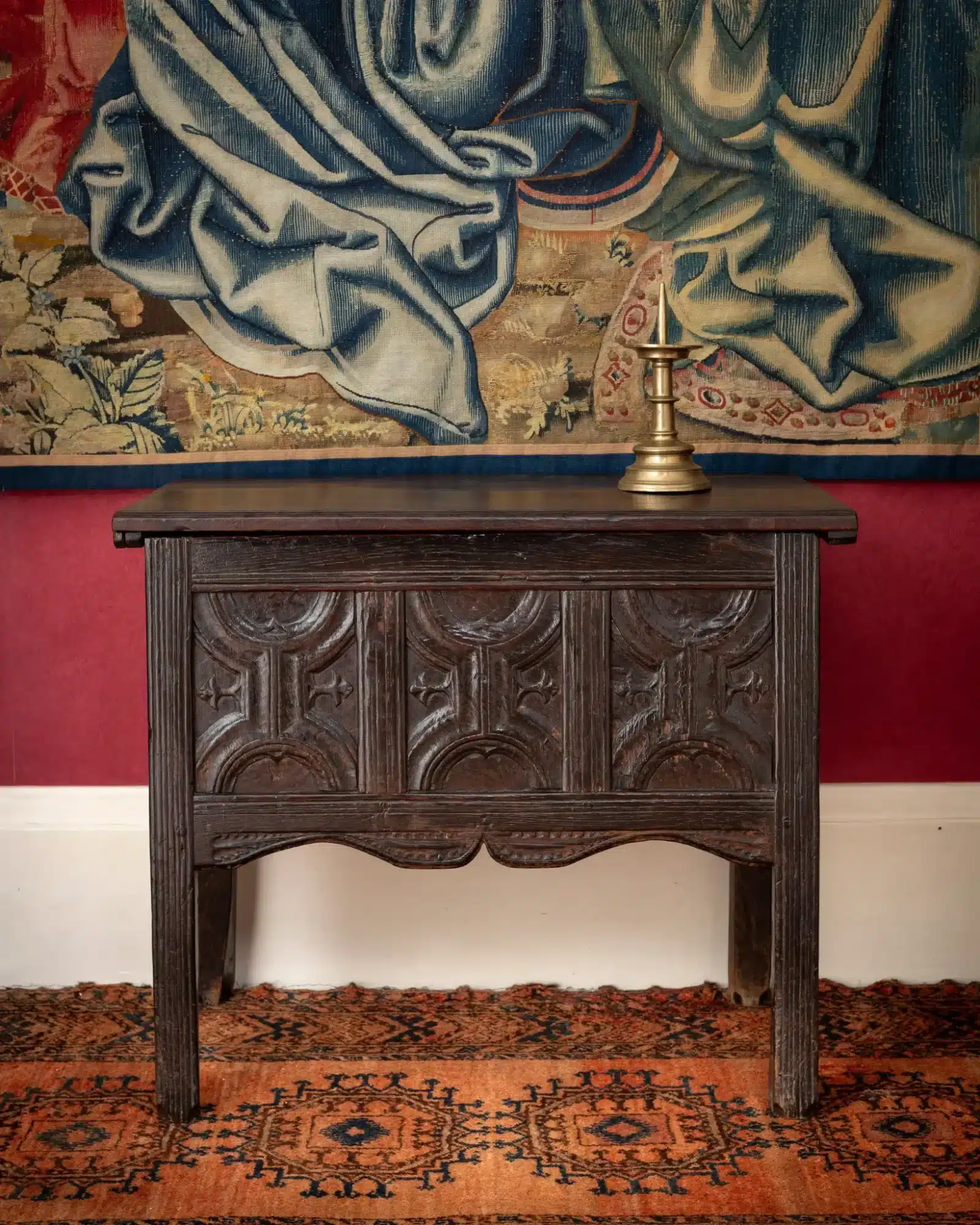
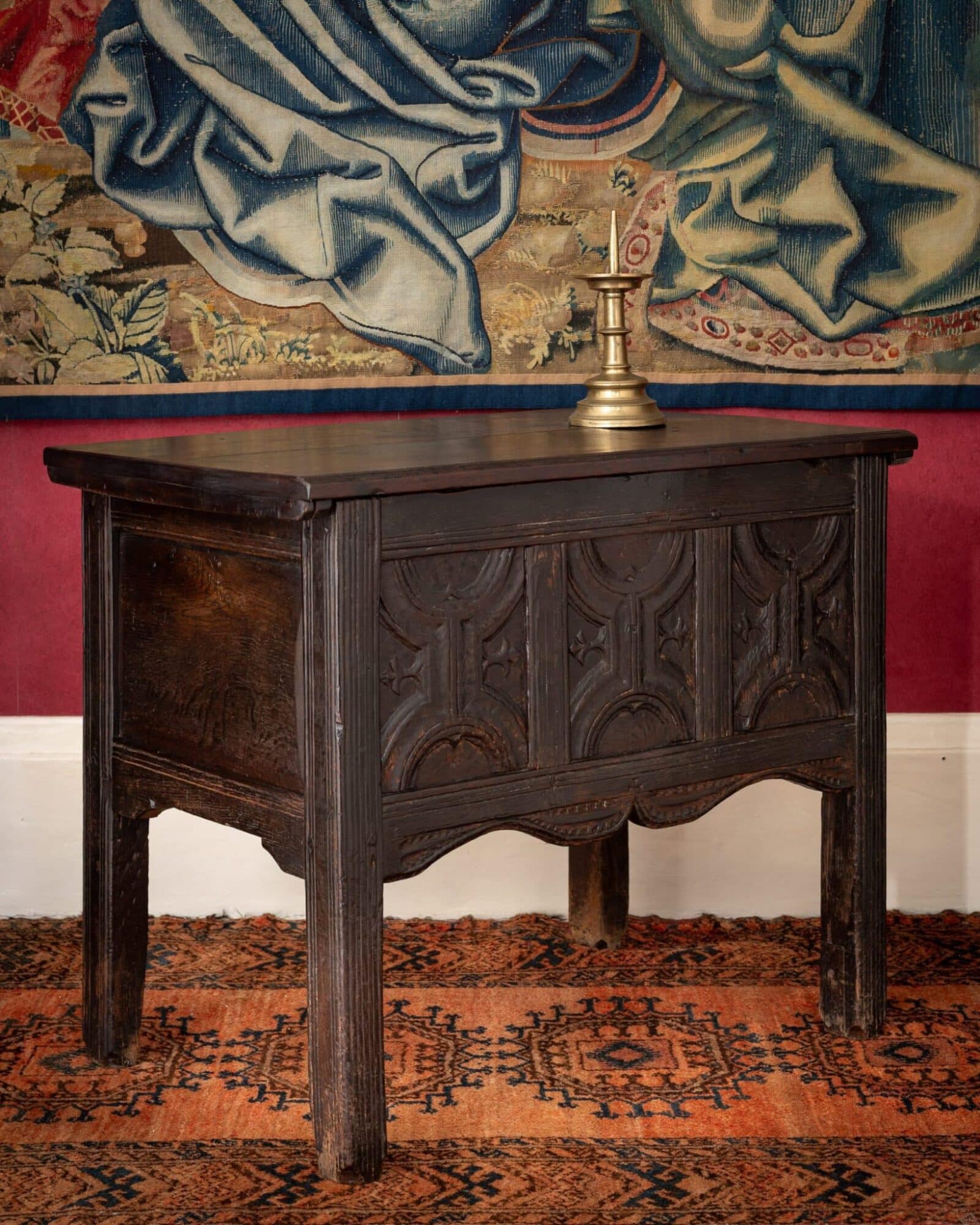
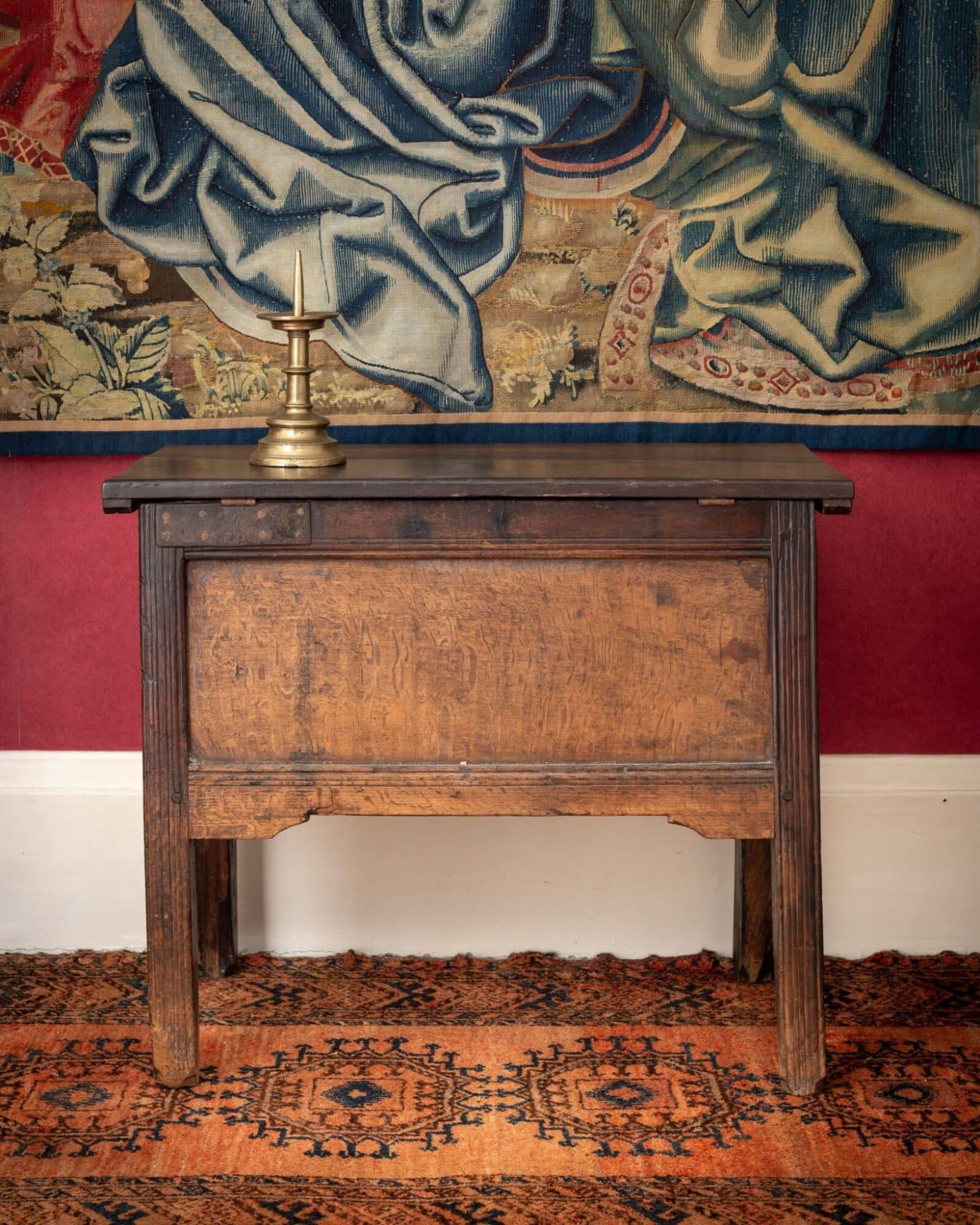
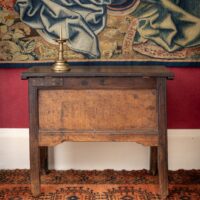
Henry VIII Oak Counter Table with Parchemin Panels
- Period
- Circa 1540
- Origin
- England
- Dimensions
- W 33 3/4" × H 28 1/4" × D 22"
- Reference
- #Marh3717
£8,500
Description
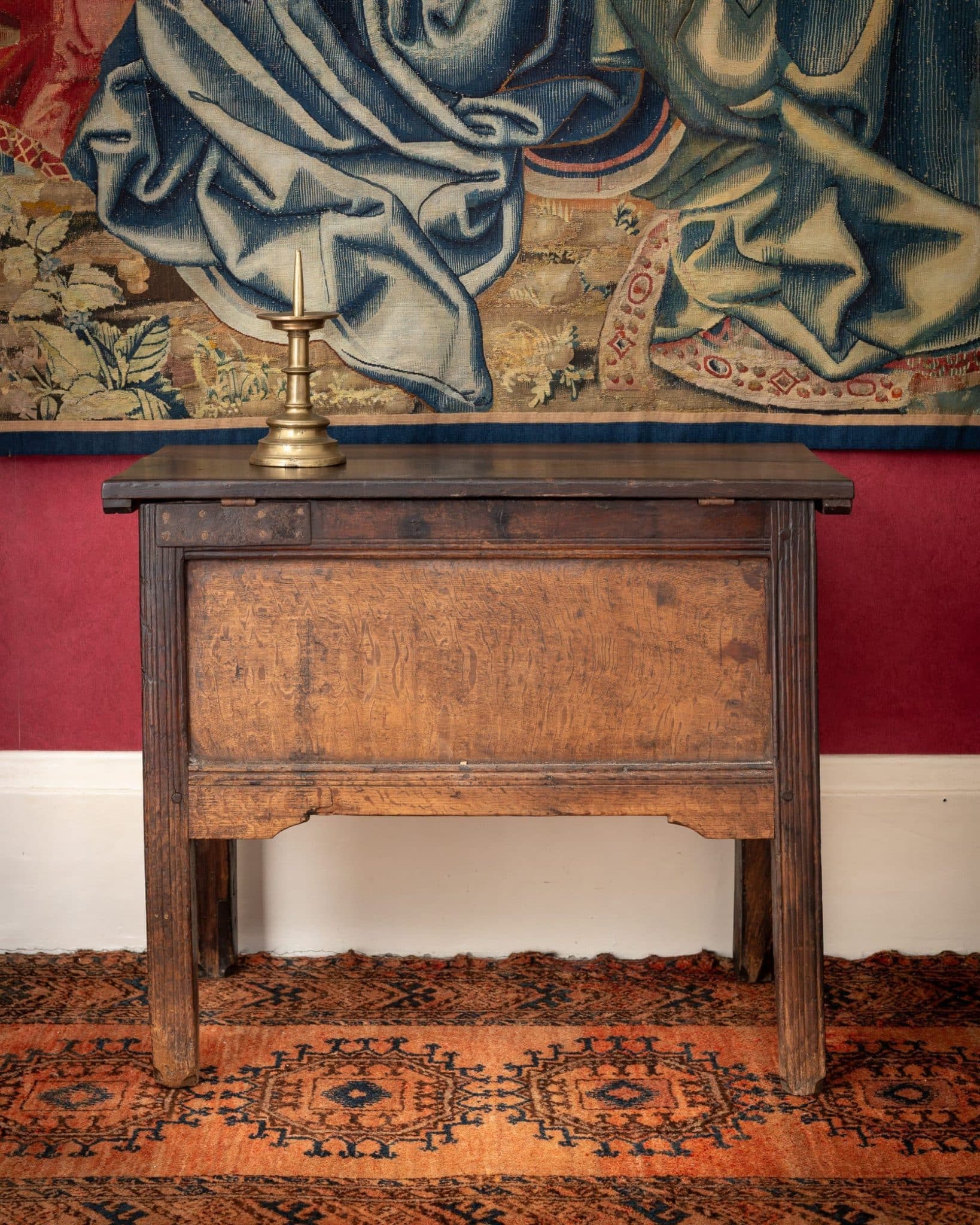
A small and exceptionally early Tudor oak counter table, the front carved with three parchemin (parchment) panels framed by simple mouldings, raised on four moulded stiles joined by plain rails. The proportions and construction indicate a portable counting table, originally fitted with a sliding or removable plank top to allow access to the interior cavity beneath, a feature noted in several mid-Tudor probate inventories. The present fixed top, is a 17th-century replacement, consistent with the near-total loss of original sliding tops on surviving examples.
Tables of this form were used in great houses, monastic offices, and estate chambers for the reckoning of household accounts and the handling of coin or tallies. The diminutive width—only 33¾ inches—places this among the smallest known recorded examples, the majority being slightly larger. The parchemin motif, a series of folded Gothic arches suggesting the turned-back corner of a parchment sheet, is characteristic of mid-Tudor courtly woodwork, appearing in chamber panelling at Hampton Court, Compton Wynyates, and other secular interiors c.1520–1550.
Condition
Rich original colour and surface. Top replaced in the 17th century, as typical of the type. Minor historic wear and small losses.