 Sold
Sold
James I Inlaid Press Cupboard
- Period
- 1603 - 1625
- Origin
- Yorkshire
- Dimensions
- W 56 1/4" × H 53 3/4" × D 25"
- Reference
- #Marh2682
This piece has been sold. It is shown here for reference in our archive.
Description
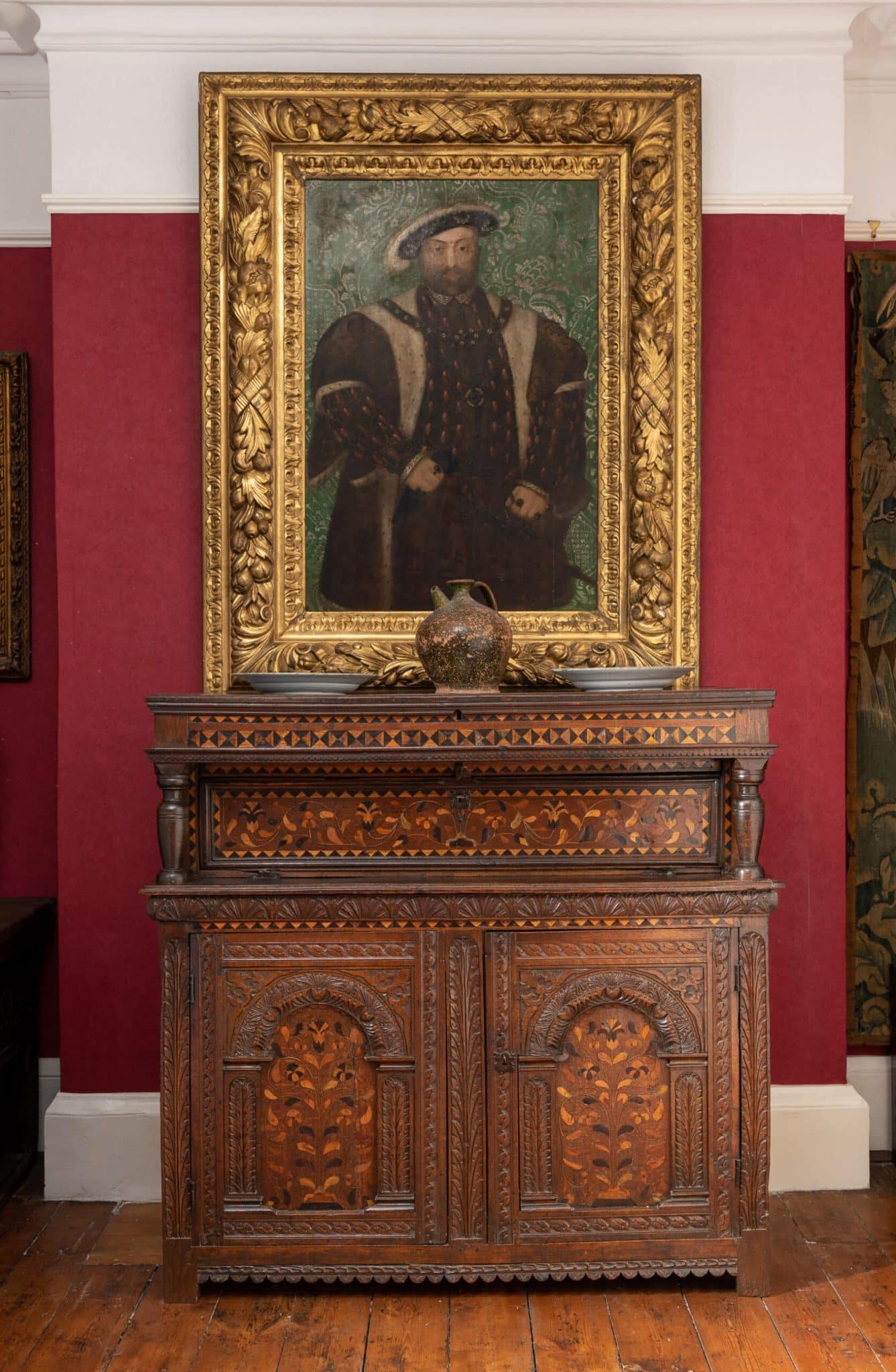
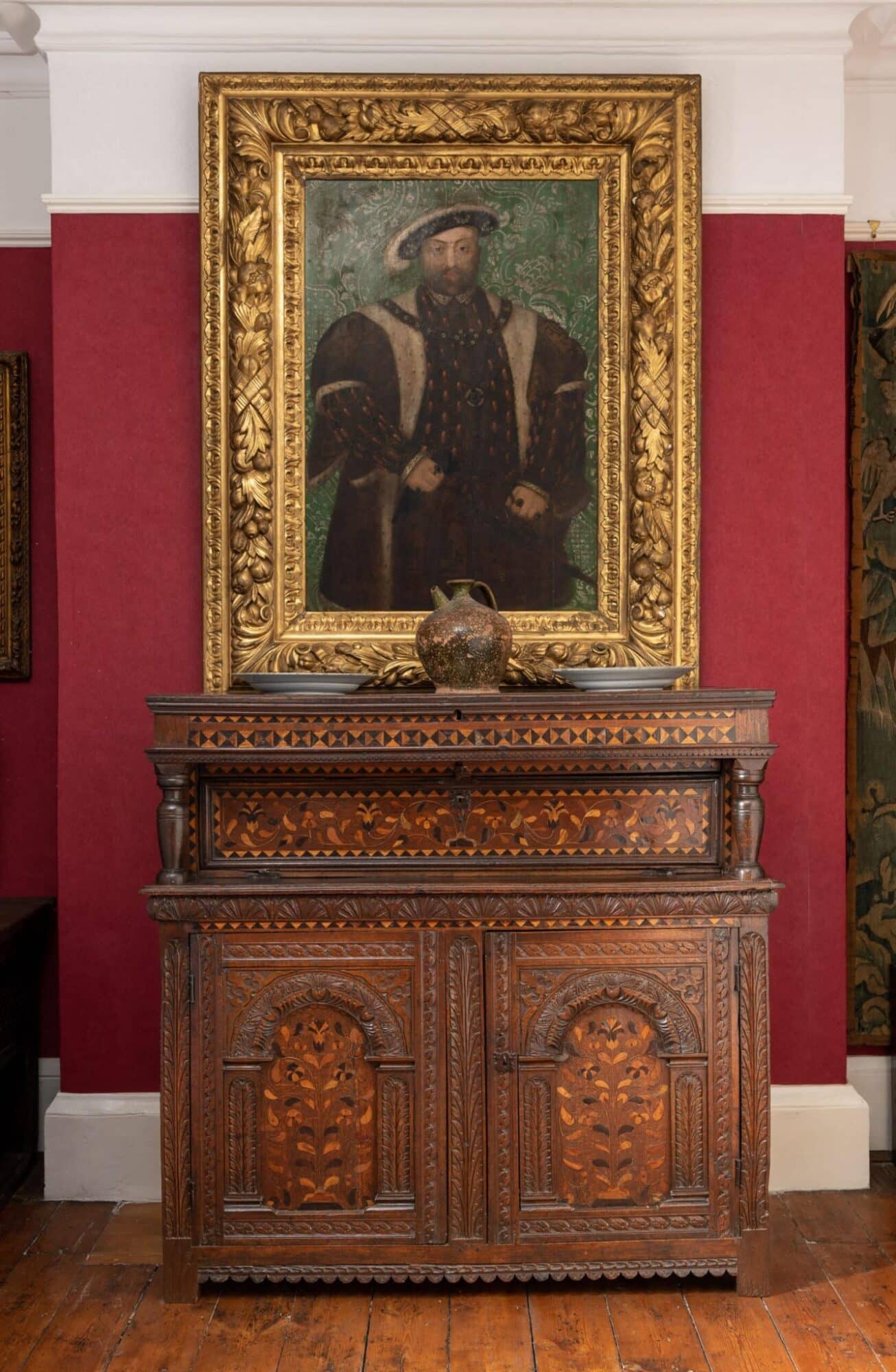
An oak inlaid press cupboard, displaying the finest craftsmanship of the early 17th century. The cupboard is constructed in three stages, each enriched with elaborate inlay and carving that epitomises the decorative exuberance of the Jacobean period.
The lower section is fitted with twin doors set within deep applied arcades, each arch outlined with boldly carved feathered mouldings. Within the arched recesses are exquisite botanical inlaid panels, the naturalistic foliage worked in contrasting woods to striking effect. The doors are framed by guilloche-carved uprights and borders, lending strong architectural presence.
The central frieze section features a remarkable fall-front door, inlaid with scrolling floral motifs of fine proportion, opening to reveal an interior fitted with five original spice drawers. Such a concealed arrangement is highly unusual, suggesting the cupboard was commissioned for a household of considerable wealth, where costly spices and small valuables required secure and discreet storage.
Above, the upper stage is surmounted by a lifting lid, beneath which lies a compartment traditionally referred to as a silver chest—intended for the safekeeping of plate and precious vessels. The framing is accentuated by turned columns, geometric chequer inlay, and fine dentil mouldings, creating a bold interplay between line, pattern, and texture.
Overall, the press demonstrates a masterful balance between robust Jacobean form and delicate ornament. The combination of inlaid marquetry panels, architectural carving, and ingenious hidden drawers sets this piece apart as a work of high status, likely commissioned in Yorkshire for a prosperous gentry family with courtly aspirations.
Comparable examples of such richly inlaid press cupboards are exceedingly scarce, with most surviving pieces housed in institutional collections. This example represents one of the finest expressions of regional craftsmanship from the reign of James I.