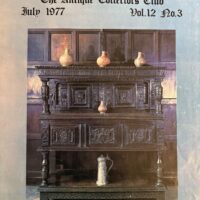
James VI Scottish cupboard
- Period
- Circa 1570 - 1590
- Origin
- Scotland
- Dimensions
- W 57 1/4" × H 61 1/2" × D 21"
- Reference
- #Marh2167
This piece has been sold. It is shown here for reference in our archive.
Description
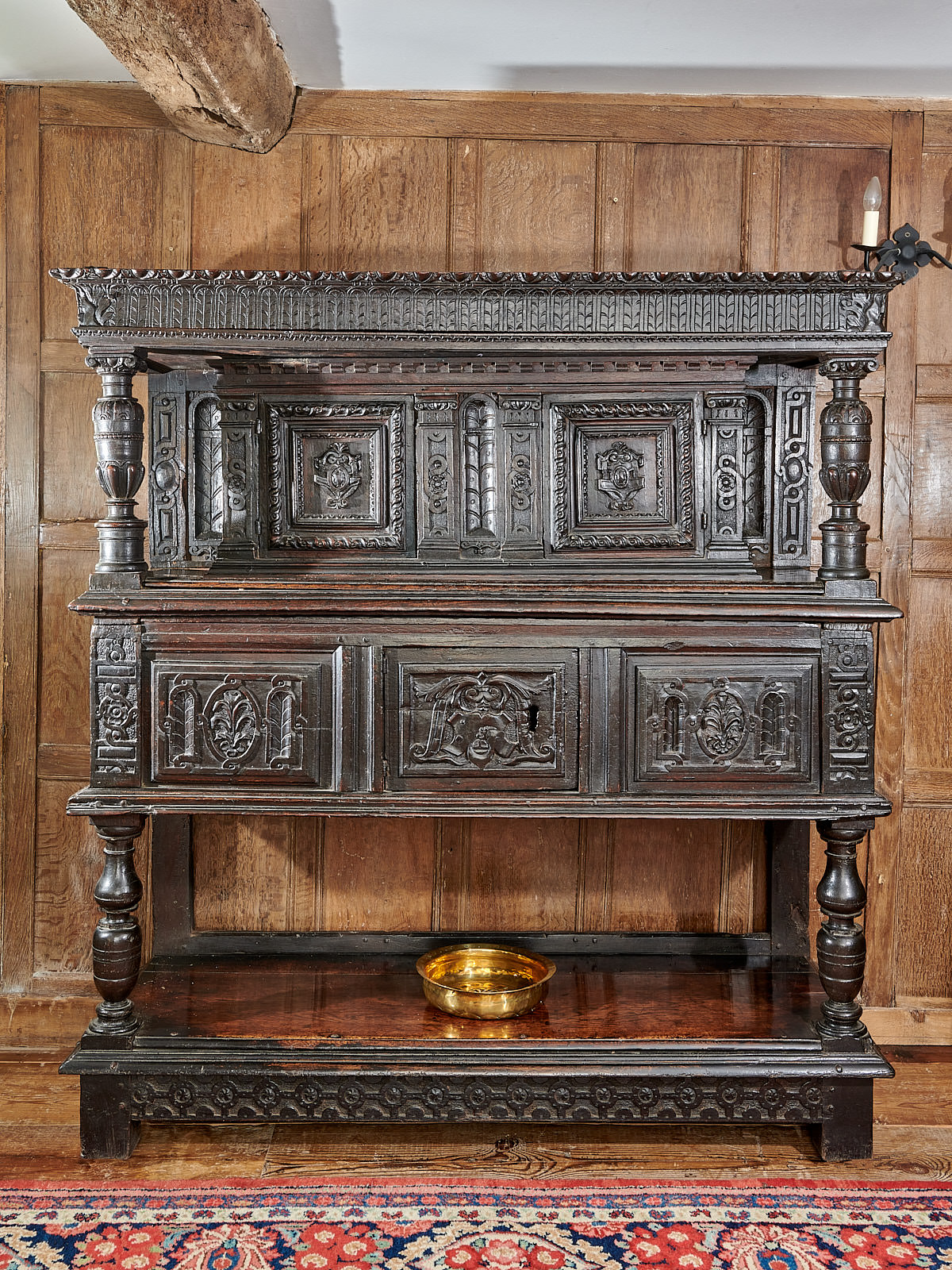
A rare and important carved oak cupboard of architectural form, made during the reign of James VI of Scotland (1567–1625). This piece exemplifies the fusion of Renaissance architectural vocabulary with Scottish courtly joinery, distinguished by heraldic ornament and ingenious concealed fittings.
The cupboard is arranged in two principal registers:
Upper section:
A boldly projecting cornice enriched with a continuous strapwork frieze, above a pair of cupboard doors flanking a central plumed arch niche. The doors are panelled with cartouche motifs enclosing feathered devices, and slide laterally to reveal concealed locks. The façade is framed by carved ionic pilasters with guilloche decoration, and gadrooned cup-and-cover columns characteristic of the Scottish Renaissance style.
Lower section:
The lower cupboard is centred on a large heraldic shield framed within scrolling strapwork, flanked by two fixed panels carved with feathered cartouches. Turned baluster columns with Ionic capitals support the structure, resting on a pot-board base. The lower frieze is carved with a continuous flowerhead motif, while the upper frieze rail conceals a hinged secret compartment, a feature associated with high-status furniture of the period.
The decoration draws upon the Northern Mannerist repertoire, with guilloche, strapwork, feather motifs, gadrooning, and architectural capitals. The heraldic shield—though its original armorial device is now softened by time—suggests the cupboard was commissioned by or for a family of standing, possibly within the orbit of the royal court. The architectural language—arches, entablatures, pilasters—translates the vocabulary of contemporary Scottish stonework into oak, a hallmark of the era.
Provenance:
By repute to have been owned and sold to Sir Ernest Salter Wills by Tobias Jellinek.
Formerly in the collection of Sir Ernest Salter Wills, Bt., at Littlecote House, Wiltshire.
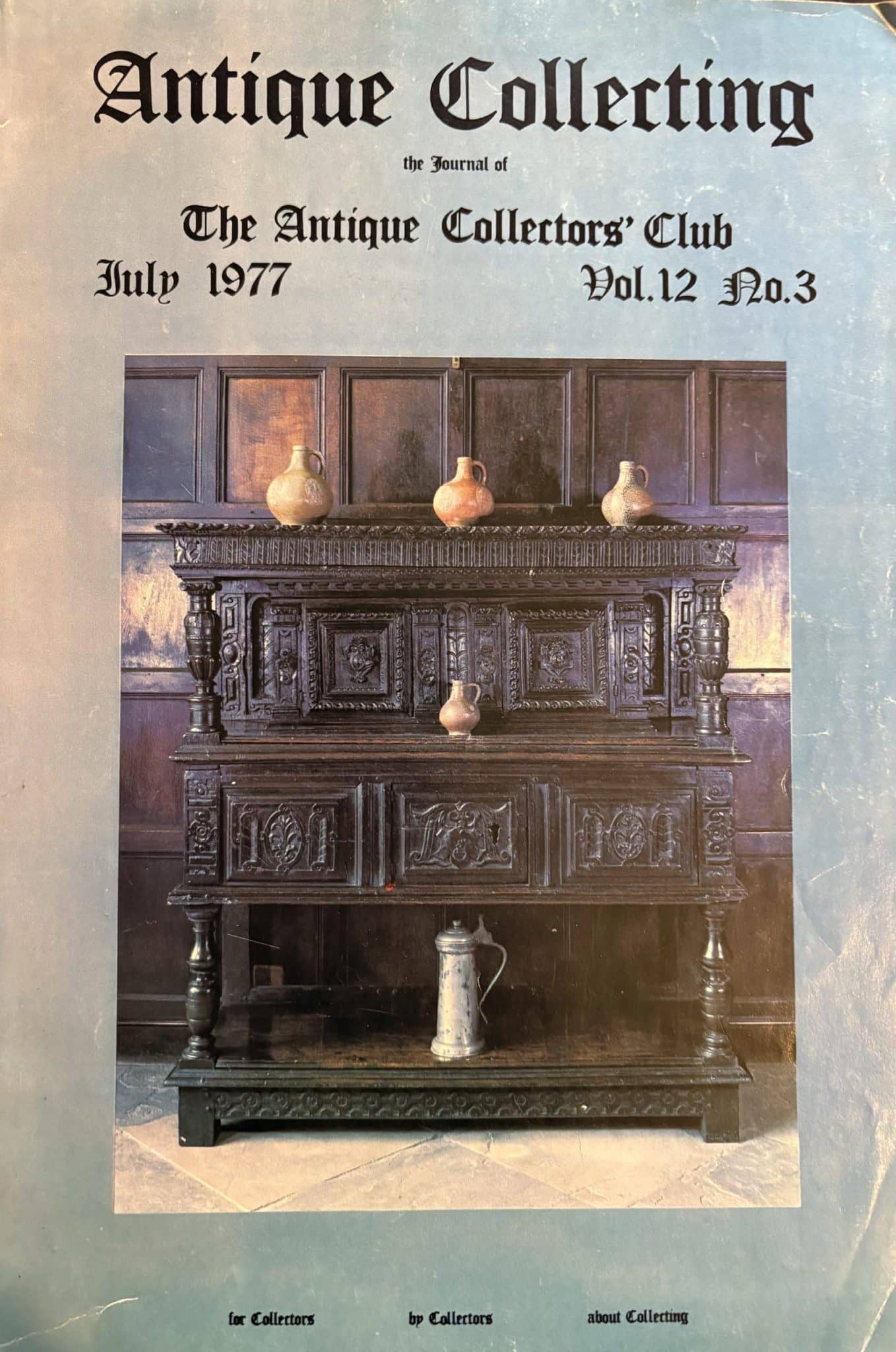
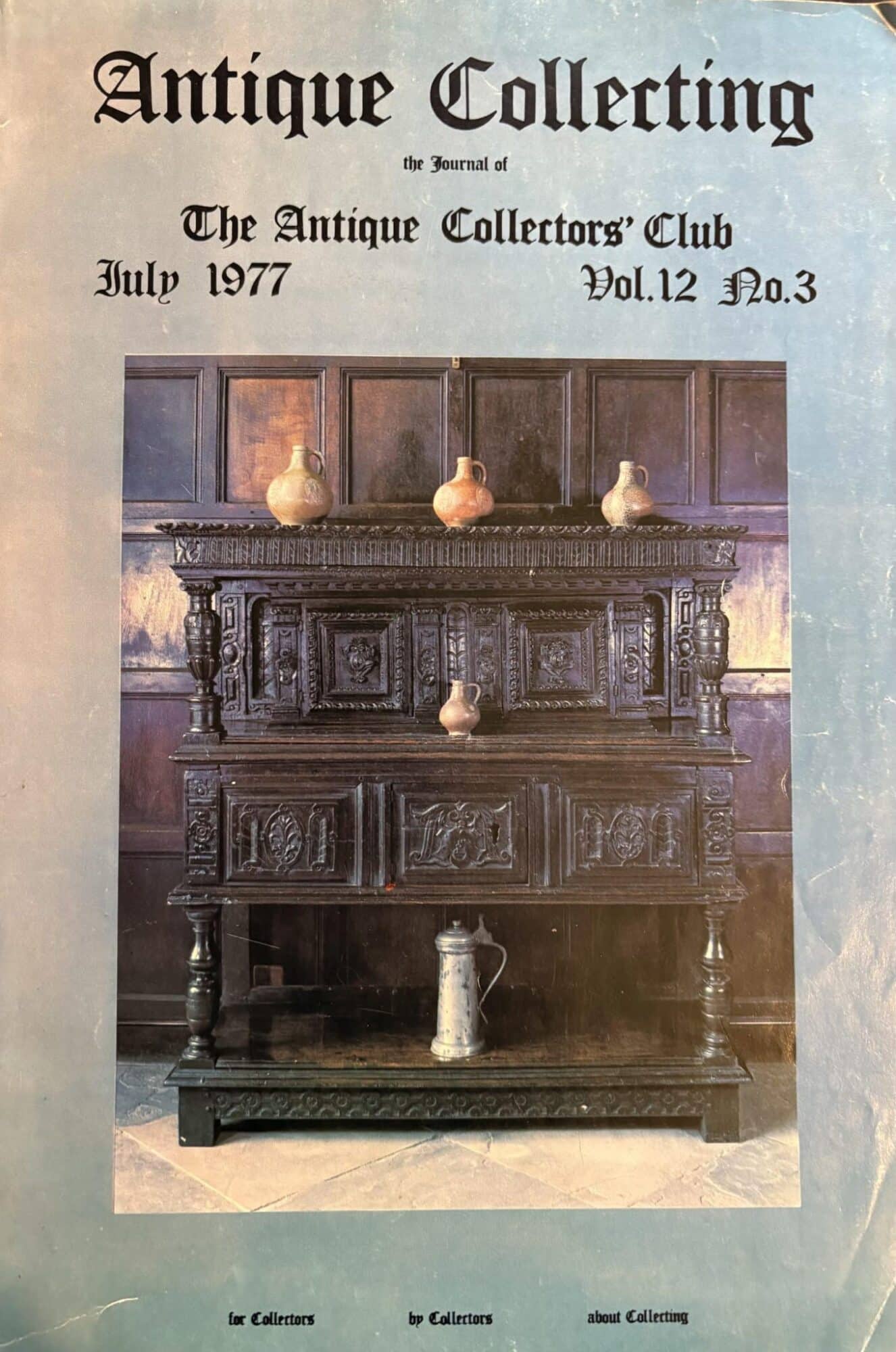
Illustrated and described on the front cover of Antique Collecting, the Journal of the Antique Collectors’ Club, July 1977, Vol. 12, No. 3 (captioned as “A fine late 16th-century English oak court cupboard, circa 1580”).
Sold as part of the contents of Littlecote House, Sotheby’s, 1985, lot 269.
“The heraldic panel at the centre of the lower register bears a shield charged with a roundel containing a cross, surmounted by a curling flourish possibly intended as a serpent or crest device. Although the precise identification remains uncertain, the form suggests a cadet armorial device, likely of a Scottish lairdly family in the later 16th century. The heraldic enrichment underlines the personal nature of this commission, situating the cupboard within the tradition of bespoke Scottish Renaissance furniture where lineage and heraldry were prominently displayed.”