Late Gothic Flemish Tapestry Fragment
- Period
- 1480 - 1510
- Origin
- Southern Netherlands, probably Brussels or Tournai
- Dimensions
- W 71" × H 88 1/4"
- Reference
- #Marh3763
Price on application
Description
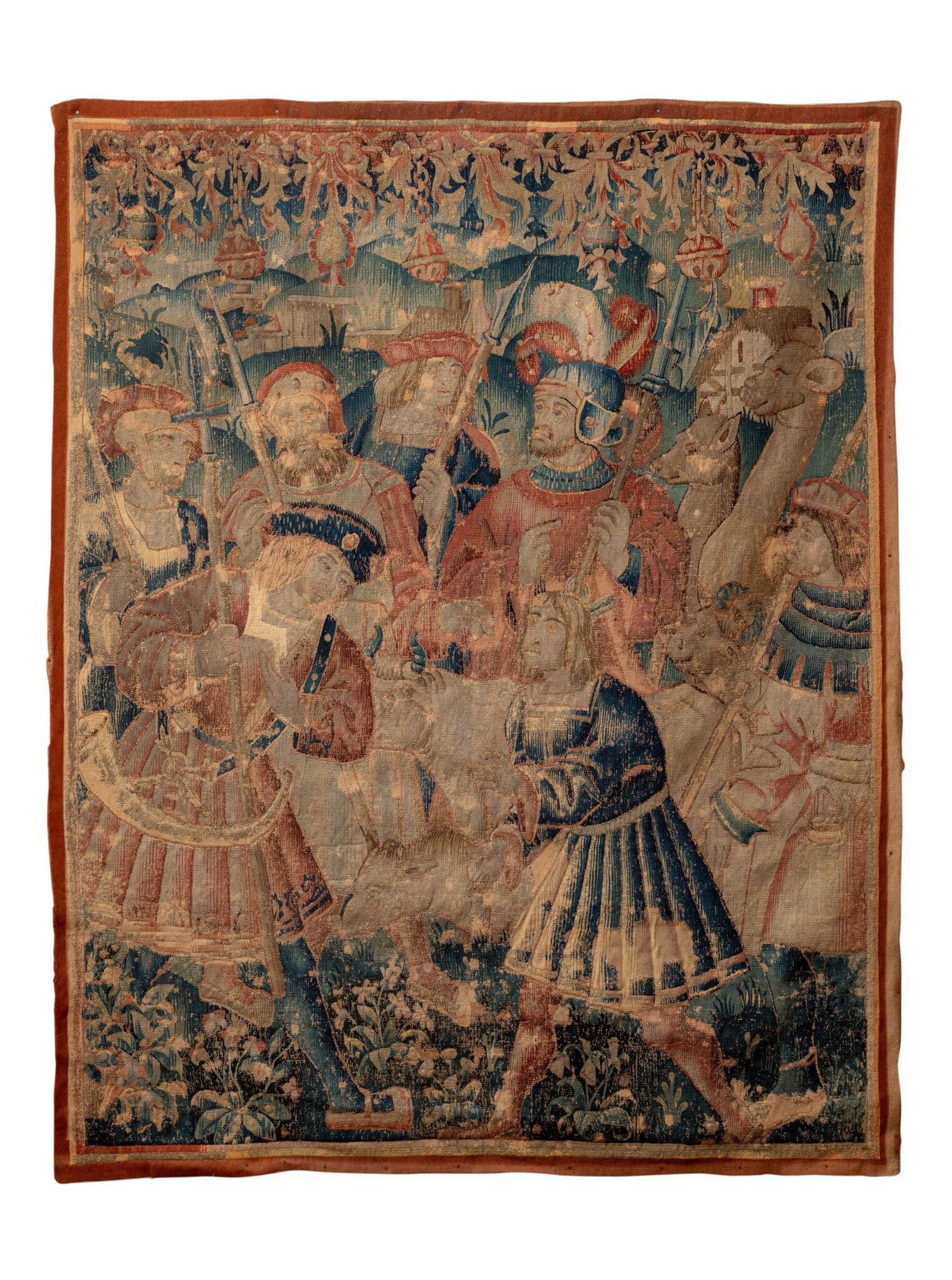
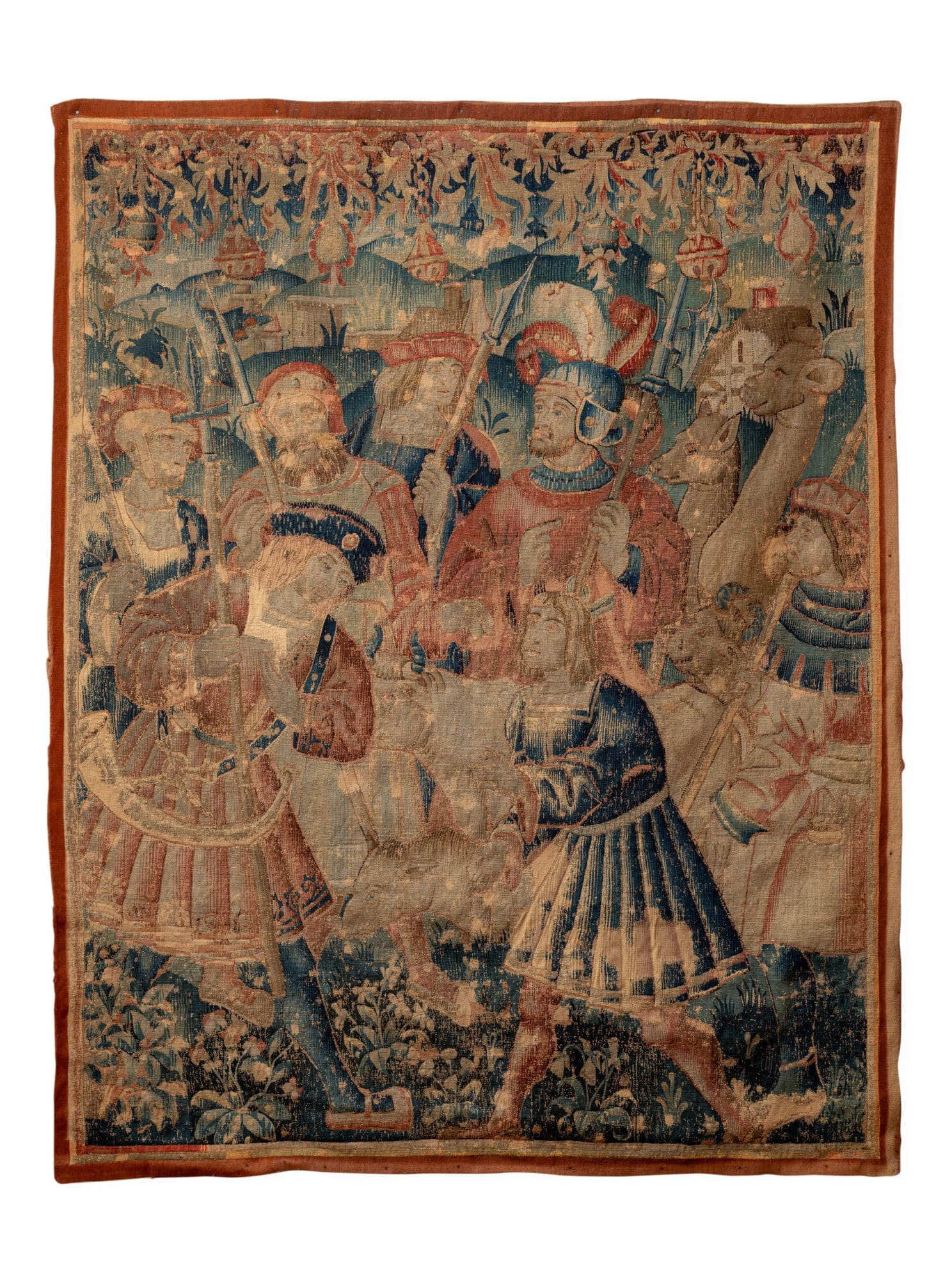
A rare and evocative late Gothic tapestry fragment, woven in wool with silk highlights, depicting a richly dressed company of armed retainers, courtiers, and attendants accompanied by a camel, stag, boar, and other animals within a rolling landscape. The surviving upper border is ornamented with suspended Gothic pendants, preserving part of the original decorative framework of what was once a considerably larger narrative hanging.
The figures are dressed in contemporary Burgundian costume of the late fifteenth century, their expressive faces and angular features characteristic of Netherlandish tapestry design of the period. The inclusion of the camel, together with the military escort and courtly procession, suggests an eastern or biblical setting, although the precise subject can no longer be identified owing to the fragmentary nature of the surviving composition. It was almost certainly woven as part of an extensive historical, biblical, or legendary narrative cycle intended for the furnishing of an aristocratic or princely interior.
The tapestry displays the refined draughtsmanship and subtle modelling associated with the great weaving centres of the Southern Netherlands during the closing decades of the Gothic period, when Brussels and Tournai workshops supplied luxurious narrative hangings to the courts of Burgundy, France, England, and the Holy Roman Empire. Despite the inevitable losses sustained through centuries of use, the fragment retains remarkable vitality in its composition, together with traces of its original rich palette of blues, reds, creams, and soft earth tones.
A surviving twentieth-century conservation label from the Viennese firm Wachuda records the tapestry’s later history, identifying it as a Flämische Tapisserie (“Flemish tapestry”) during its professional cleaning or conservation in Vienna.
Today the fragment stands as an important survival of late medieval Flemish weaving, valued both for the quality of its design and as a rare remnant of a once monumental tapestry cycle whose original subject has been lost to time.