Late Gothic Oak Heraldic Cupboard
- Period
- 1495–1515
- Origin
- Upper Rhine (Alsace or South-West Germany
- Dimensions
- W 37" × H 59 1/2"" × D 19 1/4"
- Reference
- #Marh3762
£9,950
Description
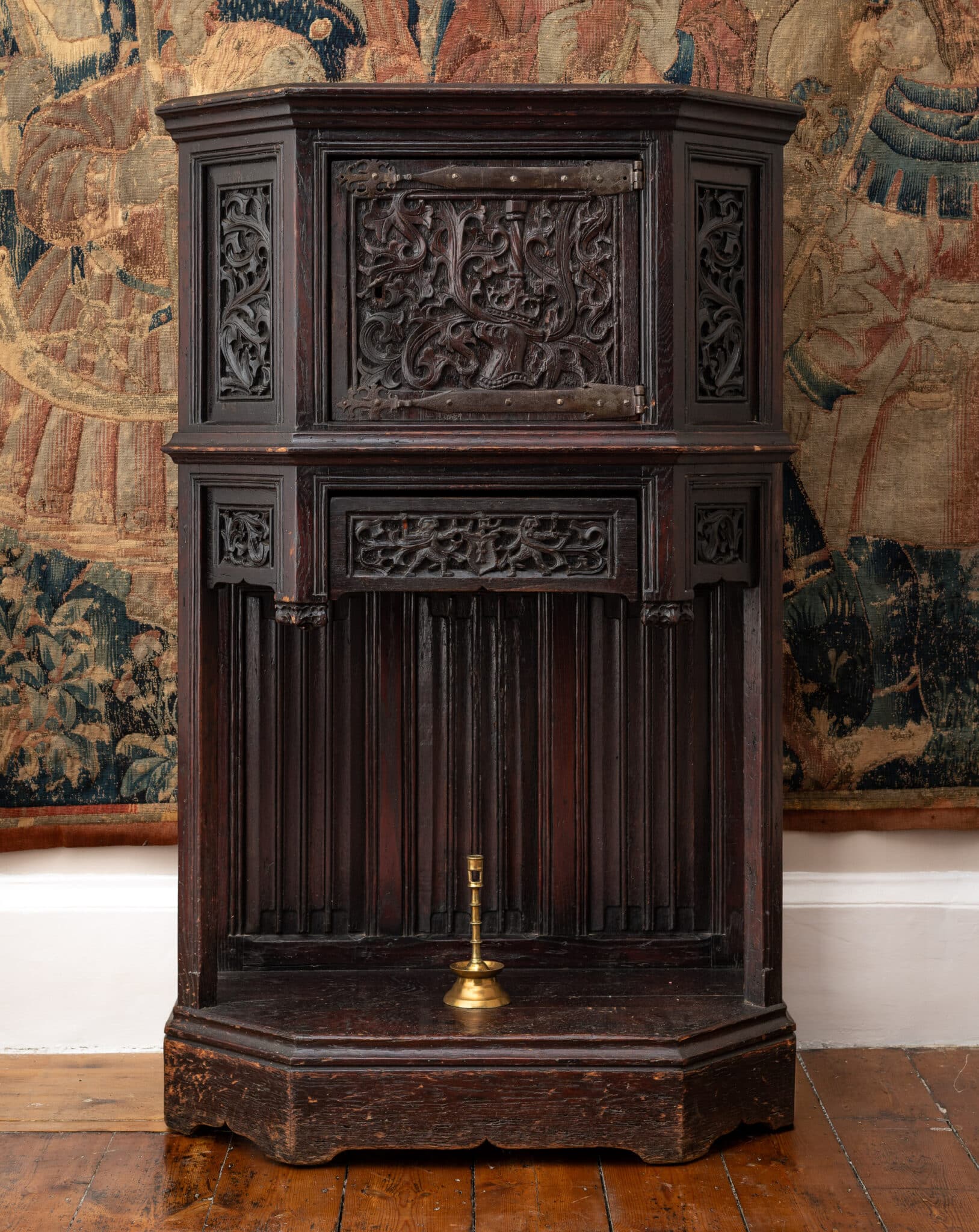
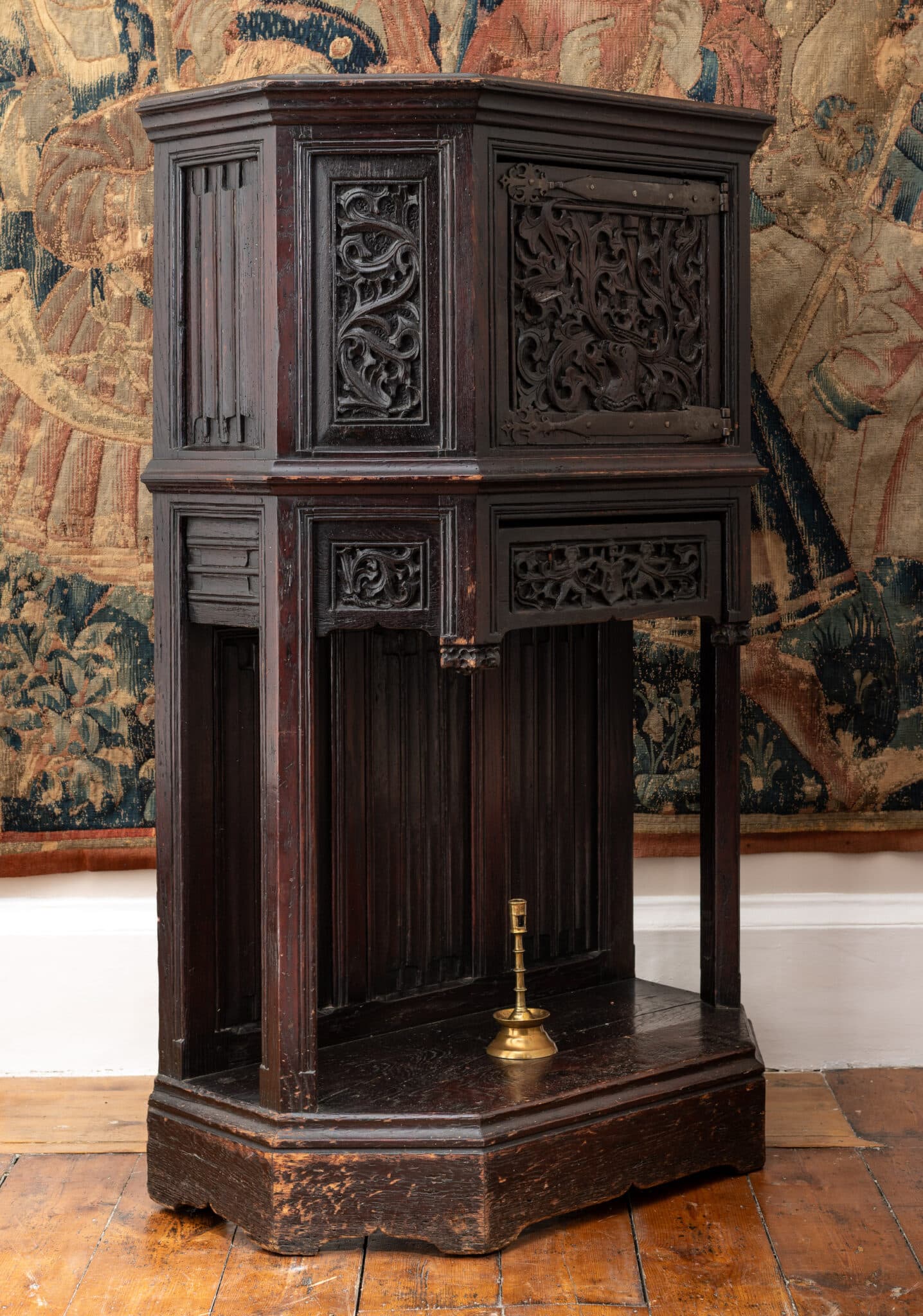
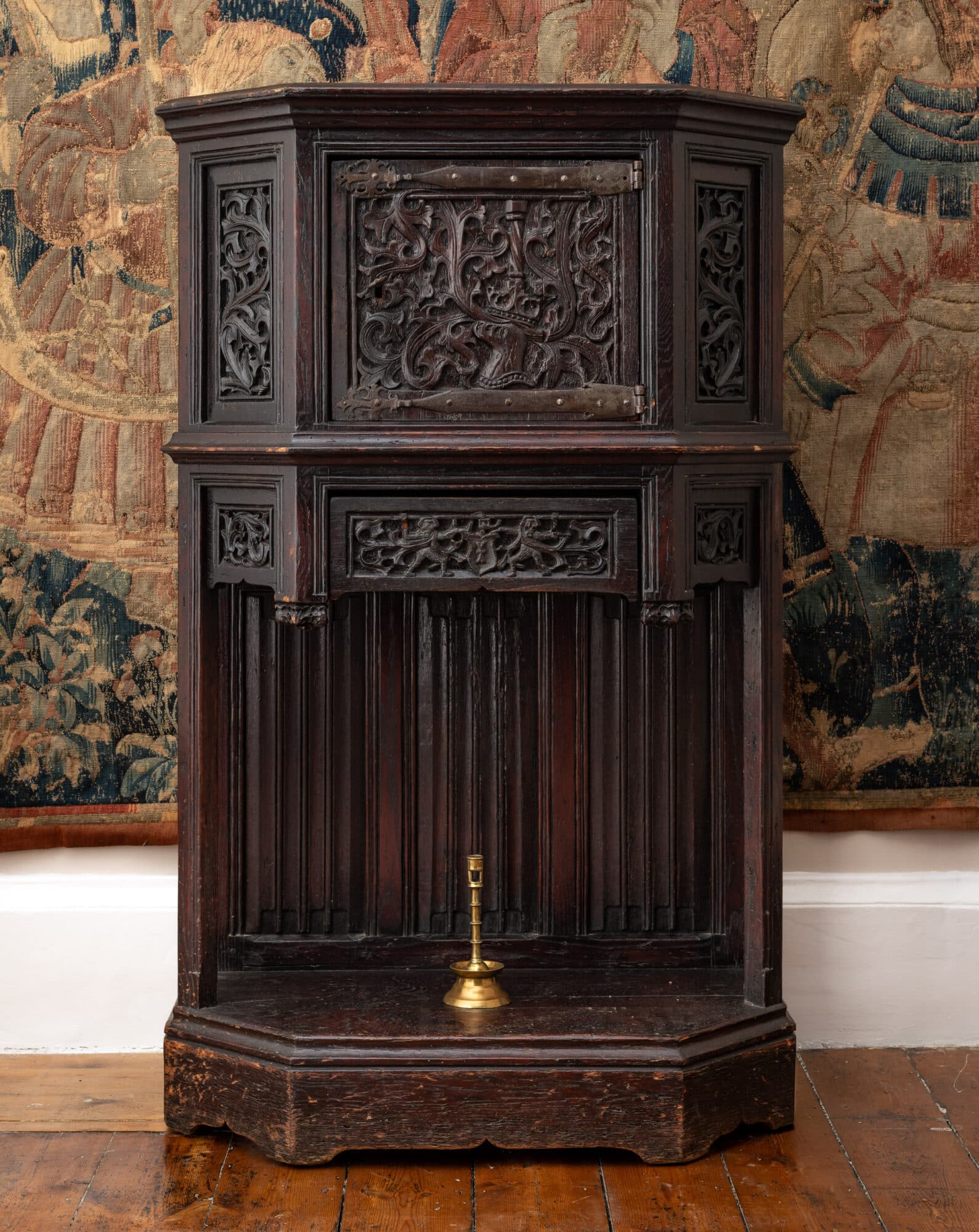
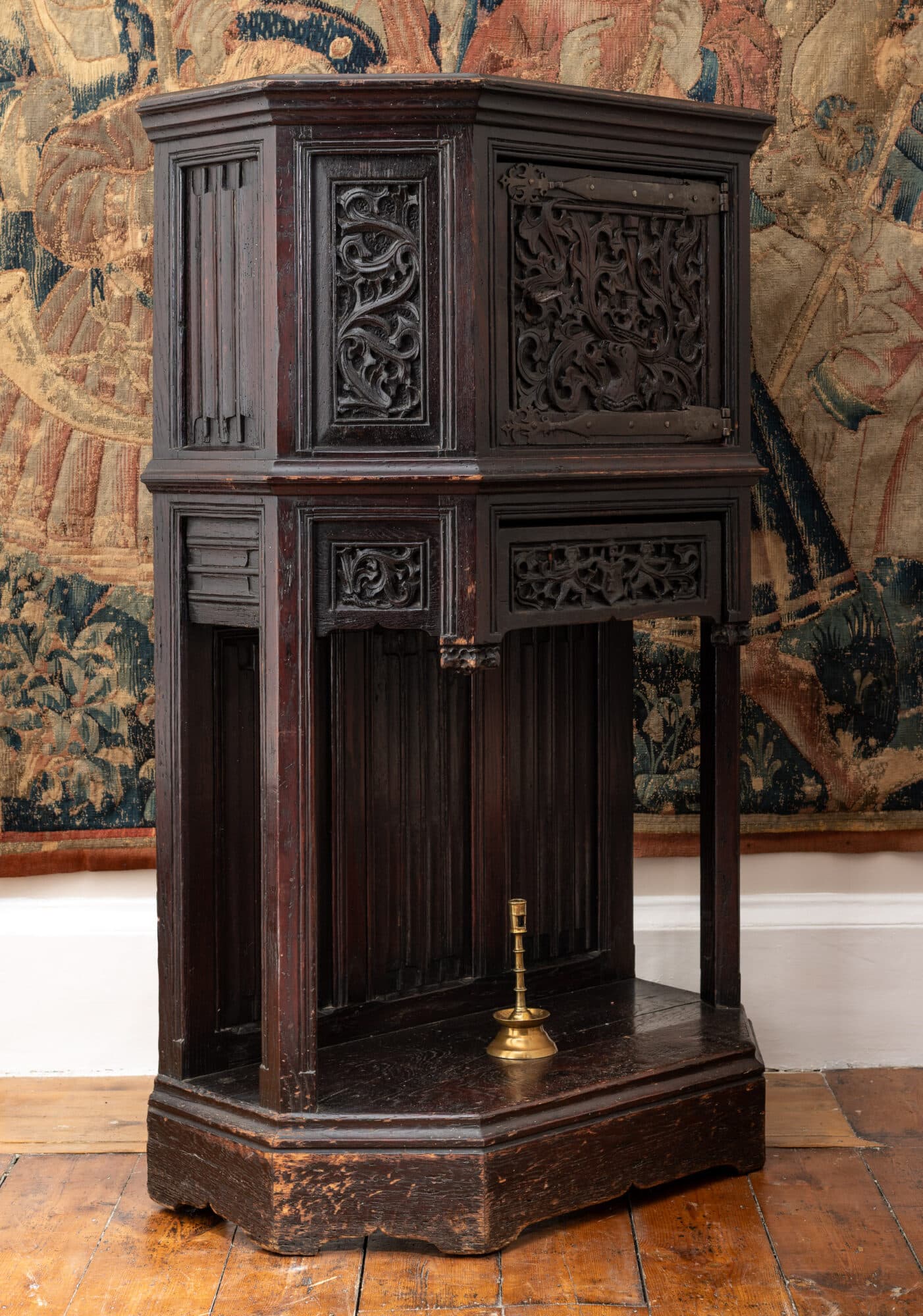
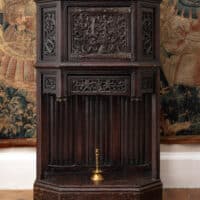
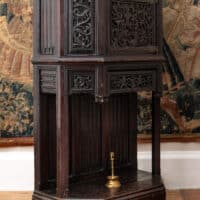
An exceptional Late Gothic oak cupboard of architectural canted form, produced in the Upper Rhine during the closing years of the fifteenth century or the opening decade of the sixteenth. The cabinet is conceived with a moulded cornice above an enclosed upper compartment, raised over an open display stage supported by stiles and standing on its original projecting plinth base.
The upper door is richly carved in deep relief with flowing Gothic vine scrolls surrounding a striking heraldic composition. At its centre is a crowned tournament helmet with crown surmounted by a spirally twisted crest support or torse-like column, all enveloped within luxuriant foliage. This is not merely ornamental carving but appears to represent a stylised heraldic achievement, reflecting the continued importance of chivalric symbolism in the decades around 1500.
Below, the drawer front is carved with two confronted wild men (Wilde Männer), each carrying a club and supporting a central shield charged with the letter ‘I’. The wild man was one of the most recognisable heraldic supporters within the Holy Roman Empire, symbolising strength, guardianship and ancestral authority. Such imagery appears extensively in the heraldry of noble and patrician families throughout the Upper Rhine, Swabia and neighbouring regions during the late fifteenth and early sixteenth centuries. The shield almost certainly represents the initial of the original patron or family rather than a conventional armorial bearing, suggesting that the cabinet was commissioned for an individual of considerable standing whose identity was expressed through an heraldic badge rather than a full coat of arms. The drawer carcass is a nineteenth-century reconstruction, while the carved heraldic front is original.
The cupboard retains its original long wrought-iron strap hinges with engraved decoration, while the pierced foliate side panels and finely moulded architectural framework demonstrate the work of an accomplished workshop steeped in the traditions of Late Gothic woodcarving. The deeply undercut foliage, vigorous modelling and sophisticated architectural composition closely relate to the flourishing carving schools of Strasbourg, Colmar and the Upper Rhine at the moment when Gothic design was beginning to absorb Renaissance influences.