 Sold
Sold
Late Gothic Limewood Sculpture of St George
- Period
- Circa 1480 - 1500
- Origin
- Germany
- Dimensions
- W 9 3/4" × H 31 1/4" × D 4 1/2"
- Reference
- #Marh3197
This piece has been sold. It is shown here for reference in our archive.
Description
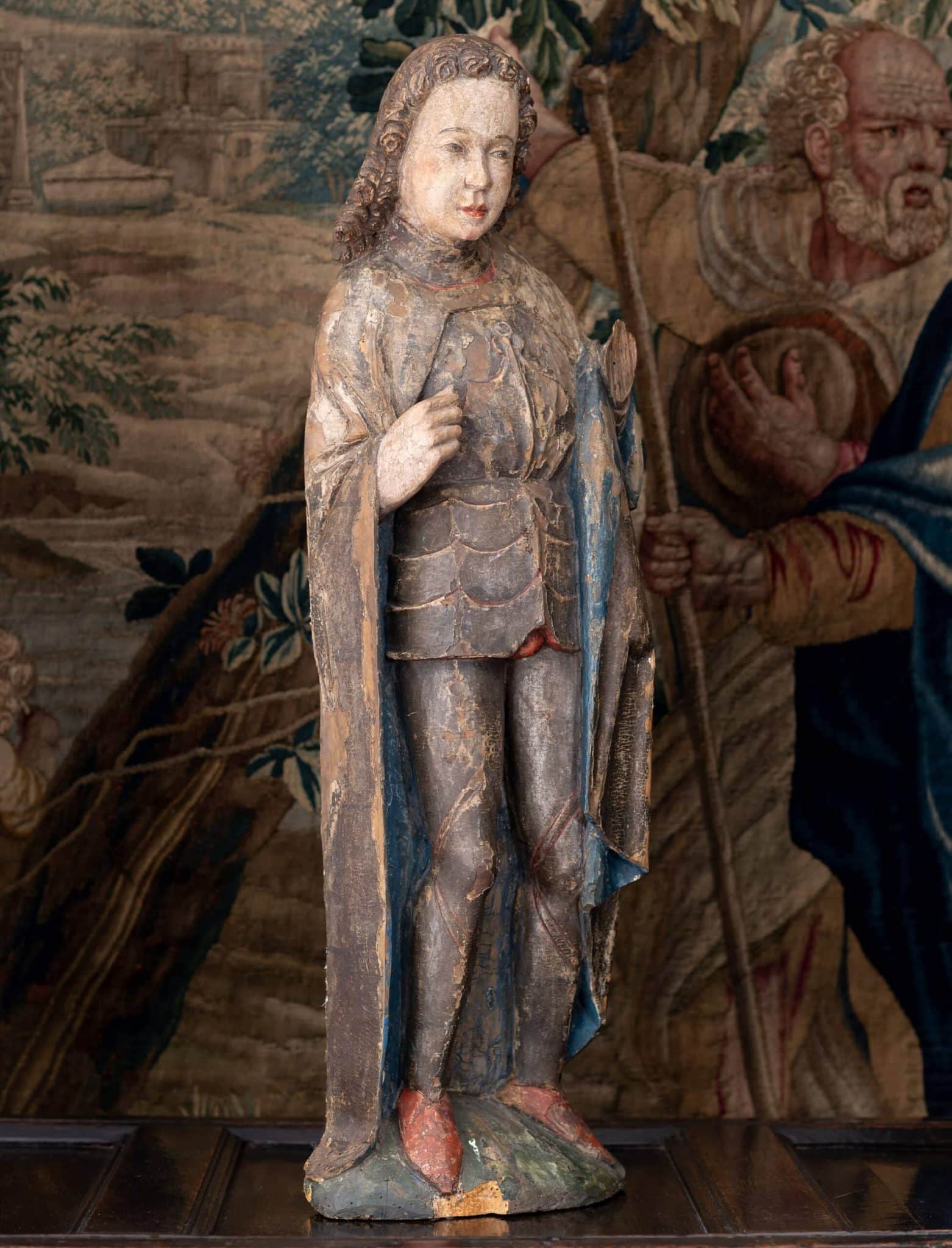
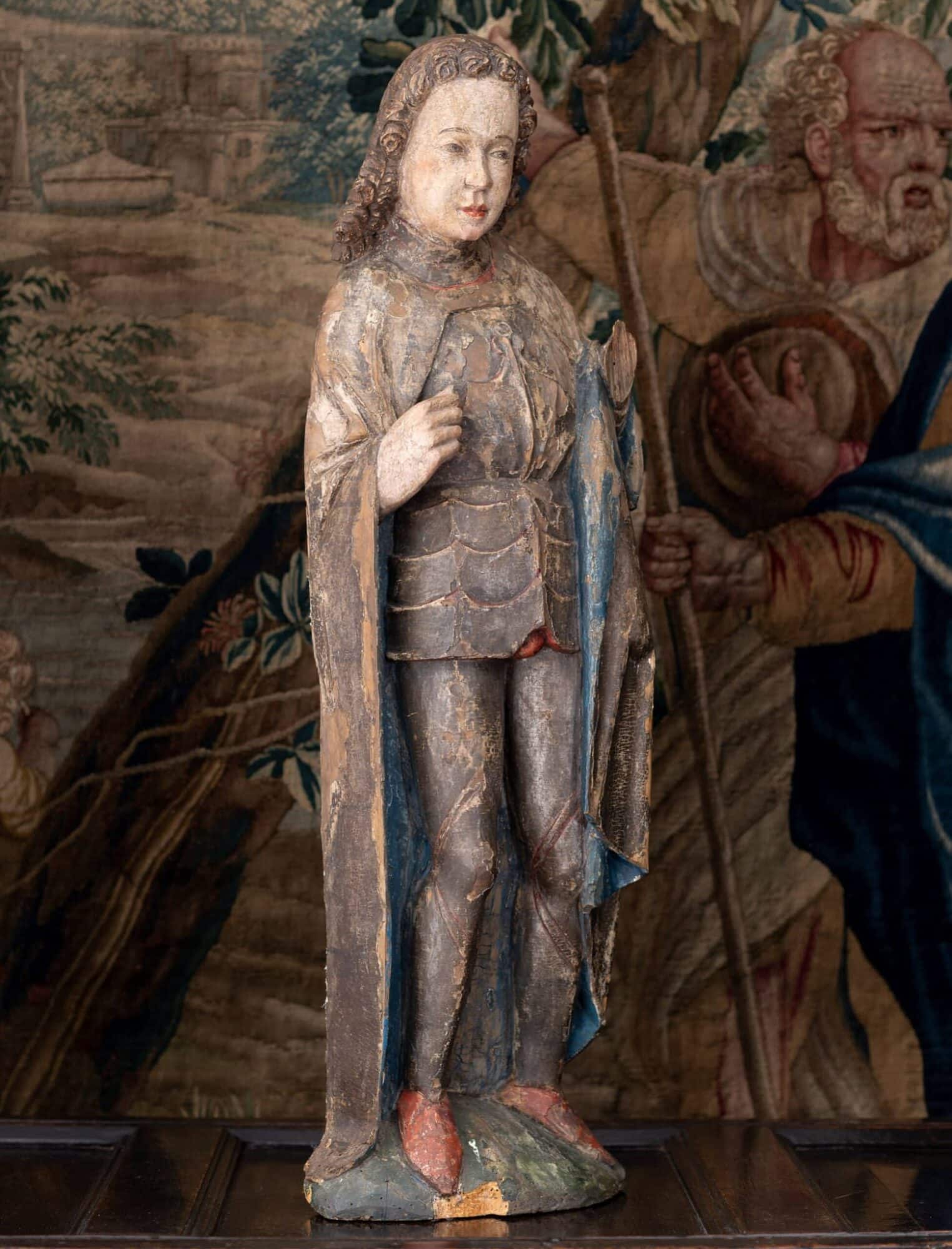
Carved in limewood and retaining significant traces of its original polychromy, this finely executed figure represents an armoured saint, traditionally identified as St George. Shown standing frontally, the youthful figure is dressed in a short tunic of plate armour with a flowing cloak draped over his shoulders, his right hand raised to hold a now-lost attribute, most probably a lance. His face is sensitively modelled with almond-shaped eyes and softly curling hair, giving the figure a contemplative presence that balances the martial character of his armour.
The identification with St George is supported by the iconographic type: a youthful soldier saint in armour, often accompanied by a cloak and sometimes without the dragon, especially in altarpiece cycles where individual saints were presented as intercessors. In late medieval Germany, St George was venerated both as a soldier saint and as a model of Christian knighthood, his cult closely tied to confraternities, guilds, and knightly orders. Alongside St Maurice, St Florian, and other warrior saints, George embodied both protection and the ideals of Christian chivalry.
The carving style — with angular drapery folds, schematic armour, and a poised, upright stance — places the work within the Swabian and Franconian traditions of the late Gothic period. Limewood was the preferred medium of these regions, valued for its fine grain and ability to capture subtle detail. The remnants of polychromy and gilding would once have given the figure vivid colour, animating its presence in a church interior lit by candles.
Figures such as this were typically produced for parish churches or confraternity chapels, where they were set into niches or arranged in groups of saints flanking a central altarpiece. Their function was both protective and devotional: to act as heavenly intercessors, reflecting the needs and identities of the communities that commissioned them.