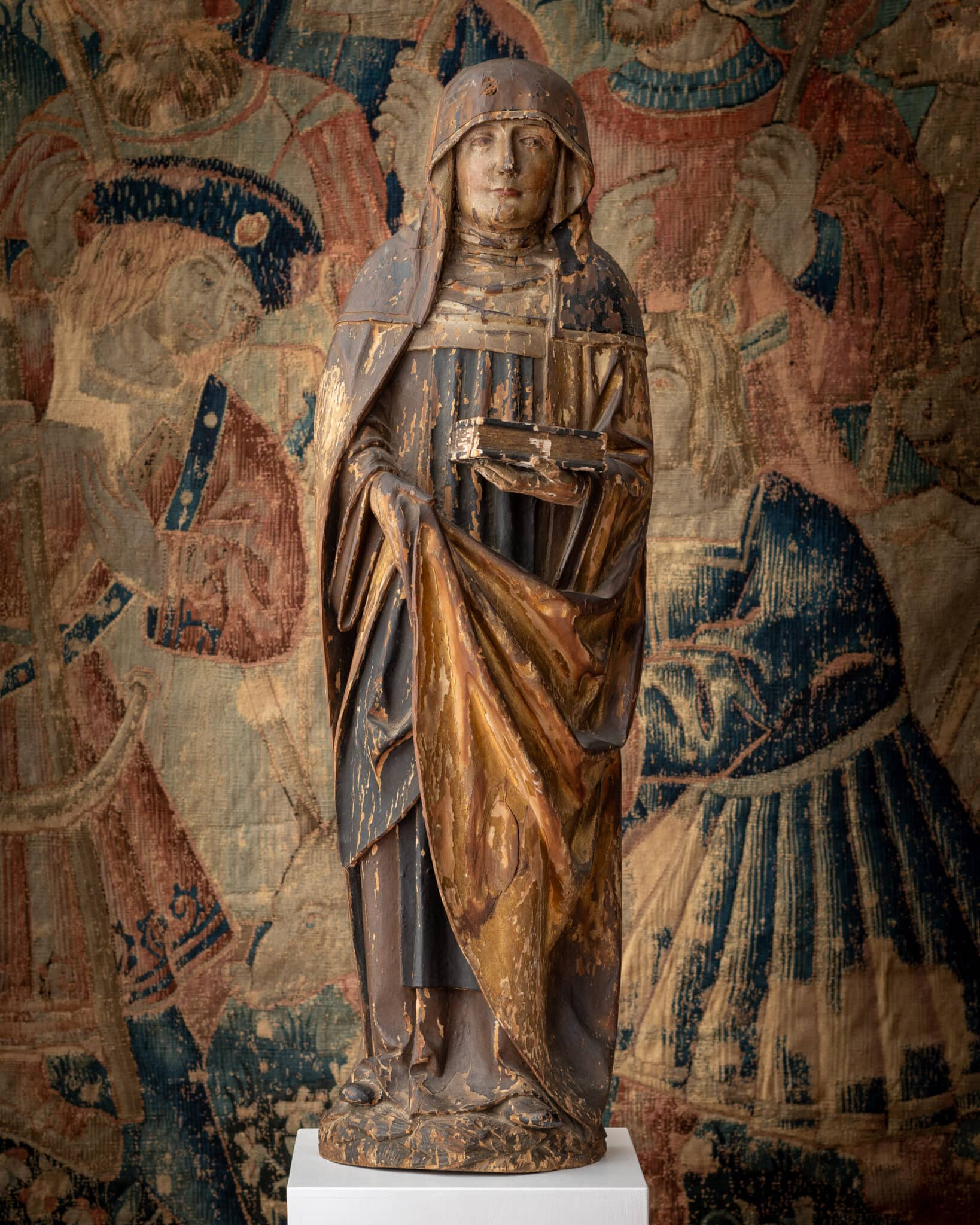
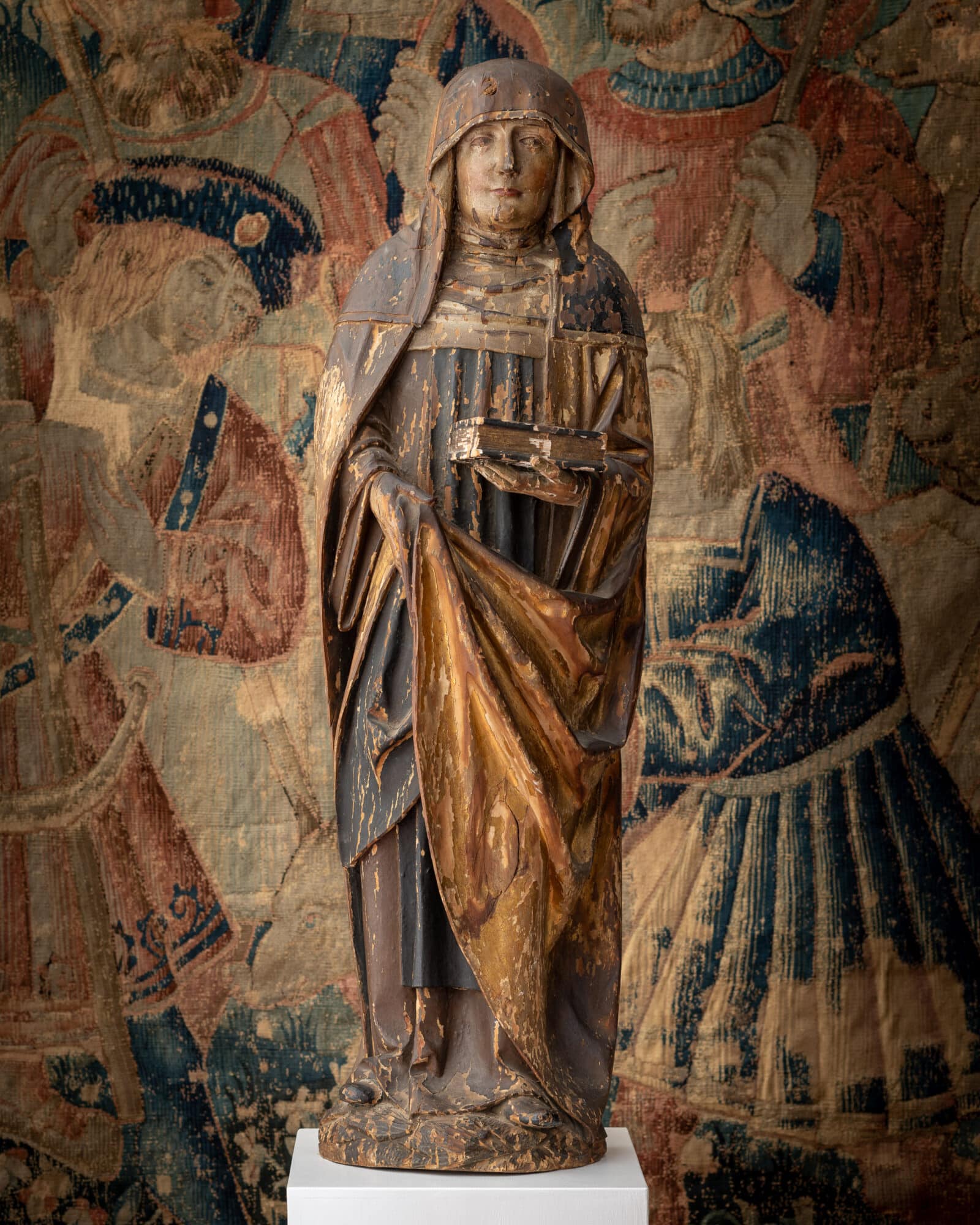
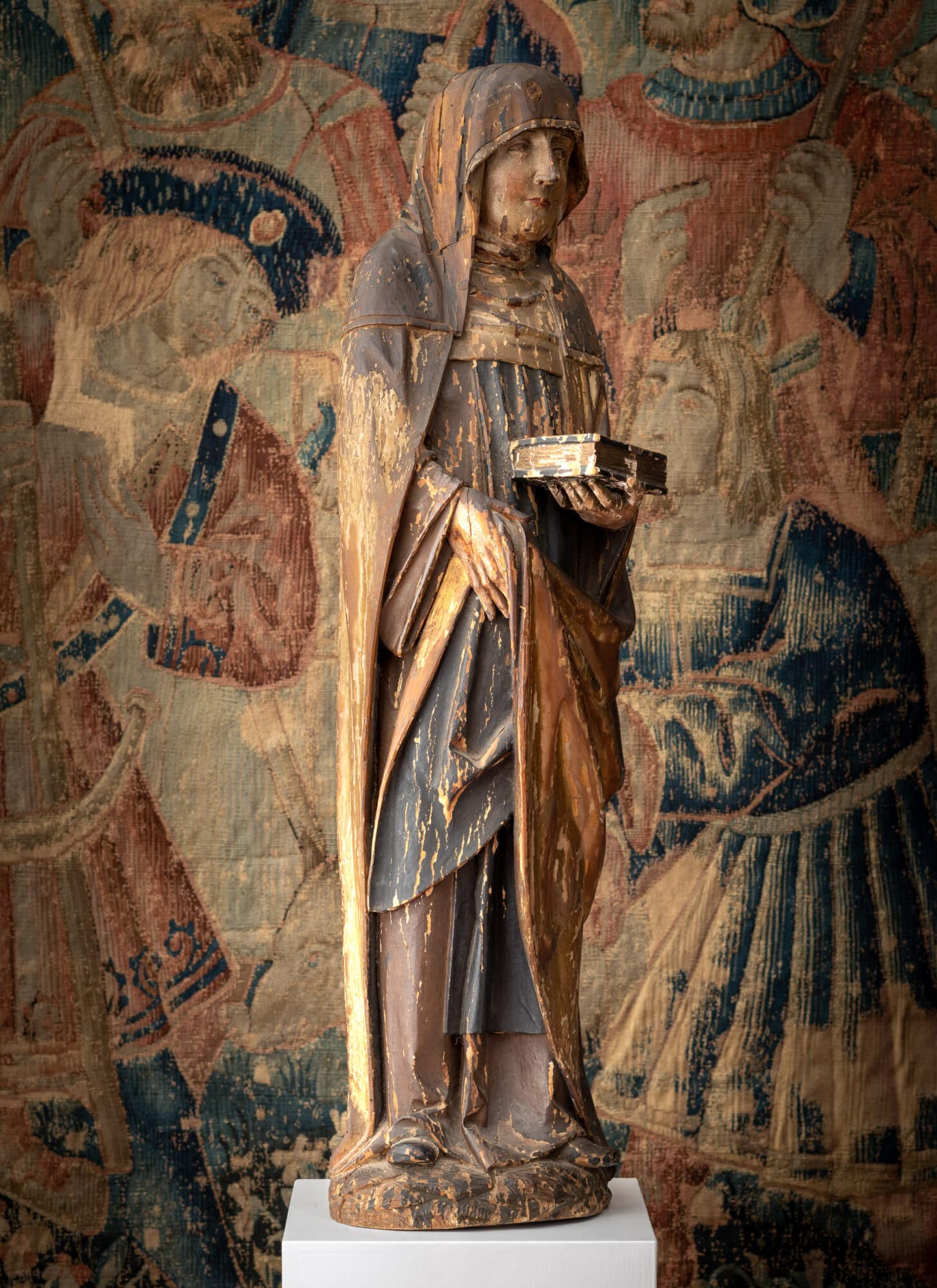

Late Gothic Limewood Figure of a Female Saint, probably St Anne
- Period
- 1490 - 1510
- Origin
- South German (Upper Rhine or Swabian)
- Dimensions
- W 10 3/4" × H 37 3/4" × D 6 3/4"
- Reference
- #Marh3765
£7,250
Description
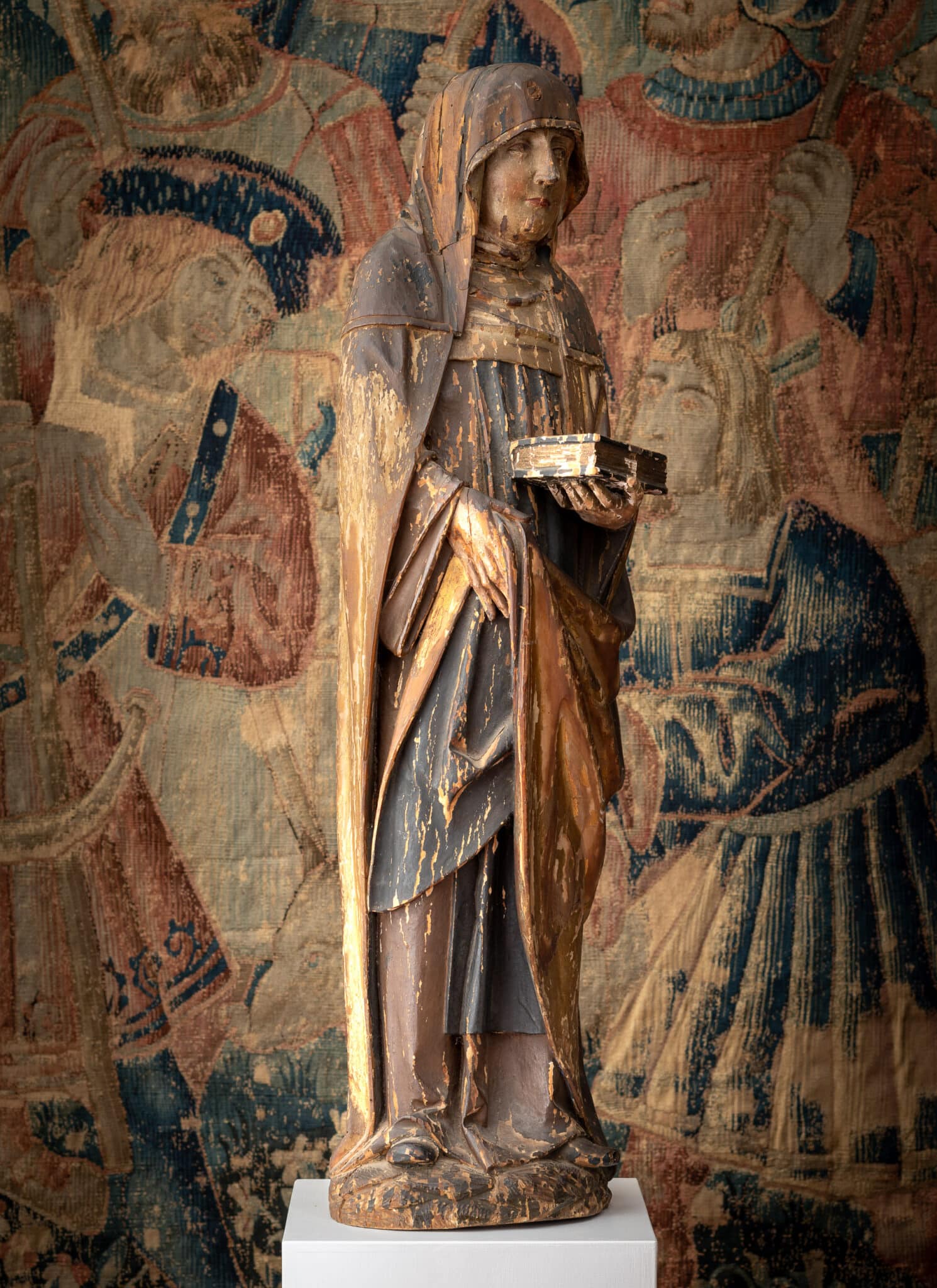
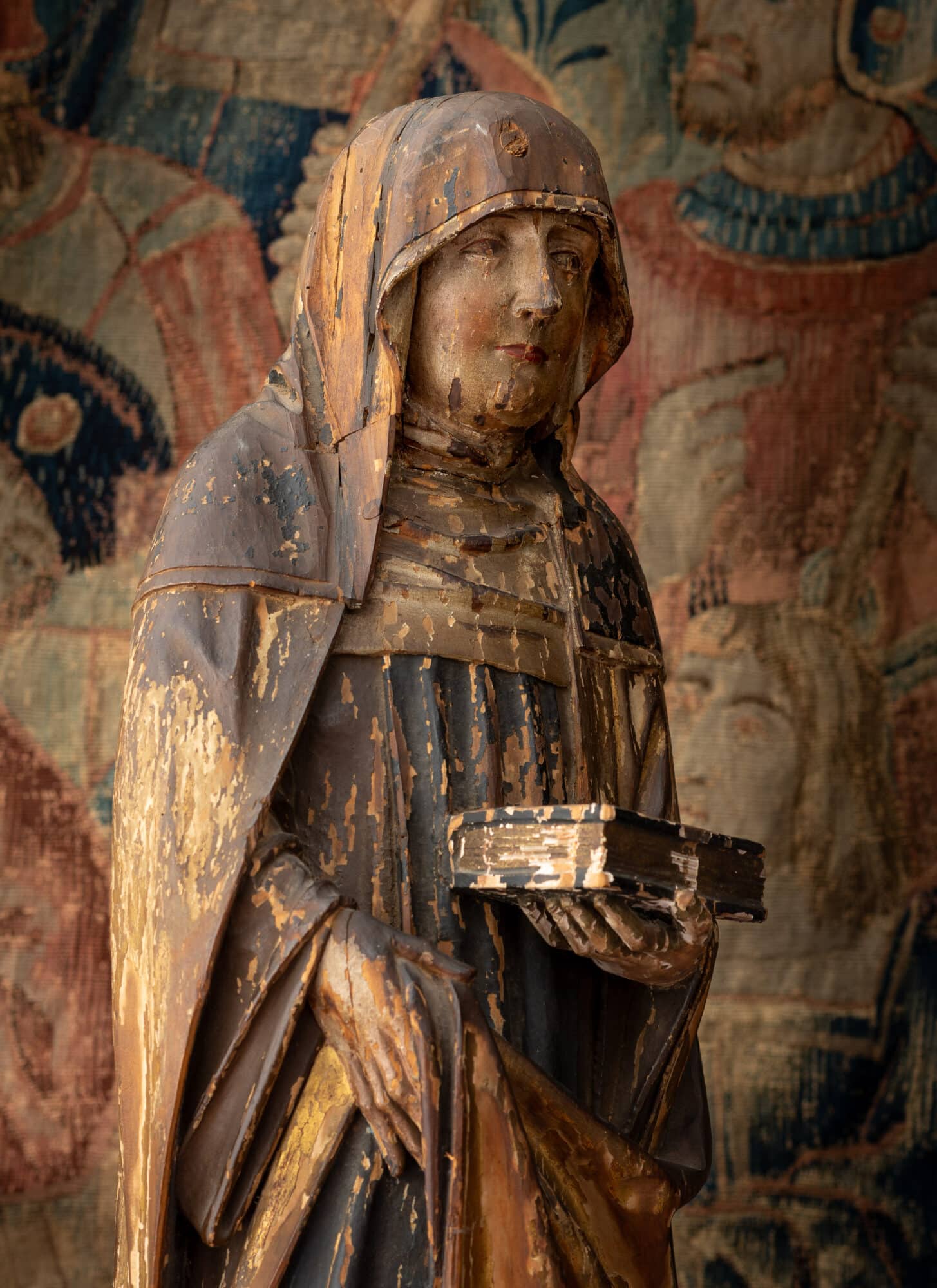
An exceptional late Gothic carved limewood figure representing a female saint, probably St Anne, portrayed standing beneath a deeply draped veil and holding a devotional book before her. Executed with remarkable sensitivity, the sculpture combines an air of quiet introspection with the refined naturalism that characterises the finest South German carving of the late fifteenth and early sixteenth centuries.
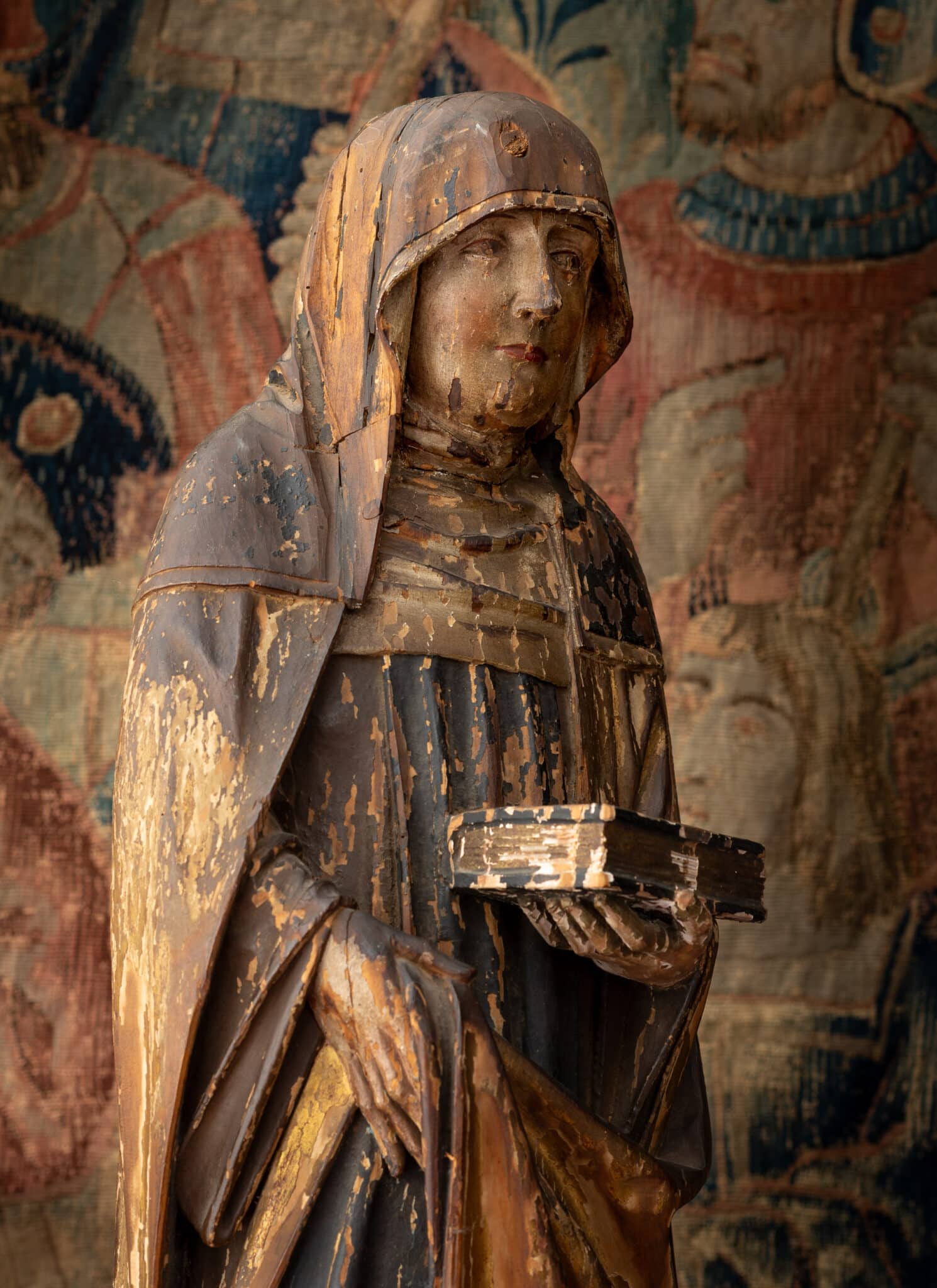
The saint is depicted with an elegantly proportioned face, her gently lowered gaze framed by softly modelled features and a composed expression of contemplative devotion. Her voluminous mantle falls in broad, sculptural folds, enveloping the figure before cascading into deeply carved drapery of remarkable fluidity and balance. Particularly noteworthy are the beautifully modelled hands, whose long, tapering fingers delicately support the book while gathering the rich folds of the cloak, demonstrating the technical accomplishment and artistic confidence of the sculptor.
The figure retains extensive areas of its original medieval polychromy and gilding. The surviving painted decoration, including flesh tones, richly coloured garments and luminous gilded surfaces, enhances the sculptural modelling and preserves the devotional character for which such works were originally intended. The reverse is hollowed in the traditional manner, reflecting its original function as part of a major ecclesiastical ensemble, most likely an altarpiece.
Standing 37¾ inches (96 cm) high, the sculpture is carved in limewood and survives in an exceptional state of preservation, preserving both the vitality of its carving and the remarkable authenticity of its medieval surface. The restrained elegance of the composition, the subtle facial modelling and the sophisticated treatment of the drapery place the work firmly within the flourishing artistic tradition of the Upper Rhine or Swabian workshops active around 1500.
A sculpture of outstanding quality and presence, representing the highest achievements of late Gothic devotional carving in southern Germany.