Elizabeth I Inlaid Nonsuch Box
- Period
- 1570 - 1600
- Origin
- Southwark or Norwich
- Dimensions
- W 25 3/4" × H 14 3/4" × D 14 1/2"
- Reference
- #Marh3766
£8,250
Description
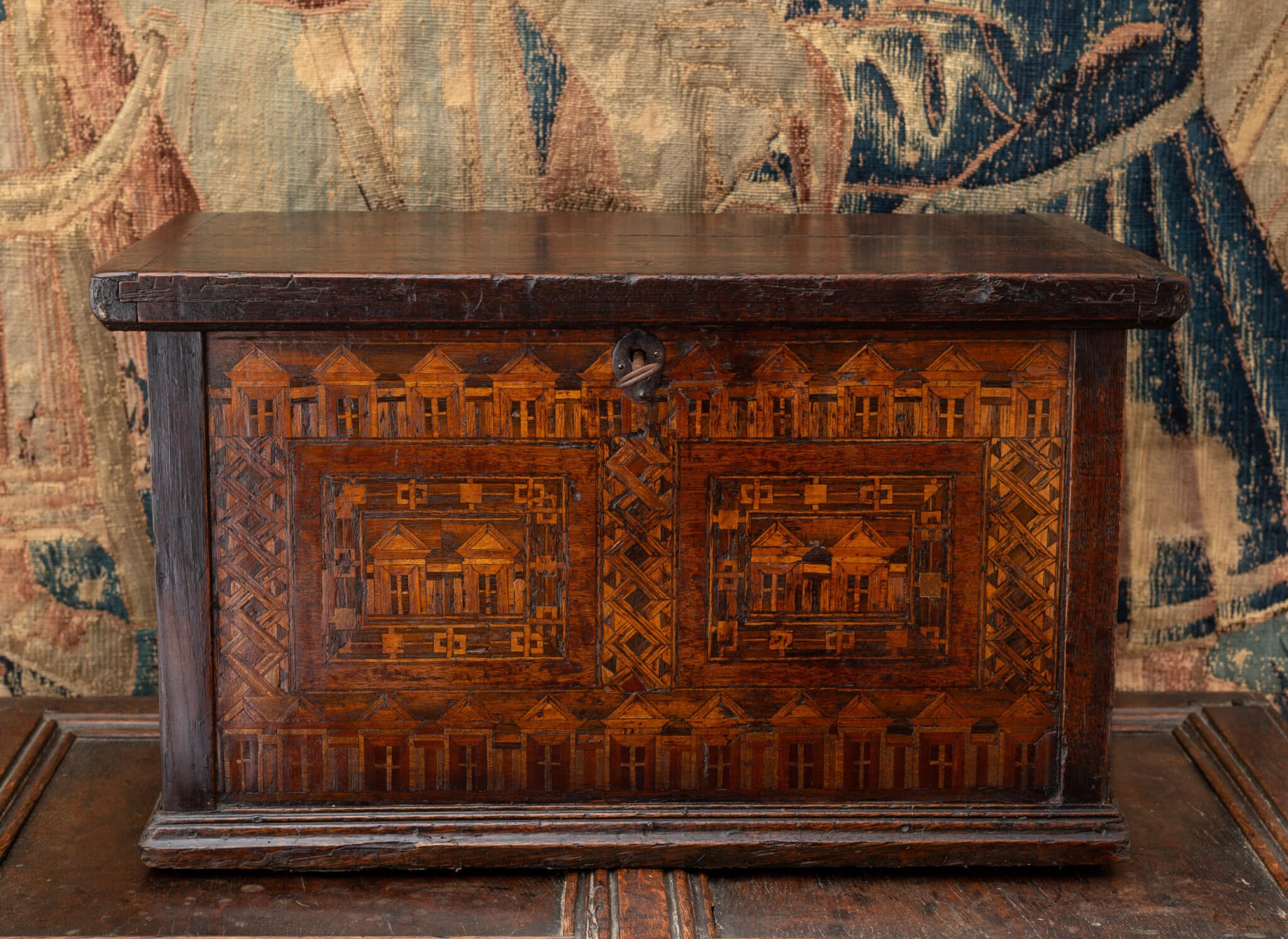
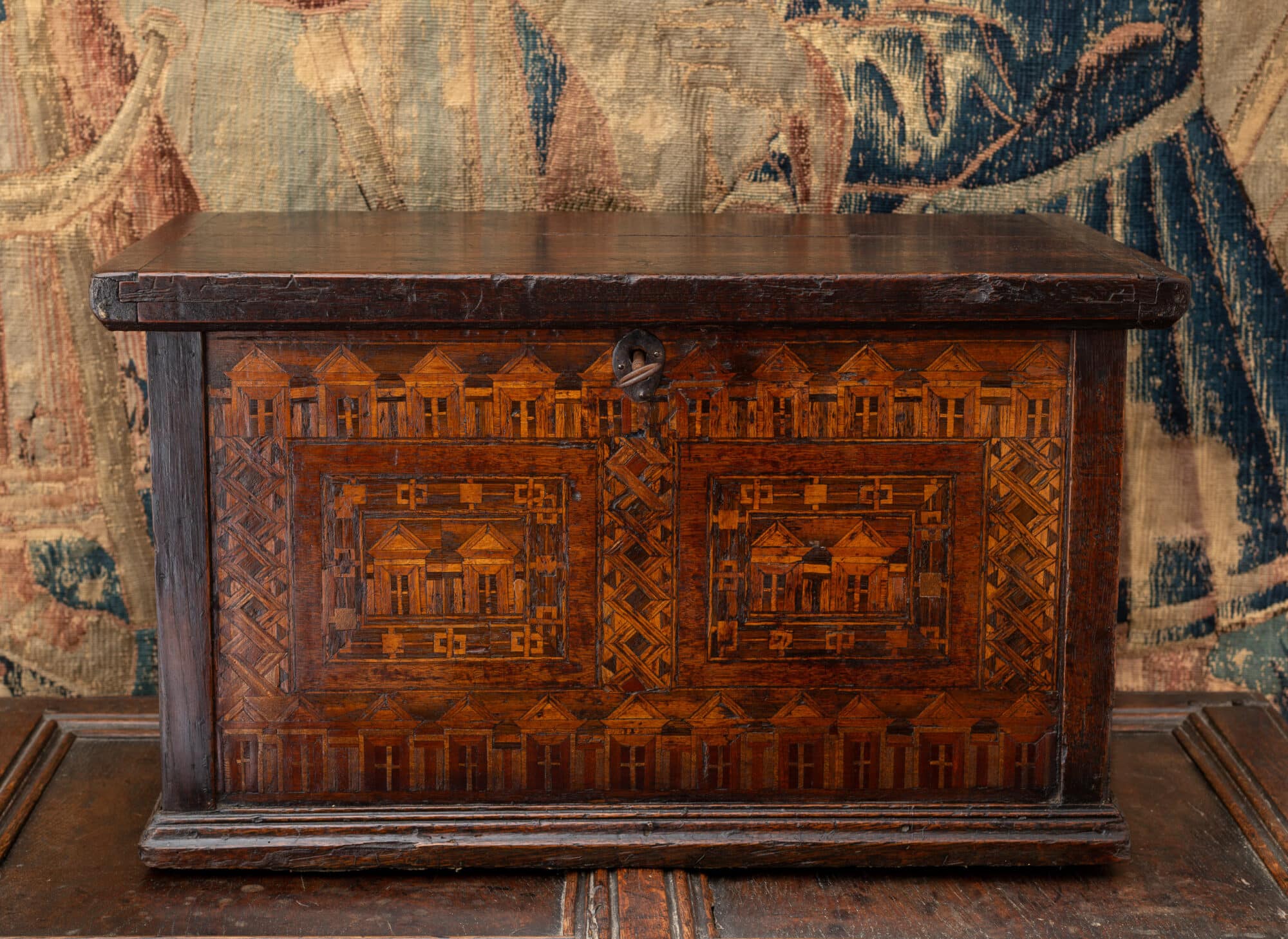
An exceptionally rare small-scale Elizabethan inlaid Nonsuch box, constructed in oak and decorated with finely executed architectural marquetry in contrasting timbers. The front is centred by two framed reserves depicting stylised Renaissance buildings with classical porticoes, enclosed within geometric parquetry borders. Above and below runs a continuous arcade of turreted pavilions, a distinctive decorative vocabulary associated with the so-called “Nonsuch” group of English furniture produced during the later sixteenth century.
Although traditionally believed to represent Henry VIII’s Nonsuch Palace, modern scholarship suggests that these architectural compositions derive more directly from the influential engraved pattern books of Hans Vredeman de Vries, whose published designs profoundly influenced Northern European ornamental woodworking during the second half of the sixteenth century.
Furniture of this type is closely associated with the workshops of Southwark and Norwich, where immigrant German and Flemish craftsmen introduced sophisticated marquetry techniques to English furniture production. The architectural imagery, employing carefully selected contrasting timbers, reflects this Continental influence while remaining distinctly English in its simplified composition and restrained ornament.
Unlike the larger coffers that survive in modest numbers, small boxes of this form are exceptionally uncommon, making this example a particularly desirable survival of late Elizabethan decorative arts. The original iron lock and compact proportions suggest it was intended for the secure storage of valuable personal possessions, documents, jewellery or money within a wealthy household.