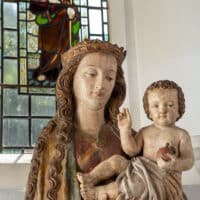
Late Gothic Limewood Sculpture of the Virgin and Child on the Crescent Moon
- Period
- 1490 - 1510
- Origin
- South Germany
- Dimensions
- W 21 3/4" × H 54" × D 10 1/2"
- Reference
- #Marh3767
Price on application
Description
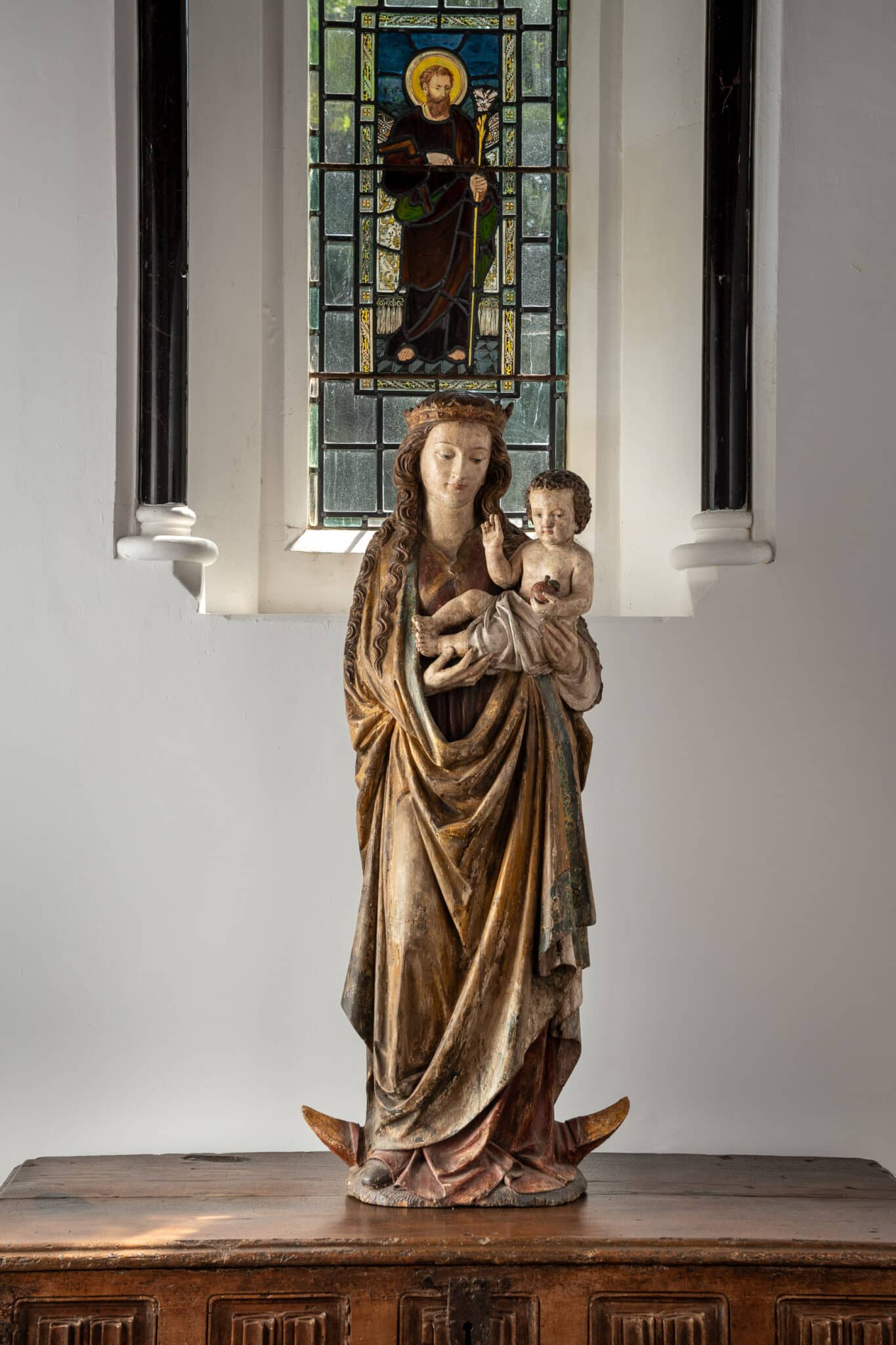
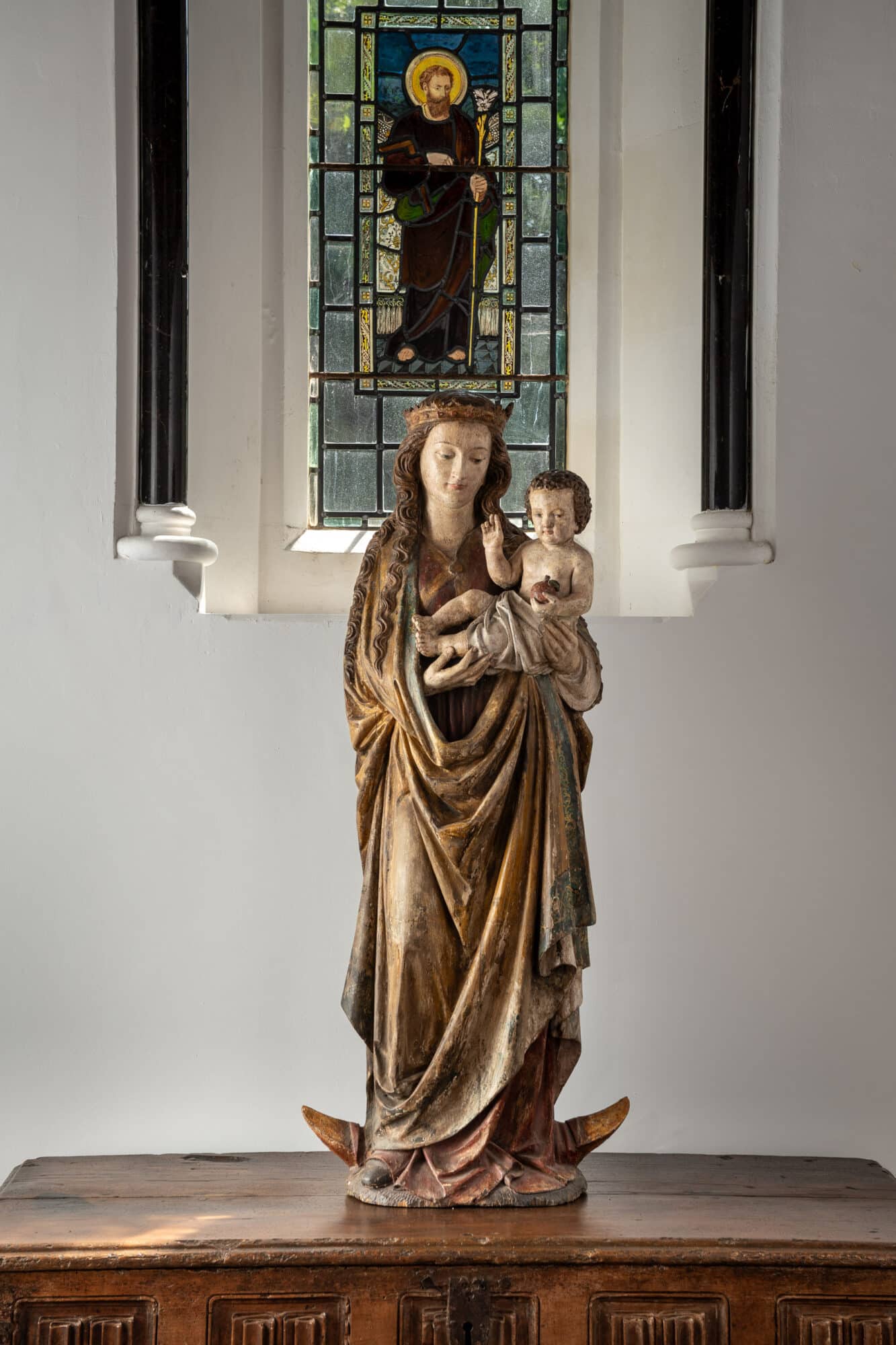
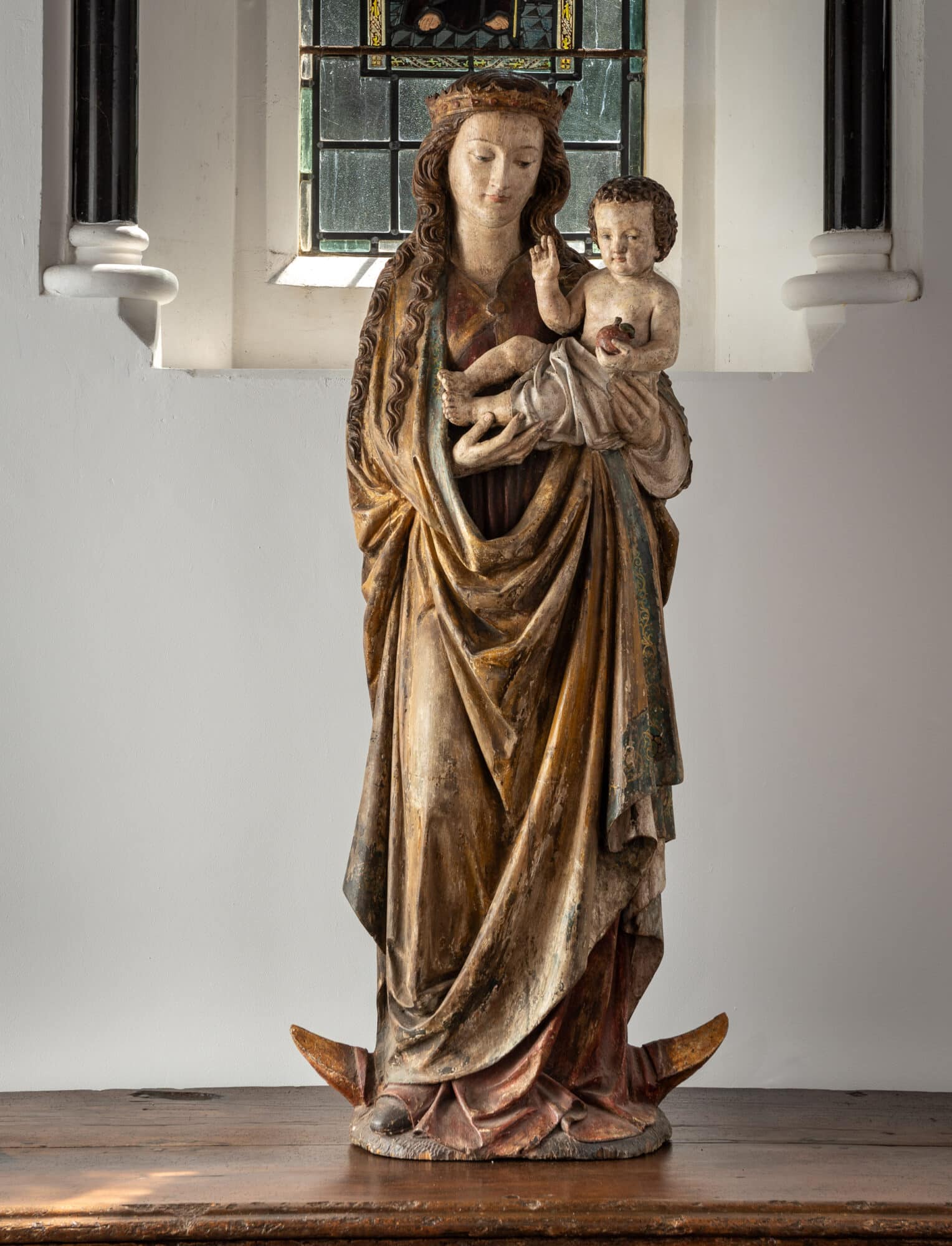
A finely carved monumental late Gothic limewood sculpture depicting the Virgin and Child standing upon the crescent moon, a celebrated Marian image derived from the Woman of the Apocalypse described in the Book of Revelation (12:1). Executed in South Germany around the turn of the sixteenth century, the sculpture exemplifies the refined devotional sculpture produced in the flourishing artistic centres of Swabia and Franconia during the late Gothic period.
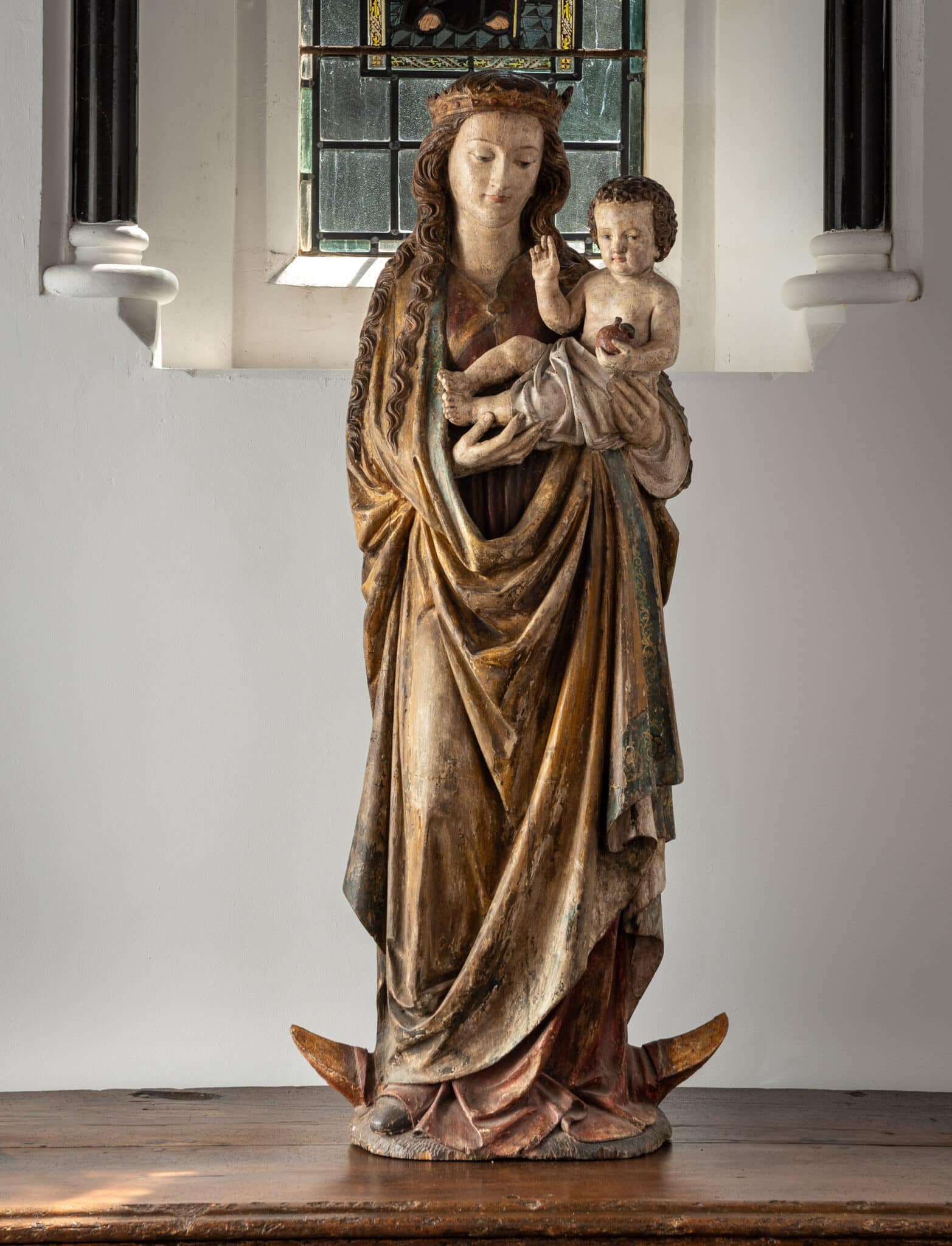
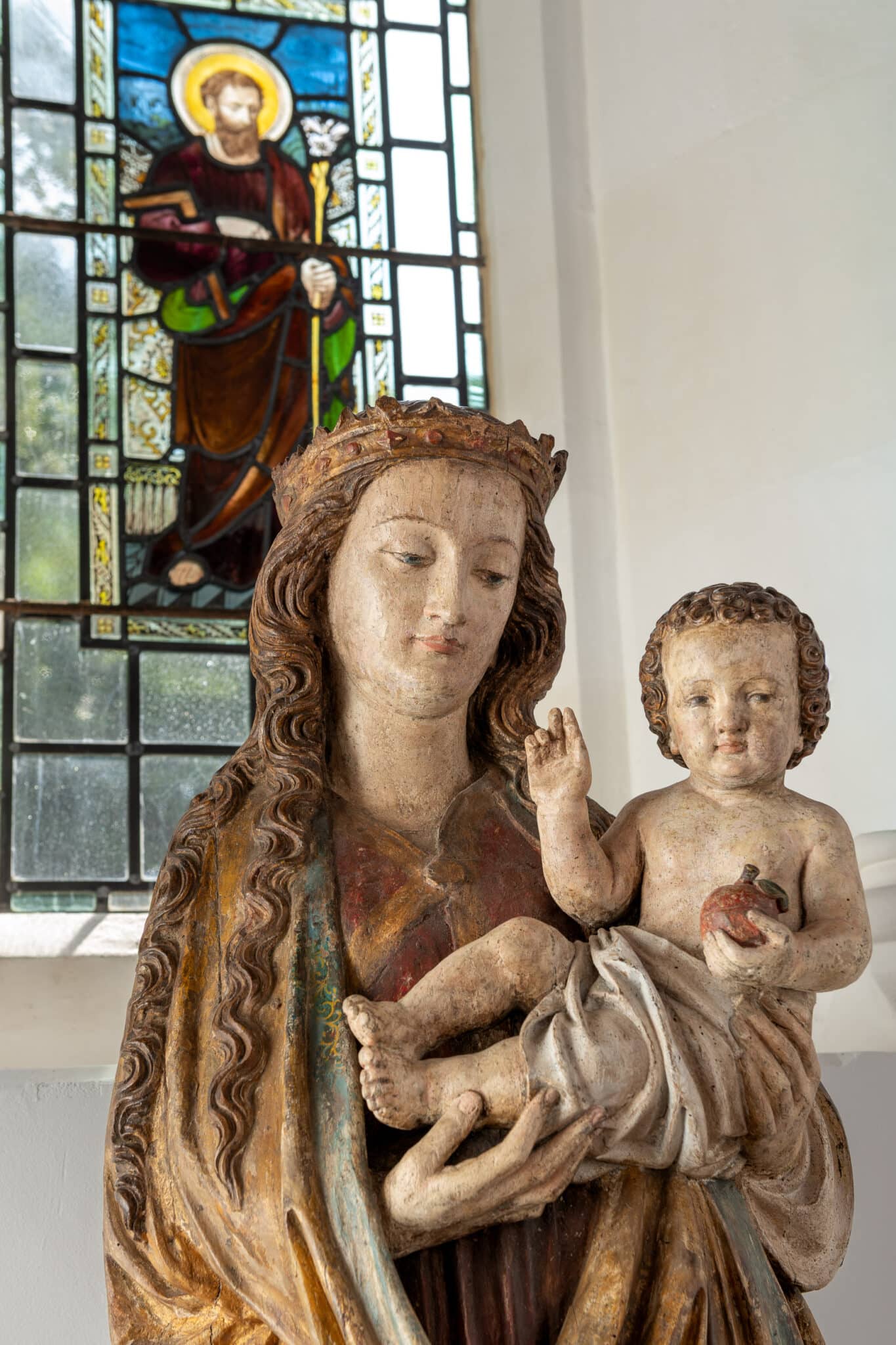
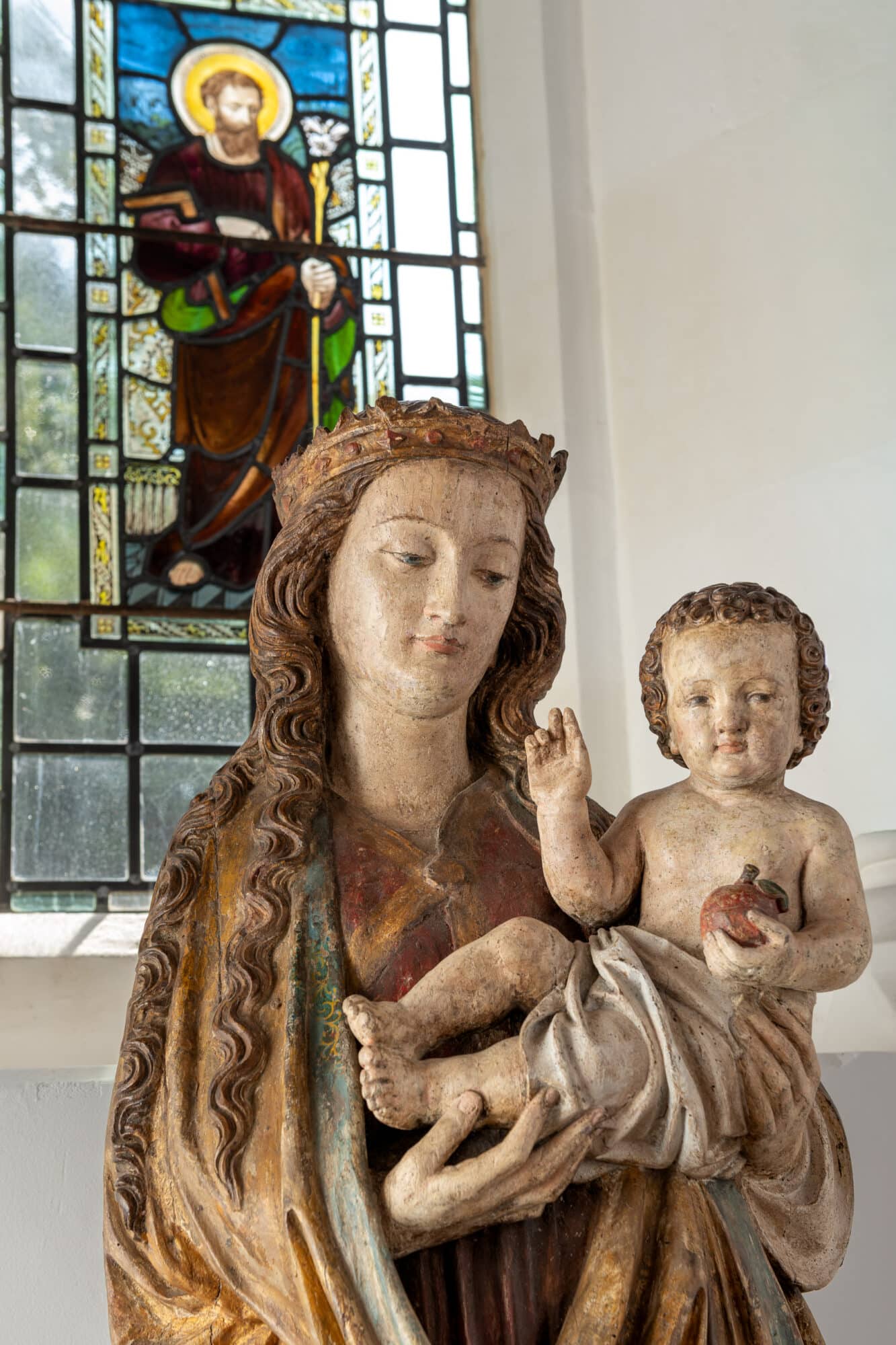
The Virgin is shown crowned as Queen of Heaven, her youthful face conveying the gentle serenity characteristic of South German Marian imagery. Her long, deeply carved flowing hair descends naturally over her shoulders, while voluminous robes fall in sweeping, sculptural folds enriched with surviving original gilding and painted decoration. She supports the Christ Child across her arms, the Infant raising His right hand in blessing whilst holding an apple in His left, symbolising Christ as the New Adam and the Redemption of mankind.
The composition is distinguished by its graceful proportions and exceptional quality of carving. The elegant treatment of the drapery, refined modelling of the faces and hands, and the animated curls of the Christ Child demonstrate the work of an accomplished late Gothic sculptor working within one of the leading South German workshops of the period.
Remarkably, extensive areas of the original medieval polychromy survive. Original flesh tones remain on both figures, together with substantial gilding to the Virgin’s mantle, rich red pigments to her robes, and blue-green borders ornamented with delicate gilt foliate decoration. The centuries of devotional use have produced an honest and attractive surface, with natural wear confined principally to exposed areas while protected recesses preserve much of the original painted finish.
The sculpture retains its original hollowed construction, a standard technique employed by South German sculptors to reduce weight and minimise movement within the timber. The reverse was opened during a later historical intervention, almost certainly to remove insect-damaged material or to permit treatment of historic woodworm infestation. This alteration does not detract from the remarkable survival of the sculpture’s medieval surface or its structural integrity.
Standing an impressive 54 inches (137 cm) in height, the figure was almost certainly conceived for an ecclesiastical setting, probably as part of a side altar or architectural niche within a church. Its scale, quality of execution, and unusually well-preserved original polychromy place it amongst the finest surviving examples of South German late Gothic devotional sculpture.
A rare and highly decorative monumental sculpture of museum quality, preserving both its original artistic character and the rich devotional presence for which such works were created over five centuries ago.