Monumental Gothic Reliquary Shrine (Grande Châsse Reliquaire)
- Period
- 1425 - 1450
- Origin
- Northern France
- Dimensions
- W 36 1/4" × H 32 1/2" × D 20 1/4"
- Reference
- #Marh3768
Price on application
Description
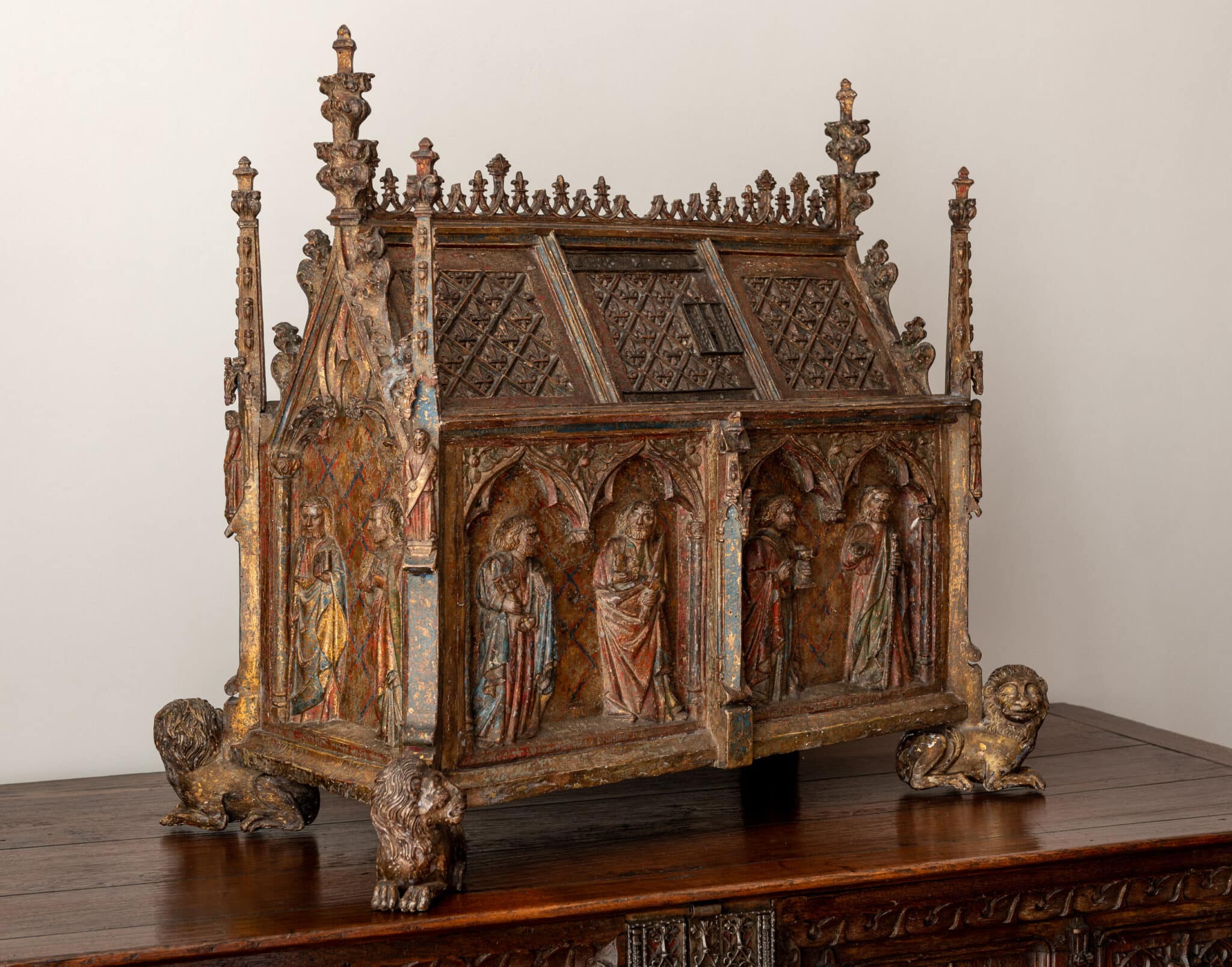
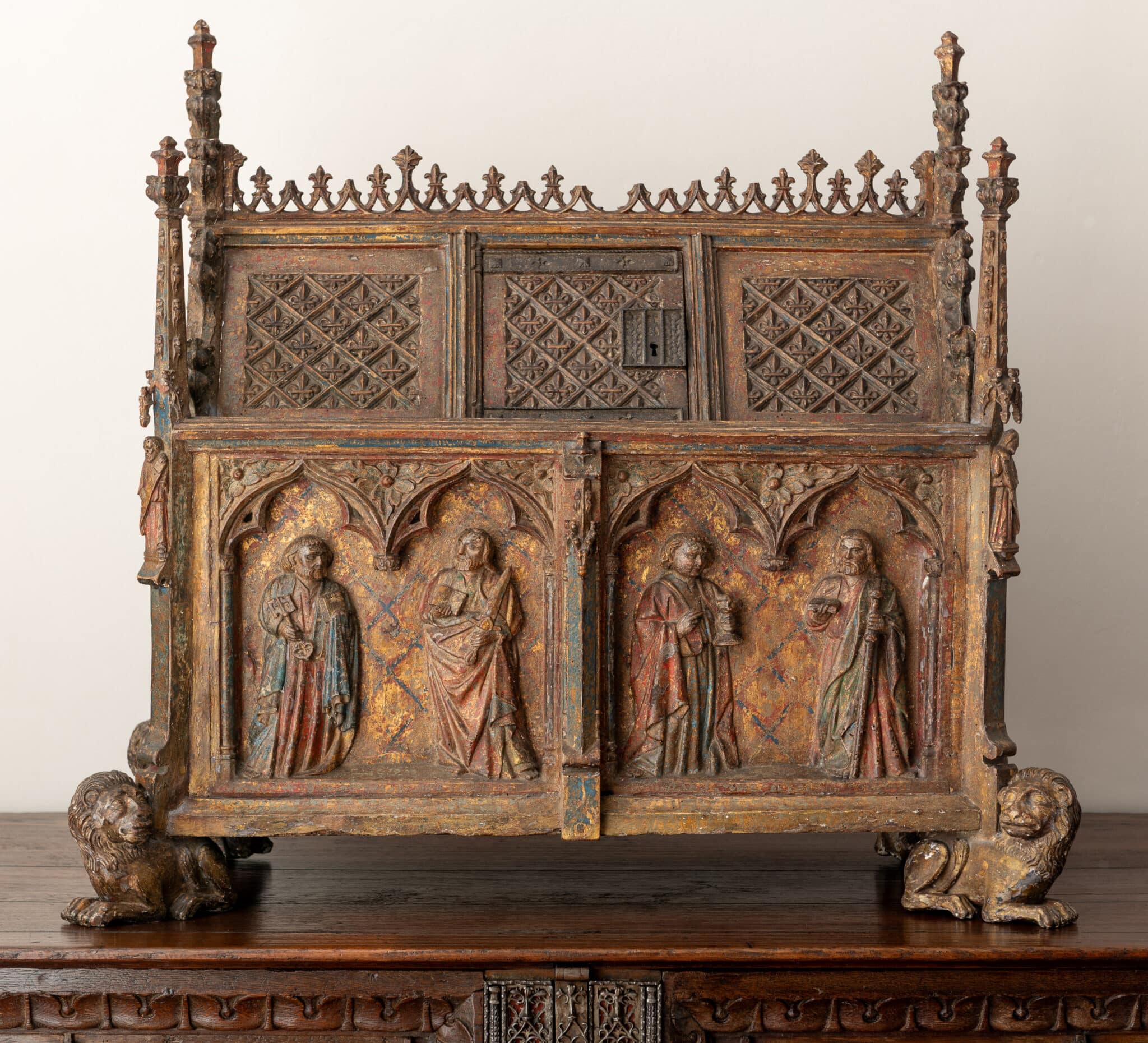
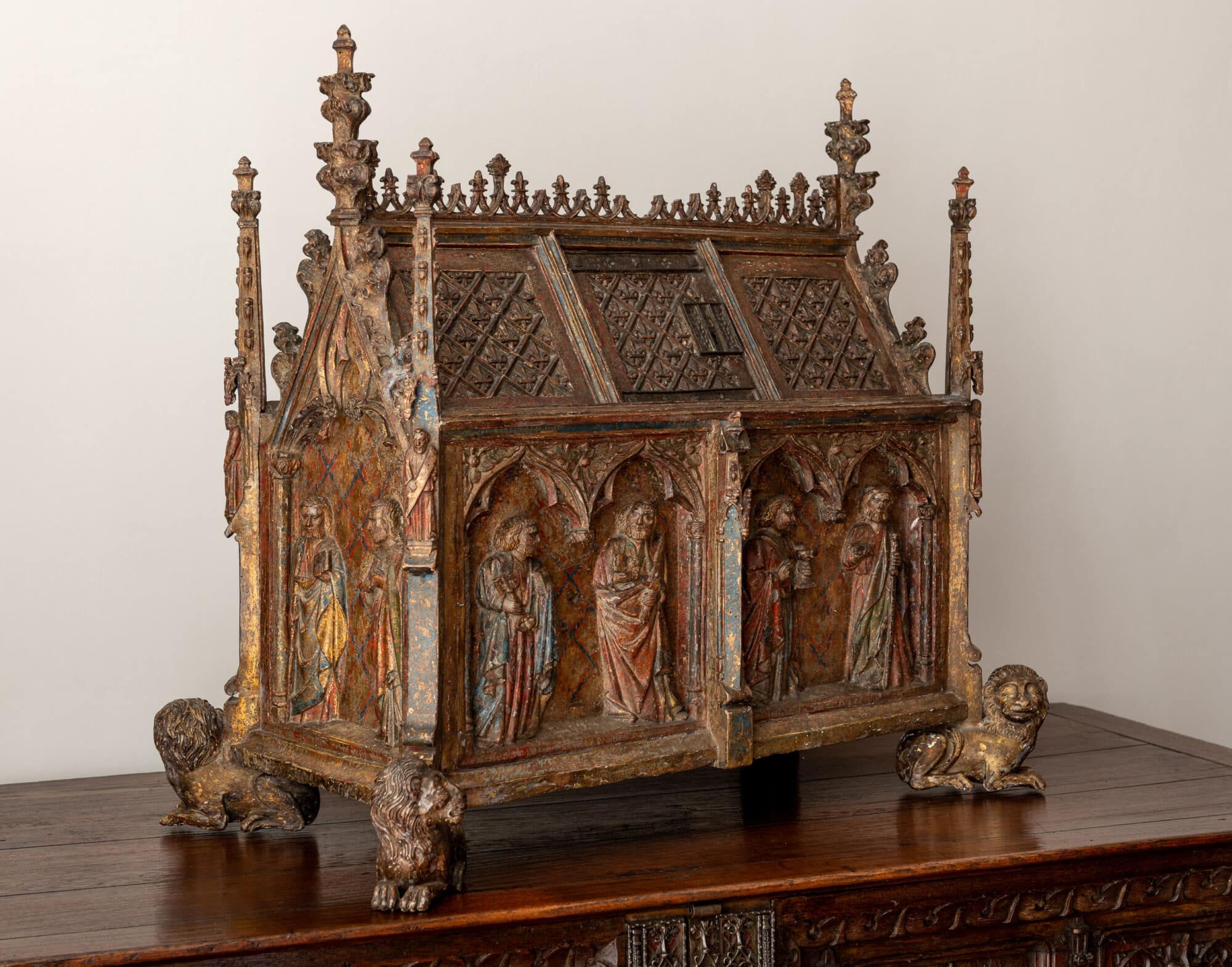
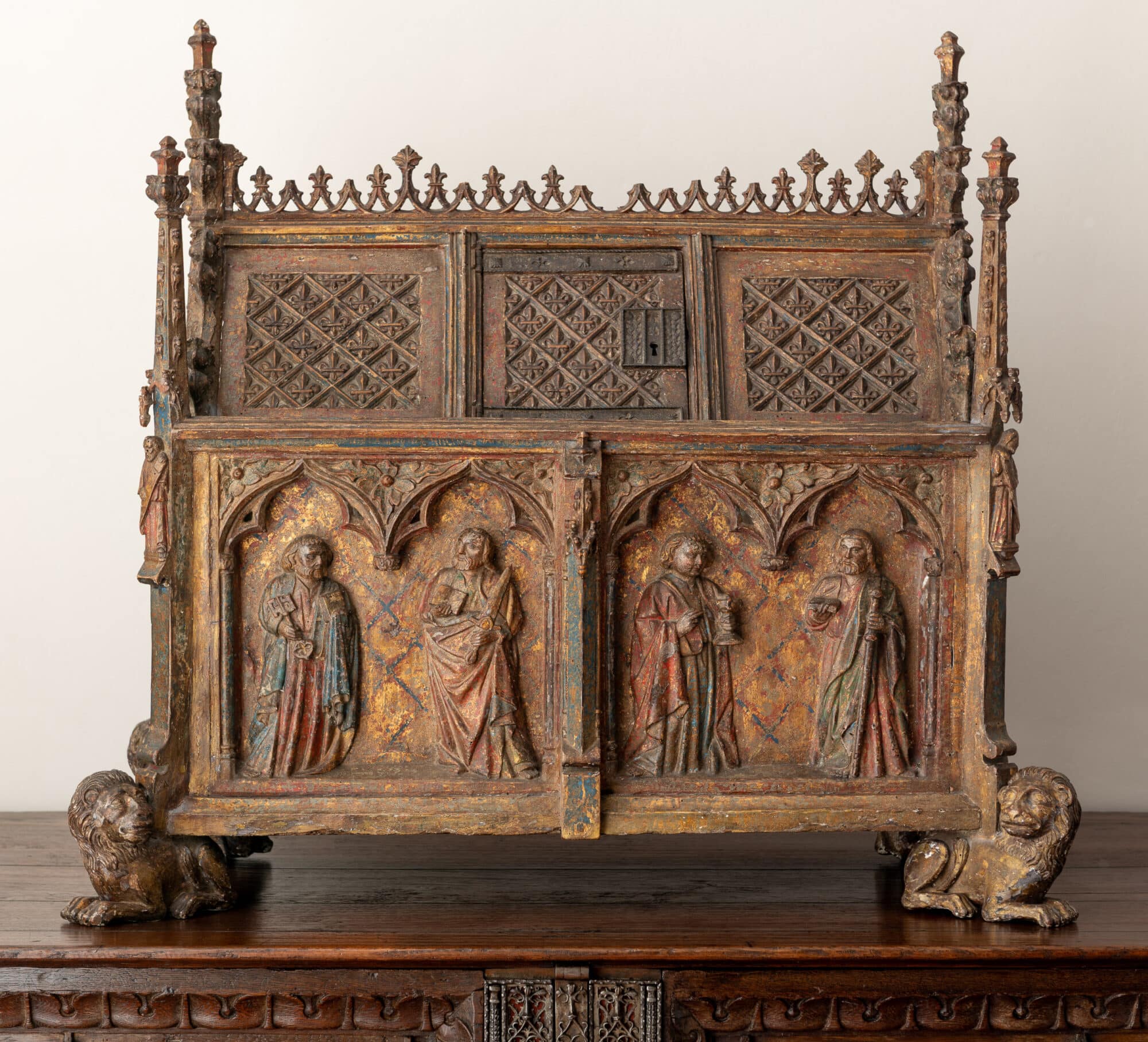
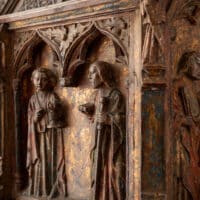
An exceptionally rare and monumental Gothic architectural reliquary shrine (grande châsse reliquaire), carved in walnut and retaining extensive areas of its original medieval polychromy and gilding. Executed in the form of a miniature Gothic church, the shrine stands upon four finely carved recumbent lions and is surmounted by an elaborate openwork cresting of fleurons, crocketed finials and architectural pinnacles, faithfully reflecting the vocabulary of fifteenth-century French ecclesiastical architecture.
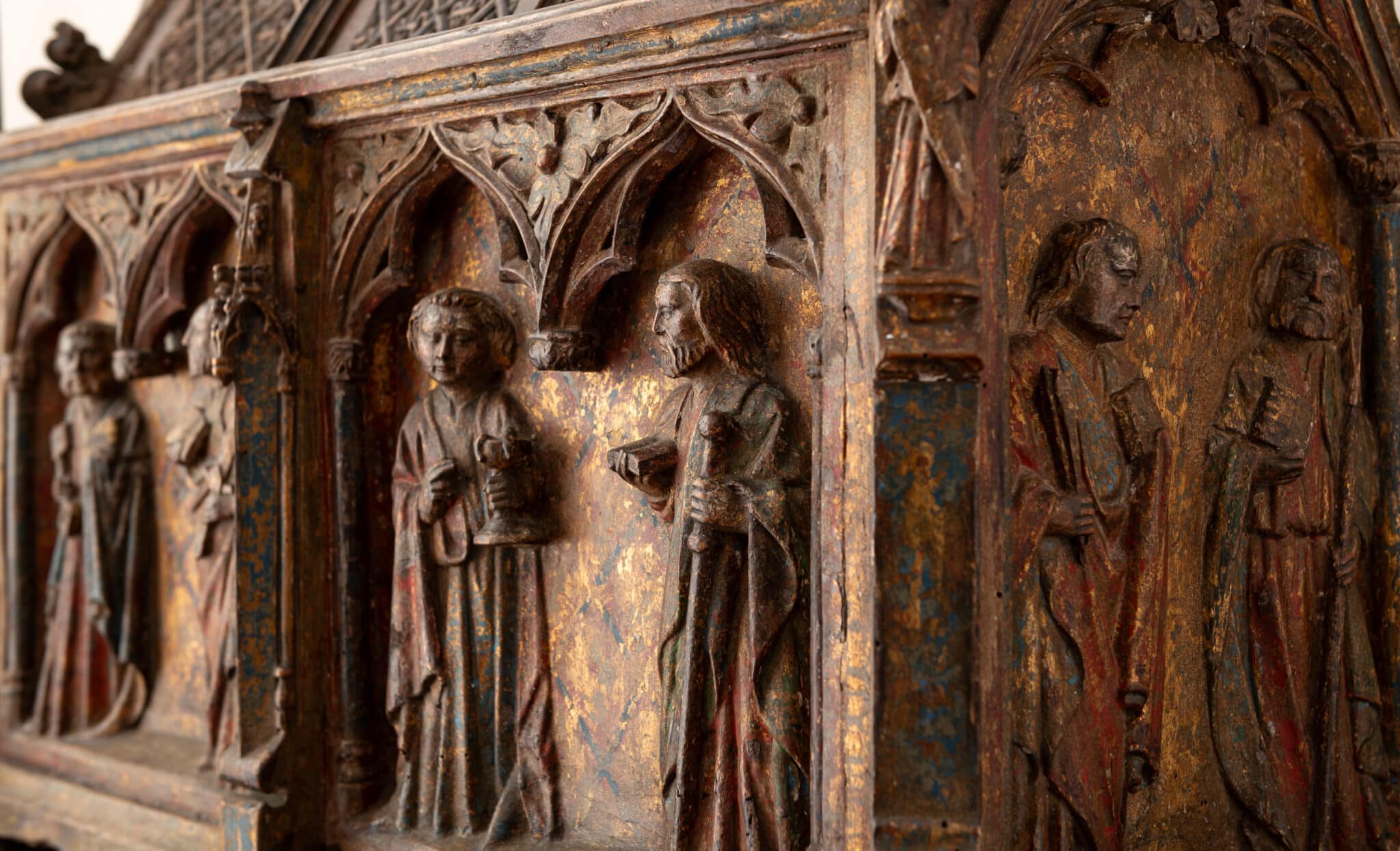
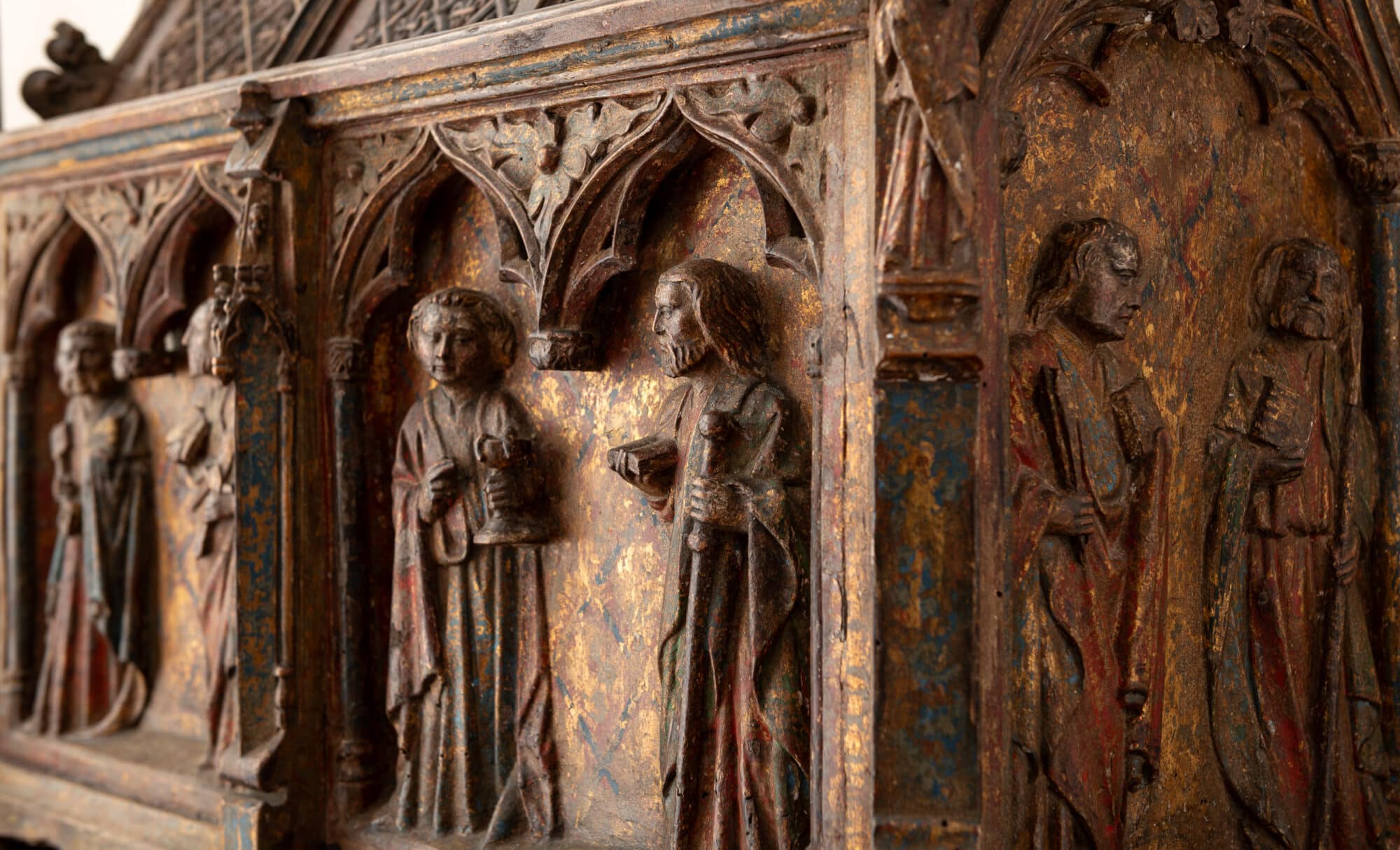
The reliquary is conceived as a fully sculptural devotional object, its iconographic programme centred upon the Twelve Apostles. Each of the two principal elevations is carved with four standing Apostles beneath finely executed trilobed Gothic arcades, while two further Apostles occupy each of the gabled ends, completing the apostolic college. Every figure is individually carved in high relief and distinguished by traditional iconographic attributes, standing before richly decorated diapered grounds retaining substantial original gilding and polychrome decoration.
The four projecting corner buttresses are each enriched with standing figures of the Four Evangelists, housed beneath elegant Gothic canopies and serving as symbolic guardians of the sacred relics formerly preserved within. Their placement at the corners reinforces the theological programme of the shrine, uniting the authors of the Gospels with Christ’s Apostles in a complete representation of the foundations of the early Church.
The steeply pitched roof is divided into six panels enriched with repeating fleur-de-lys enclosed within diamond compartments, while the ridge is crowned by an exceptionally fine pierced cresting. One roof panel incorporates the original concealed hinged hatch, secured by its original forged iron lock, providing controlled access to the relic chamber within. Such concealed openings are characteristic of important medieval reliquaries, allowing relics to be revealed only during prescribed liturgical ceremonies and major feast days.
Architecturally, the shrine is a superb expression of mature French Gothic craftsmanship. Every element—including the buttresses, pinnacles, crocketed cresting, traceried arcading and steep gabled roof—recreates the architecture of a contemporary church in miniature. This architectural conception transformed the reliquary into a symbolic Heavenly Jerusalem, providing an appropriately sacred setting for the relics it was commissioned to house.
Remarkably, the reliquary survives in an exceptional state of preservation, retaining its original lion supports, architectural superstructure, Gothic cresting, sculptural programme, medieval painted decoration and original iron lock. Large wooden reliquaries of this scale and completeness are among the rarest survivals of medieval ecclesiastical art, many having been destroyed during the iconoclasm of the sixteenth century and the widespread dispersal of church treasures during the French Revolution.
Comparable in conception to the great architectural reliquaries of northern Europe, including the celebrated Shrine of St Ursula by Hans Memling in Bruges, this monument belongs to the earlier French sculptural tradition from which such later painted shrines developed. Its remarkable completeness, sophisticated architectural design and extensive surviving medieval surface place it amongst the finest surviving examples of fifteenth-century French ecclesiastical wood sculpture remaining in private hands.