Late Gothic Polychrome Figure of a Saint
- Period
- 1480 - 1520
- Origin
- South Germany
- Dimensions
- W 5 1/4" × H 13 1/4" × D 3"
- Reference
- #Marh3757
£3,250
Description
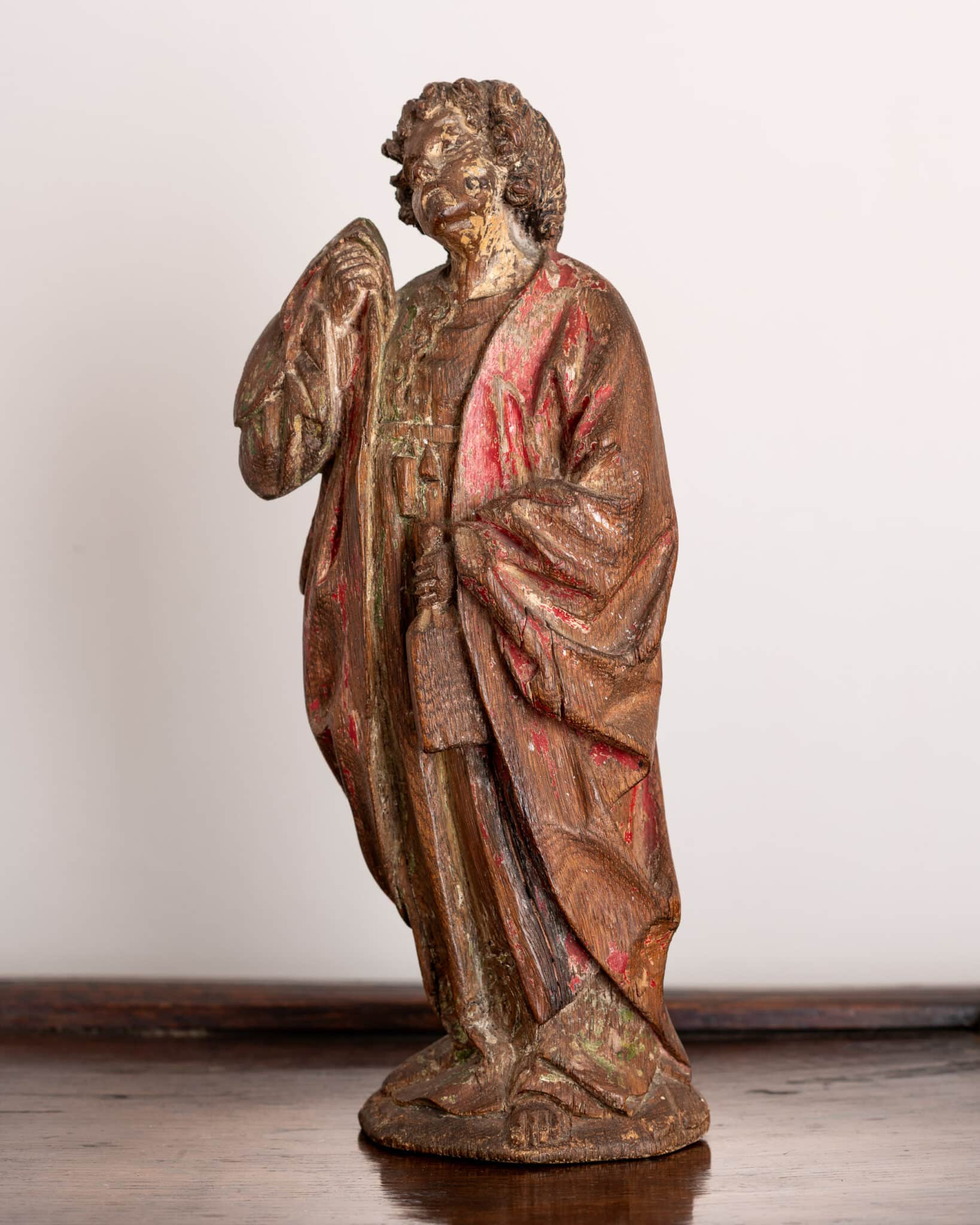
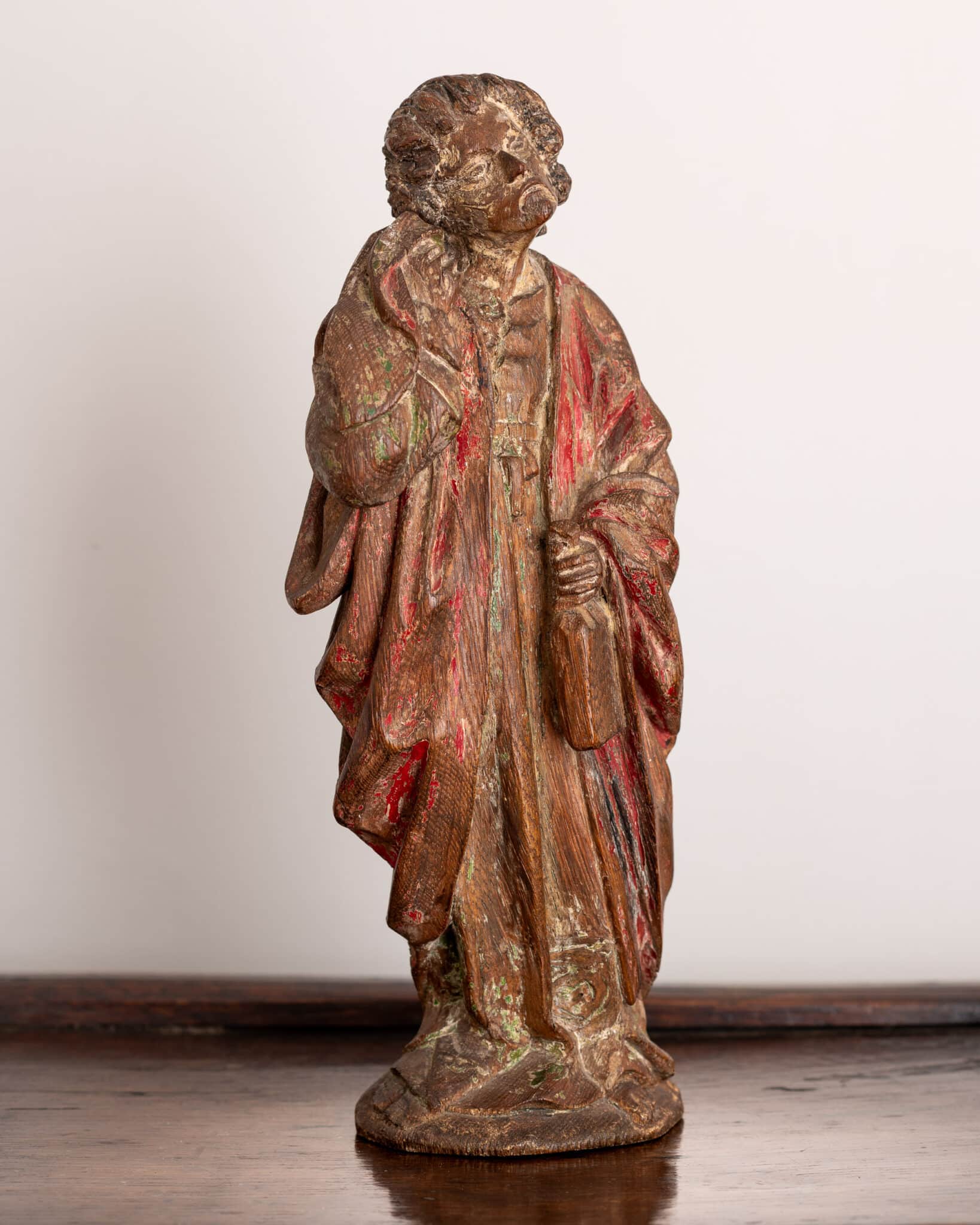
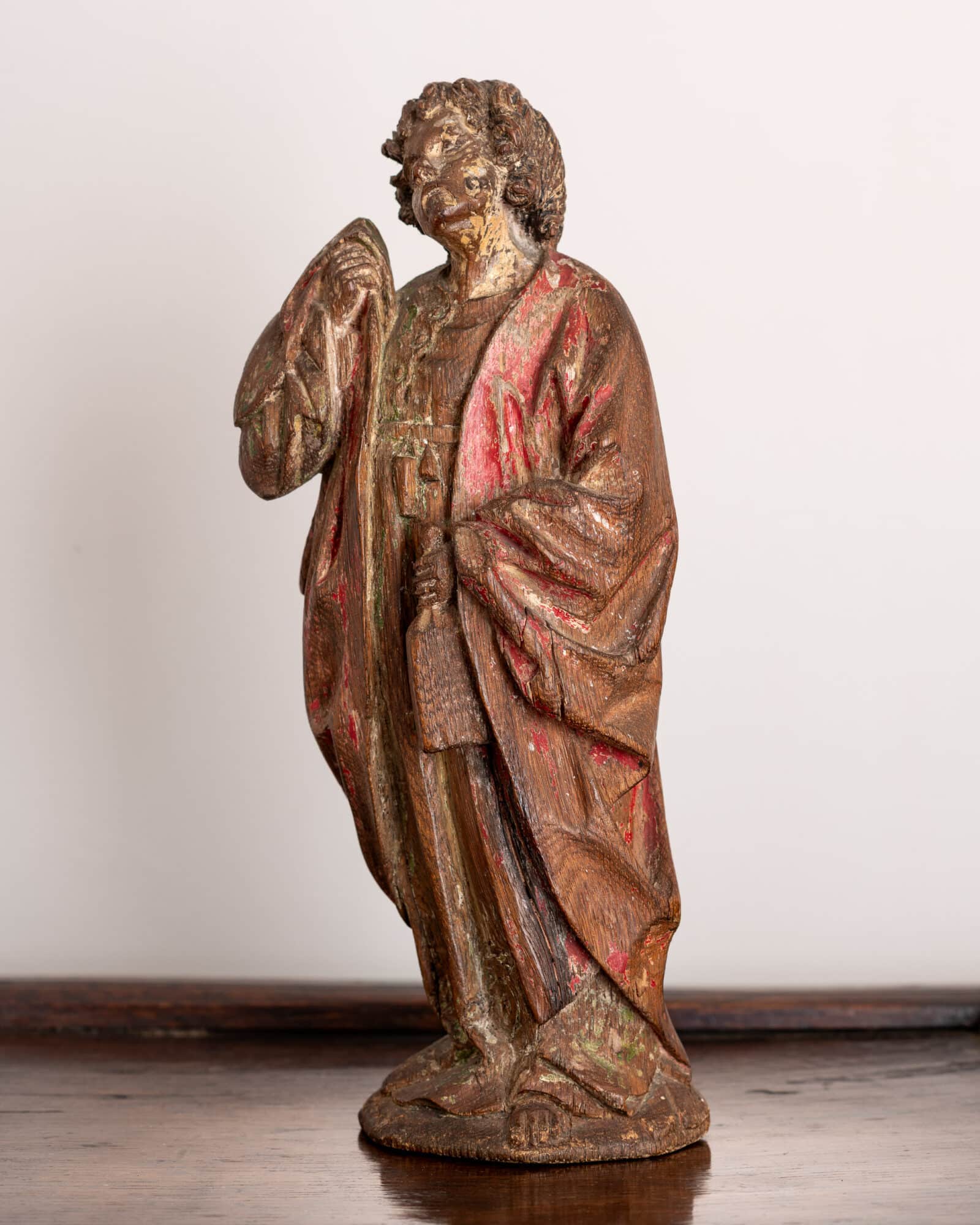
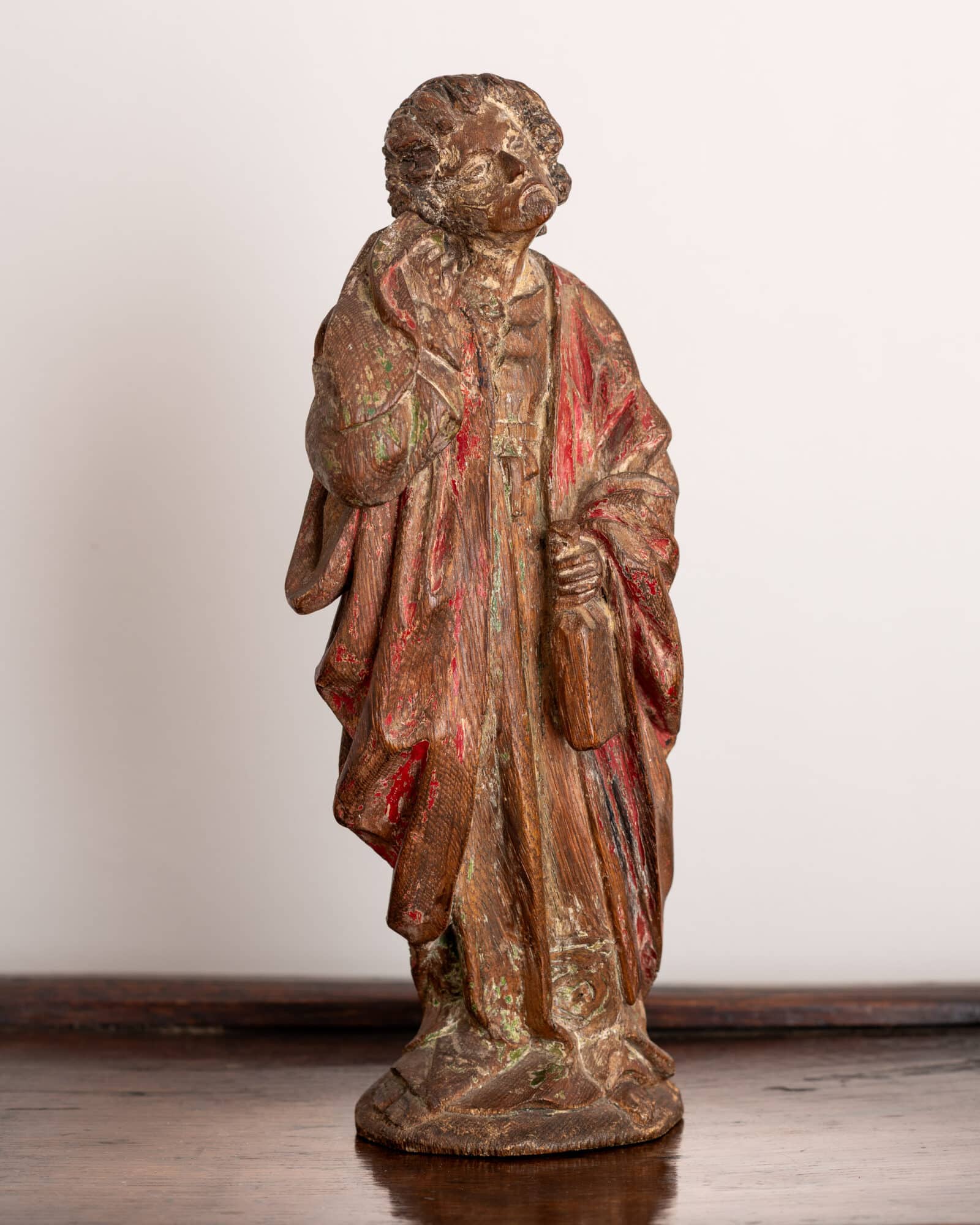
Carved oak with traces of original polychromy and gilding.
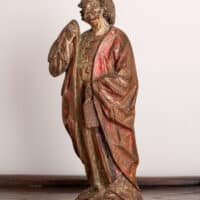
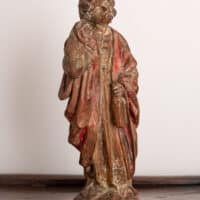
Standing on an integral base, the figure is depicted wearing a voluminous cloak arranged in angular, deeply cut folds characteristic of late Gothic sculpture in the German-speaking regions. The saint raises one hand to gather the edge of his mantle while the other holds a pouch or satchel; a further object is suspended from the girdle. Traces of the original decorative scheme survive throughout, including areas of red and green polychromy and remnants of gilding.
The flattened yet fully worked reverse indicates that the sculpture was intended for placement within an architectural setting, most likely as part of a retable or devotional ensemble. The robust proportions, compact composition, and treatment of the drapery suggest a date around 1500 and an origin in a provincial workshop of southern Germany, possibly Franconia or Bavaria.
The identity of the saint remains uncertain owing to the simplification of key attributes. The presence of a satchel-like object and a suspended pouch may suggest a pilgrim saint, perhaps St James the Greater, although a secure identification cannot be made.
This sculpture is a characteristic example of late medieval German devotional carving, retaining significant traces of its original painted surface and displaying the expressive naturalism and angular drapery conventions associated with the closing decades of the Gothic period.