Paul Fitzsimmons logo
  • Current Stock
  • Archive
  • Notable Works
  • About Us
  • News
  • Contact
Home / Current Stock / Monumental Gothic Oa…
Previous
  • Monumental Gothic Oak Chest
  • Monumental Gothic Oak Chest
  • Monumental Gothic Oak Chest
  • Monumental Gothic Oak Chest
  • Monumental Gothic Oak Chest
  • Monumental Gothic Oak Chest
  • Monumental Gothic Oak Chest

Monumental Gothic Oak Chest

Period
1475 - 1500
Origin
Normandy, France
Dimensions
W 71 3/4" × H 38 1/4" × D 30"
Reference
#Marh3758

Price on application

Description

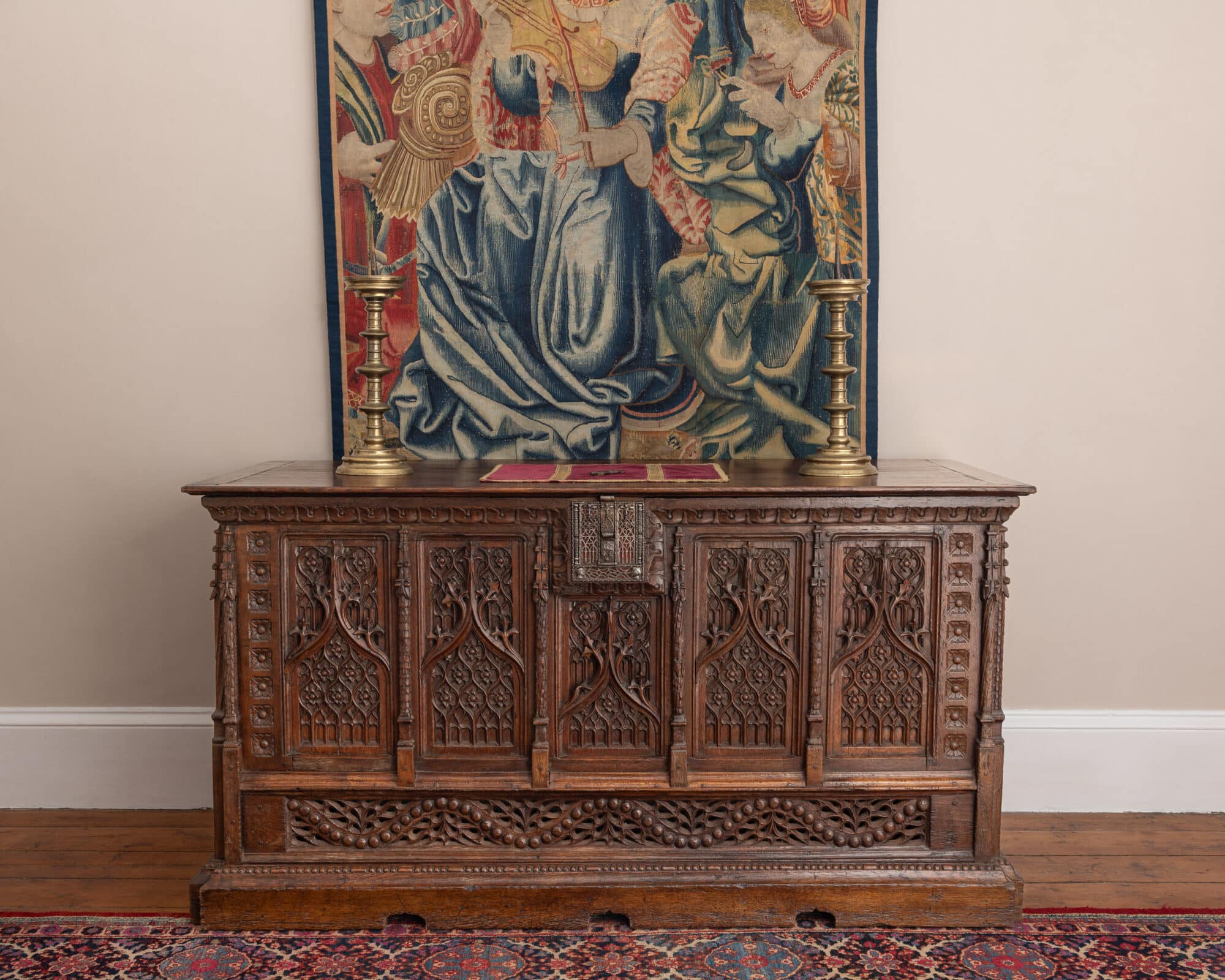
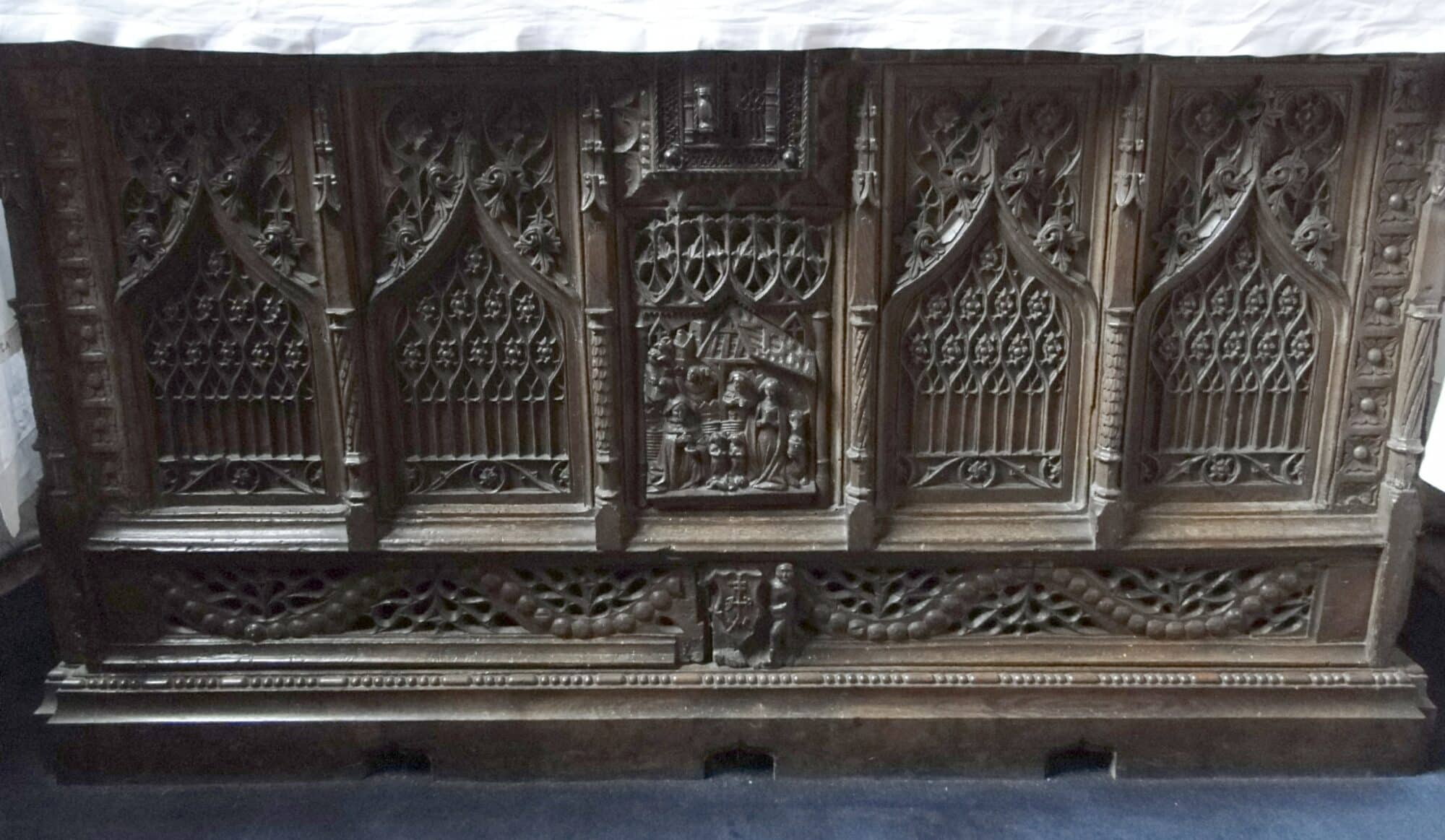
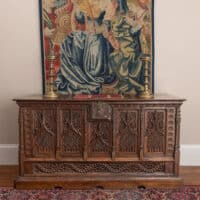
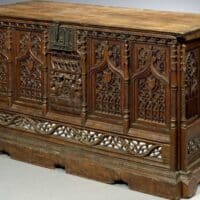
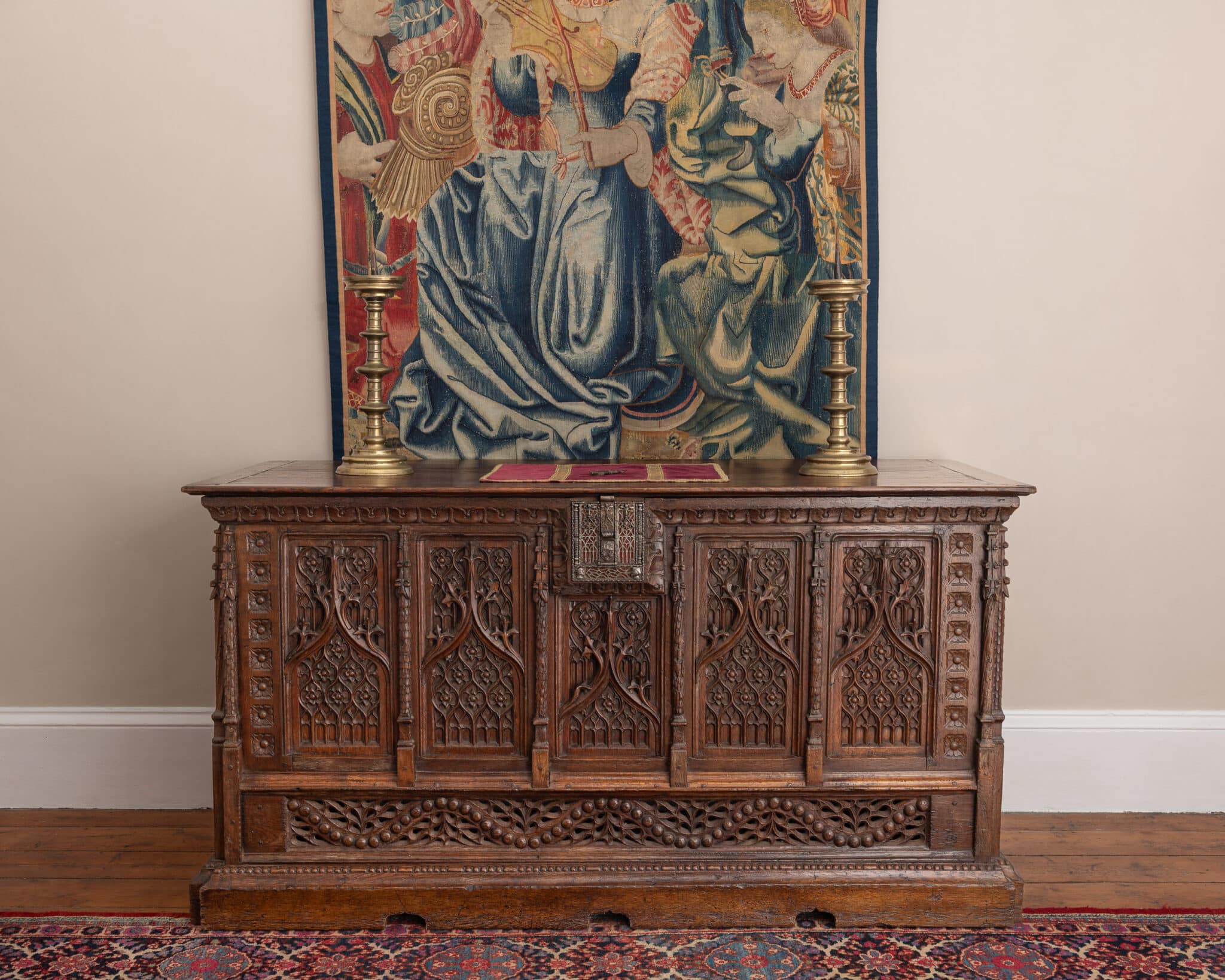
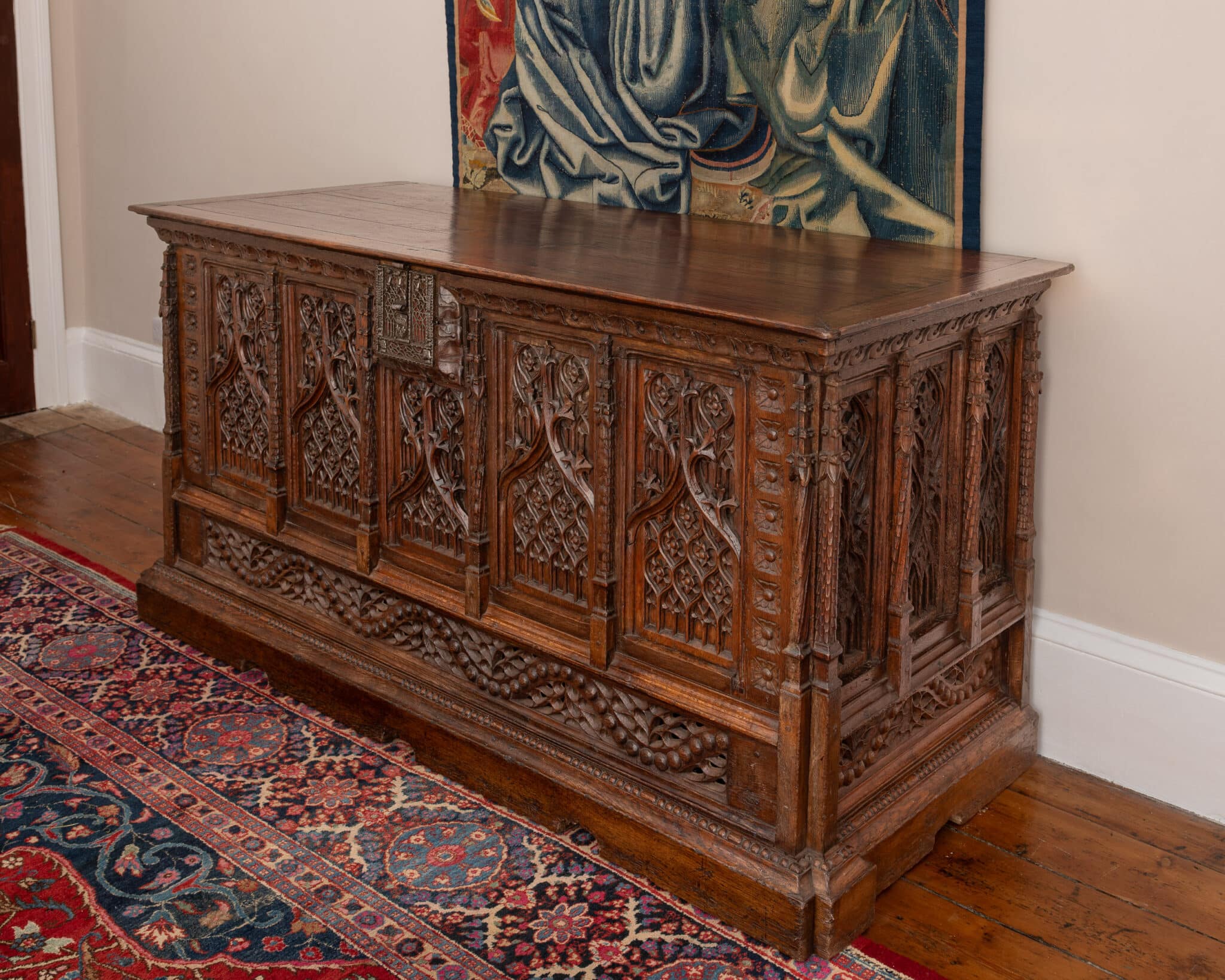
This remarkable oak chest is an outstanding survival from the closing decades of the medieval period and belongs to a small and distinguished group of monumental Gothic chests produced in northern France, probably Normandy, during the late fifteenth century. Constructed on an imposing scale and retaining the great majority of its original fabric, it stands among the finest examples of its type to survive.

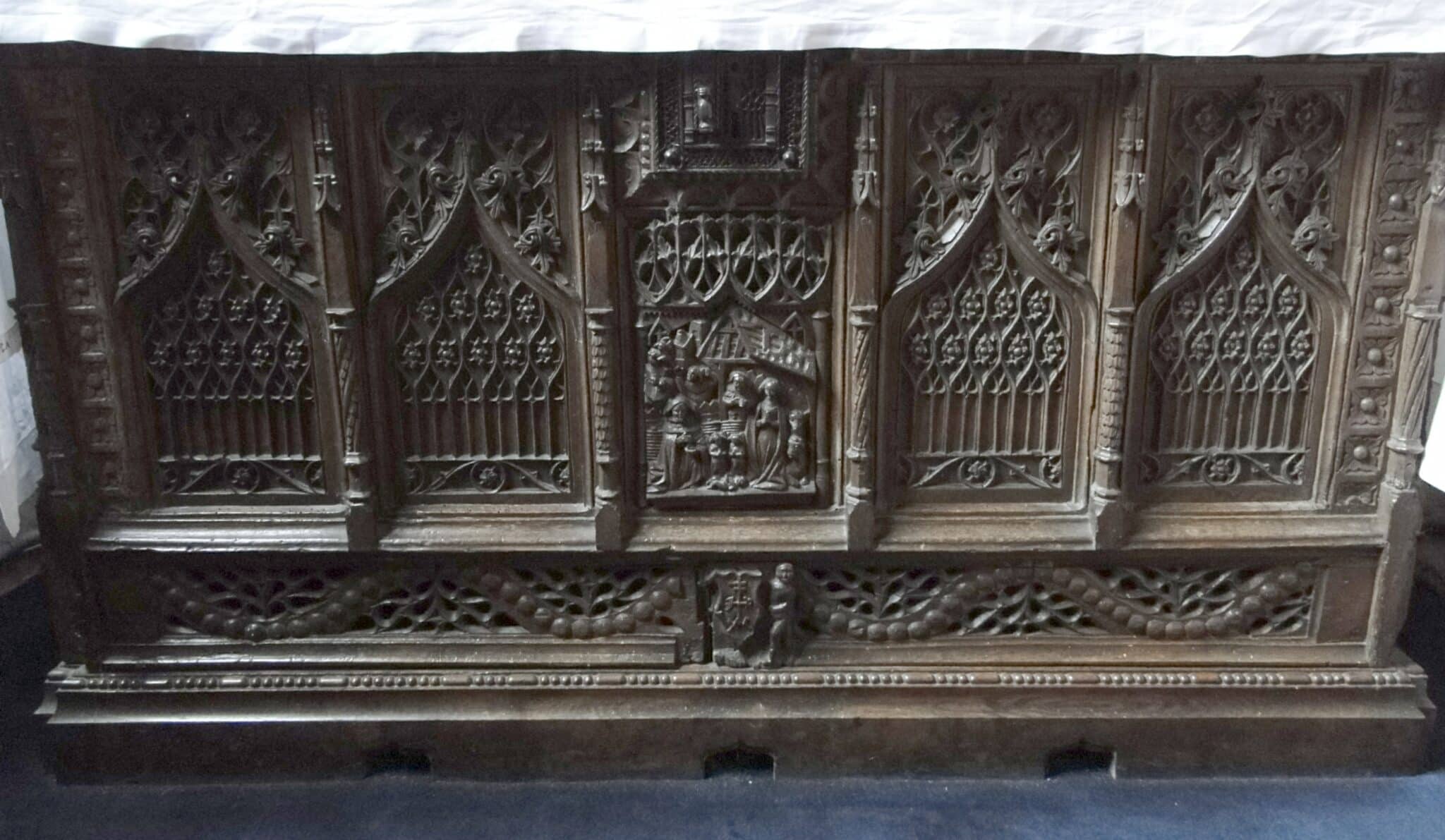
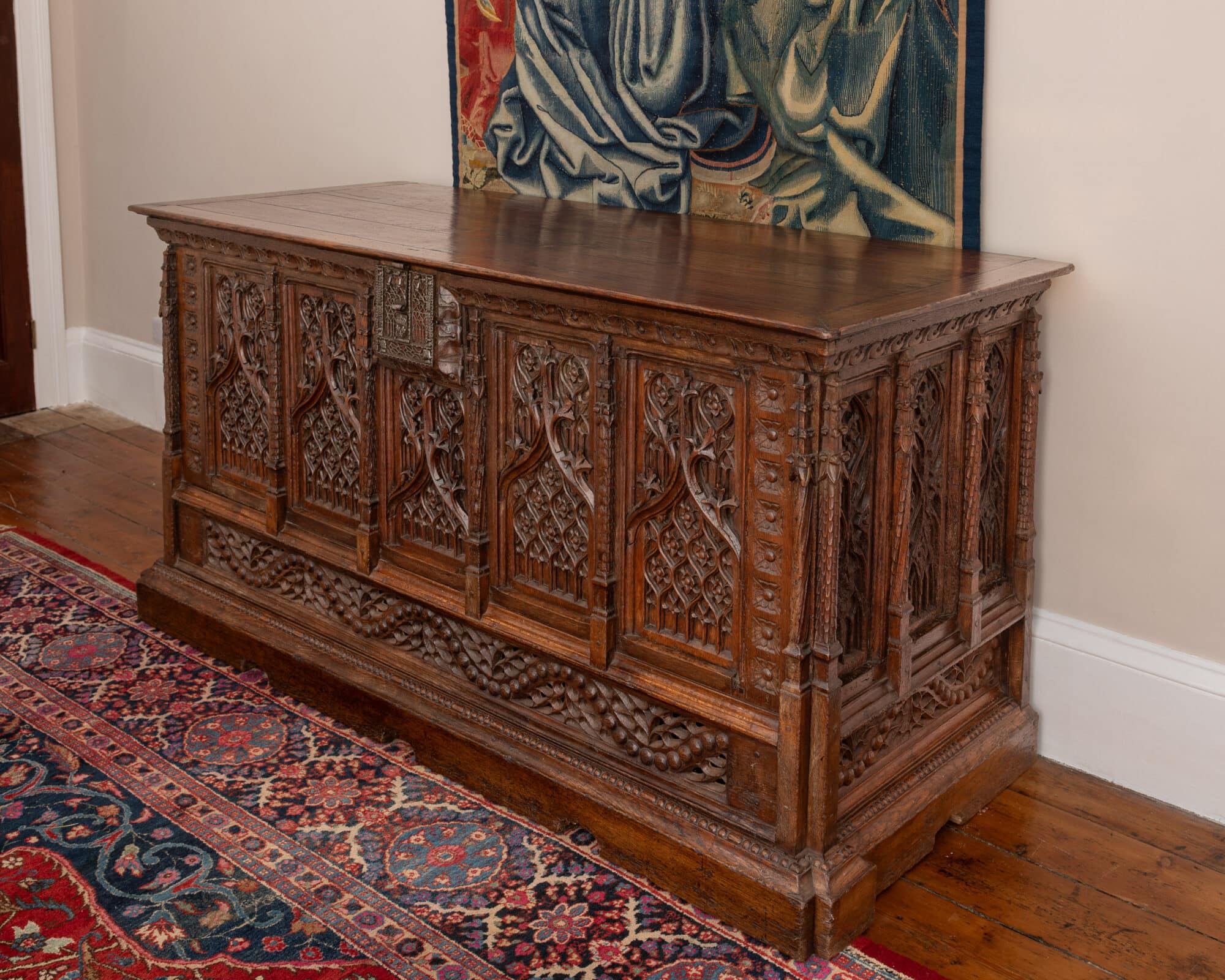
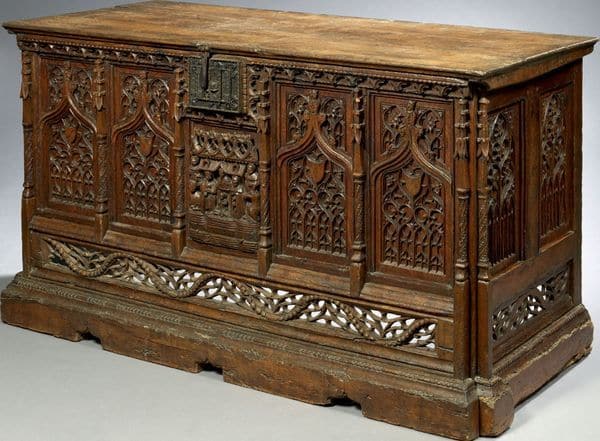
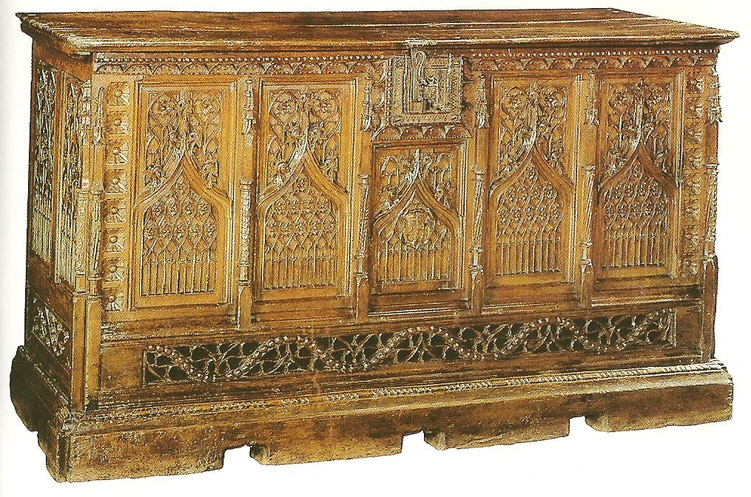
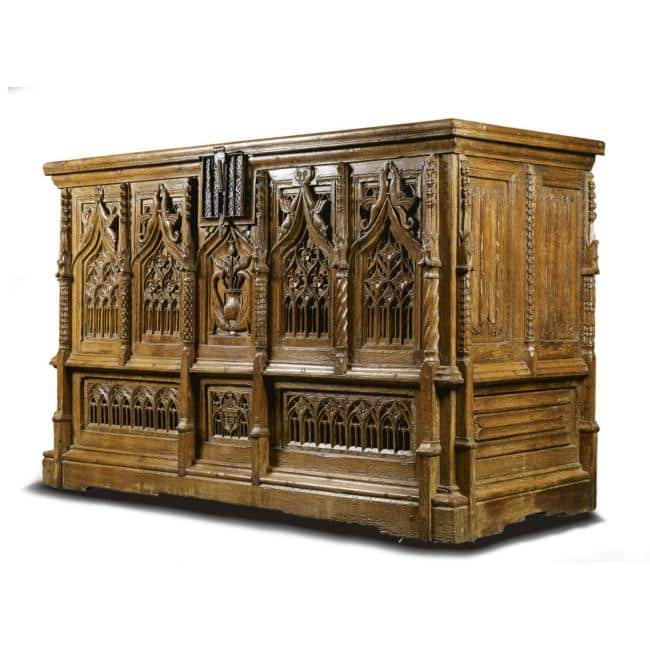
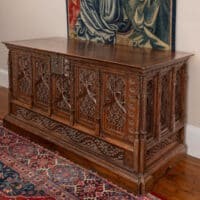
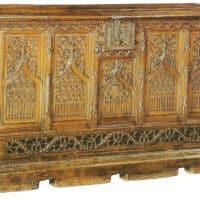
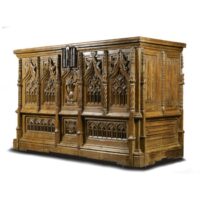
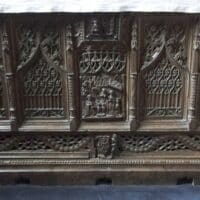
The façade is arranged in five architectural bays divided by substantial buttress-like uprights and enriched throughout with finely carved Flamboyant Gothic tracery. The design reflects the architectural vocabulary of contemporary ecclesiastical buildings, translating the forms of stone window tracery and choir furnishings into oak with exceptional confidence and sophistication. The side panels continue the decorative programme, creating a unified architectural composition of considerable visual power.

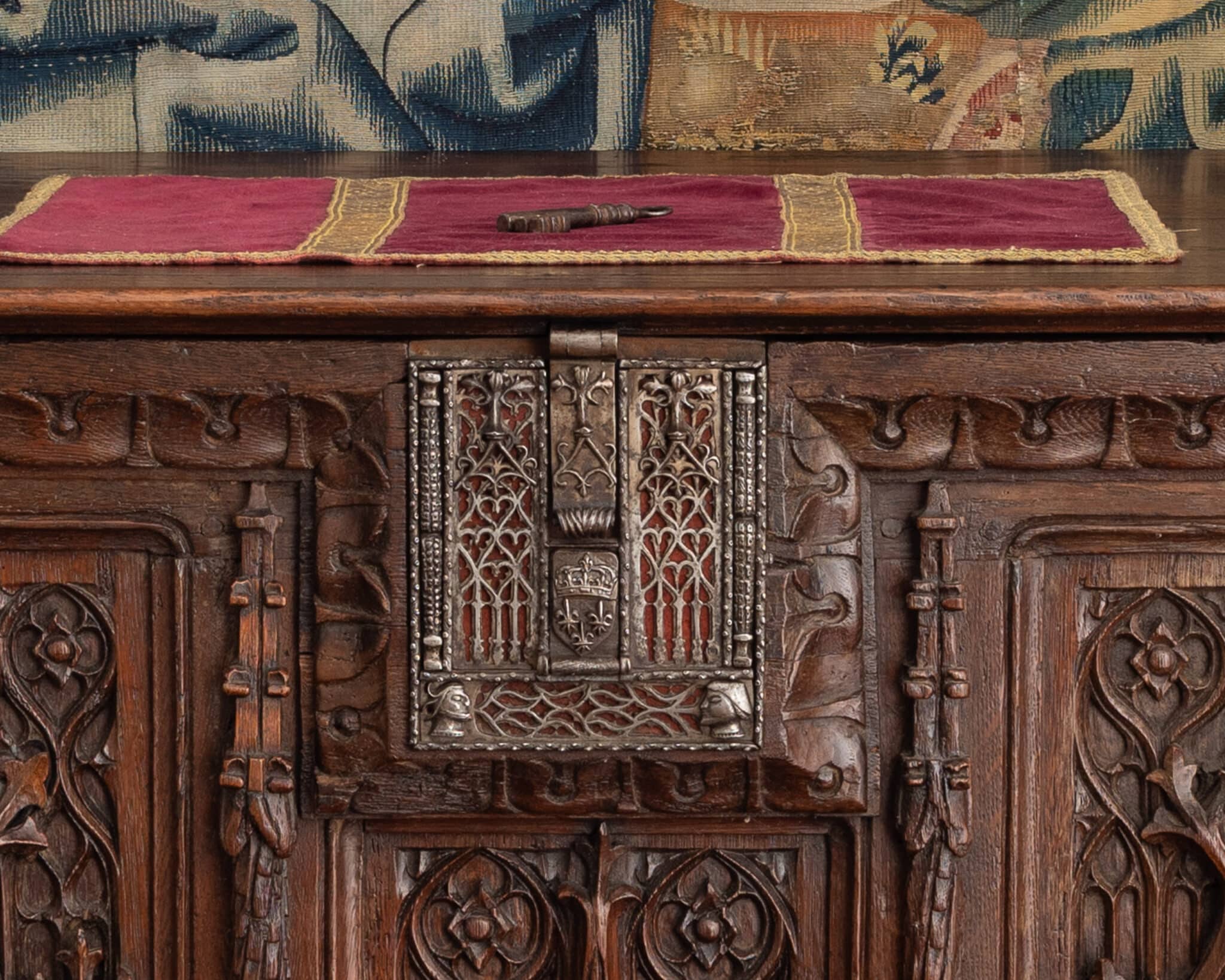
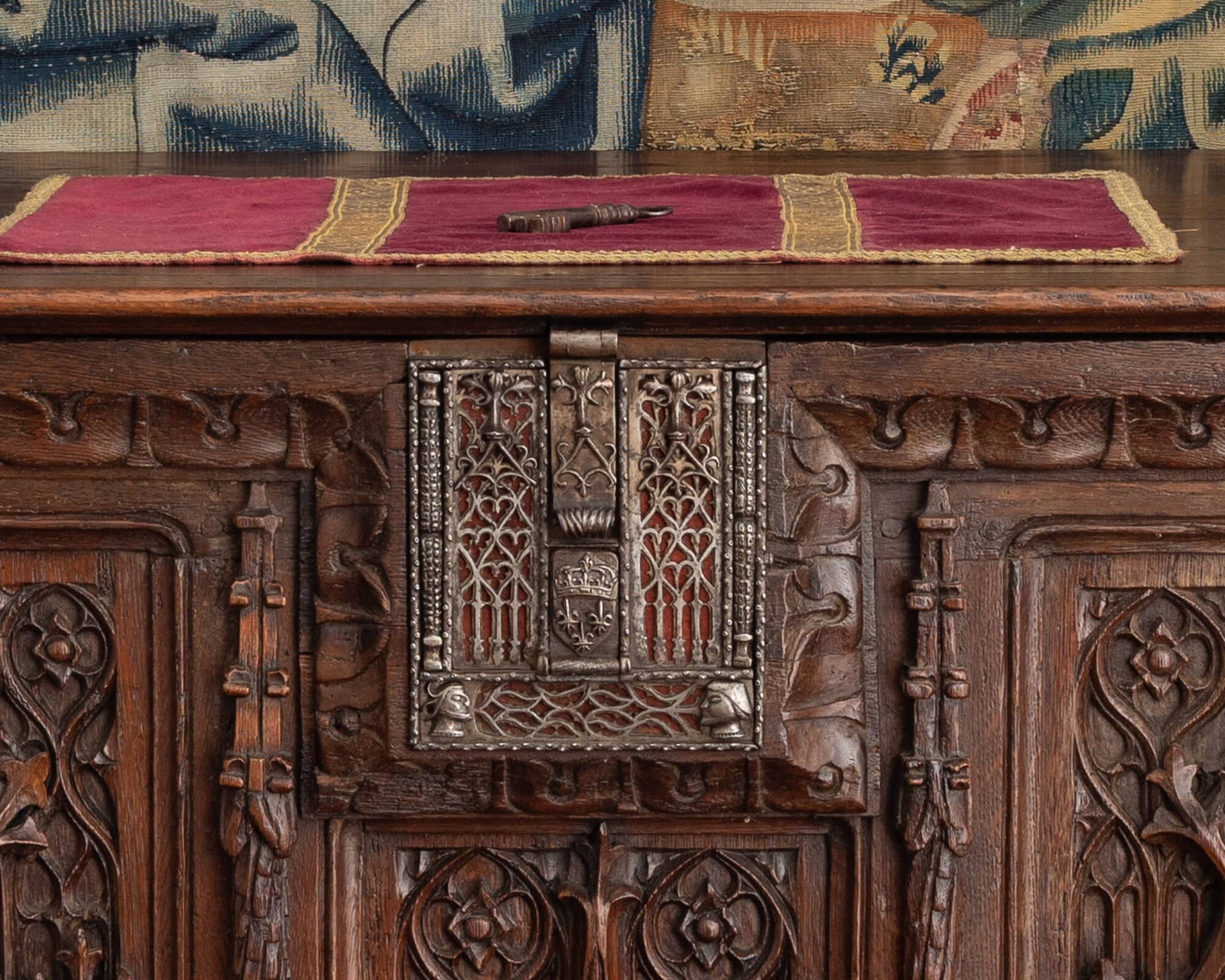
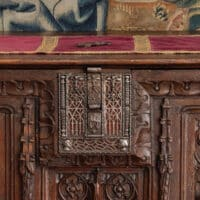
Particularly noteworthy is the magnificent pierced iron lockplate, conceived as a miniature Gothic façade and decorated with tracery, heraldic motifs and a crowned shield. Such elaborate medieval ironwork is increasingly rare and forms an integral part of the original design. Together with the chest’s monumental proportions and refined carving, it emphasises the status and prestige of the object.

The chest may be compared with a small group of celebrated Norman Gothic chests, including the famous Crediton Church chest, Devon, and related examples that have appeared in important international sales and publications devoted to Haute Époque furniture. Comparable examples include:

  • An important French Gothic oak chest, probably Normandy, early 16th century, sold at Sotheby’s, London, Haute Époque, 31 October 2007 (£72,500).
  • A monumental Norman Gothic chest from the Bruno Perrier Collection, sold at Ader-Tajan, Paris, catalogued as the work of Norman workshops of the 15th century (approximately £75,000).
  • A five-bay Gothic oak chest from Normandy, late 15th or early 16th century, sold in France for approximately £93,000.

These examples share a common architectural conception characterised by traceried façades, elaborate lock arrangements and imposing scale. The present chest is particularly notable for its exceptional width of 182 cm (71¾ in.), making it one of the largest examples of the type recorded.

The principal façade, side panels, carcass and lock ensemble are substantially original. The plinth has been renewed and a section to the rear of the lid replaced, restorations consistent with the long history of use associated with furniture of this age.

Originally intended for the secure storage of valuables, textiles, documents or ecclesiastical possessions, the chest would have represented a significant commission, whether for a wealthy secular household or an important religious institution. Today it survives as an impressive testament to the artistic ambition and technical accomplishment of the great woodworking traditions of late medieval northern France.
Monumental Gothic chests of the late fifteenth century rank amongst the rarest and most important survivals of medieval domestic and ecclesiastical furniture. Produced in relatively small numbers by highly skilled workshops in northern France, particularly Normandy, they represent the culmination of medieval woodworking traditions at the very moment when Gothic architecture reached its most elaborate and sophisticated expression.

These great chests were more than simple storage furniture. In an age when textiles, documents, plate and other valuables represented considerable wealth, the chest was often the most important movable object within a household, manor, monastery or church. As such, it became a vehicle for artistic display. The finest examples were conceived as miniature works of architecture, their façades articulated with tracery, buttresses and decorative carving inspired directly by the great churches and cathedrals of northern France.

Only a small number of monumental Norman Gothic chests survive today. Among the best known is the celebrated Crediton Church chest in Devon, long recognised as one of the masterpieces of medieval furniture. Related examples have appeared only occasionally on the international market, including notable chests sold at Sotheby’s, London, the Ader-Tajan sale of the Bruno Perrier Collection in Paris, and a further important Norman example sold in France. Their rarity, scale and historical significance have ensured their place among the most sought-after works of Haute Époque furniture.

What distinguishes this group is not merely their size but their ambition. The finest examples demonstrate a sophisticated understanding of architectural form, transforming the language of Flamboyant Gothic stone carving into oak with remarkable confidence and technical mastery. Equally important is the survival of their ironwork, often executed with the same artistic imagination as the carving itself. Elaborate lockplates, hinges and locking mechanisms were intended not only to secure valuable contents but also to proclaim the prestige of their owners.

The present chest belongs within this distinguished tradition. Its monumental scale, traceried façade and exceptional Gothic lockplate place it among a select group of surviving late medieval chests that continue to bear witness to the artistic achievement of the great Norman woodworking workshops. More than five centuries after its creation, it remains a compelling expression of the wealth, craftsmanship and architectural imagination of late medieval France.

Curator's Note

Previous Late Gothic Polychro…
  • Monumental Gothic Oak Chest
  • Monumental Gothic Oak Chest
  • Monumental Gothic Oak Chest
  • Monumental Gothic Oak Chest
  • Monumental Gothic Oak Chest
  • Monumental Gothic Oak Chest
  • Monumental Gothic Oak Chest

Newsletter

New Stock, Direct to Your Inbox.

Be among the first to hear about new acquisitions and notable works.

Please enable JavaScript in your browser to complete this form.
Loading
Paul Fitzsimmons logo
  • Current Stock
  • Archive
  • Notable Works
  • About Us
  • News
  • Contact

Contact Us

+44 (0)777 903 8891

  • Pinterest
  • Instagram

By Appointment

Devon, England.

Paul Fitzsimmons

Specialist in early oak furniture and works of art.

© 2026 Paul Fitzsimmons | Website by Dancing Badger Ltd

  • Privacy Policy
  • Terms & Conditions

Search the collection

Search in

    Enquire About This Piece

    Monumental Gothic Oak Chest · Ref. Marh3758

    Please enable JavaScript in your browser to complete this form.
    Newsletter signup
    Loading
    1 / 1