
Paul Fitzsimmons logo
  • Current Stock
  • Archive
  • Notable Works
  • About Us
  • News
  • Contact
Home / Archive / Late Gothic Savonaro…
Previous Next
  • Late Gothic Savonarola Folding Chair
  • Late Gothic Savonarola Folding Chair
Sold

Late Gothic Savonarola Folding Chair

Period
Late 15th century
Origin
Florence, Italy
Dimensions
W 26 1/2" × H 42 1/2" × D 22 1/2"
Reference
#Marh3181

This piece has been sold. It is shown here for reference in our archive.

Description

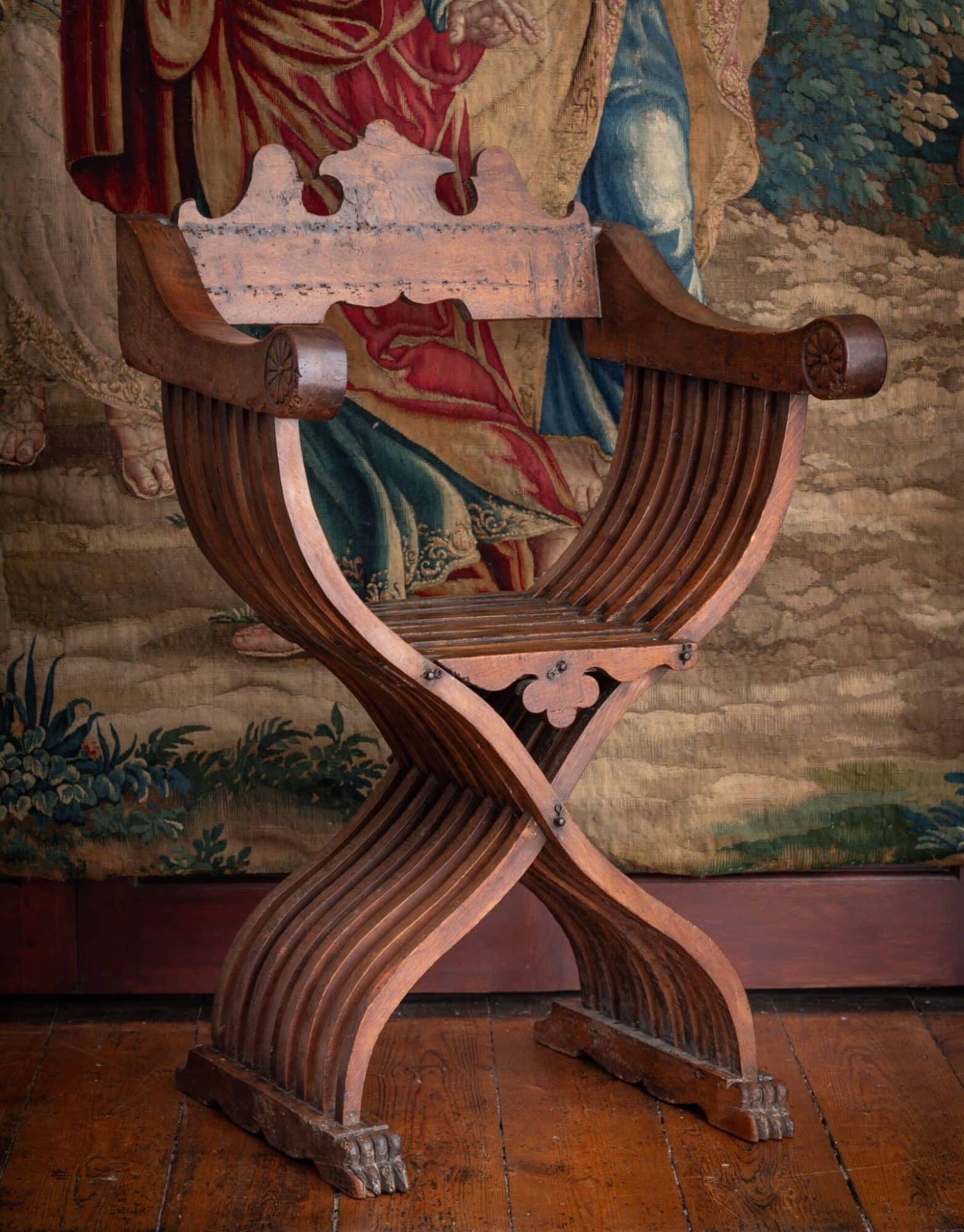
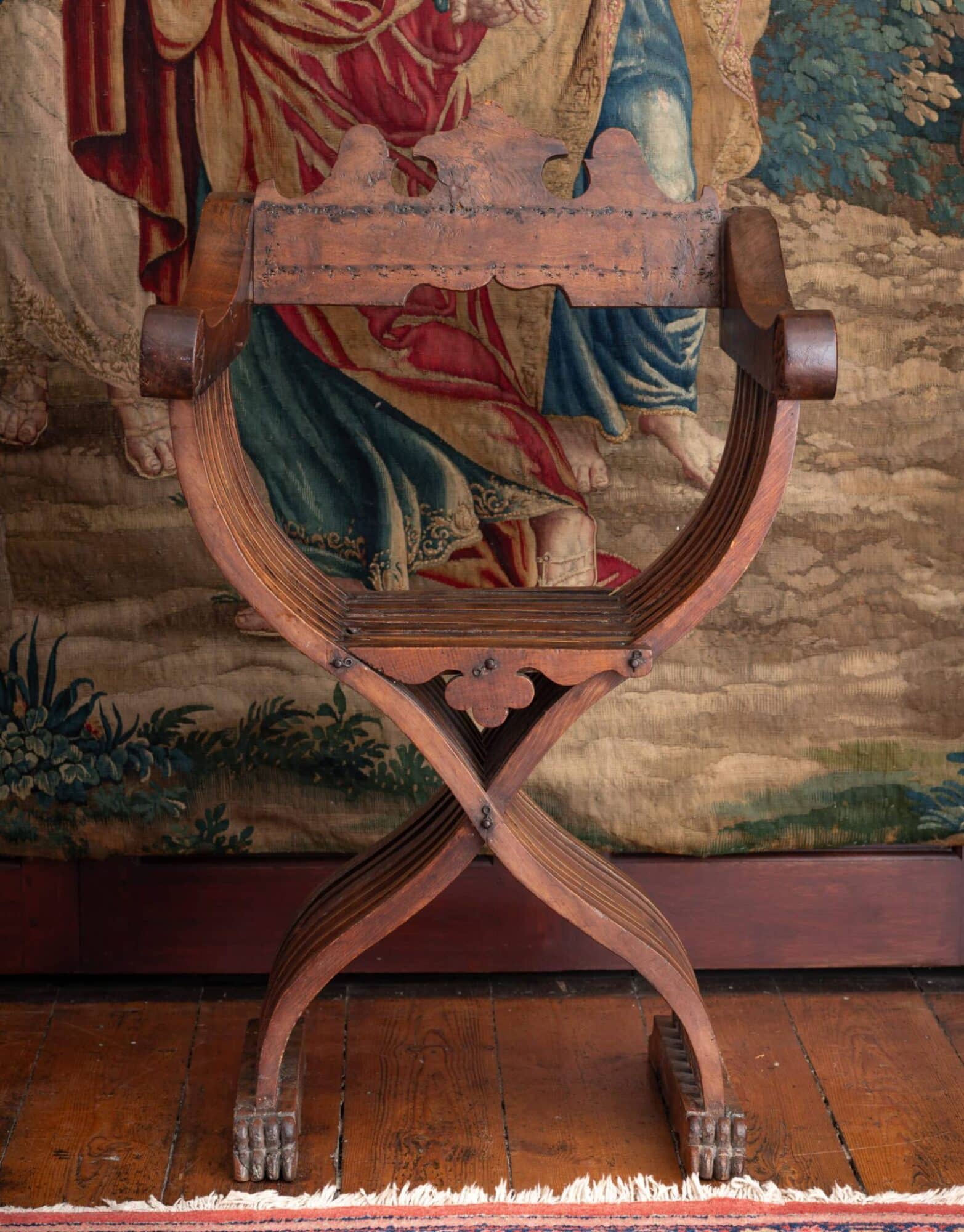
A rare and well-preserved late Gothic walnut Savonarola chair, with the characteristic X-frame formed of multiple slats creating the legs and seat, raised on bold lion pad sledge feet. The backrest, of shaped plank form, shows a line of nail holes indicating the former presence of an applied fabric panel, a later addition now removed. The wide armrests are decorated with carved floral roundels, lending a refined detail to the strong architectural form of the chair.
The Savonarola chair type descends from the ancient Roman sella curulis, the folding seat of magistrates and senators, long associated with civic power and authority. Its revival in late 15th-century Florence coincided with the political upheavals of the period, and the chair came to be popularly linked to the reformist Dominican friar Girolamo Savonarola (1452–1498), whose brief but dramatic rule left a powerful legacy.
Practical in its folding design yet also symbolic, such chairs were reserved for persons of high rank in civic, ecclesiastical, and domestic settings. The lion paw feet here underscore the connection with authority, strength, and classical heritage, while the decorative armrest details reflect late Gothic taste at the threshold of the Renaissance.

Provenance: Important private collection of Graham Dark, Truro, Cornwall. This chair was originally intended to be housed in Truro Museum.
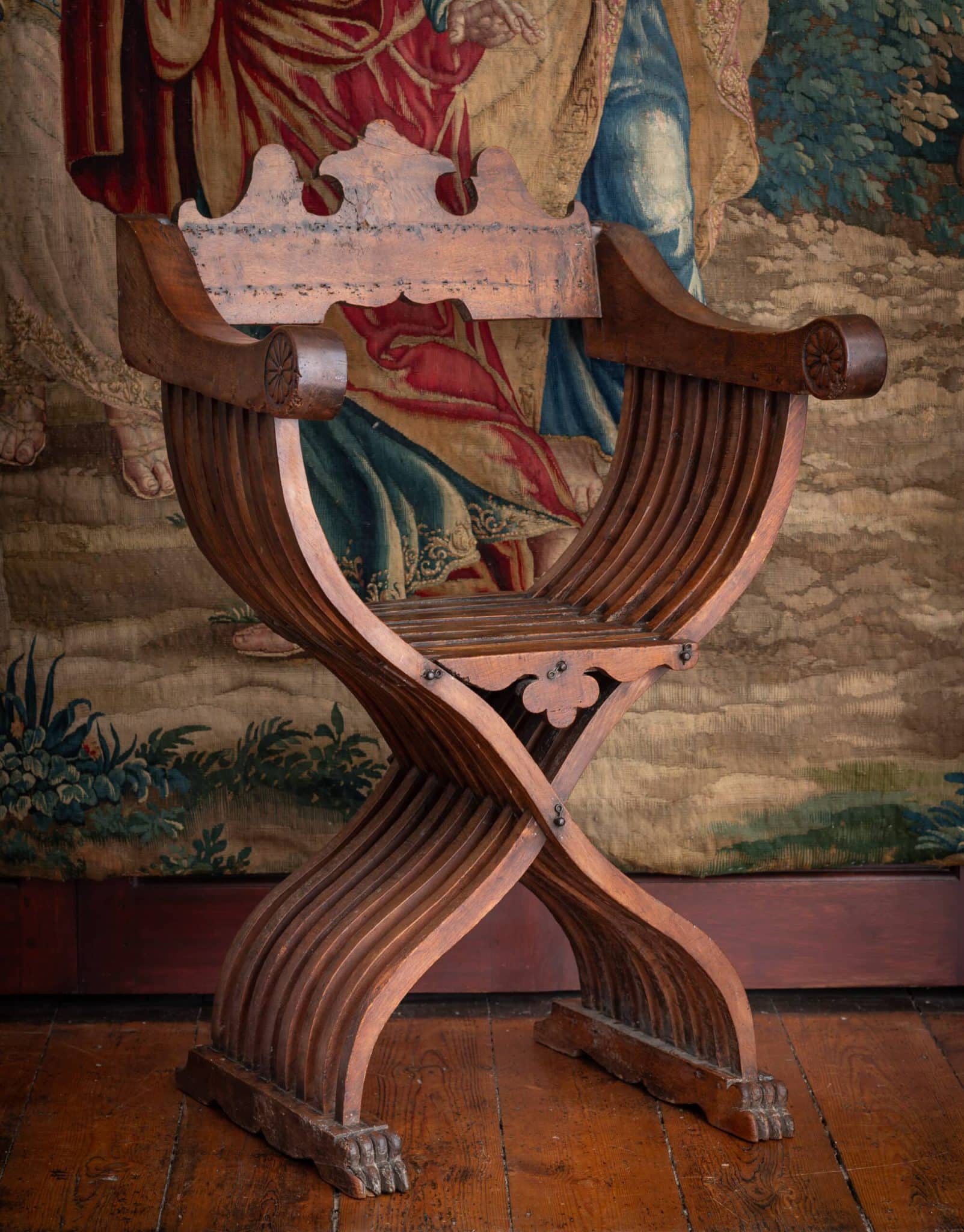
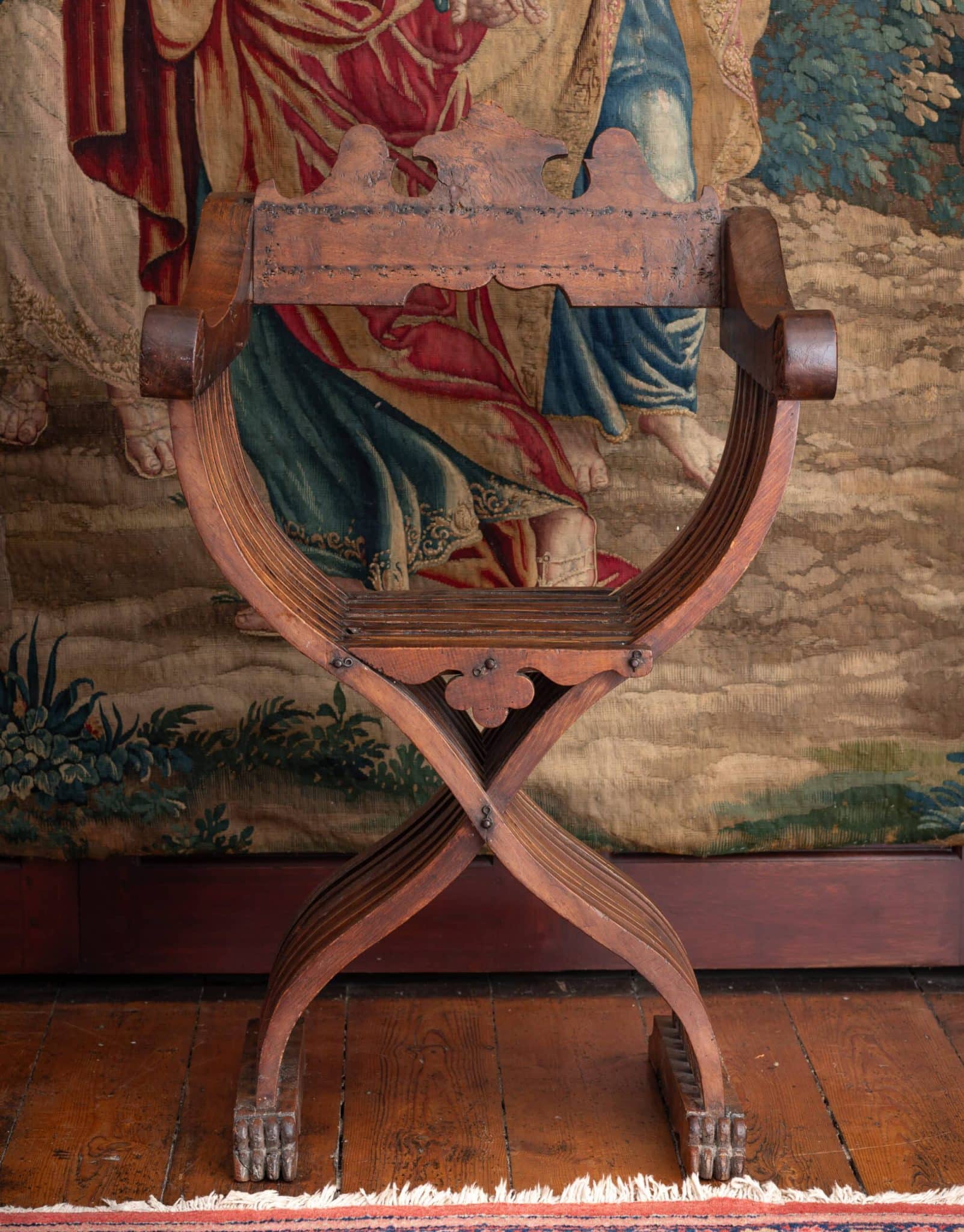
Savonarola chairs of this quality were not common household items — they were prestigious seats reserved for individuals of rank and authority. In late 15th-century Florence and across Italy, such folding chairs were typically found in the palaces of wealthy patricians, civic magistrates, high-ranking clerics, and members of ruling families. They were also used in ceremonial and diplomatic contexts, where their classical heritage (deriving from the Roman sella curulis) reinforced the power and dignity of the sitter.
Aristocracy & Nobility: Prominent Florentine families such as the Medici would have commissioned or owned chairs of this type, to be displayed in their palazzi as both practical furniture and status symbols.
Civic Leaders & Magistrates: As heirs to the Roman curule seat, these chairs were associated with civic authority. They were used by magistrates and other officials when conducting public duties or receiving visitors.
Clergy & Scholars: Bishops, abbots, and scholars within humanist circles also valued such chairs, not only for their classical symbolism but for the dignity they conferred in ecclesiastical or intellectual settings.
Because they fold, they could also travel with their owners — appearing in council chambers, chapels, or even on campaign with military leaders. This mobility made them especially practical as well as symbolic.

Curator's Note

Previous Renaissance Tapestry Next Medieval Elm Iron Bo…
  • Late Gothic Savonarola Folding Chair
  • Late Gothic Savonarola Folding Chair

Newsletter

New Stock, Direct to Your Inbox.

Be among the first to hear about new acquisitions and notable works.

Please enable JavaScript in your browser to complete this form.
Loading
Paul Fitzsimmons logo
  • Current Stock
  • Archive
  • Notable Works
  • About Us
  • News
  • Contact

Contact Us

+44 (0)777 903 8891

  • Pinterest
  • Instagram

By Appointment

Devon, England.

Paul Fitzsimmons

Specialist in early oak furniture and works of art.

© 2026 Paul Fitzsimmons | Website by Dancing Badger Ltd

  • Privacy Policy
  • Terms & Conditions

Search the collection

Search in
    1 / 1