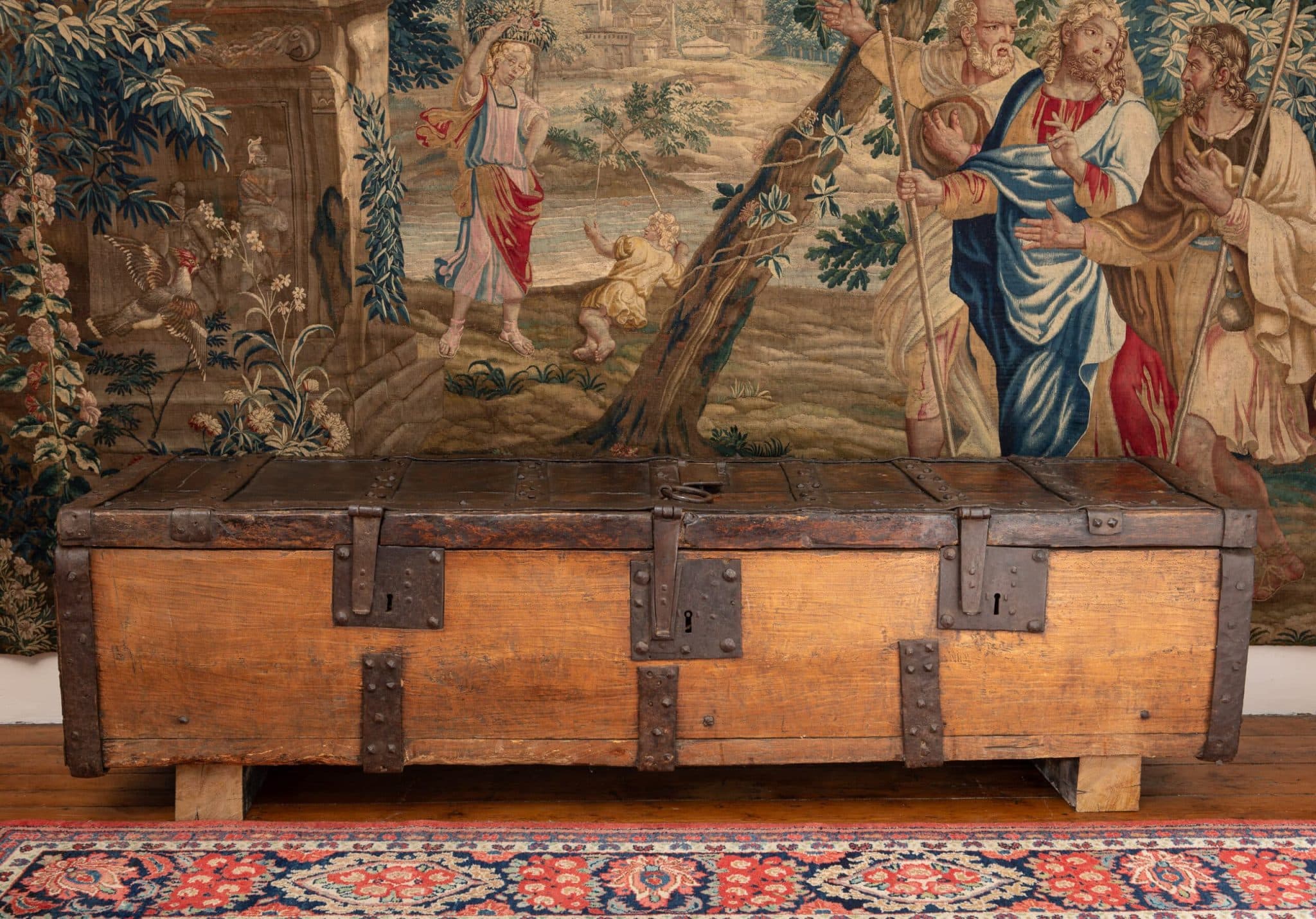
Medieval Elm Iron Bound Chest
- Period
- 1300 - 1400
- Origin
- England
- Dimensions
- W 85 1/2" × H 19" × D 22"
- Reference
- #Marh3182
This piece has been sold. It is shown here for reference in our archive.
Description
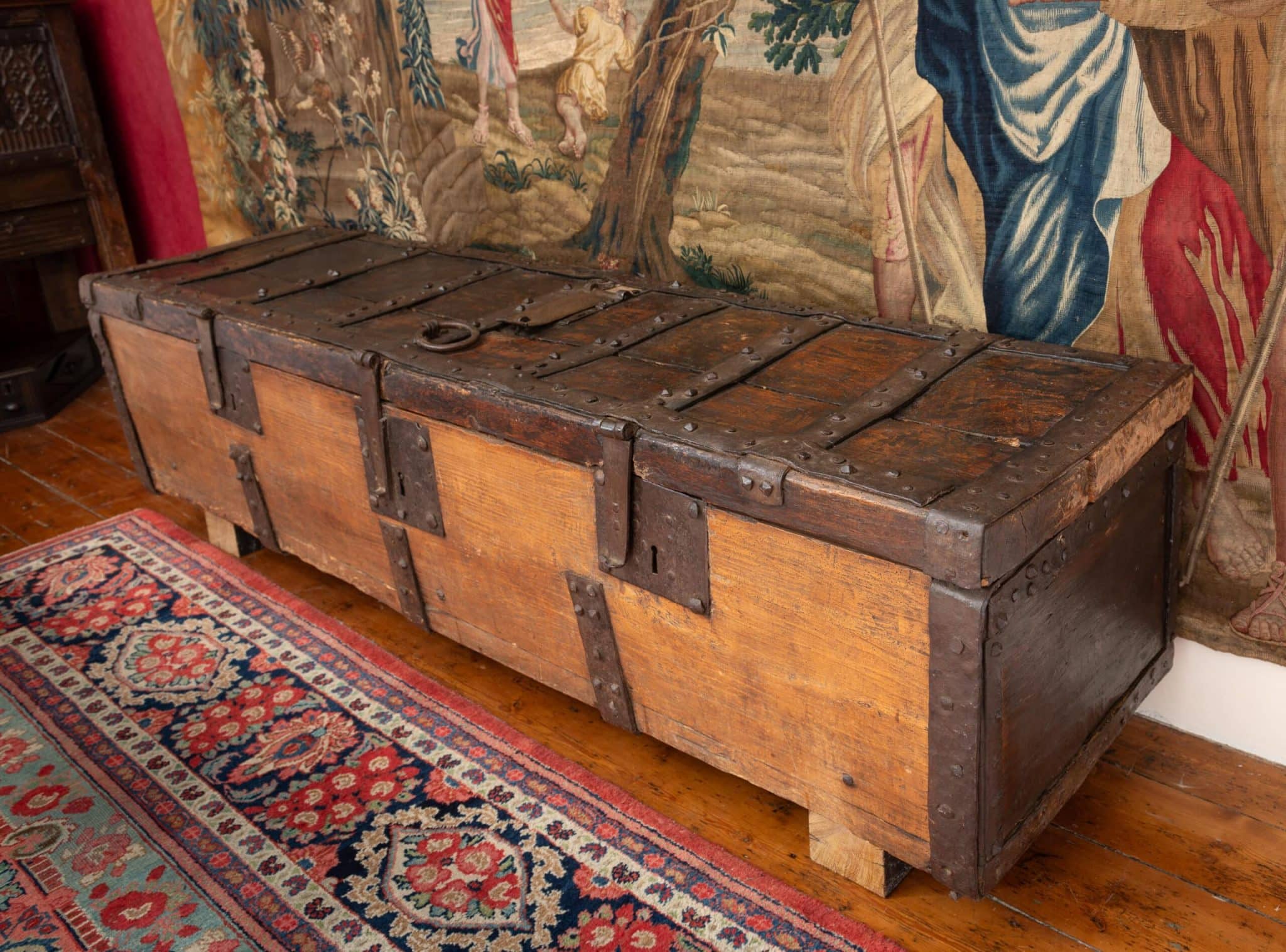
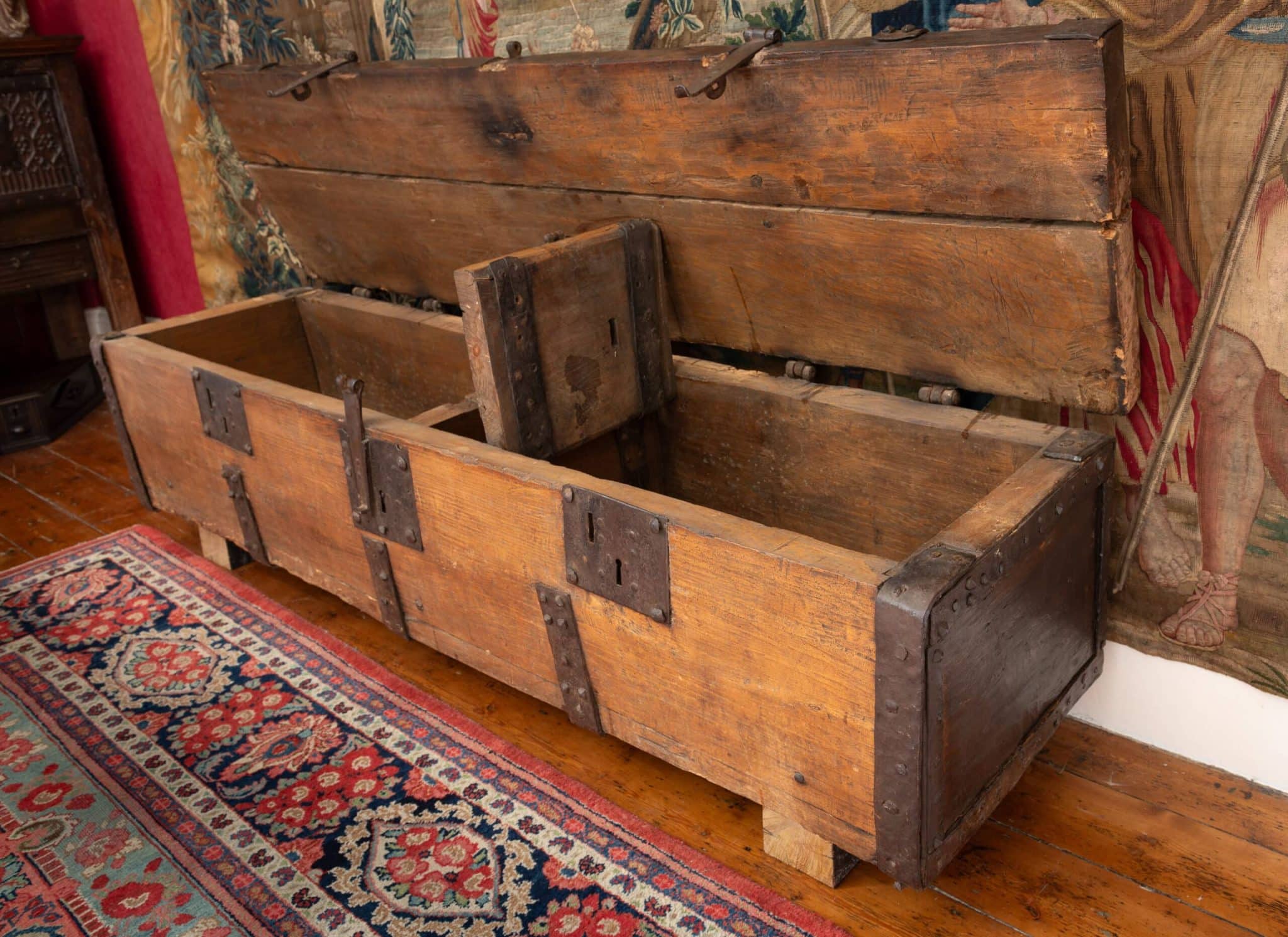
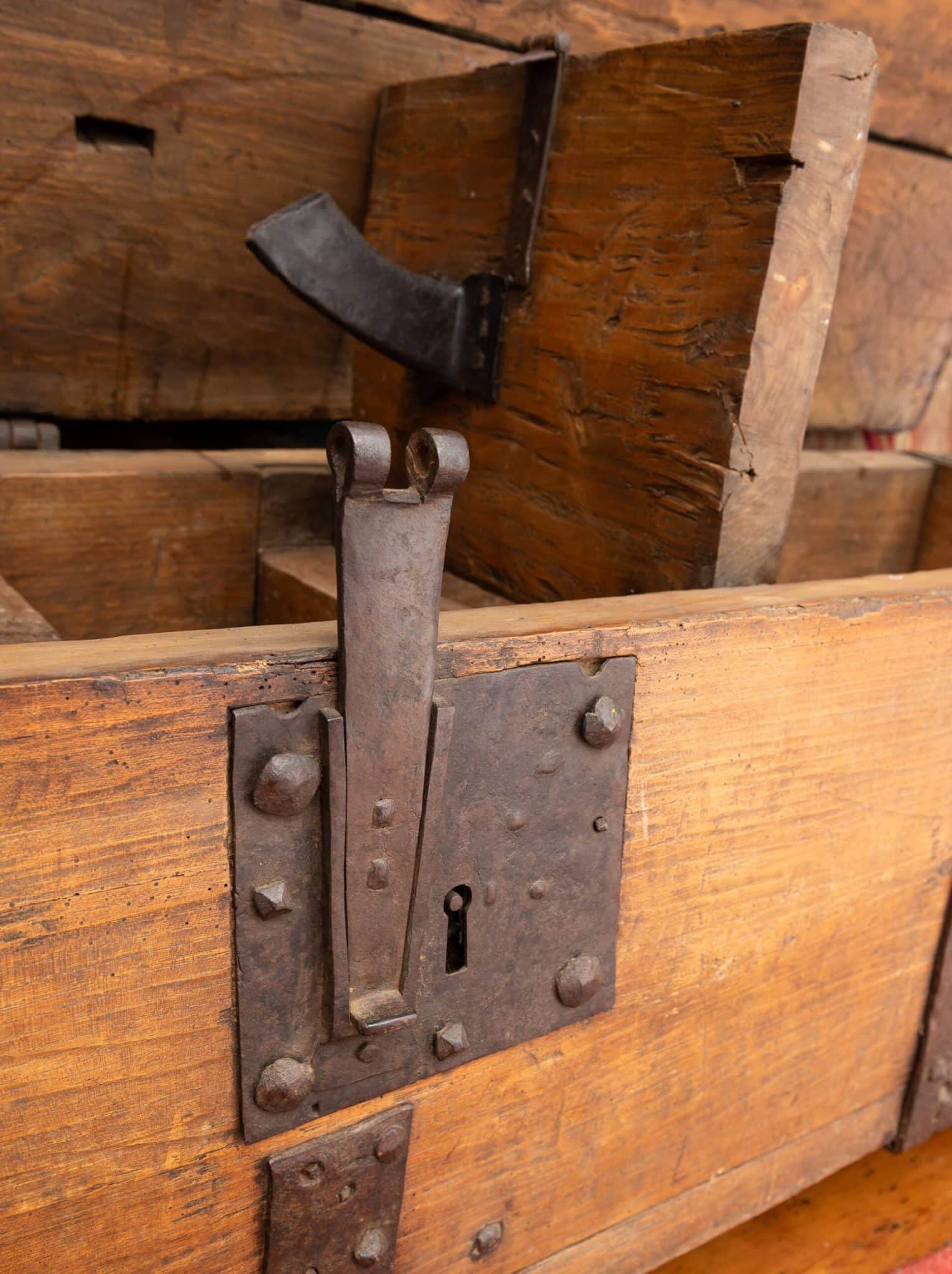
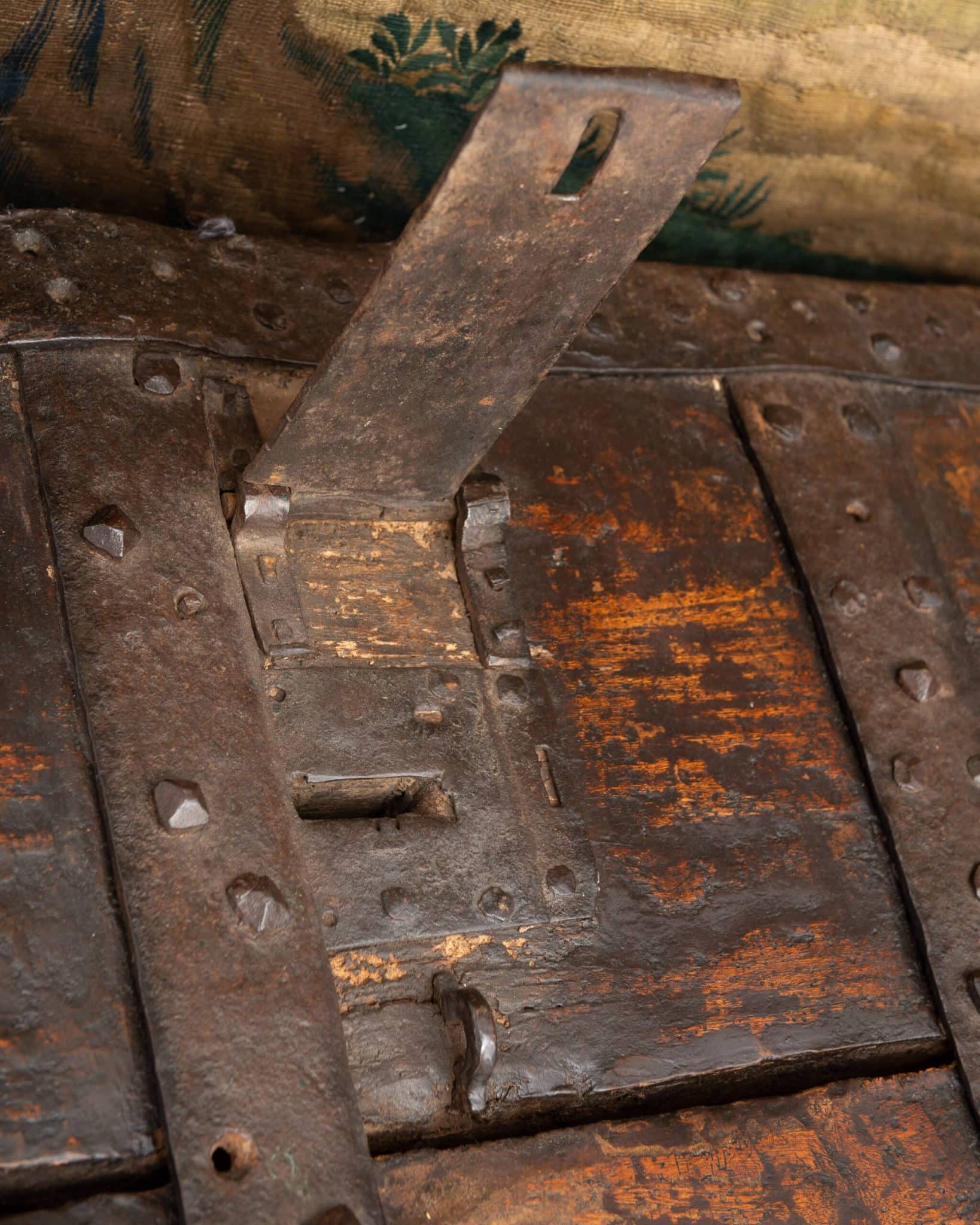
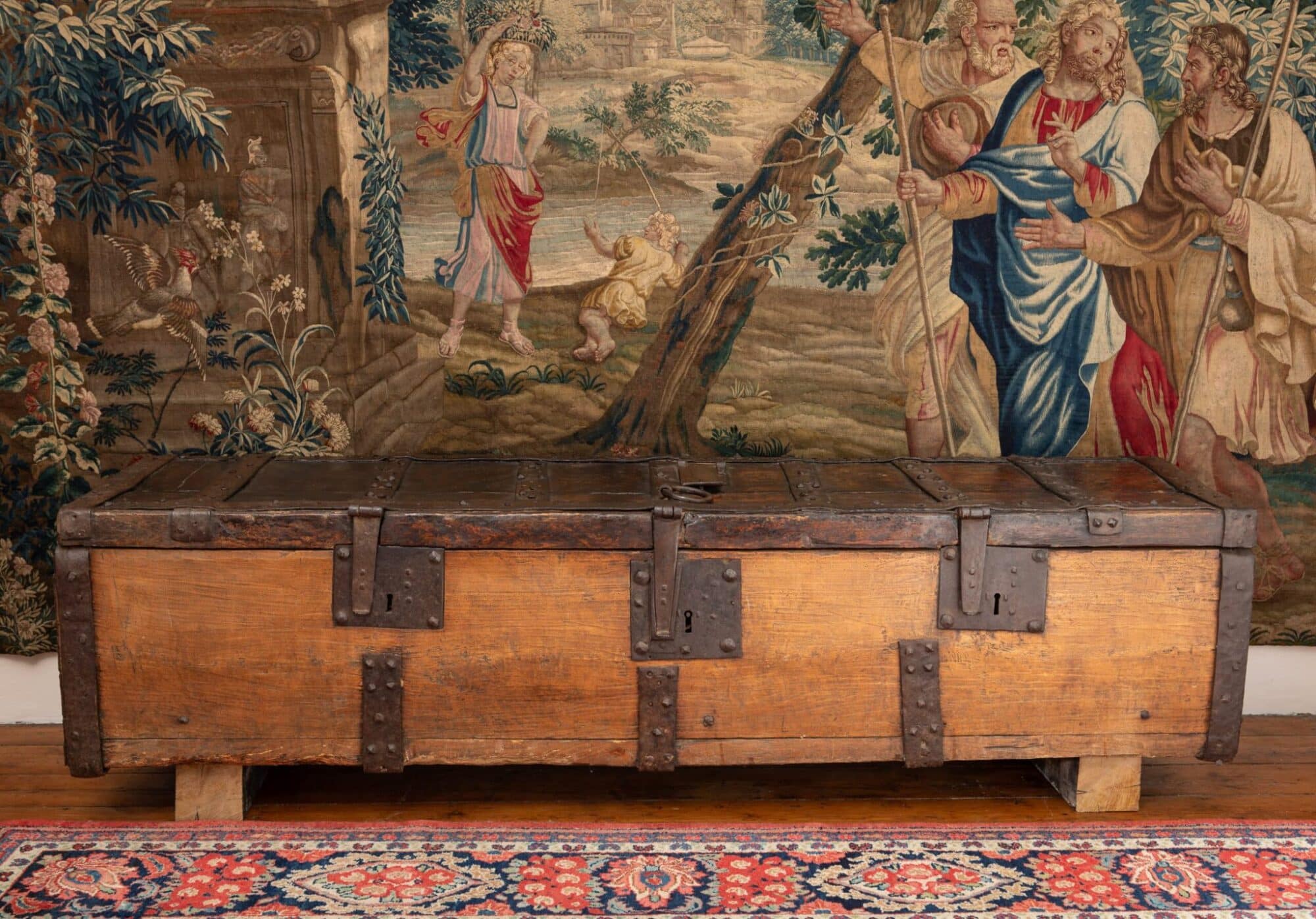
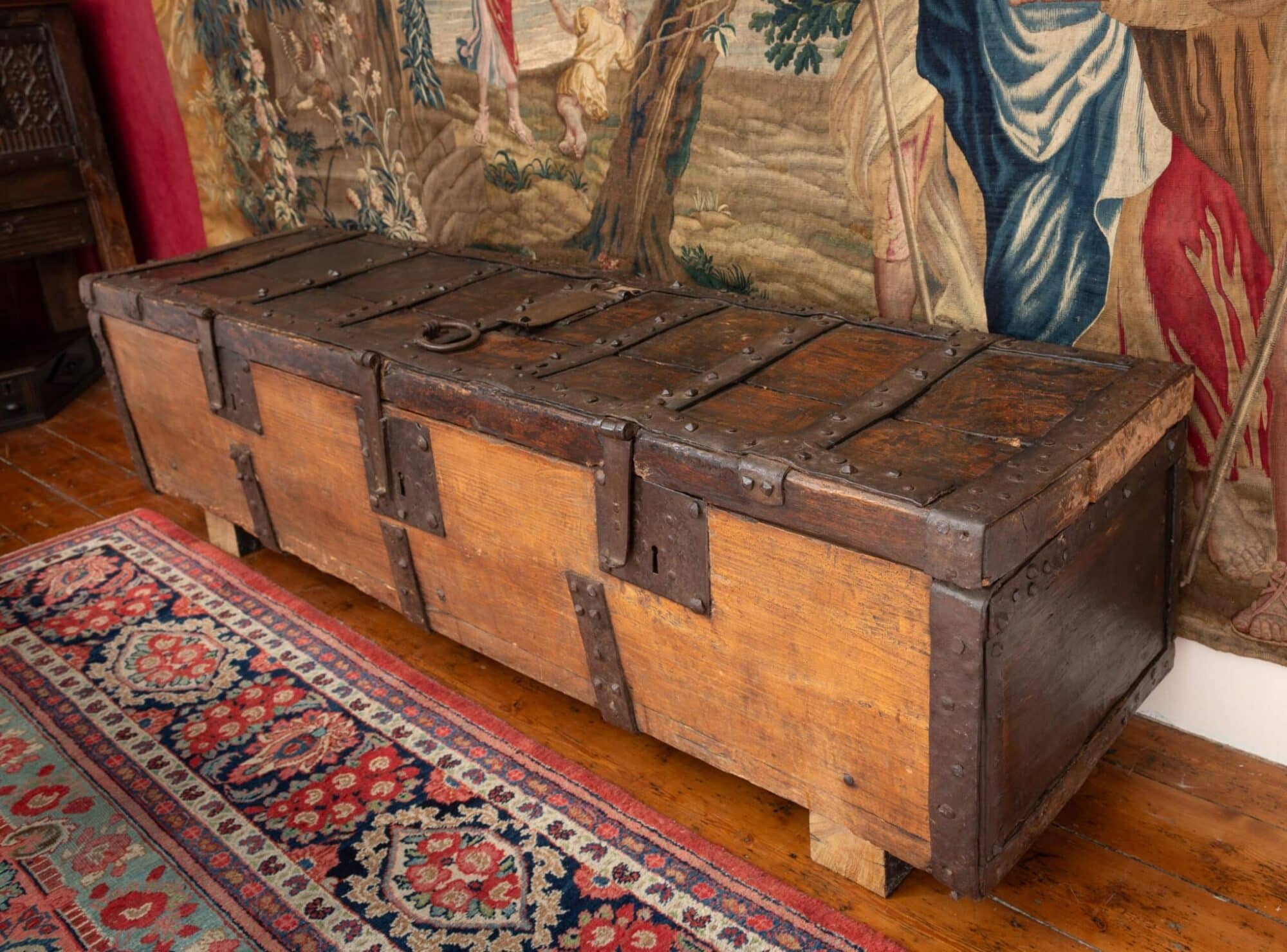
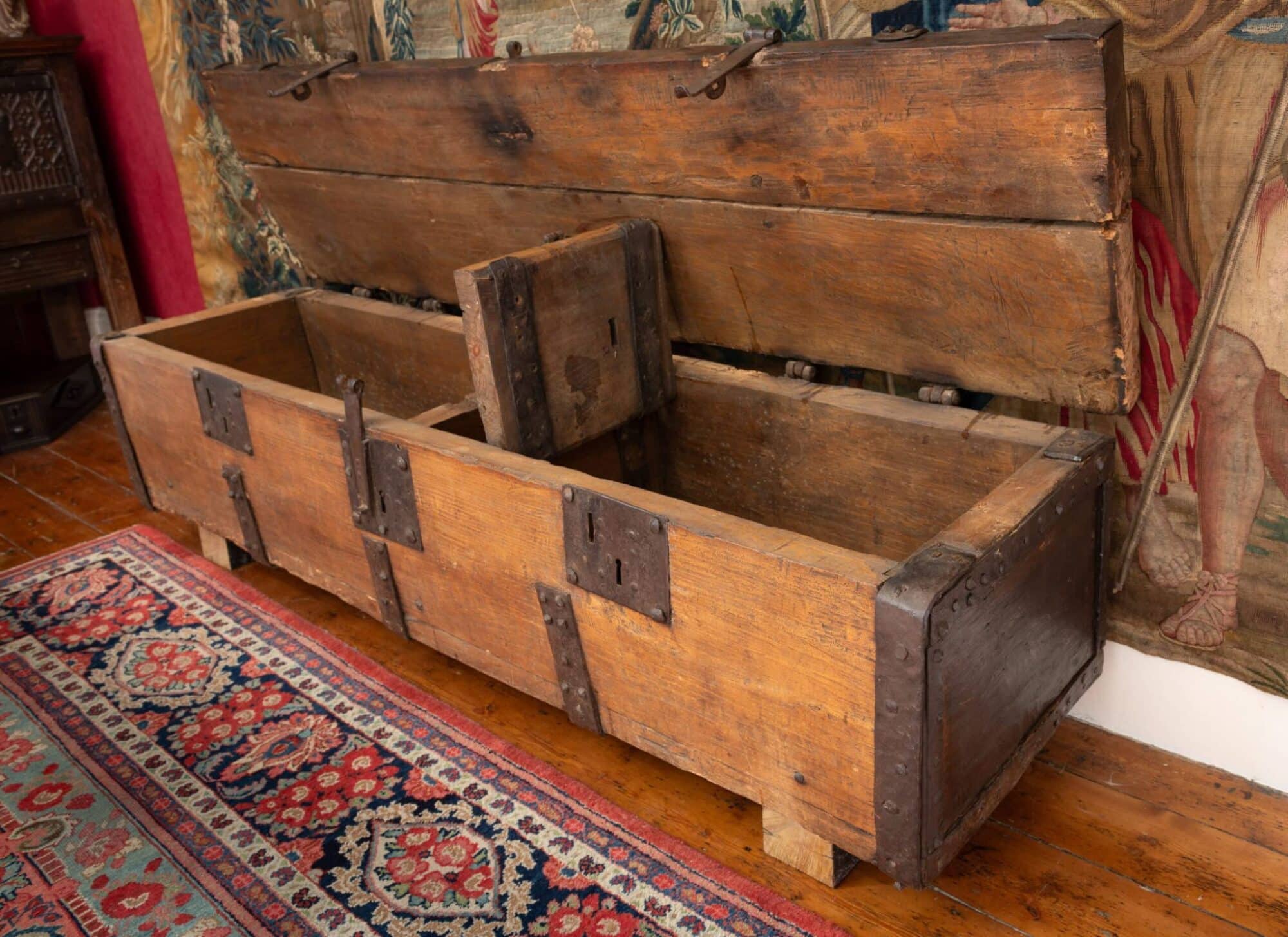
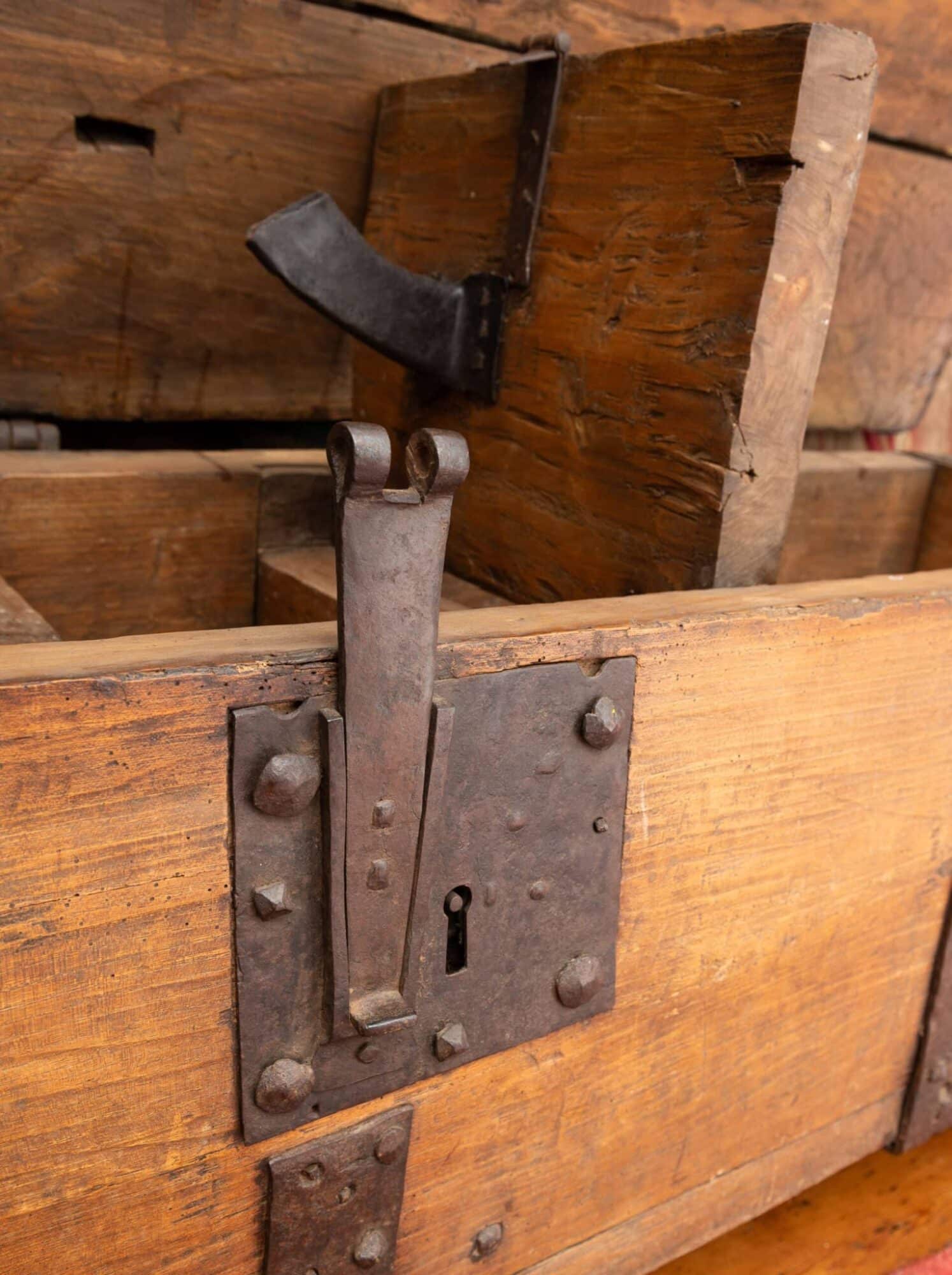
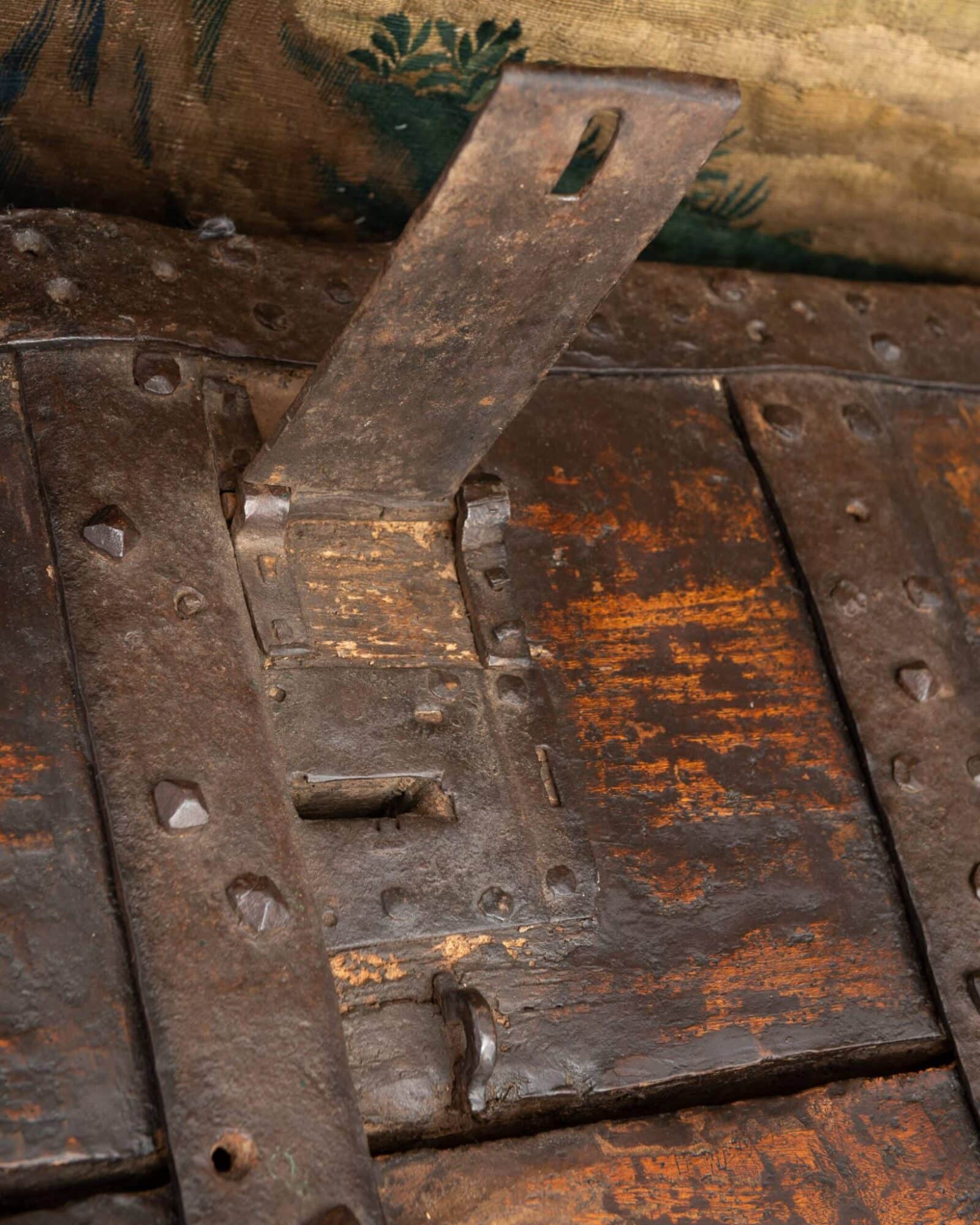
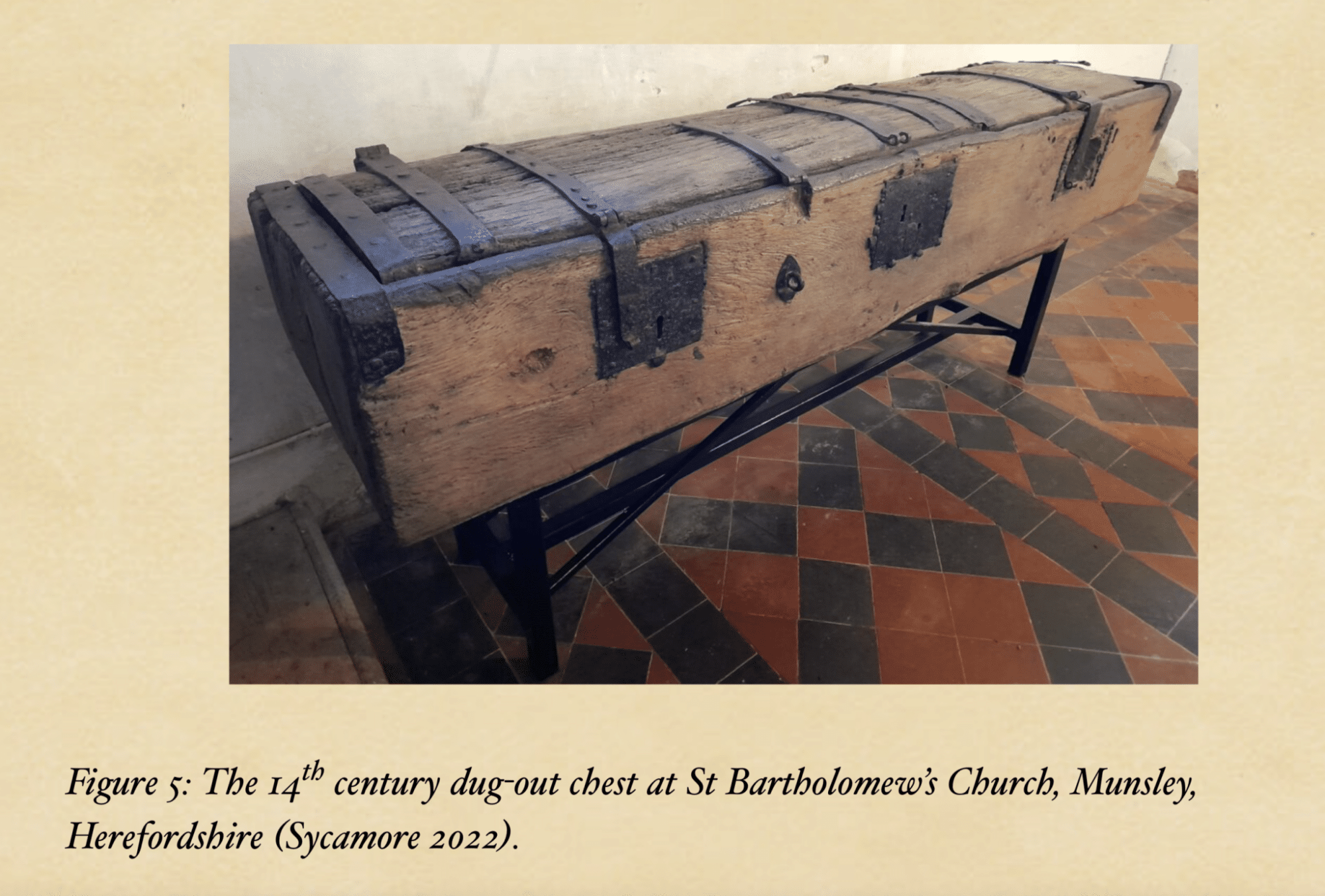
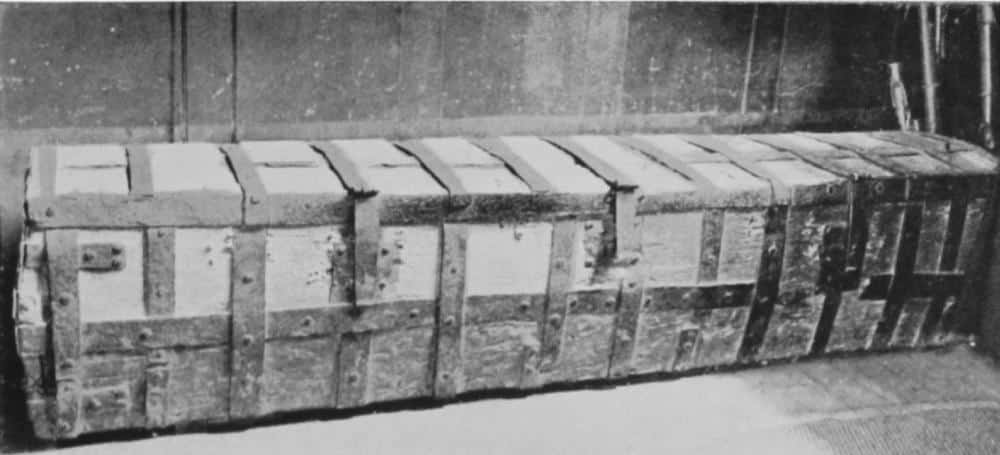
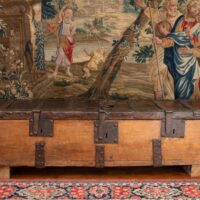
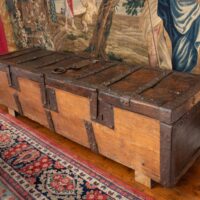
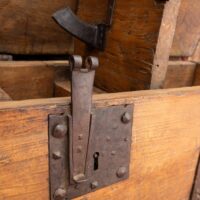
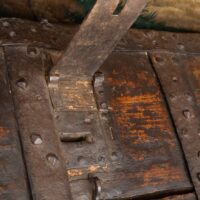
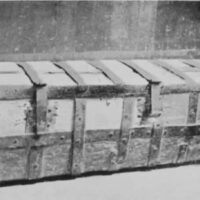
A very rare medieval elm chest of boarded construction, the timbers being an impressive 2 ½ inches thick throughout, and bound with heavy wrought iron straps and mounts. The lid is hung on five massive iron strap hinges and further strengthened by ironwork across the boards, centred by a large wrought iron ring handle. Three lock plates are positioned across the front, allowing multiple custodians to hold separate keys—ensuring security and accountability.
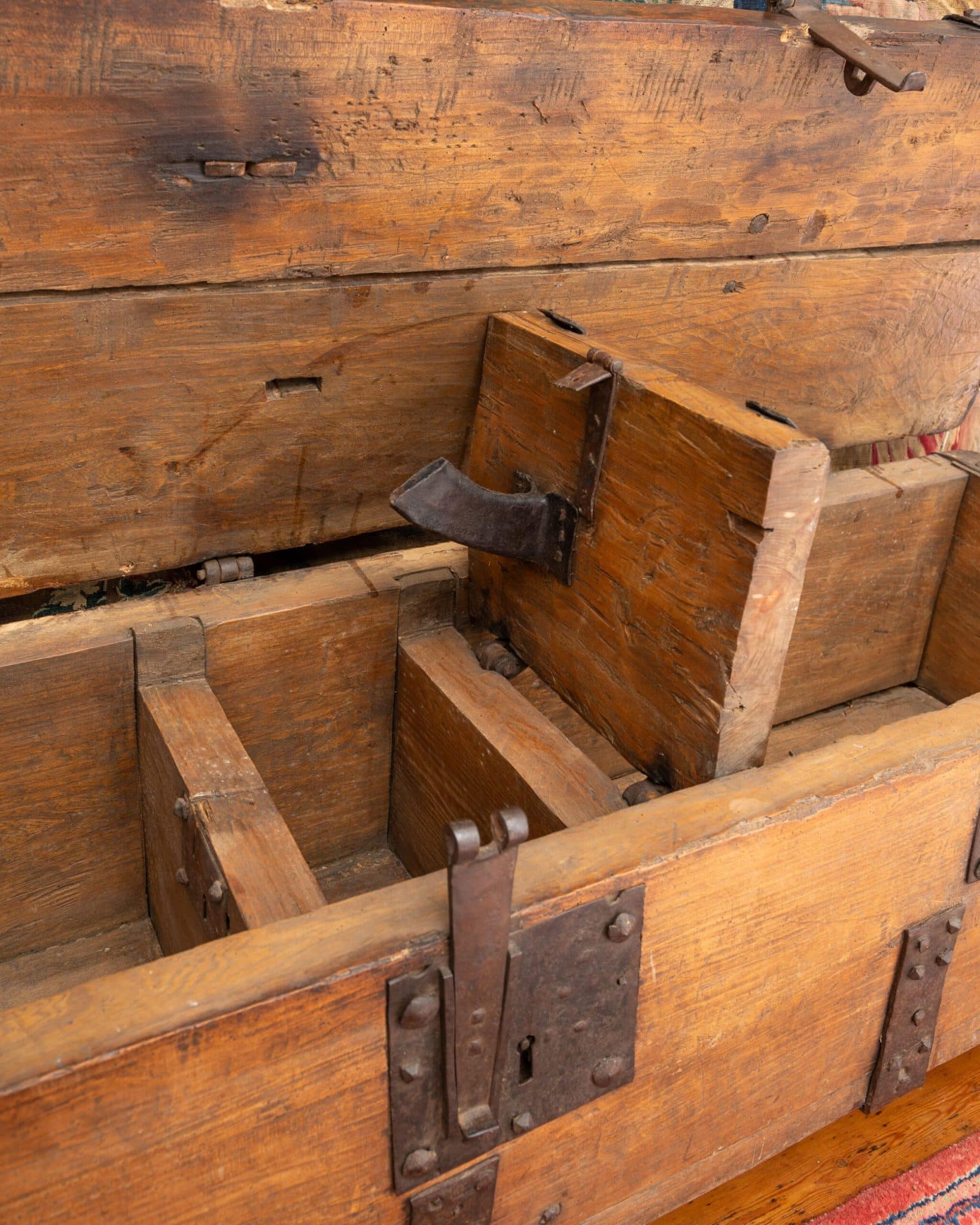
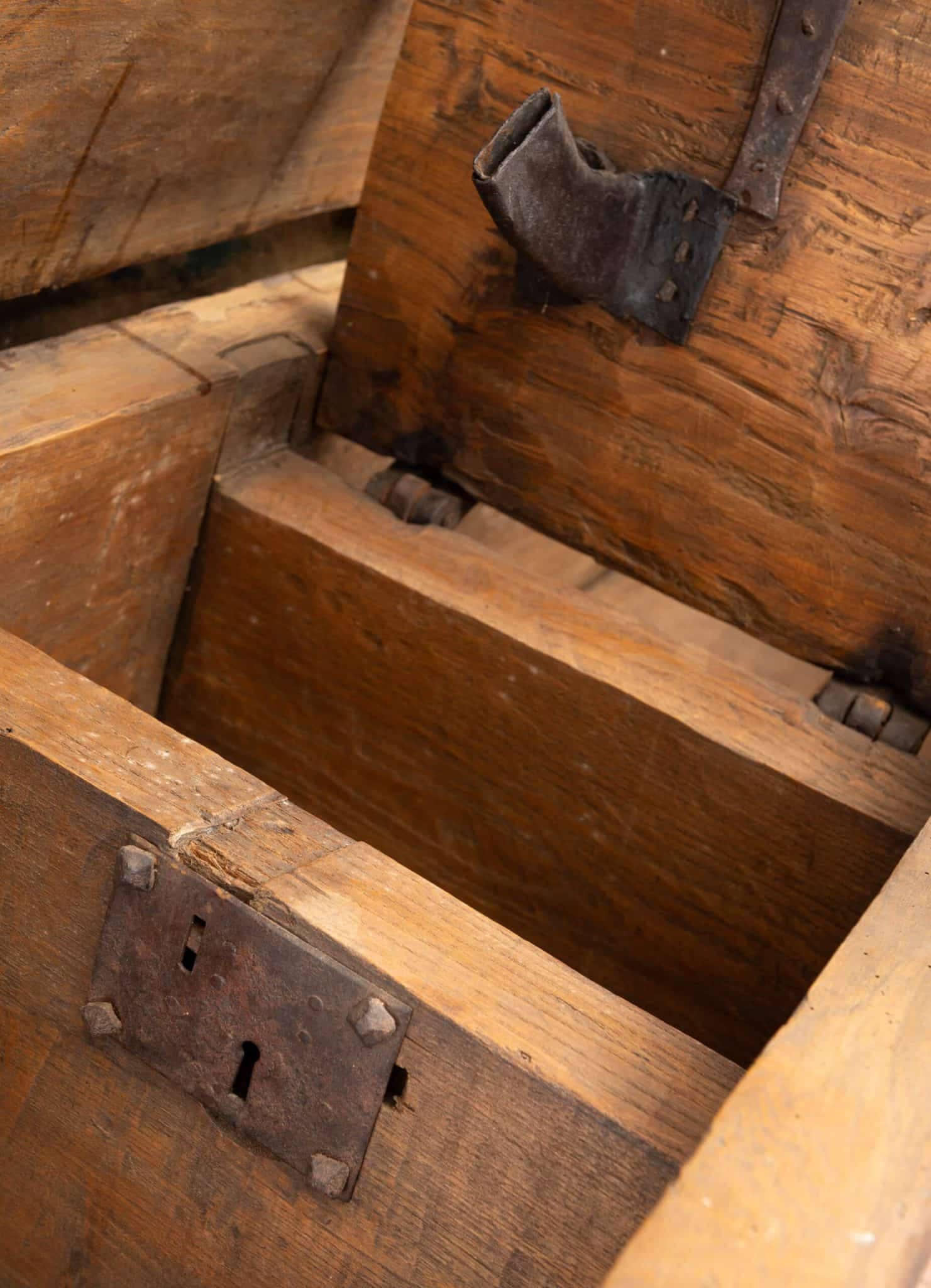
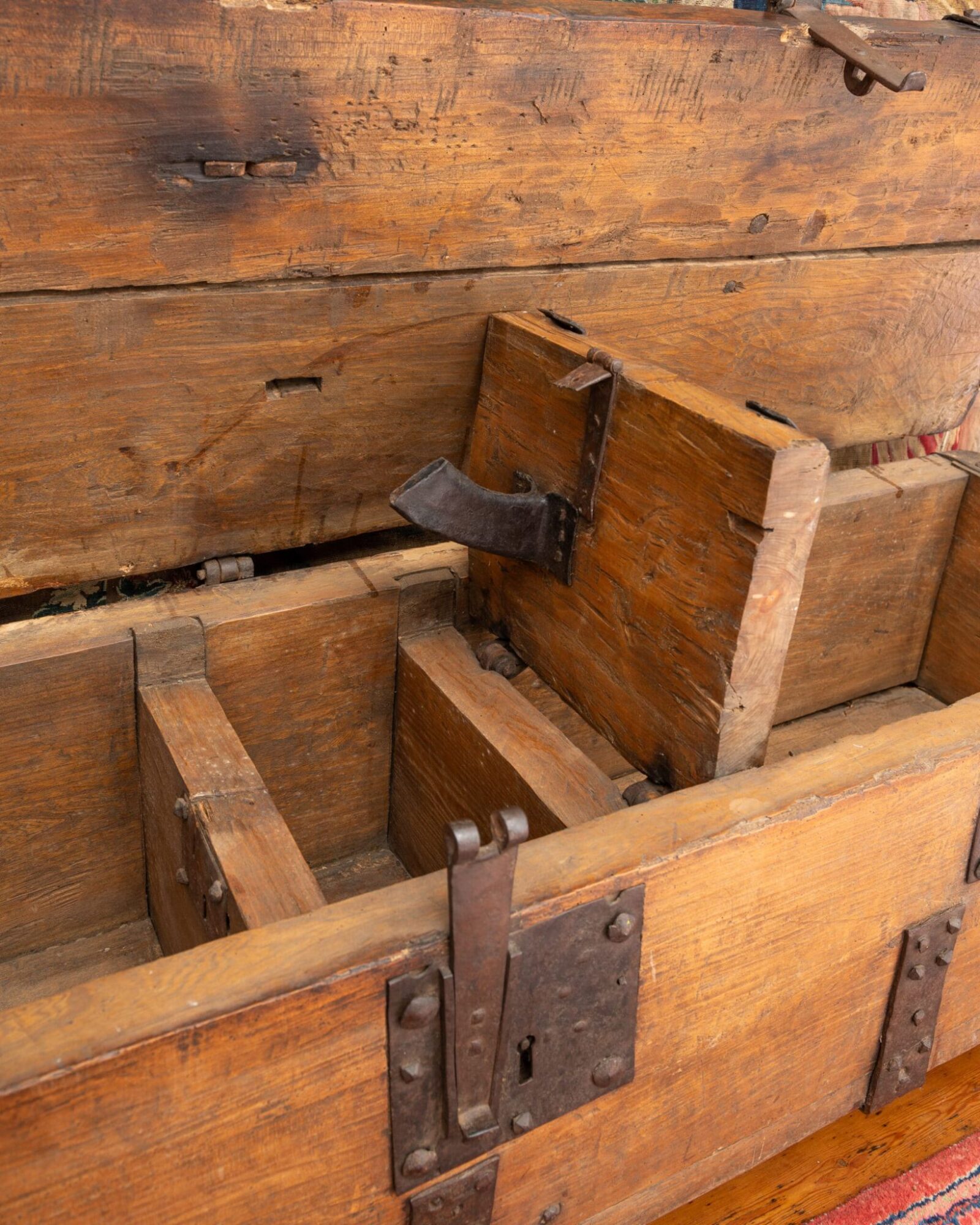
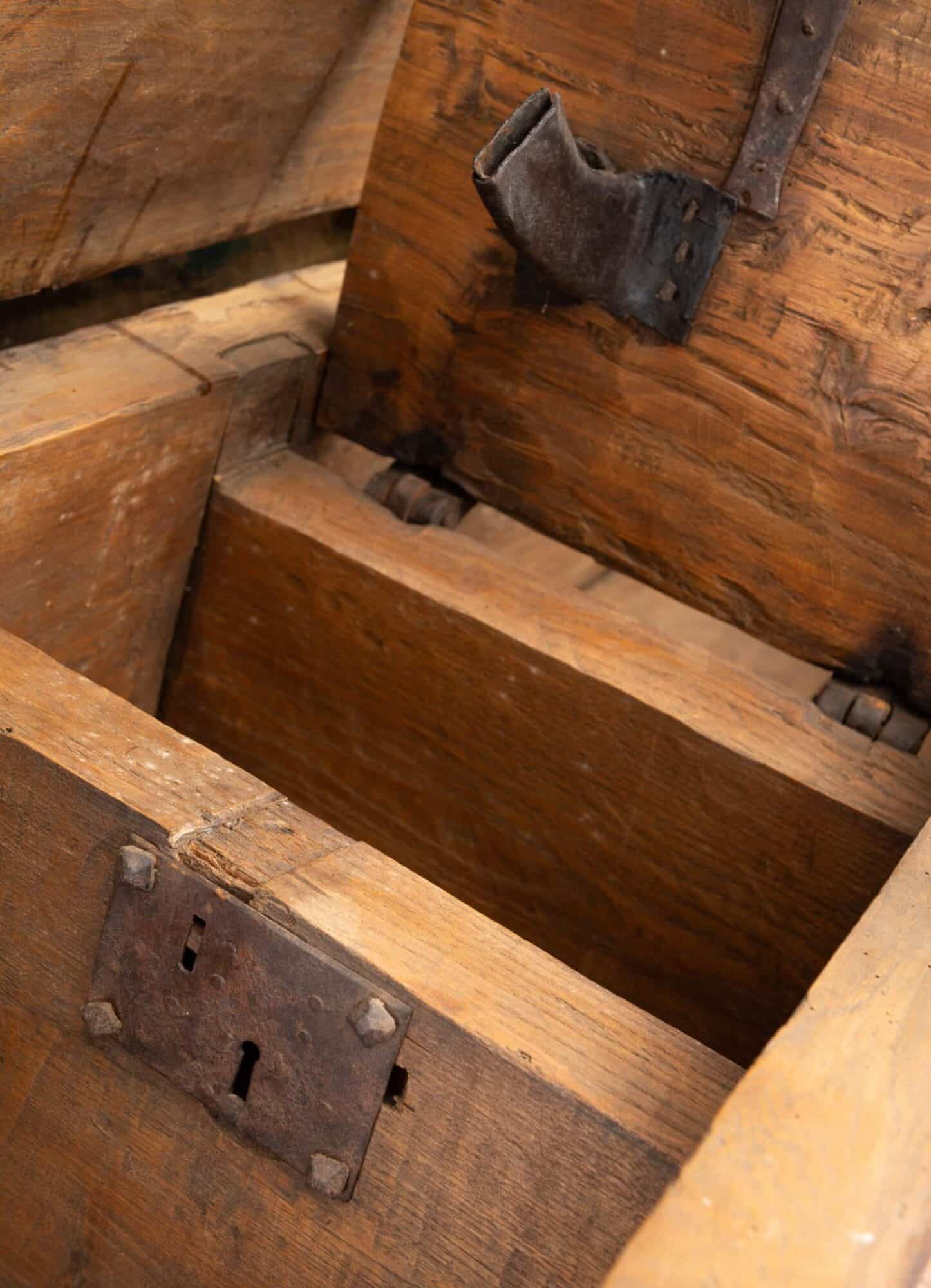
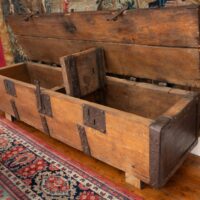
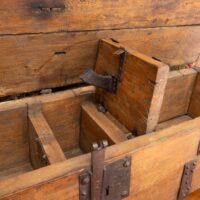
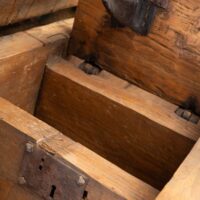
The interior retains its central compartmentalised till with hinged lid, iron lock and money slot—an original feature for the secure storage of coins and smaller valuables. The robust boarded construction and extensive ironwork suggest the chest was designed for institutional or communal use, such as in a church, guild hall, or monastic treasury.
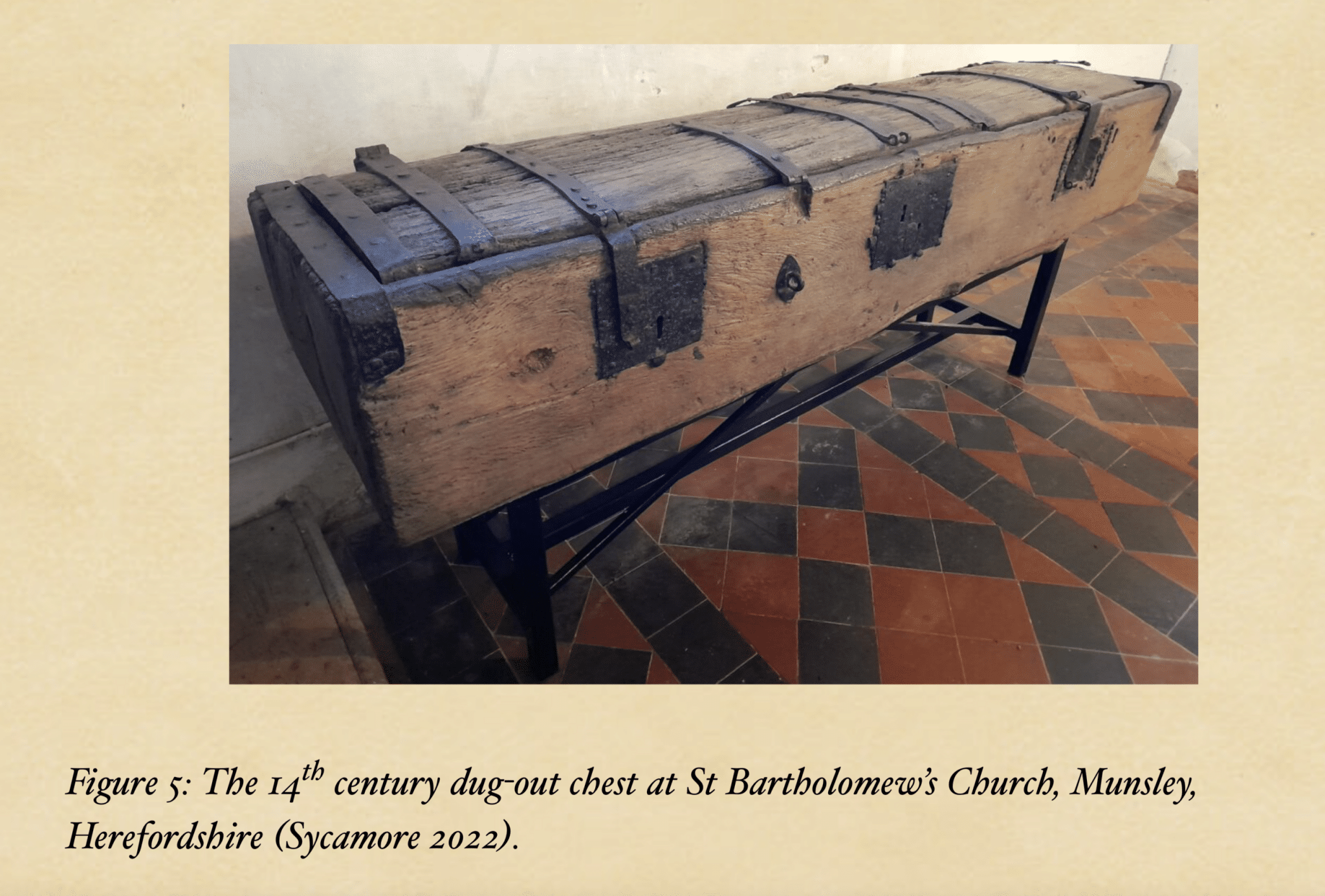
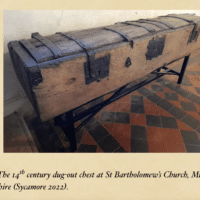
Comparable examples are recorded at St Bartholomew’s Church, Munsley, Herefordshire (13th century), and in Messing Church, Essex. Surviving medieval chests of this form and scale very rarely appear on the market, making this example—preserved in superb condition—all the more significant.
Provenance: In a Parisian collection for the last 50 years.
As Rachel Sycamore notes, chests such as these were among the most important and prevalent forms of medieval furniture, serving as secure containers for vestments, sacraments, alms, and crusade funds. Constructed from oak or elm and rendered almost immovable by their size and weight, they provided security against thieves and vermin. Wealthy households also entrusted their valuables to such chests, believing the sanctity of the church would safeguard their contents.