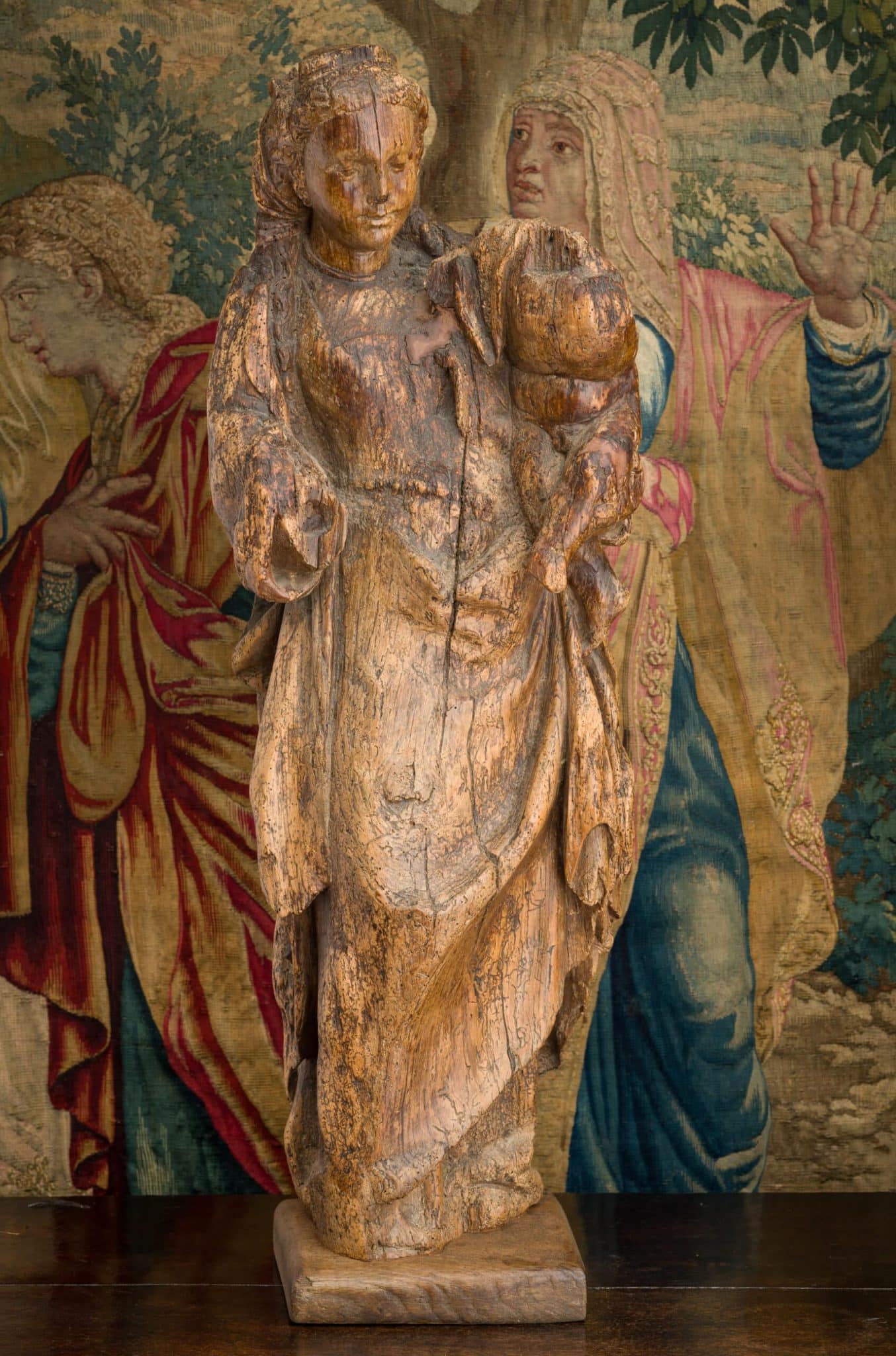
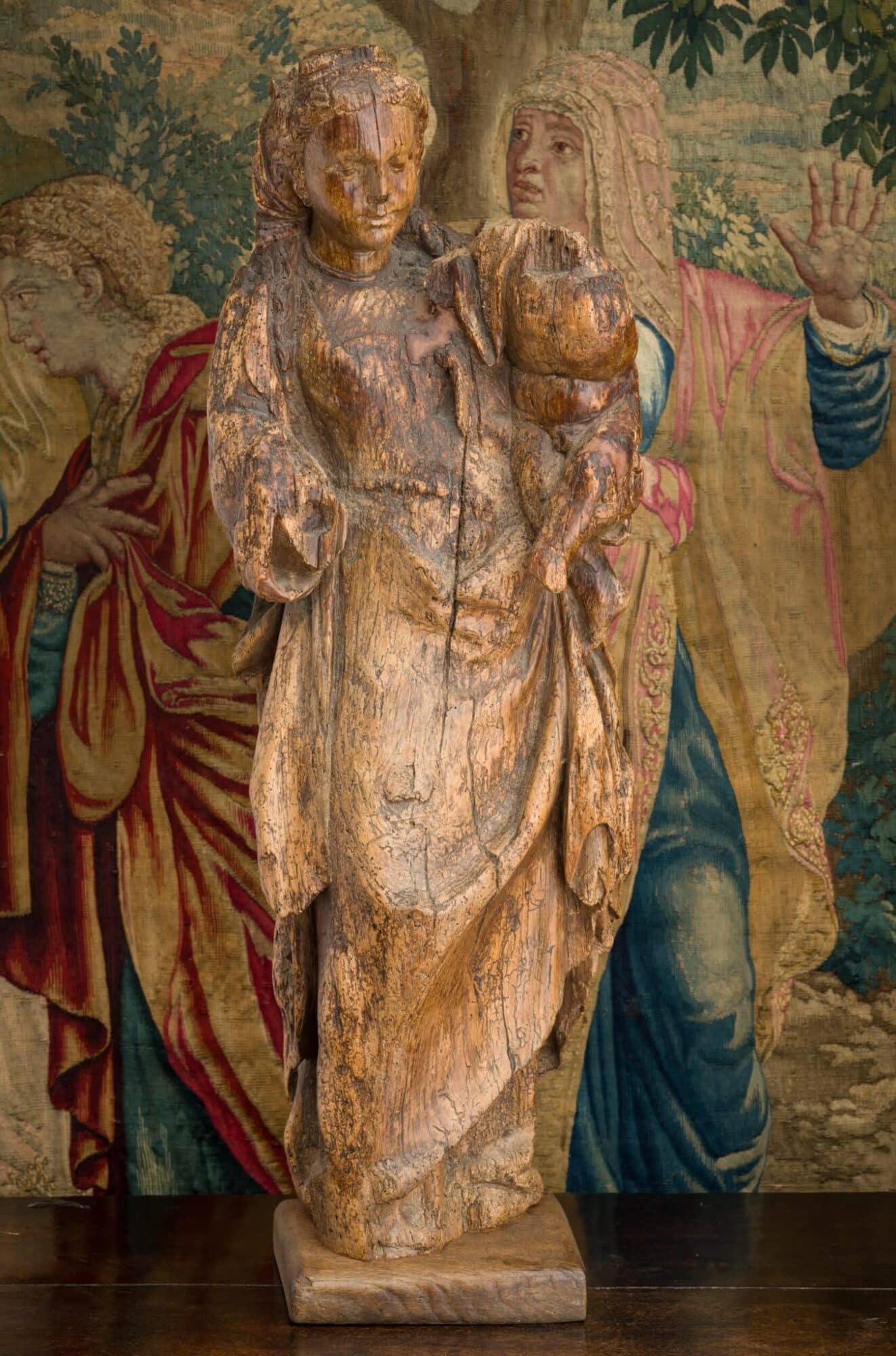
Late Gothic oak sculpture of the Virgin and Child
- Period
- Circa 1500
- Origin
- France
- Dimensions
- W 13" × H 38 1/2" × D 8"
- Reference
- #Marh2876
This piece has been sold. It is shown here for reference in our archive.
Description
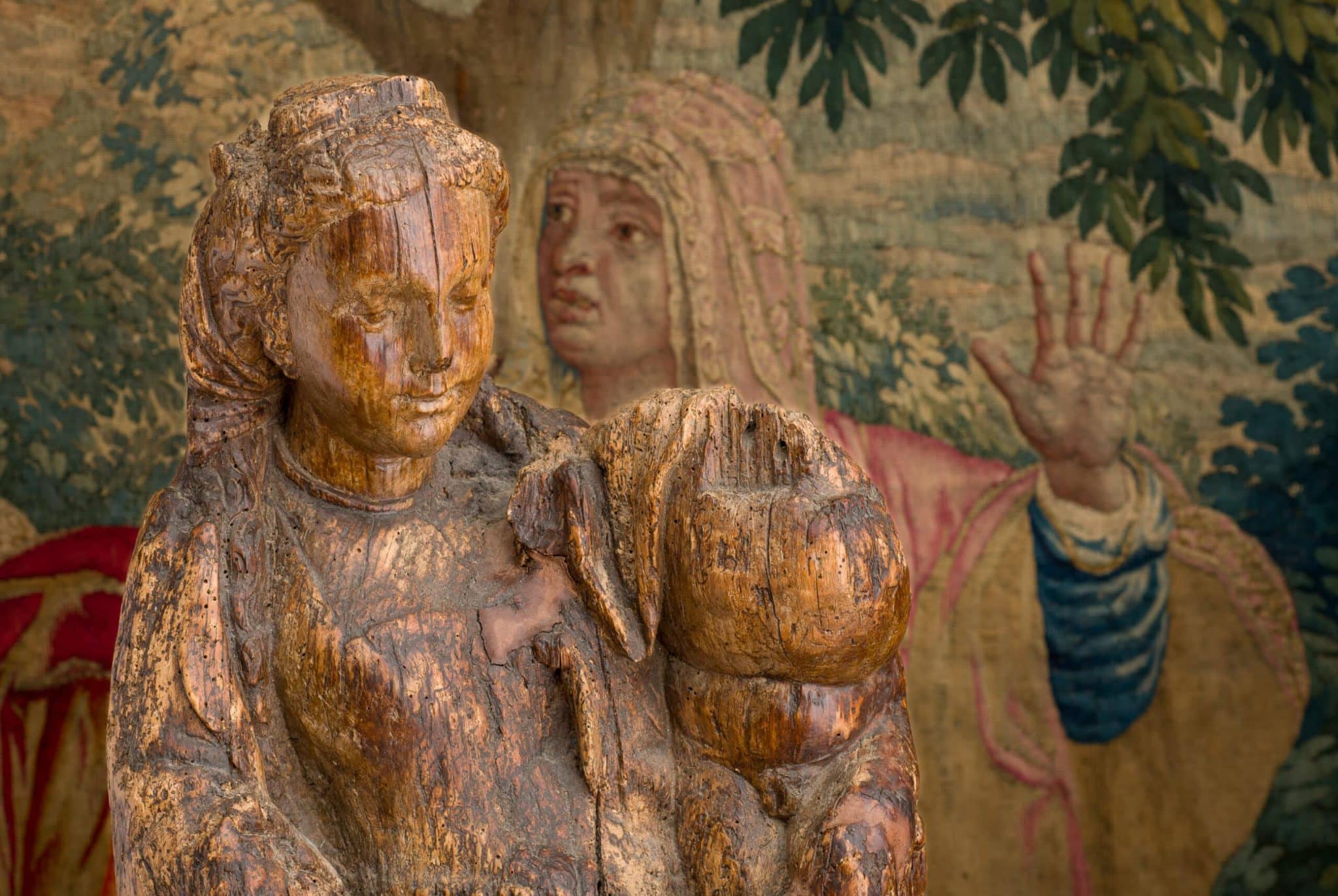
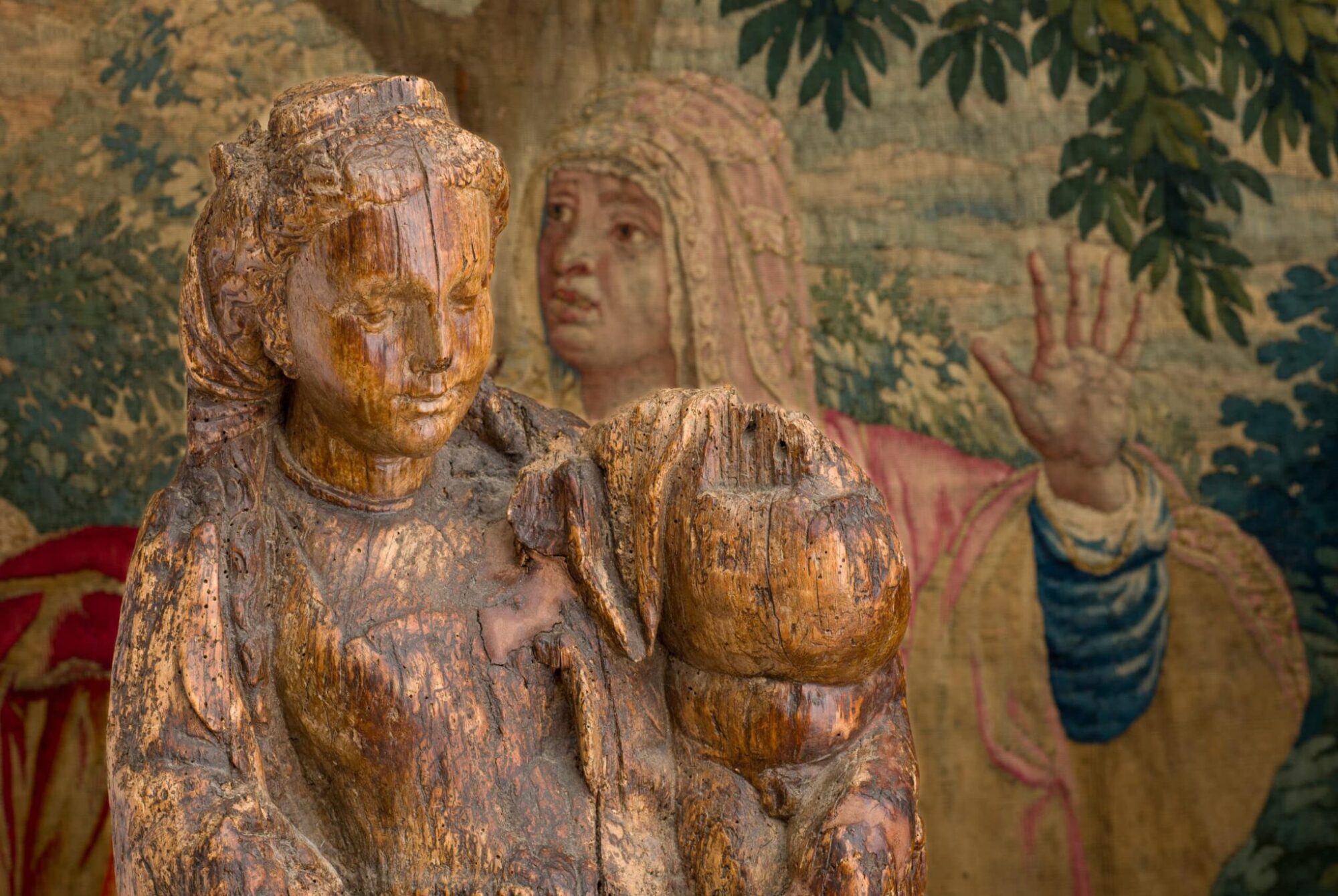
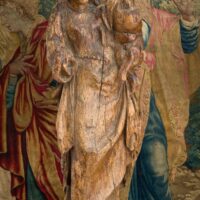
A large and sensitively carved oak sculpture of the Virgin and Child, dating to the late Gothic period around 1500. The Virgin is shown standing in contrapposto, her figure enveloped in flowing drapery which falls in heavy, angular folds typical of French Gothic carving of the late 15th century. She supports the Christ Child upon her left arm, the infant’s form nestled close to her body in a gesture that emphasises both maternal intimacy and sacred symbolism.
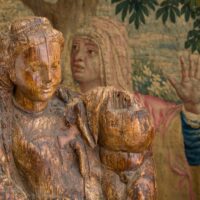
The sculpture retains much of its original presence despite the weathering and losses of time, which now reveal the warm texture of the oak beneath. The softened contours of the Virgin’s face, the delicate treatment of her hair, and the rhythmic fall of her robe are characteristic of the transition from the austerity of earlier Gothic to the gentler, more humanised devotional imagery of the early Renaissance.
Works such as this would have stood in parish churches or private chapels, serving as the focus of Marian devotion. The Virgin and Child was the most popular devotional subject of the period, embodying both theological meaning—the Incarnation of Christ—and an accessible image of maternal care and protection.
Comparable examples of French Gothic Madonnas, particularly from Burgundy and the Loire Valley, display the same emphasis on naturalism in the drapery and tenderness of the mother-and-child grouping.