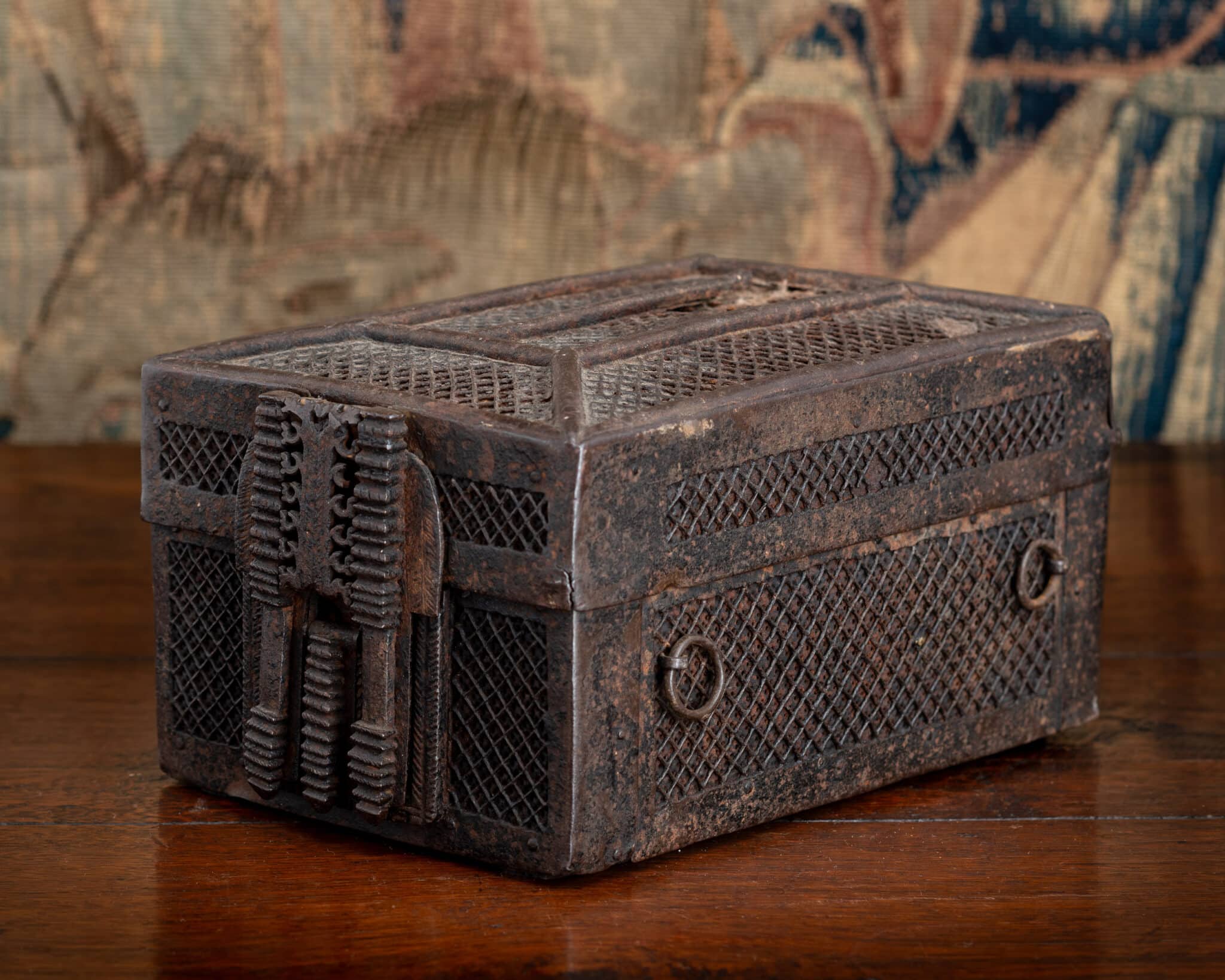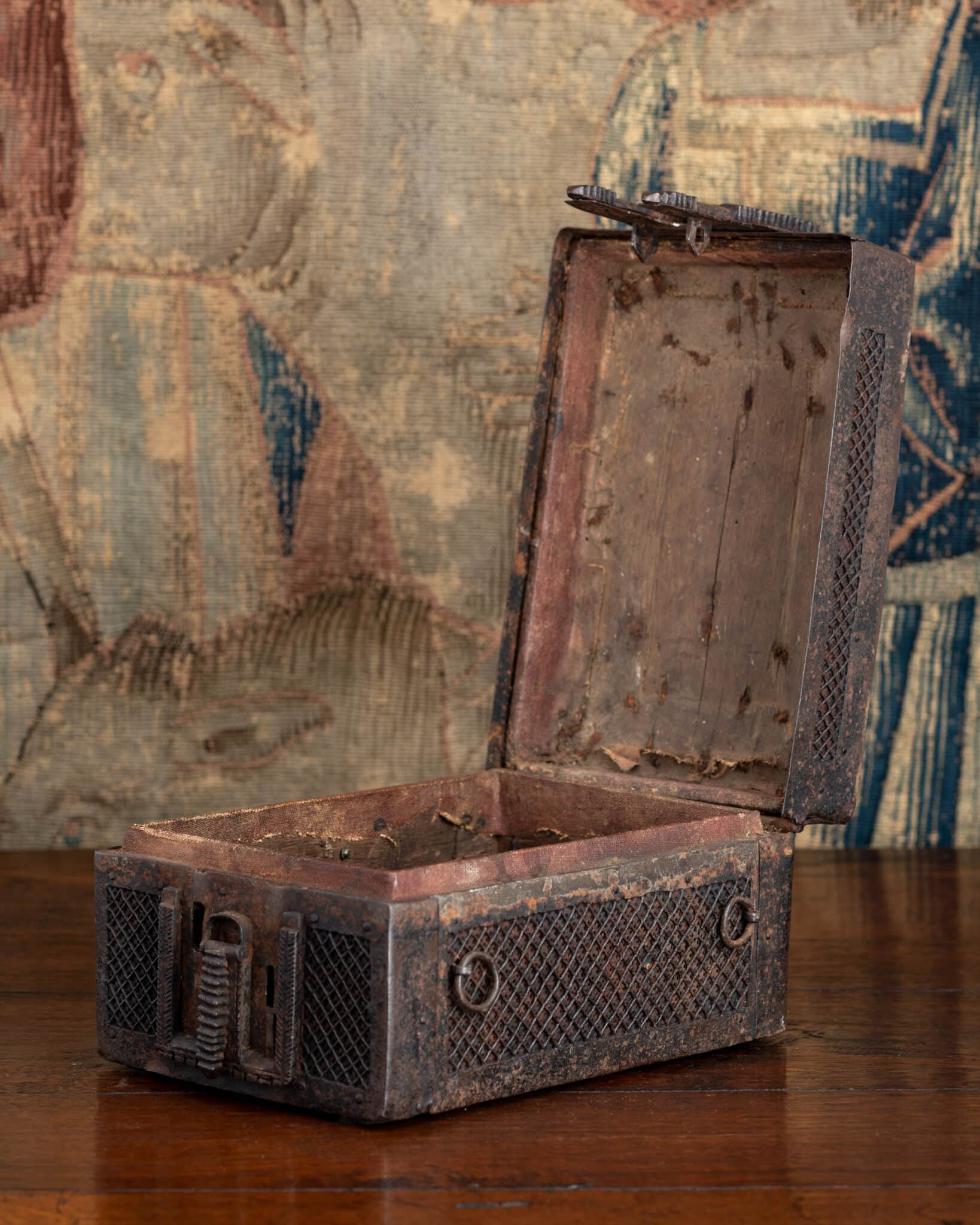
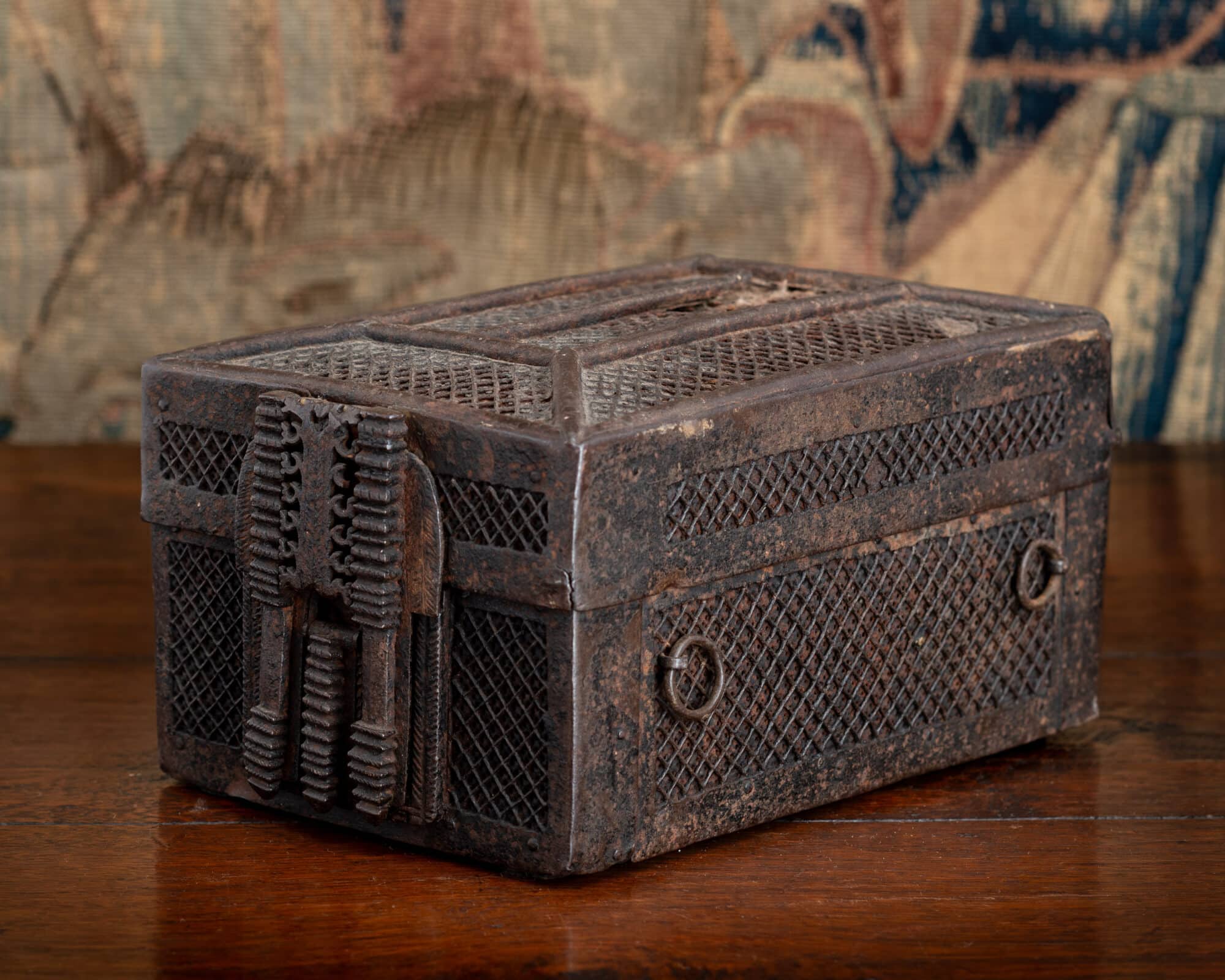
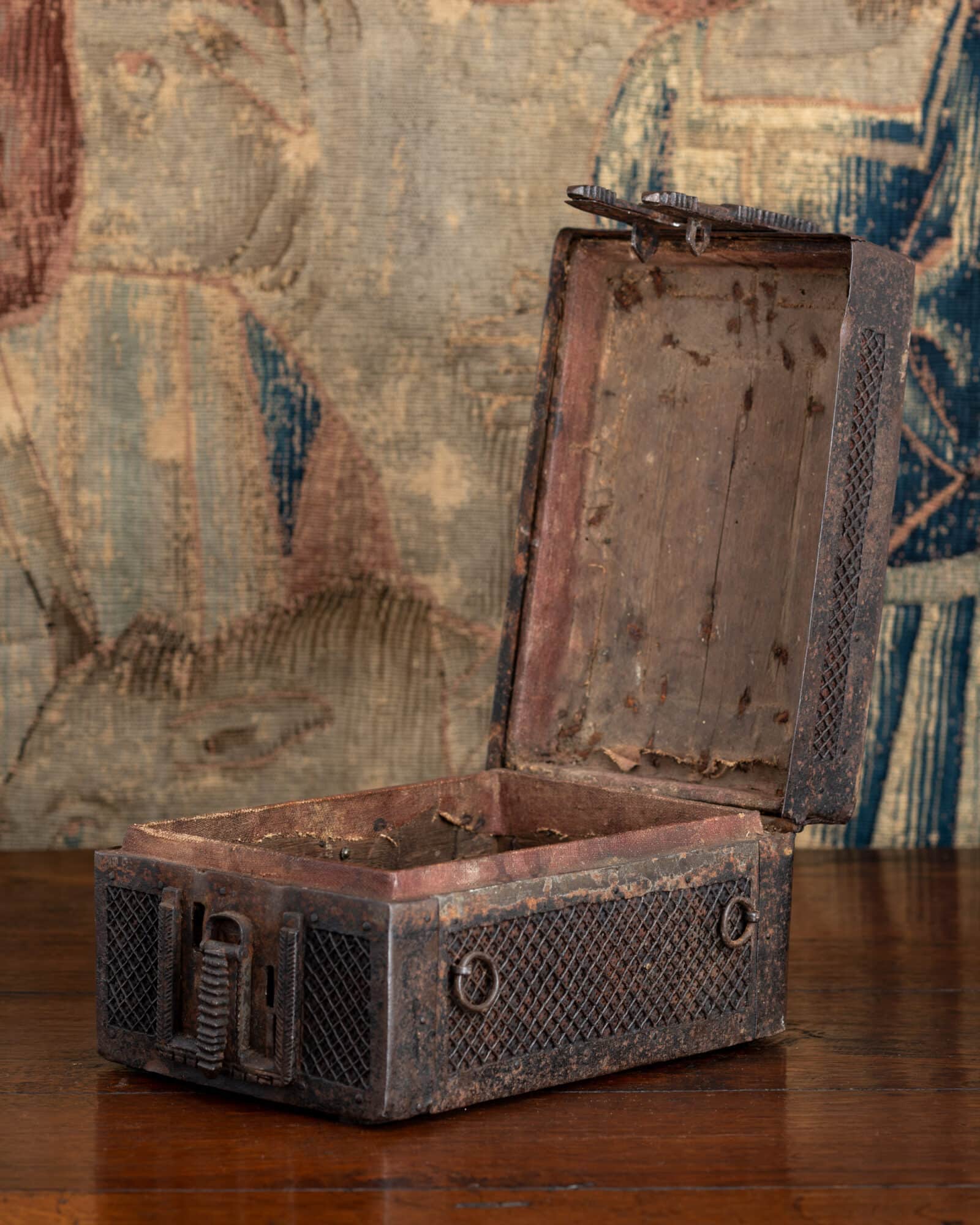
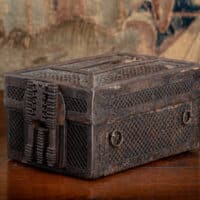
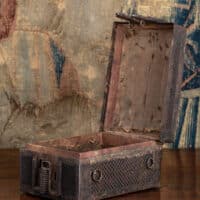
Late Gothic Wrought-Iron Travelling Coffret or ‘Missal Box’
- Period
- Circa 1480 - 1520
- Origin
- France
- Dimensions
- W 11"" × H 5 1/2"" × D 7""
- Reference
- #Marh3786
This piece has been sold. It is shown here for reference in our archive.
Description
A late Gothic travelling coffret of rectangular form, constructed around an oak core and extensively encased in wrought iron. The exterior is decorated throughout with finely worked diagonal lattice or maille ornament, arranged within raised borders. The slightly architectural lid is divided by moulded ribs into a recessed central rectangular field surrounded by four sloping panels of latticework.
The front is dominated by an unusually elaborate wrought-iron locking arrangement. Its projecting vertical elements, repeatedly notched and moulded, have the character of miniature Gothic buttresses or pinnacles and flank pierced scrolling ironwork. Small iron rings applied to the sides provided a means by which the coffret could be secured during travel.
The interior retains its oak construction together with remnants of an early textile covering or lining. The combination of a wooden core, textile and an extensively pierced iron outer casing is characteristic of a distinctive group of late medieval French coffrets generally known as coffrets à mailles. Contemporary and later descriptions also associate such objects with work à la manière d’Espagne (‘in the Spanish manner’), although surviving examples are firmly associated with French manufacture.
Traditionally termed missal boxes, these exceptionally robust portable coffrets were intended for the secure carriage of valuable possessions and might accommodate a small devotional manuscript, correspondence, documents, money, jewels or other precious objects. The present example, with its particularly elaborate architectural lock furniture and remarkably extensive lattice decoration, belongs to the late Gothic tradition flourishing around the transition from the fifteenth to the sixteenth century.