 Sold
A Late Gothic Carved Oak Canopy from a Chair of Estate
- Period
- Circa 1470 - 1500
- Origin
- Southern Netherlands, probably Flanders
- Dimensions
- W 35 1/4"" × H 18 1/4"" × D 24""
- Reference
- #Marh3811
This piece has been sold. It is shown here for reference in our archive.
Description
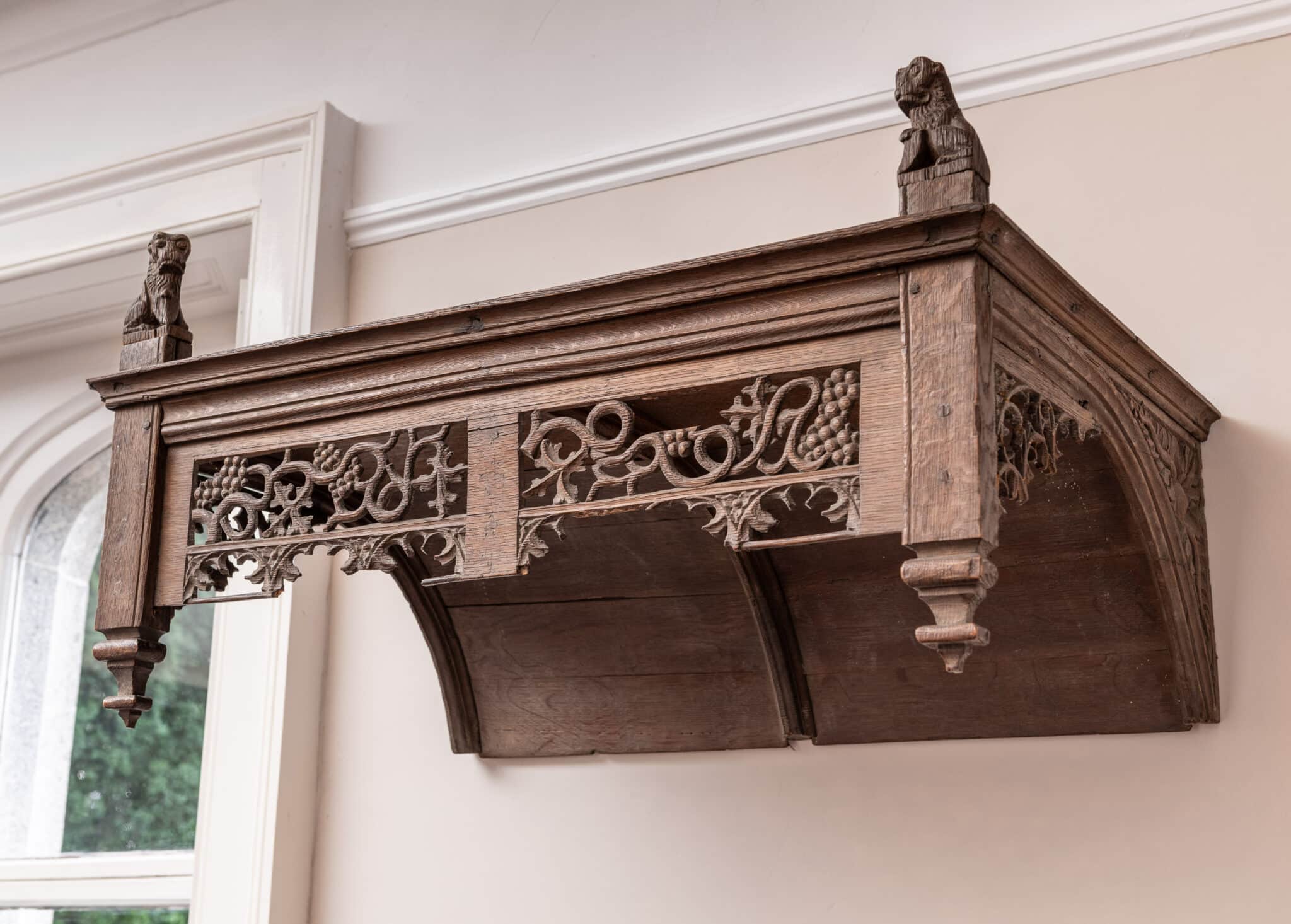
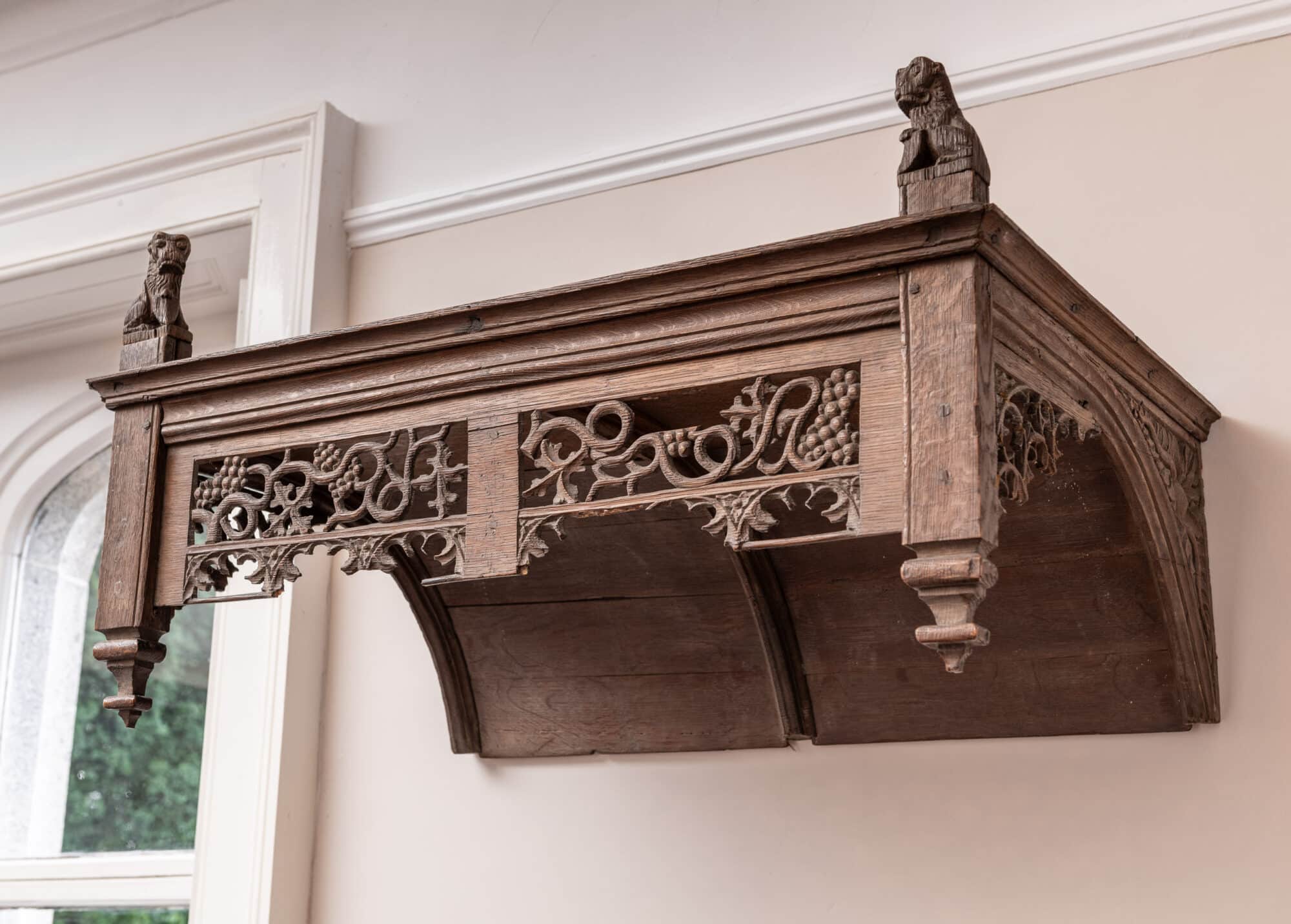
A rare and substantial late fifteenth-century carved oak canopy, originally forming the architectural crown of an important canopied chair or chair of estate.
The canopy is conceived as a projecting architectural structure, with a deep moulded cornice surmounted at either end by a seated lion. Beneath the cornice is an exceptionally vigorous pierced frieze of scrolling vine, foliage and pendant bunches of grapes, worked almost entirely in the round to create a richly shadowed openwork effect. Below this runs a further band of pierced late Gothic tracery, terminating at the corners in elongated pendant finials.
Of particular importance is the canopy’s construction. The whole structure was designed to be secured from the rear, the elaborately carved front projecting freely without evidence of supporting posts or other fixings at its leading edge. The broad boarded soffit consequently formed a true overhead canopy above the occupant. This construction, together with the pendant corners and strongly frontal arrangement of the decoration, identifies the piece as the surviving upper section of a monumental canopied seat rather than simply an architectural cornice
The paired lions are especially noteworthy. Positioned prominently at the outer corners of the canopy, they would originally have appeared above and to either side of the seated occupant. The lion had broad associations with strength, authority and guardianship in medieval imagery, although in the absence of surviving heraldry it would be inappropriate to associate the present examples with a particular family or institution.
The luxuriant fruiting vine occupying the principal frieze is equally characteristic of late medieval carving. Vine and grape imagery possessed obvious Eucharistic associations and was consequently widespread in ecclesiastical art, while it was also employed more generally as an ornamental motif in prestigious secular woodwork. Its presence therefore does not in itself establish whether the original chair was made for a secular or ecclesiastical setting.
Stylistically, the combination of deeply undercut naturalistic foliage with pierced flamboyant tracery belongs to the sophisticated woodworking traditions of the Southern Netherlands and neighbouring Franco-Flemish territories during the closing decades of the fifteenth century. The architectural character of the carving and the use of oak are consistent with the monumental furniture produced throughout this region, where the distinction between the work of the joiner, sculptural carver and architectural woodworker was often remarkably fluid.
The survival of the canopy independently from the remainder of its chair is unsurprising. Large medieval seats were particularly susceptible to alteration, dismantling and reuse as interiors changed. Architectural components could survive long after the furniture to which they originally belonged had disappeared.
The canopy retains considerable evidence of this long history. The two lions have at some stage been removed and subsequently reinstated, while the delicate pierced tracery and vinework have sustained old breaks and losses. These interventions remain clearly visible and have not obscured the fundamental medieval construction or the remarkable sculptural character of the piece.
Despite the loss of the chair beneath it, the canopy preserves enough of its original structure to evoke the imposing appearance of the complete object: a seated figure framed beneath flamboyant Gothic tracery and fruiting vines, with paired lions occupying the highest points above.
Condition
Old losses and breaks to the pierced tracery and vinework; the two carved lions have previously been removed and reinstated. Further age-related losses, wear and historic repairs consistent with the considerable age and history of the object.