Late Medieval Leather-Covered and Iron-Bound Domed Standard
- Period
- Circa 1480–1500
- Origin
- England
- Dimensions
- W 25"" × H 16"" × D 14 1/4""
- Reference
- #Marh3801
£6,250
Description
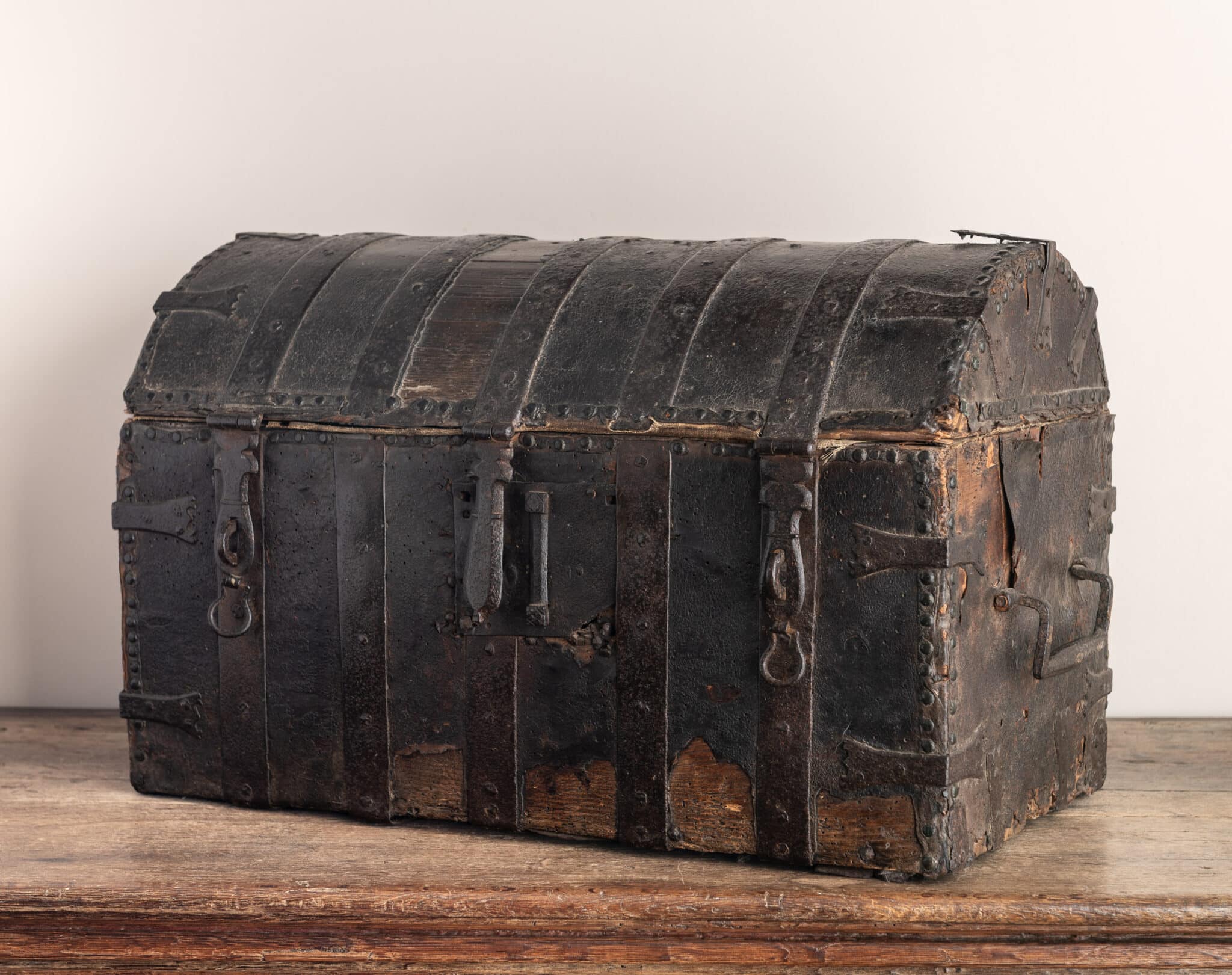
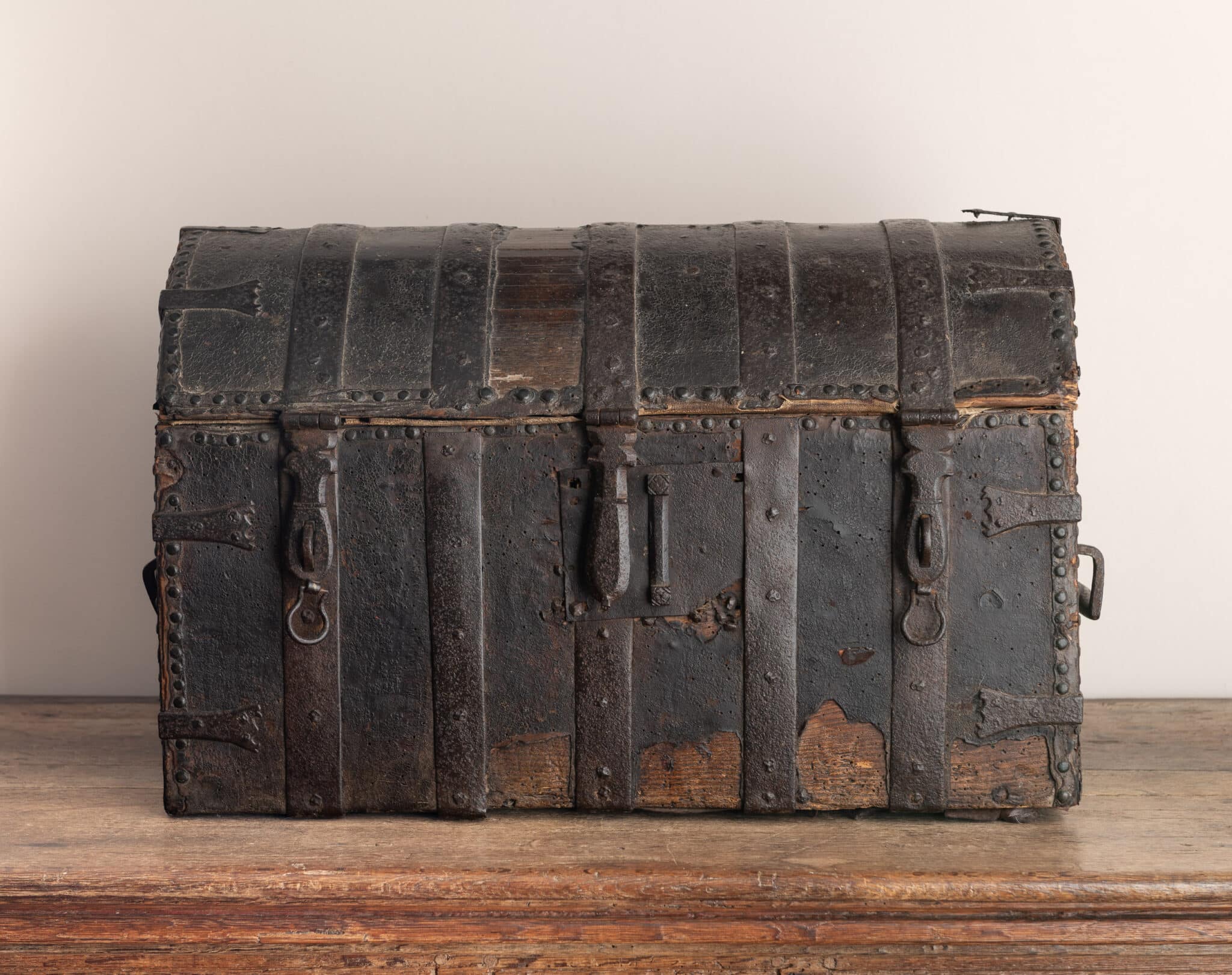
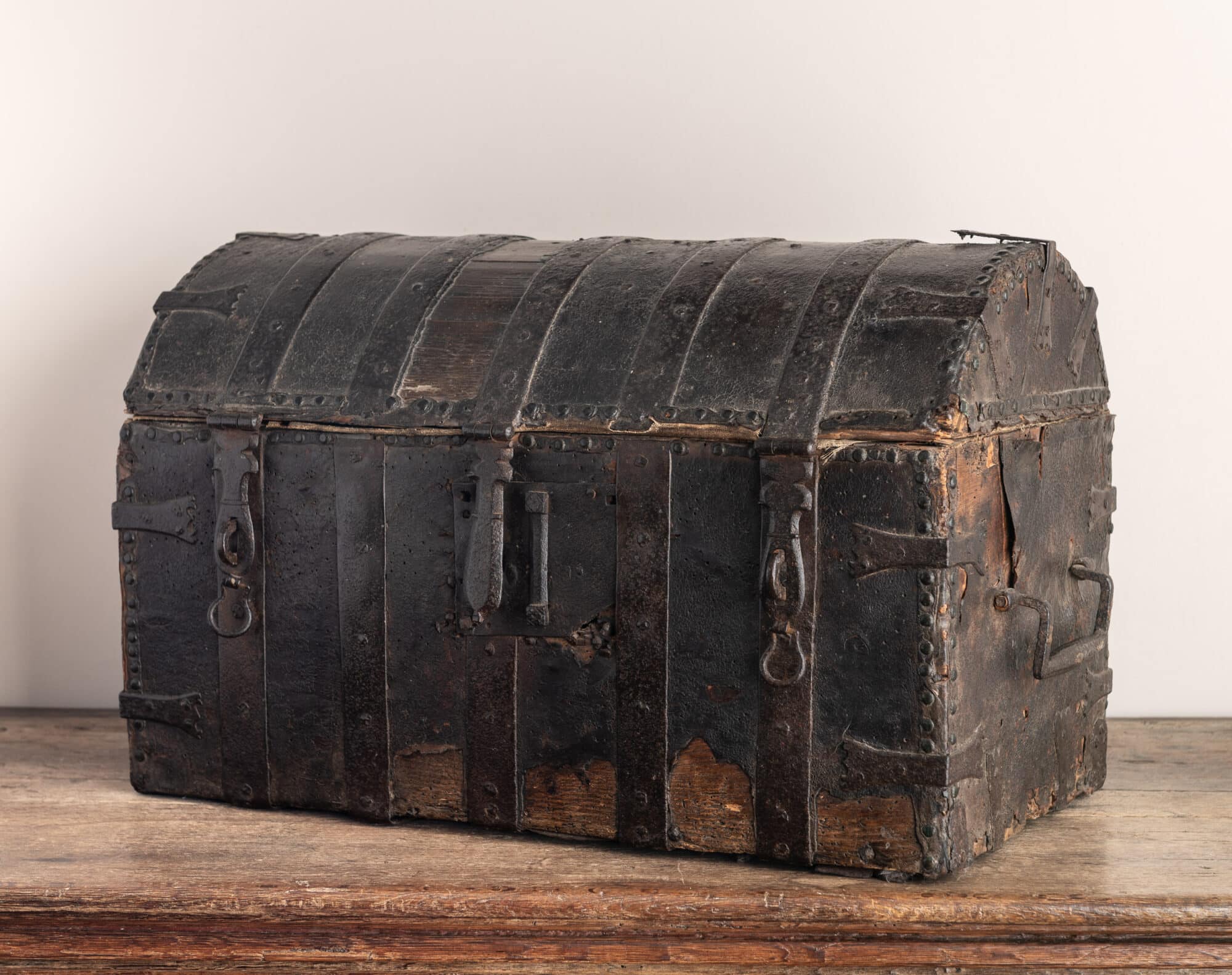
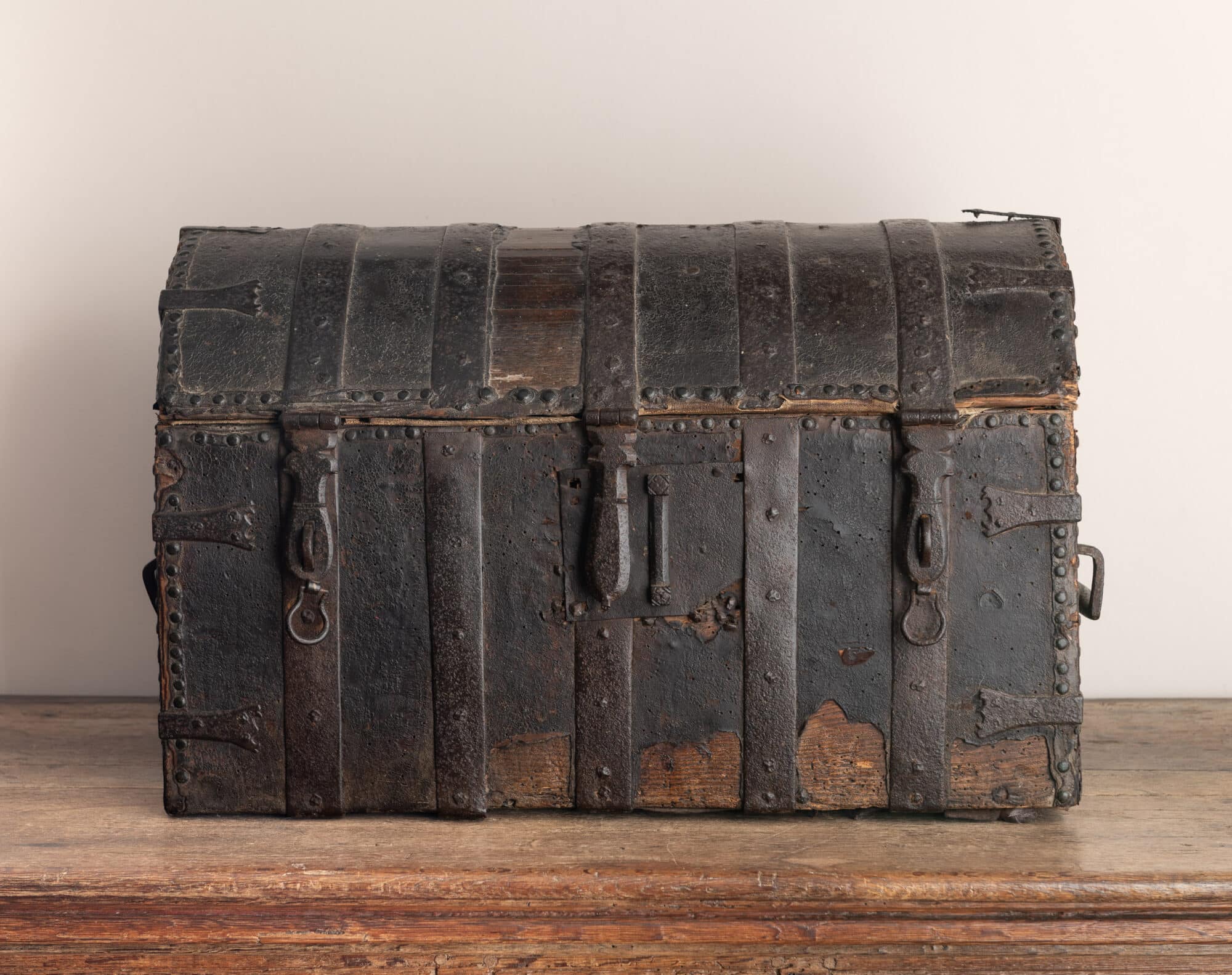
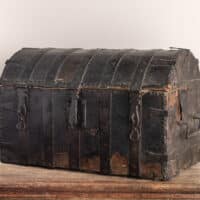
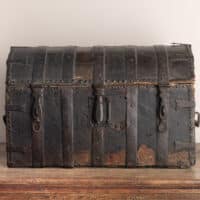
A remarkable late medieval travelling chest or standard, constructed principally of elm, retaining extensive remains of its original leather covering and comprehensively reinforced with wrought-iron straps. The strongly domed lid is secured by broad transverse iron bands, while the front retains its sophisticated arrangement of locks, hasps and pendant rings. Wrought-iron carrying handles at either end complete an object clearly conceived for both security and transportation.
Penelope Eames discusses this distinctive class of medieval furniture in her important study Furniture in England, France and the Netherlands from the Twelfth to the Fifteenth Century. Known as standards, these strongly constructed portable chests were used for transporting possessions and survive in both gabled and domed forms.
The pronounced barrel-shaped lid of the present example is particularly characteristic. Its shape was practical rather than simply decorative: the curved surface allowed rainwater to run away rather than collect on the top when the chest was being transported. Combined with the leather covering, iron reinforcement and carrying handles, almost every aspect of its construction reflects its original purpose.
Such a chest belonged to a world in which important households were frequently on the move. Clothing, documents, money, textiles and other valuable possessions travelled with their owners between residences and on longer journeys. The standard consequently occupied a fascinating position somewhere between furniture and luggage: a secure chest within the household which became a travelling container when that household moved.
The quality of the wrought ironwork is especially noteworthy. The numerous straps and domed nails are functional, yet the shaped hasps, moulded details and pendant rings display a refinement beyond what was necessary simply to strengthen the chest. Security was clearly important, with multiple locking points protecting its contents.
Although domed standards were produced elsewhere in northern Europe and imported examples are known in England, the combination of the present chest’s elm construction, leather covering, ironwork and constructional characteristicssupports an English attribution in the closing decades of the fifteenth century, circa 1480–1500.
Its survival is particularly compelling. Areas of leather have disappeared to reveal the elm beneath; the ironwork has worn and oxidised; and the edges bear the marks of centuries of handling. These are not simply losses, but evidence of the working life of an object made to be lifted, carried and transported.
More than five hundred years later, the purpose for which it was made remains immediately understandable. It is a rare survival of late medieval furniture and, in the most literal sense, a surviving piece of medieval luggage.
Provenance:
Formerly in a distinguished private collection, North Devon.
Previously with Marhamchurch Antiques Ltd.; subsequently reacquired.